
Multi-Unit Restaurant Management Guide

Quick Answer: Managing multiple restaurant locations successfully requires a shift from hands-on daily supervision to a systems-based executive model. Multi-unit operators must centralize POS and online ordering data into a single parent dashboard to track real-time unit margins and sales. Standardised recipe sheets, a structured RACI decision matrix for General Managers, digital SOP checklists, and clear L-GAV compliance protocols ensure operational consistency across all branches without requiring your physical presence every day.
Expanding from a single restaurant to multiple locations is a major milestone. But running 3 to 8 sites demands a different mindset than running one kitchen. Once you can’t be on the floor every shift, small flaws in portioning, scheduling, or service compound across branches and erode your margins.
According to multi-unit hospitality research published by Sage, successful scaling relies on data centralisation and rigid process standardisation. In Switzerland’s high-cost environment — where wages, rent, and ingredient costs rank among the highest in Europe — multi-site operators need scalable systems to protect margins. This guide is a practical blueprint for managing multiple restaurant locations across Switzerland.
Are You Ready to Expand? The Multi-Unit Readiness Checklist
Before signing a lease for a second or third location, evaluate whether your primary business can actually support expansion. Opening a new branch before your first unit is fully systemised is the fastest way to destabilise the whole operation.
Run through this 5-point readiness audit before expanding:
- Stable Unit Profitability: Your flagship must generate positive net margins (target 10%–15%) for 12 consecutive months without cash infusions.
- Proven General Manager Bench: A trained, trustworthy GM must be ready to run the existing location independently before you focus on site selection.
- Documented SOPs: Every daily task — morning prep, station setup, register closing, sanitation — must be recorded in written playbooks.
- Capital Reserves: You need enough working capital to cover 6 months of pre-opening overhead, fit-out, and payroll without pulling funds from unit one.
- Supplier Bandwidth: Your key Swiss distributors must confirm they can service the new location at identical schedules, pricing, and volume discounts.
The Centralise-versus-Localise Operating Model
Managing multiple restaurant outlets requires a deliberate balance between brand control and local flexibility. Centralising every minor decision creates bottlenecks; giving local managers full autonomy leads to inconsistent guest experiences and brand dilution.
To scale smoothly, set clear boundaries: the central team controls brand identity, master recipes, technology access, and financial targets, while local General Managers own daily shift execution, staffing rosters, and community engagement.
Use this operational division model across your locations:
| Centralise Across All Locations | Keep Location-Specific |
|---|---|
| Core menu items and recipe sheets | Local cantonal holiday rosters |
| Brand visual design & hygiene standards | Location-specific community sponsorships |
| Financial KPIs & reporting formats | Opening & closing hour adjustments |
| Approved supplier contracts & pricing | Regional seasonal specials (with approval) |
| Unified technology & POS permissions | Delivery zones & routing rules |
| Customer review response policies | Local staffing & shift scheduling |
Centralising Menu and Recipe Management
Consistency is the bedrock of a multi-unit restaurant brand. If a guest enjoys a signature burger or pasta dish at your Zurich location, they expect the exact same taste, presentation, and portion size at your Winterthur or Lucerne branch.
Standardised Recipe Sheets and Change Control
Every branch kitchen must execute dishes using identical preparation methods. To establish precise digital recipe sheets, read our comprehensive guide on restaurant recipe management.
Core menu items must remain standardized across all sites. Local chefs should not adjust core recipes without approval. Implement a formal change-control approval workflow for any proposed recipe modification, ingredient substitution, or seasonal menu test:
- Proposal Submission: The local head chef submits a written change request detailing the reason (e.g. local supplier shortage or seasonal pricing spike).
- Costing & Allergen Review: Central management calculates the impact on food cost percentage and reviews allergen documentation.
- Controlled Trial: The proposed modification is trialled at a single test location for 14 days.
- Final Sign-Off: Senior management approves or rejects the change for permanent adoption across all units.
Yield Calculation Example: Zurich vs. Bern
Take a 3-unit Italian group in Zurich, Winterthur, and Bern. A central purchasing audit finds the Bern site buys CHF 10,000 of fresh salmon fillet monthly with 13% trim waste, while Zurich buys the same volume at a strict 5% trim waste.
That 8-point gap represents CHF 800 in lost salmon margin every month in Bern alone — traced to an improper filleting technique. Retraining the prep chef on the group’s standardised filleting SOP eliminated the leak immediately.
Centralised Supplier Procurement Strategy
Managing multiple branches increases your purchasing power with Swiss food and beverage distributors. However, relying entirely on a single supplier can create operational risk if shortages occur.
Structure your procurement using a three-tier supplier model:
| Supplier Tier | Scope | Management Model |
|---|---|---|
| Tier 1: Core Bulk Ingredients | Flour, oils, proteins, dairy, packaging | Negotiate centralized annual contracts for volume discounts. |
| Tier 2: Fresh Regional Produce | Local vegetables, fresh bakery, regional cheeses | Order from approved regional vendors to ensure daily freshness. |
| Tier 3: Emergency Backups | Critical high-turnover ingredients | Maintain pre-approved secondary contracts with fast-delivery wholesalers. |
Evaluating Central Commissary Kitchens
As your business grows past 3 locations, you may evaluate building a central commissary kitchen to handle heavy prep work (such as sauces, stocks, doughs, and pre-cut meats).
A commissary kitchen is financially viable only when central production savings exceed operating overhead:
[\text{Central Savings} > \text{Commissary Rent} + \text{Dedicated Prep Labour} + \text{Refrigerated Transport} + \text{Packaging} + \text{HACCP Compliance}]
If logistics, vehicle leases, and extra rent costs outweigh your bulk purchasing and kitchen labour savings, standardising prep inside individual branch kitchens remains the more profitable choice.
Establishing Standard Operating Procedures and Auditing
Standard Operating Procedures (SOPs) are the operational rules that govern your business. In a multi-site operation, they must be audited systematically so standards don’t slip over time.
Digital Shift Checklists
Move from paper logbooks to cloud-based digital checklists on tablets. Front- and back-of-house teams complete standardised opening, line-check, and closing checklists before a shift is signed off — giving regional managers real-time visibility across all branches without a single phone call.
Peer Audits and Unannounced Quality Inspections
Inspect what you expect. Regional managers should run unannounced audits at each location twice monthly using a standardised scoring sheet.
Schedule quarterly peer audits too — the Zurich GM spends a morning auditing the Lucerne outlet alongside its local manager. This cross-pollinates ideas and surfaces blind spots local teams have grown used to ignoring.
Centralising Technology and Multi-Unit POS Reporting
Managing multiple restaurant outlets is nearly impossible if your operational data is trapped in separate legacy systems. Data silos conceal underperforming locations until quarterly profit statements reveal damage.
Consolidated Dashboard Reporting
Your Point-of-Sale (POS) terminals, inventory management tools, and online ordering systems must aggregate data into a single executive dashboard. Centrally configured POS systems allow you to audit transaction exceptions — such as high void rates, excessive discounts, or frequent cash drawer openings — across all shift logs instantly.
POS Inventory Variance Limitations
Linking your inventory software to POS sales data does not automatically identify food waste. A POS only records sales transactions; it does not track physical waste.
To identify actual inventory leaks across your locations, calculate your inventory variance weekly:
[\text{Inventory Variance} = \text{Theoretical Usage (from POS Recipe Sales)} - \text{Actual Usage (from Physical Stock Count)}]
A positive inventory variance indicates unrecorded food waste, over-portioning, theft, or unlogged kitchen mistakes. Track waste logs alongside physical inventory counts to identify the precise cause at each branch.
To establish strong foundational systems, read our guide on how to run a successful restaurant.
Multi-Location Weekly Scorecard
To maintain a clear financial overview across all branches, track these 12 core Key Performance Indicators (KPIs) on a consolidated weekly scorecard:
| Key Performance Indicator | Formula or Purpose | Multi-Unit Target Benchmark | Action Protocol If Outside Target |
|---|---|---|---|
| Net Sales by Location | Total revenue minus discounts and MWST | Concept-dependent target | Review local marketing & traffic trends |
| Same-Store Sales Growth | Sales comparison excluding new openings | Positive YoY growth (+3%–5%) | Audit local menu & service execution |
| Food Cost % (COGS) | Food & beverage costs ÷ net sales | 28% – 35% of net sales | Audit kitchen waste & portion scales |
| Gross Labour Cost % | Total gross employment costs ÷ net sales | 30% – 35% of net sales | Re-align shift rosters with hourly demand |
| Prime Cost % | Food Cost % + Gross Labour Cost % | 60% – 65% of net sales | Immediate operational audit of unit |
| Sales per Labour Hour (SPLH) | Net sales ÷ total working hours worked | CHF 85 – CHF 120 / hour | Adjust staffing levels on quiet shifts |
| Average Spend per Cover | F&B revenue ÷ guest headcount | Concept-dependent target | Train staff on suggestive upselling |
| Inventory Variance % | Theoretical usage minus actual usage | Under 2% total variance | Conduct physical stock & receiving audit |
| Order Acceptance Time | Average duration to confirm digital orders | Under 90 seconds | Check tablet alerts & staff training |
| Customer Complaint Rate | Total complaints ÷ total order volume | Under 1% of total orders | Retrain kitchen or front-of-house team |
| Repeat Guest Order Rate | Returning guests ÷ total unique guests | 30% – 50% repeat rate | Launch targeted SMS win-back campaign |
| Location Contribution Margin | Store profit before central office overhead | 15% – 20% unit margin | Audit lease terms & local overheads |
Multi-Site Staff Management and L-GAV Compliance
Staff scheduling and human resources grow exponentially more complex as your workforce expands across cities. Clear decision rights and strict compliance with Swiss labour laws are essential.
Empowering General Managers with RACI
Your General Managers are the key to scaling your business. Use a RACI framework (Responsible, Accountable, Consulted, Informed) to define decision authority clearly between Head Office, Regional Operations, and Branch GMs:
| Operational Decision | Head Office | Regional Manager | Location GM |
|---|---|---|---|
| Master Recipe Modifications | Accountable / Approves | Consulted | Responsible for Execution |
| Local Marketing Campaigns | Sets Limits / Approves | Reviews | Proposes & Executes |
| Emergency Supplier Selection | Defines Approved List | Approves | Selects |
| Weekly Staff Scheduling | Sets Labour Cost Limits | Audits | Owns & Publishes |
| Menu Price Adjustments | Accountable / Approves | Consulted | Recommends |
| Guest Complaint Resolution | Sets Policy | Escalation Support | Responsible for First Response |
L-GAV and Travel Time Compliance in Switzerland
When managing staff across multiple units in Switzerland, you must strictly comply with the National Collective Employment Agreement (L-GAV) and Swiss employment ordinances.
- Travel Time Regulations (ArGV 1 Art. 13): Travel between two branches during a split shift counts as paid working time. If an employee is asked to work at a site other than their contracted base, extra travel time beyond their normal commute must be compensated.
- Working Time Recording: L-GAV rules require precise daily records of hours, breaks, and rest days per location. Refer to the official L-GAV Art. 21 work schedule regulations to stay compliant.
- Cantonal Holiday Adjustments: Public holidays vary by canton (e.g. Zurich vs. Basel-Stadt). Configure your roster software to apply the correct cantonal rules based on where each employee is working that day.
Glocalised Marketing and Google Business Groups
Your core brand identity stays unified, but local marketing must adapt to each branch’s neighbourhood.
Google Business Groups and Multi-Unit Local SEO
Each location needs its own local search presence:
- Location Profiles: A separate Google Business Profile per branch, with local phone numbers, addresses, and opening hours.
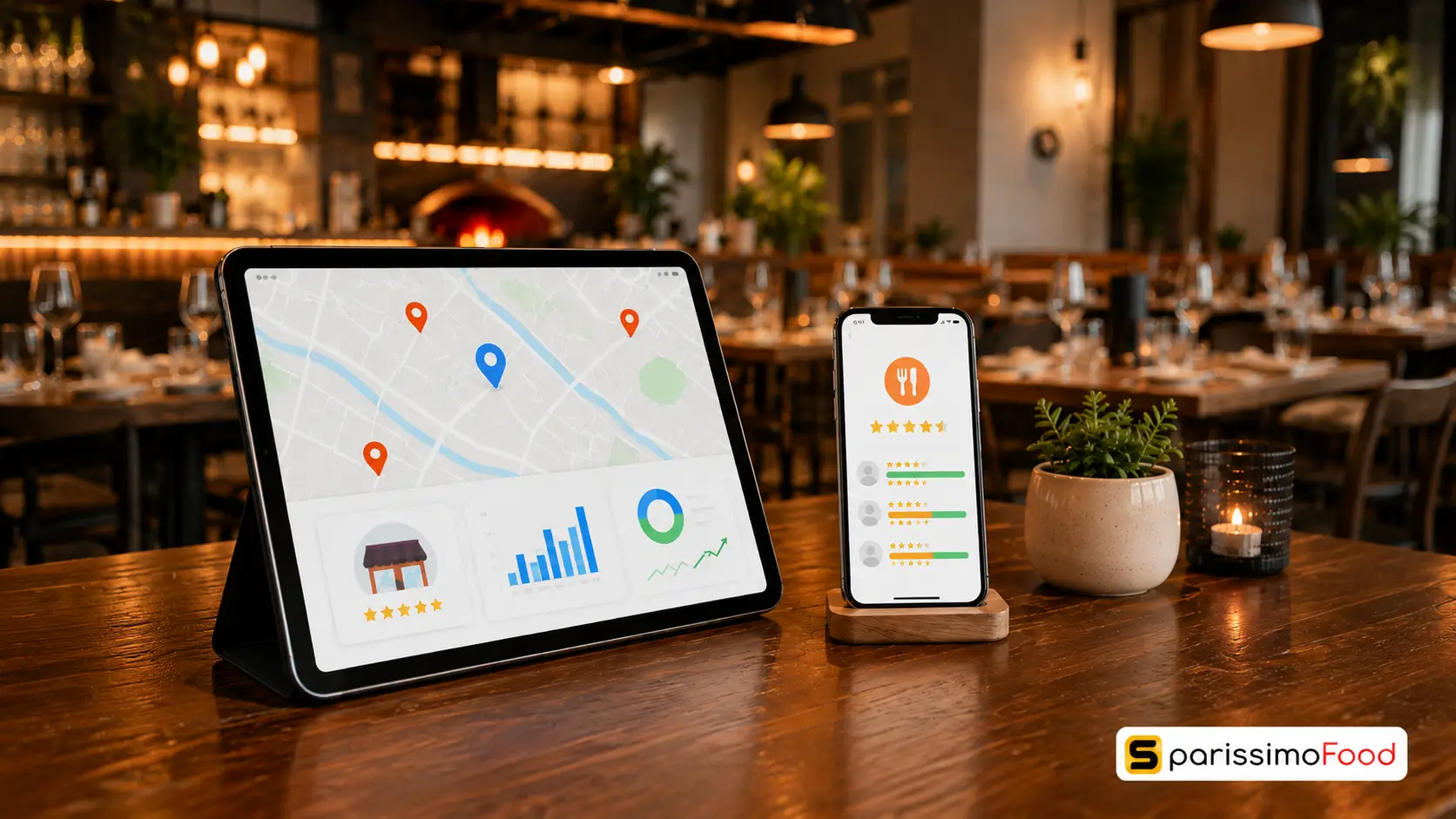
- Google Business Groups: Organise all profiles under one Google Business Group, so head office keeps master access while local GMs get manager access to update photos and hours.
- Bulk Verification: At 10+ locations, apply for Google bulk verification to manage updates centrally.
- Dedicated Landing Pages: Build location-specific pages (e.g.
/locations/zurich,/locations/bern) with custom reservation links and directions.
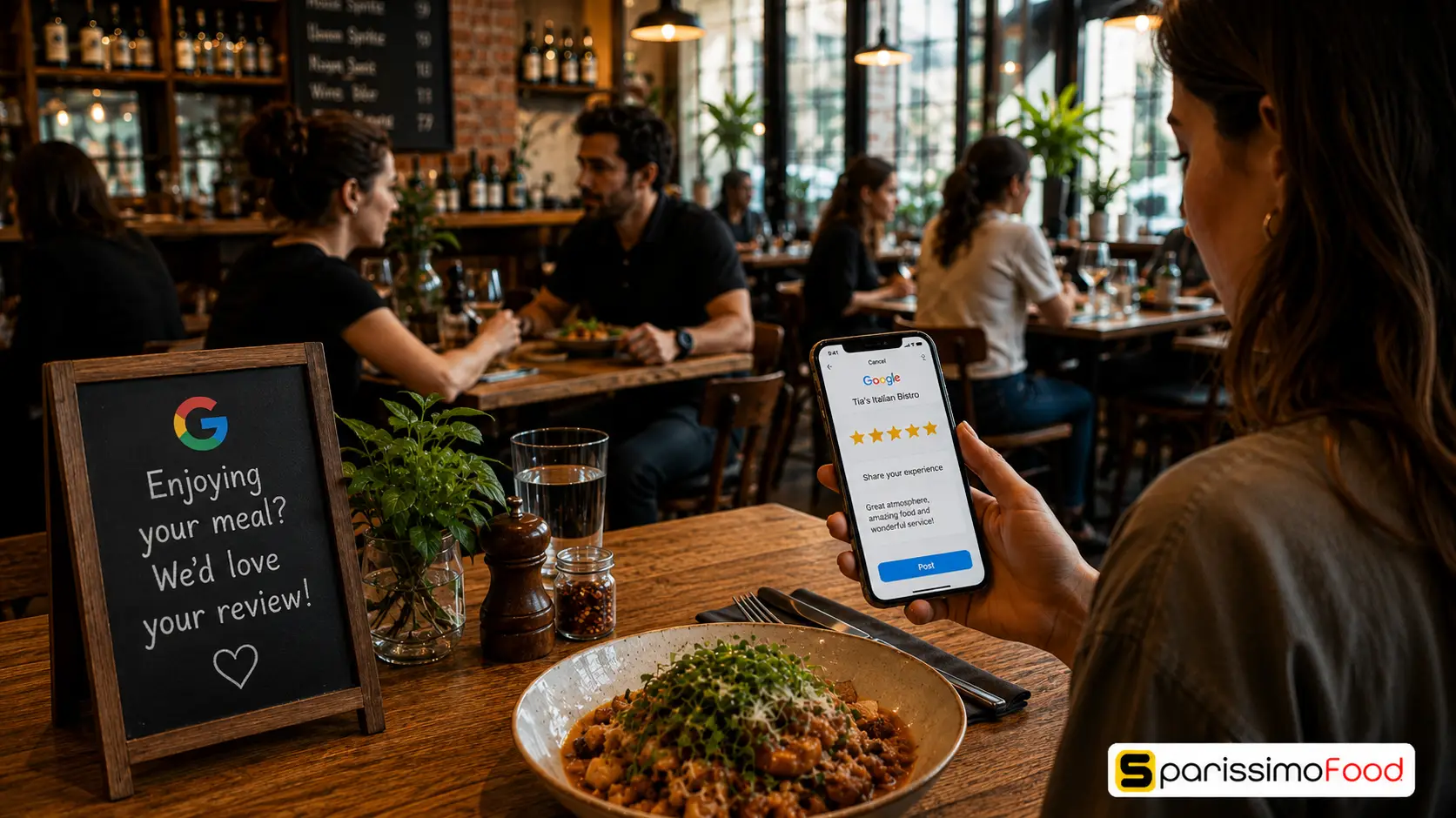
Centralised Review Monitoring and Escalation Matrix
Customer feedback directly impacts foot traffic. Set an internal SLA requiring all reviews to be acknowledged within 48 hours.
Implement this review escalation framework:
| Review Category | Responsible Owner | Action Protocol |
|---|---|---|
| 5-Star / Routine Praise | Central Marketing | Reply with a personalized thank-you note within 48 hours. |
| Food Quality / Portion Issue | Location GM & Head Chef | Local GM contacts guest directly; internal kitchen audit initiated. |
| Hygiene / Safety Allegation | Operations Director | Immediate phone escalation; full site audit within 24 hours. |
| Staff Misconduct Complaint | Location GM & HR Manager | Internal staff interview conducted; corrective coaching documented. |
| Legal or Health Inspector Threat | Executive Management | Escalated immediately to company legal adviser. |
To protect your kitchen throughput during busy shifts, read our guide on restaurant peak hour management.
How SparissimoFood Helps With Managing Multiple Restaurant Locations
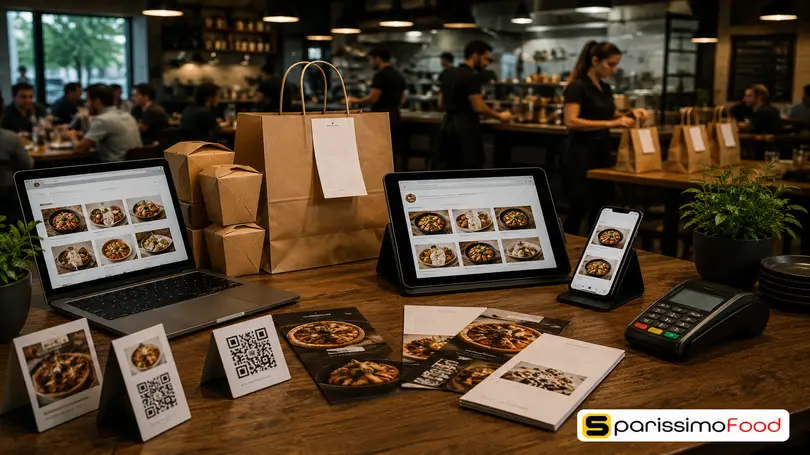
Managing multiple outlets requires a stable, integrated digital ordering platform. SparissimoFood gives multi-unit Swiss operators centralised technology to streamline online ordering, menu management, and customer analytics across all branches.
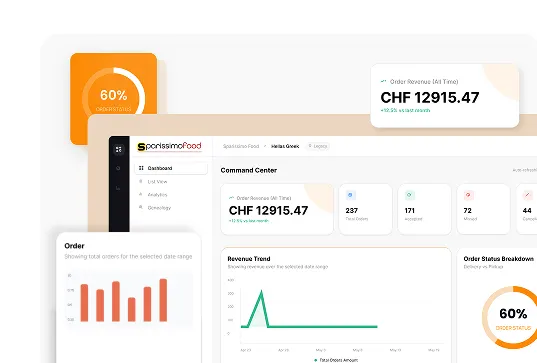
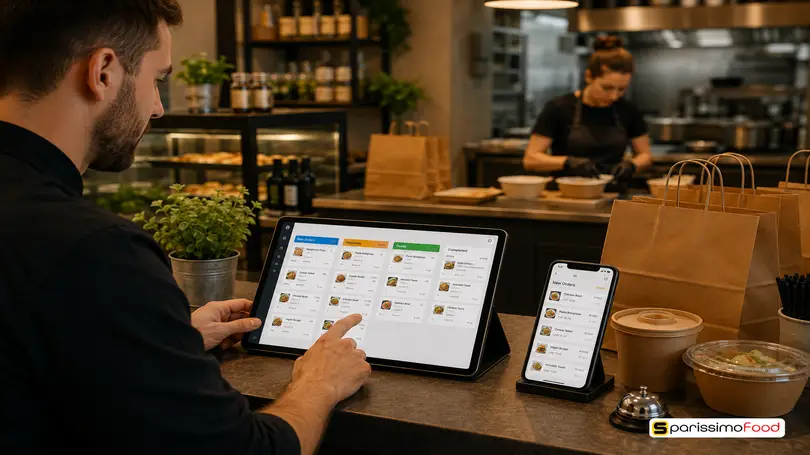
The platform’s parent management dashboard is built for multi-location groups. From one login, operators push master menu updates instantly or customise location-specific pricing, seasonal items, and store hours. Running your own direct ordering channel for delivery, pickup, and QR code table ordering also protects unit margins from the 25%–30% commissions third-party delivery portals charge. To analyse margin retention across channels, read our breakdown of how much Just Eat charges in Switzerland.
The dashboard aggregates real-time sales, average order values, and ordering trends across all units, cutting out manual spreadsheet consolidation. During kitchen rushes, order-throttling tools let local managers or head office adjust prep times or pause online ordering for a single branch with one tap.
Pricing is built to stay predictable as you add units: the Starter tier is CHF 49/month with an 8% order commission, and both the Business (CHF 79/month) and Professional (CHF 148/month) tiers bring that down to 5%. A 14-day free trial with no credit card lets a single location pilot the platform before you roll it out group-wide. To compare packages and configure your multi-unit setup, visit direct online ordering plans.
Frequently Asked Questions
How do I maintain food consistency across multiple restaurant locations? Use centralised digital recipe sheets with exact ingredient weights, prep steps, and plating photos, stored in a cloud database all kitchens can access. Pair this with bi-weekly unannounced quality audits using a standardised scoring checklist.
Should I build a central commissary kitchen for 3 restaurant locations? Only if your central production savings exceed the combined cost of commissary rent, dedicated prep labour, refrigerated transport, packaging, and extra HACCP compliance. For 3 simple-concept locations, standardising prep inside individual kitchens is usually more cost-effective.
How do I manage different cantonal public holiday rules under L-GAV? Public holiday compensation and rest-day rules vary by canton. Use cloud scheduling software configured with each location’s cantonal rules so rosters automatically comply based on where the shift takes place.
How do I manage Google Business Profiles for multiple restaurant locations? Set up an individual Google Business Profile per branch with its own address and phone details, then group all profiles under one Google Business Group — head office keeps owner access while local GMs get manager access to post updates and photos.
Is it better to build one website for all locations or separate domain sites? A single master website with dedicated location landing pages (e.g. /locations/zurich, /locations/bern) beats separate sites — it consolidates your domain’s search authority while still giving guests clear, location-specific addresses, hours, and ordering links.
Scaling a restaurant group successfully depends on the strength and discipline of the systems you build.
.Ds4FHhSq_ZxC9WE.webp "Restaurant Upselling Techniques That Don't Feel Pushy")




.CXCr6fQt_Z11gsYh.webp "Build a Branded Restaurant App Without Developers")
.y09Xtv8Z_1gH6f6.webp "Set Up Restaurant Online Ordering in Under a Week")
.B-Rl4IDw_Z204OoN.webp "Restaurant Loss Prevention and Theft Guide")
.DPpk5JZR_AlrVy.webp "Restaurant Communication During Peak Hours | Guide 2026")
.B6eEizW1_Z2bHQYl.webp "Restaurant Menu Pricing Strategies That Actually Protect Your Margins in 2026")
.CRszlDy5_2neUXu.webp "How to Migrate from GloriaFood Without Disruption: A Technical Step-by-Step Guide")
.kT6N2QP-_1Tp2j1.webp "GloriaFood Is Shutting Down on April 30, 2027 — What Every Restaurant Owner Needs to Do Now")