
Restaurant Inventory Management: How to Reduce Food Waste
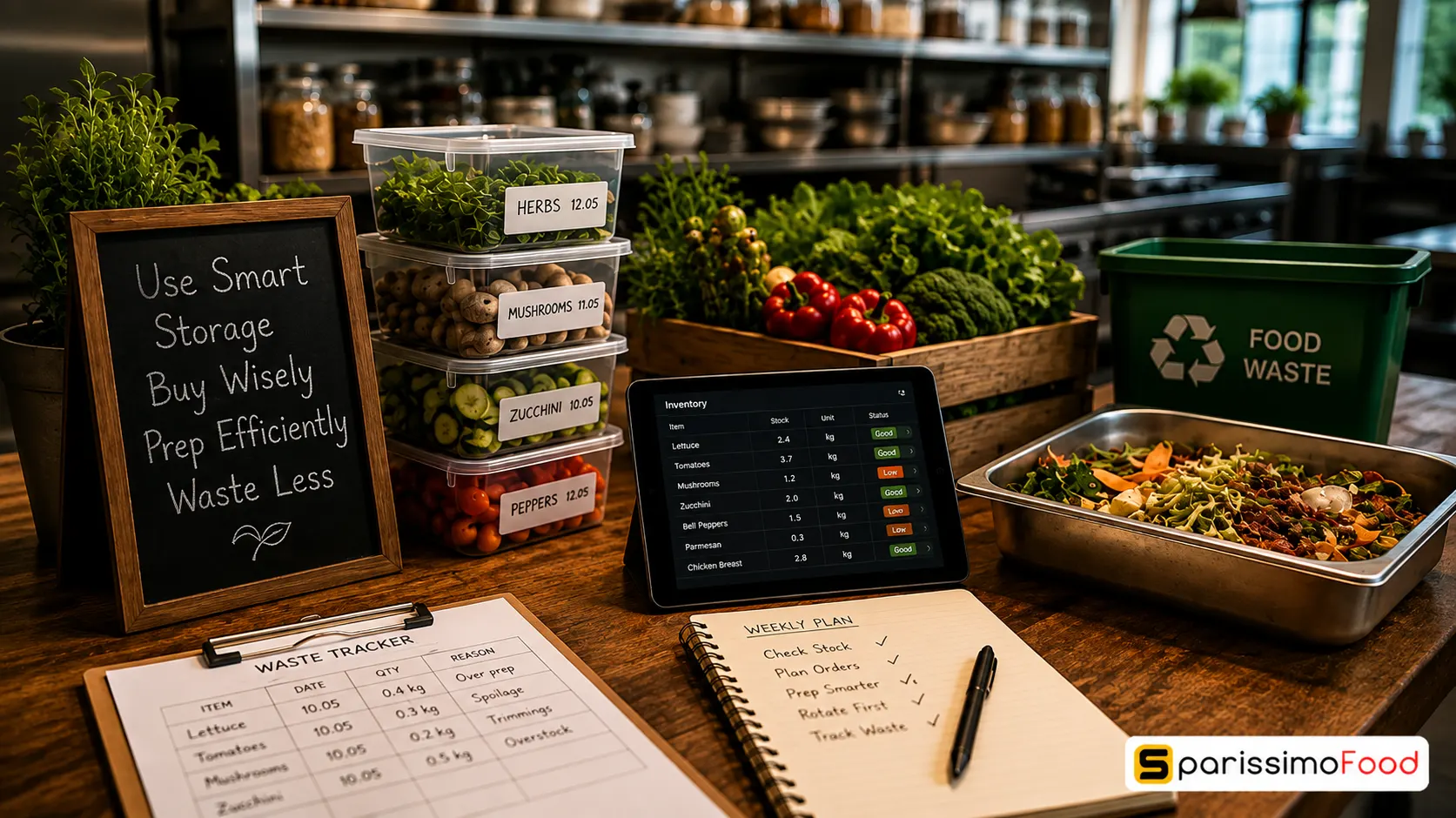

Quick Answer: The most effective way to manage restaurant inventory and reduce food waste is to track stock using predictive sales data rather than guessing. Key strategies include setting accurate par levels for your top 20 most expensive ingredients, strictly enforcing the FIFO (First In, First Out) storage method, and running weekly waste audits. Restaurants that implement these controls typically reduce their food costs by 3–5 percentage points within the first month.
If your restaurant is struggling with its food cost percentage, you probably do not have a purchasing problem. You have a tracking problem.
In Switzerland, where wholesale food prices have risen 11.4% since 2022 and labour costs are the highest in Europe, the margin for error in a kitchen is practically zero. Every kilogram of expired beef, every withered case of salad, and every over-portioned side dish is pure net profit thrown directly into the bin.
Most independent restaurant owners know this, yet they still order ingredients based on a quick glance at the walk-in fridge and a gut feeling about how busy the weekend might be.
This guide breaks down the professional inventory management systems used by highly profitable restaurants to eliminate guesswork, reduce spoilage, and protect their margins.
The True Cost of Poor Inventory Management
Food waste in a restaurant happens in three ways, and only one of them ends up in the bin:
- Spoilage (The visible waste): Ingredients that expire before they can be sold because the kitchen over-ordered.
- Over-portioning (The invisible waste): Cooks placing 220g of fries on a plate when the recipe calls for 180g. Because the inventory is not tracked tightly, the missing 40g goes unnoticed until the end of the month.
- Theft/Shrinkage (The malicious waste): High-value items (steaks, alcohol) disappearing from the storeroom.
When you do not track your inventory accurately, all three of these profit killers operate freely. A restaurant generating CHF 80,000 a month with a 35% food cost is spending CHF 28,000 on ingredients. If just 5% of that is lost to poor inventory management, that is CHF 1,400 of lost net profit every single month.
Strategy 1: Establish Strict Par Levels
A “par level” is the exact minimum amount of an ingredient you need to have on hand to make it through a specific period (usually until the next delivery) plus a small safety buffer.
You should not try to establish par levels for every single spice and garnish on day one. Start with your Top 20 items by cost — the proteins, dairy, and high-value dry goods that account for 80% of your total food spend.
How to calculate a par level:
Par Level = (Average Daily Usage × Days Between Deliveries) + Safety Buffer (20%)
Example:
- You use an average of 4 kg of chicken breast per day.
- Your supplier delivers every 3 days.
- You need 12 kg to get through the delivery cycle.
- Add a 20% safety buffer (2.4 kg) in case of an unexpectedly busy night.
- Your Par Level is 14.4 kg.
When your chef does the inventory count and sees only 5 kg of chicken left, they do not need to guess how much to order. They look at the par level (14.4 kg), subtract what they have (5 kg), and order exactly 9.4 kg (or the nearest supplier unit).
Strategy 2: Enforce the FIFO Method Religiously
First In, First Out (FIFO) is the foundational rule of kitchen storage, yet it is the most frequently broken rule during a busy prep shift.
When a new delivery arrives, it must be placed behind or below the existing stock. The oldest stock must always be pulled forward so it is used first.
How to enforce FIFO:
- Label everything with a date: A Sharpie and a roll of masking tape are your best inventory tools. If it goes in the fridge, it gets the delivery date written on it.
- The “Empty Bin” rule: Never pour fresh dry goods (like flour or rice) on top of the old goods in a storage bin. The old goods at the bottom will eventually expire and contaminate the fresh stock. Empty the bin, clean it, pour the new stock in, and place the old stock in a smaller container on top to be used first.
- Audit the walk-in: Twice a week, the head chef or manager should do a 5-minute walk-through of the fridges specifically checking dates.
Strategy 3: The Weekly Waste Log
You cannot fix a problem you are not measuring. Every kitchen should have a physical clipboard hanging on the wall with a Waste Log.
Every time an item is thrown away, it must be recorded:
- What was thrown away? (e.g., 2 kg of tomatoes)
- Why? (e.g., Spoiled / Dropped / Burned during prep)
- Who logged it? (Initials)
At the end of the week, the manager reviews the log and calculates the CHF value of the waste. If you threw away CHF 80 worth of tomatoes because they spoiled, your par level for tomatoes is too high. If you threw away CHF 60 of burnt steaks, you have a staff training issue. The waste log turns an abstract problem into a specific, fixable action.
Strategy 4: Connecting Inventory to Sales Data
The ultimate goal of inventory management is to make it predictive rather than reactive.
If you know exactly how many burgers you sold last Tuesday, you can predict with high accuracy how much minced beef, buns, and cheddar cheese you need to order for next Tuesday.
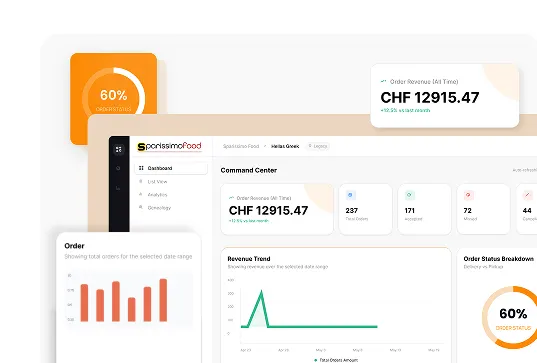
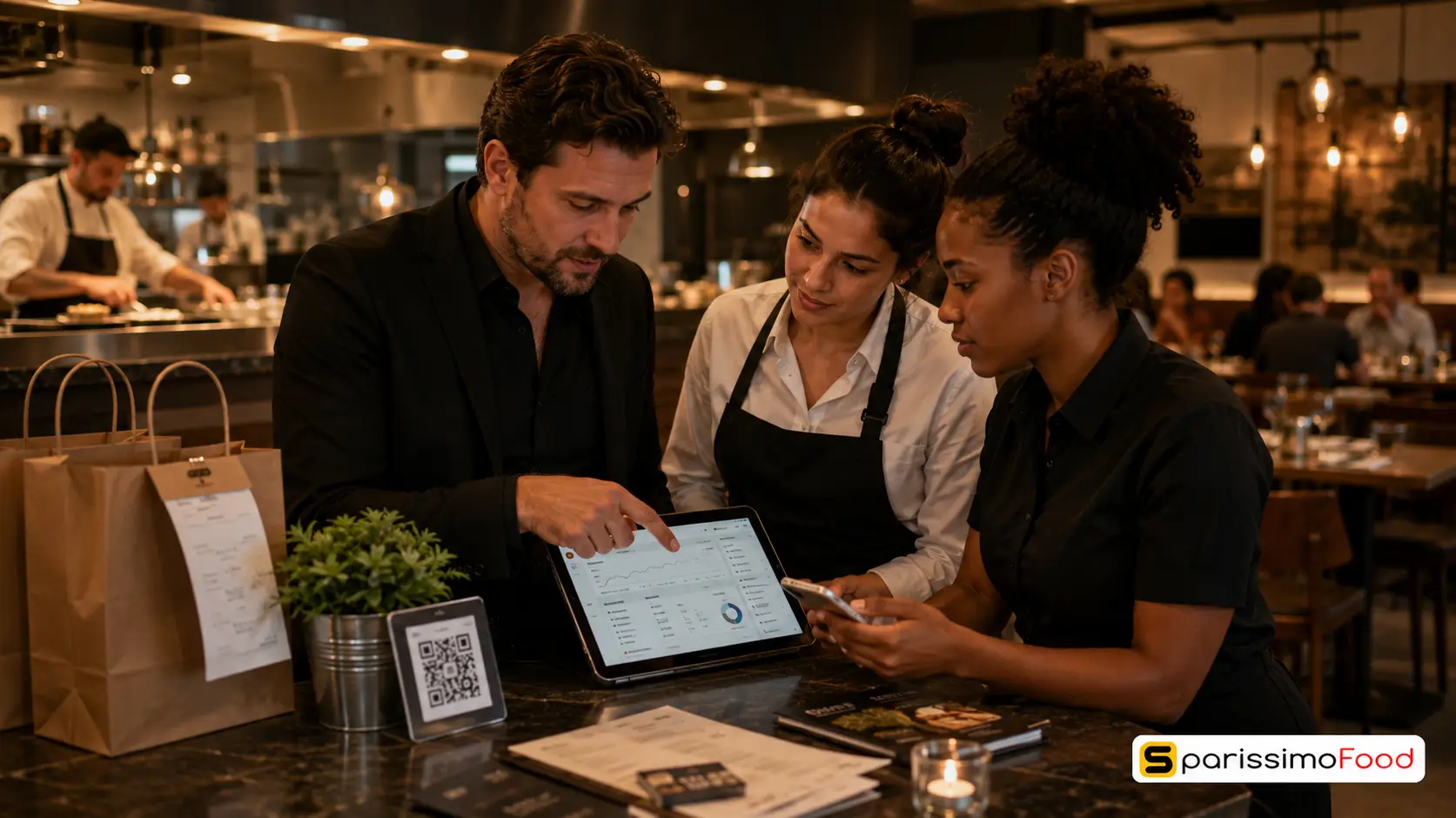
This is where a modern digital ordering system becomes your strongest kitchen tool. When you use a platform like SparissimoFood for your direct online orders, you generate precise item-level sales data. The analytics dashboard tells you not just your total revenue, but exactly which items move on which days of the week.
By cross-referencing your SparissimoFood sales data with your recipe ingredient requirements, your kitchen can adjust their par levels dynamically based on real customer demand, eliminating the “gut feeling” ordering that leads to overstocked fridges and ruined margins.
Frequently Asked Questions
Why is restaurant inventory management important?
Inventory management is critical because food cost is the second-largest expense in a restaurant (after labour). Without accurate inventory tracking, restaurants suffer from high food waste, over-portioning, and employee theft. Proper inventory control typically reduces a restaurant’s food cost percentage by 3–5 points, directly increasing net profit.
What is the FIFO method in a restaurant?
FIFO stands for “First In, First Out.” It is a storage method where newly delivered ingredients are placed behind older stock, ensuring the older stock is used before it expires. It is the most effective operational habit for reducing food spoilage in a commercial kitchen.
How do you calculate par levels for a restaurant?
To calculate a par level, multiply the average daily usage of an ingredient by the number of days between deliveries, and add a safety buffer (usually 20%). For example, if you use 5 kg of flour a day and get deliveries every 4 days: (5 kg × 4 days) = 20 kg. Add a 20% buffer (4 kg). Your par level is 24 kg.
How often should a restaurant do inventory?
Restaurants should conduct a full, physical inventory count at least once a month to accurately calculate their Cost of Goods Sold (COGS) and food cost percentage. However, for the top 20 most expensive ingredients (proteins, alcohol, premium dairy), inventory should be counted weekly or even daily to prevent theft and over-ordering.
How can restaurants reduce food waste?
Restaurants can significantly reduce food waste by: (1) implementing strict par levels so they do not over-order; (2) using the FIFO storage method to prevent spoilage; (3) maintaining a weekly waste log to identify why food is being thrown away; and (4) using historical sales data from their POS or online ordering system to forecast demand accurately.
A profitable restaurant is not built in the dining room. It is built in the walk-in fridge, on the prep stations, and in the storage room. Take control of your inventory, and you take control of your margins.

.Ds4FHhSq_ZxC9WE.webp "Restaurant Upselling Techniques That Don't Feel Pushy")





.CXCr6fQt_Z11gsYh.webp "Build a Branded Restaurant App Without Developers")
.y09Xtv8Z_1gH6f6.webp "Set Up Restaurant Online Ordering in Under a Week")
.B-Rl4IDw_Z204OoN.webp "Restaurant Loss Prevention and Theft Guide")


.DPpk5JZR_AlrVy.webp "Restaurant Communication During Peak Hours | Guide 2026")



.B6eEizW1_Z2bHQYl.webp "Restaurant Menu Pricing Strategies That Actually Protect Your Margins in 2026")
.CRszlDy5_2neUXu.webp "How to Migrate from GloriaFood Without Disruption: A Technical Step-by-Step Guide")
.kT6N2QP-_1Tp2j1.webp "GloriaFood Is Shutting Down on April 30, 2027 — What Every Restaurant Owner Needs to Do Now")