
Restaurant Peak Hour Management: Survive the Rush (2026)
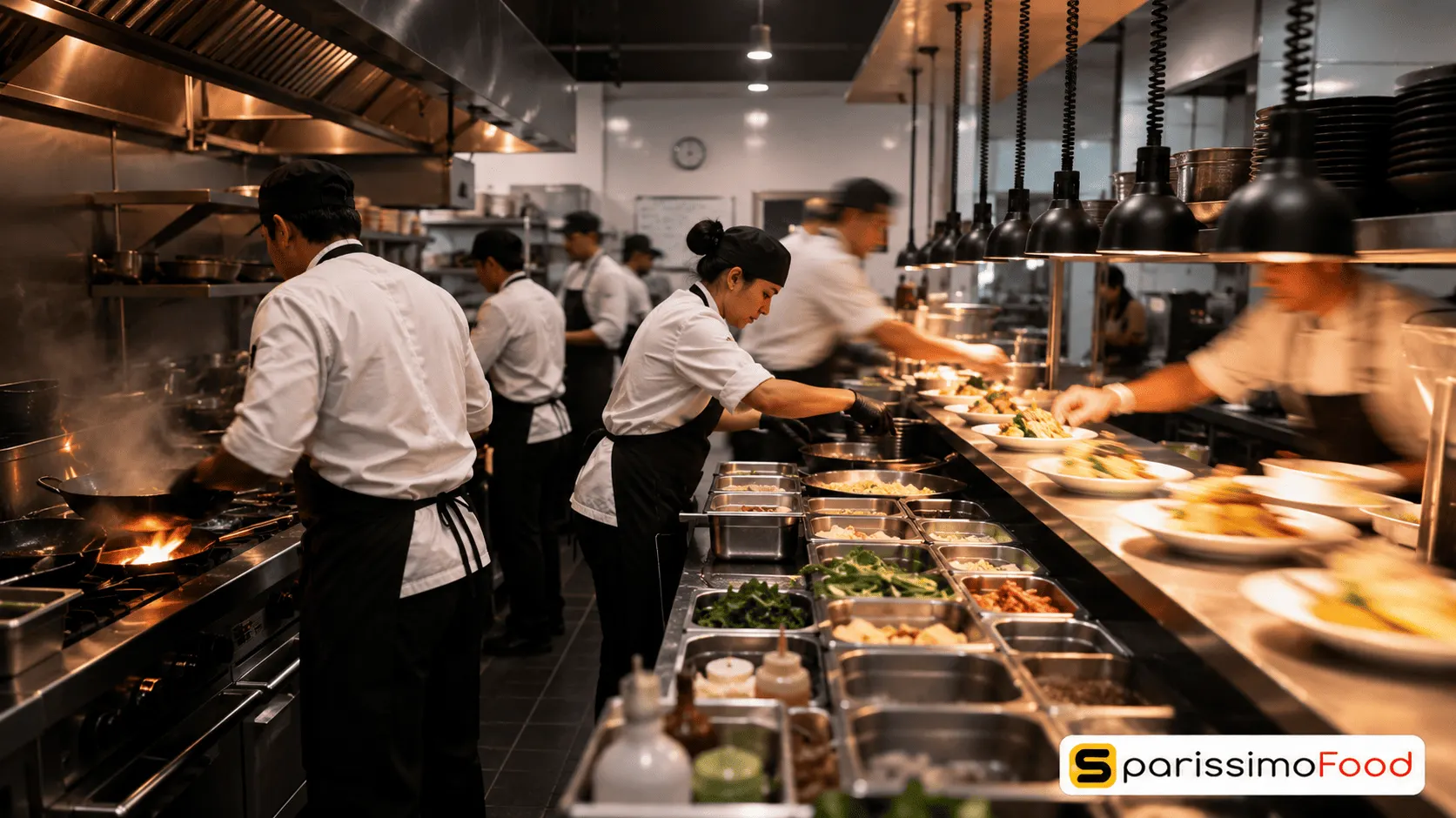

Quick Answer: Effective restaurant peak hour management starts before service begins, not during it. Rush failures are almost always a preparation failure, not a pressure failure. The three pillars are: (1) a structured pre-service prep checklist that ensures every station is stocked before the first ticket drops; (2) clear role isolation so each cook owns their station and one expeditor controls the pass; and (3) kitchen throttling — extending online delivery times or pausing new online orders temporarily when dine-in demand peaks simultaneously.
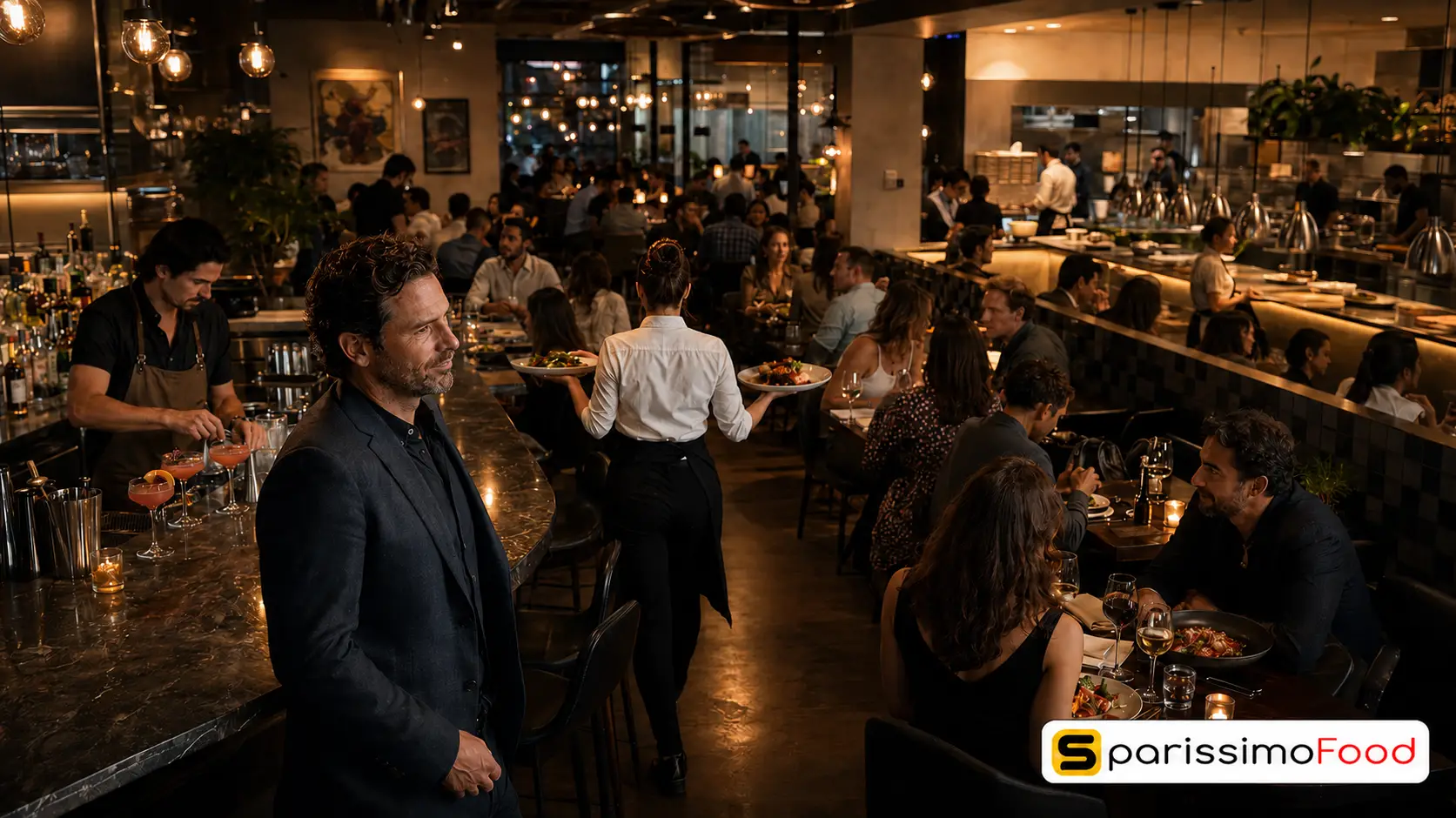
It is 19:30 on a Friday night. Every table is full. The kitchen printer is screaming. Three delivery orders just arrived through your online system. A walk-in party of six just sat down. Your sous chef is shouting. Two tickets are overdue.
This is not a crisis. This is a restaurant peak hour management problem — and it has a solution. But that solution needed to be built at 15:00 this afternoon, not at 19:30 tonight.
The single most important truth in restaurant kitchen management is this: rush failures are preparation failures. Every kitchen that falls apart during service failed during prep. Every kitchen that handles 200 covers smoothly had a head chef who built the systems before the guests arrived.
This guide will show you exactly how to build those systems.
What Is Restaurant Peak Hour Management?
Restaurant peak hour management is the set of operational frameworks, staffing decisions, and technology tools that allow a kitchen to maintain food quality, speed, and consistency when order volume is at its highest.
The challenge is not simply about working faster. It is about eliminating the friction — the unclear roles, the unstocked stations, the surprise online orders — that turns a busy service into a chaotic one.
Peak hour management has three layers: preparation, execution, and throttling. Most restaurants only focus on execution (working faster under pressure) and completely neglect preparation and throttling. This is why they struggle.
Layer 1: Pre-Service Preparation — Your Most Underused Tool
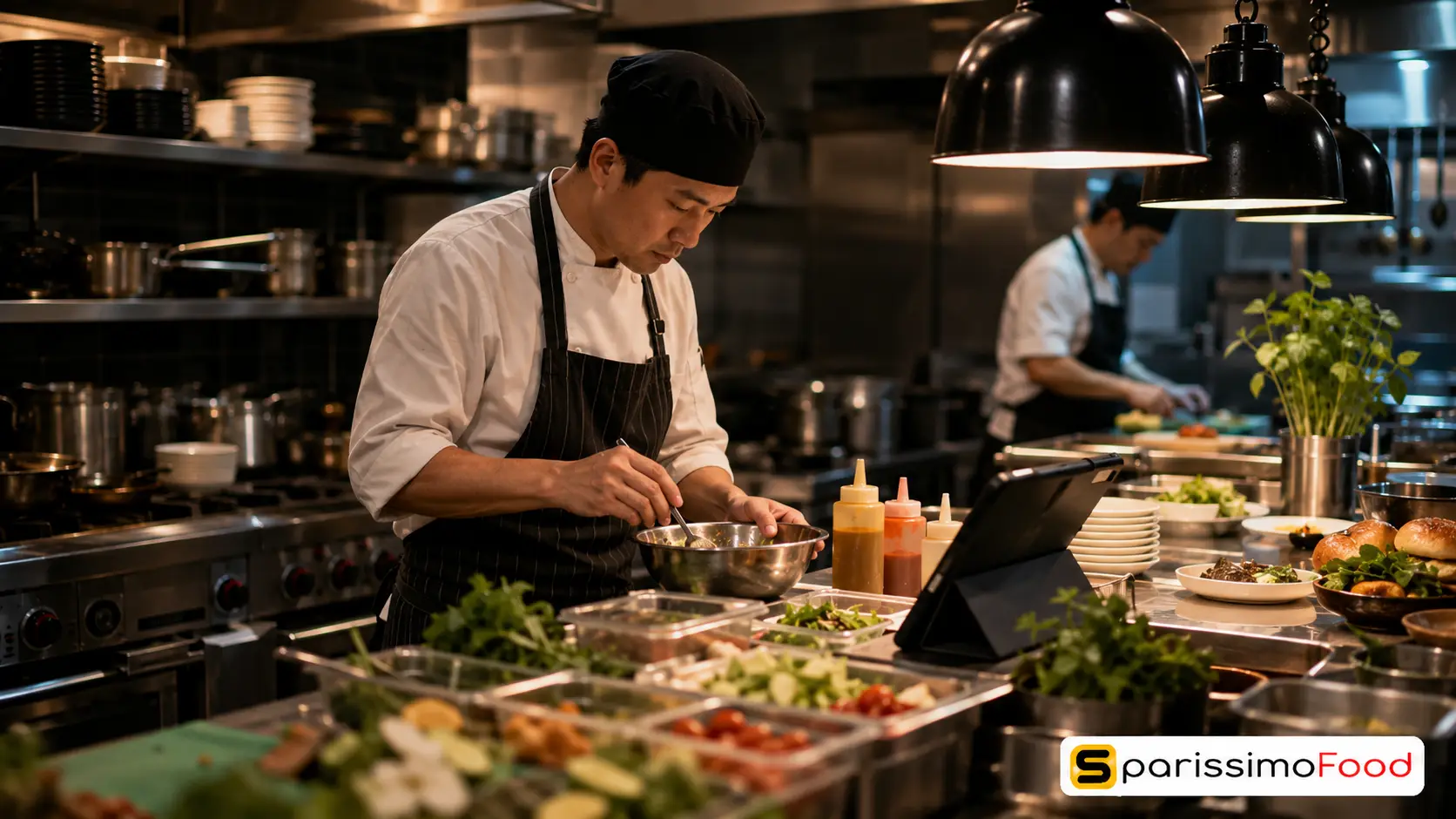
A structured pre-service checklist is the most powerful kitchen management tool that most restaurants use inconsistently or not at all.
Every station must be independently signed off as “ready” before the first order is taken. Not “mostly ready.” Ready.
The Pre-Service Station Checklist:
- All sauces, stocks, and bases: portioned and at temperature
- All proteins: trimmed, portioned, and correctly stored
- All garnishes and toppings: prepped to exact par levels
- All station equipment: tested and working (burners, grill, fryer)
- Ticket rail: empty and positioned correctly
- Station mise en place: everything in its fixed, agreed position
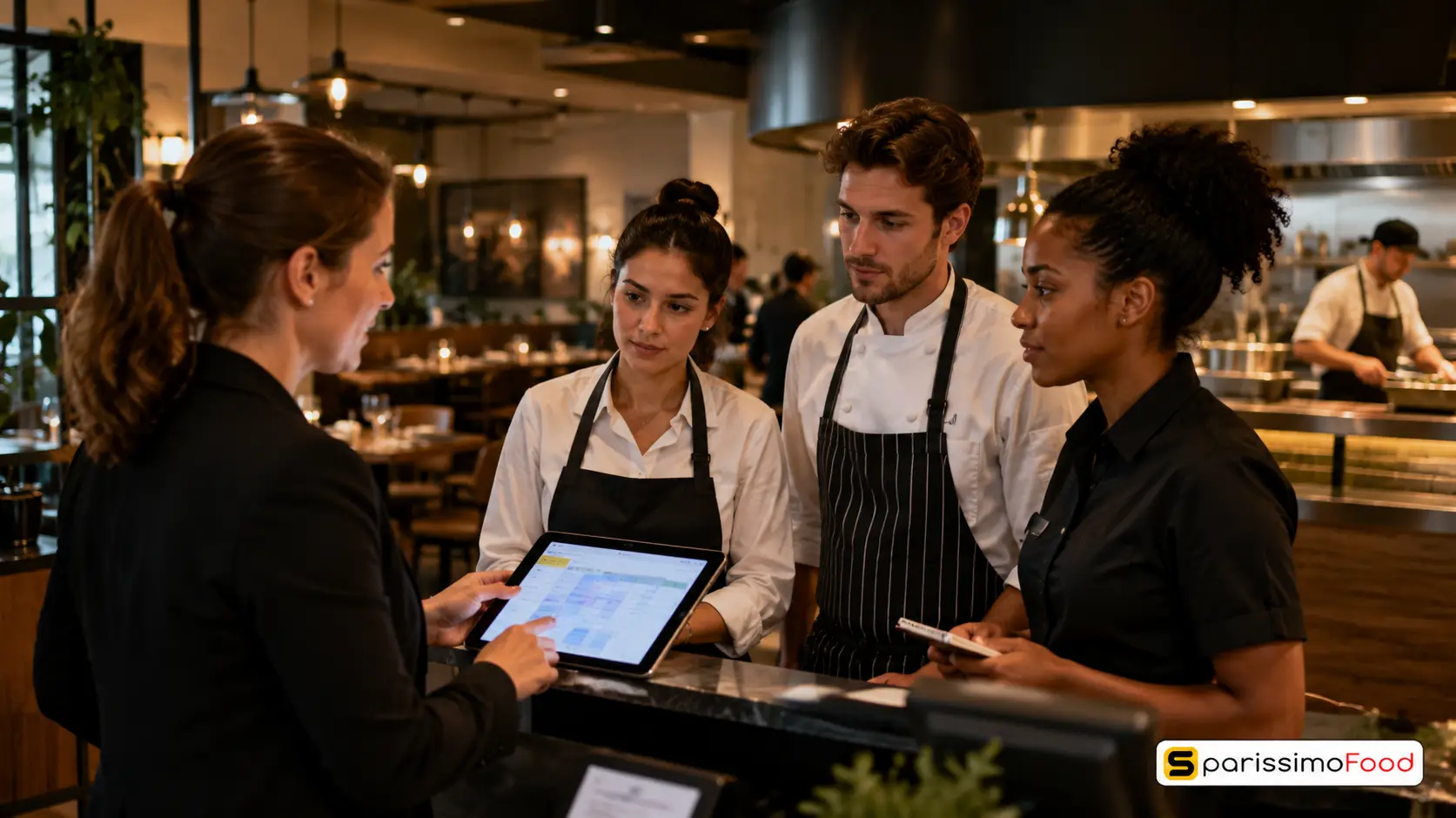
The pre-service kitchen briefing (maximum 10 minutes): Before every service above 60% capacity, the head chef must brief the team. Cover: tonight’s covers and anticipated busy window, any 86’d (sold-out) items before service starts, table-specific dietary requirements for pre-booked parties, and the kitchen communication protocol for the evening.
The briefing is not optional. It is the moment the team shifts from individual to collective. A kitchen that skips the briefing enters service as a group of individuals. A kitchen that runs the briefing enters service as a unit.
Layer 2: Station Isolation and the Expeditor Role
The single biggest cause of kitchen breakdown during rush is everyone trying to help everyone. When one station falls behind and three cooks abandon their own stations to help, you get two problems instead of one.
Station Isolation Rules:
- Each cook owns their station completely during service. They do not leave it unless their station is idle and they have permission.
- A station only calls for help when it is at risk of falling more than two minutes behind. Until then, it manages independently.
- Only the head chef or expeditor can authorize one station to assist another.
The Expeditor Role: During any service above 70% capacity, you need one person whose sole job is to run the pass. They do not cook. They call tickets, check plates, communicate with front of house, and ensure every dish leaving the kitchen is correct.
The expeditor is the air traffic controller. Without one, the kitchen has no single source of truth about what is happening. With one, every cook knows their one job: execute the ticket in front of them.
Layer 3: Managing Online Orders During a Dine-In Rush
This is where most modern restaurants struggle in a way that did not exist ten years ago. Online delivery orders arriving simultaneously with a packed dining room is now the primary cause of kitchen failure on busy service nights.
The problem is structural. Your dining guests can see and feel the restaurant is busy. They understand if their starter takes an extra four minutes. Your delivery customer, sitting at home, ordered with an expectation of a 30-minute delivery time. When you are slammed, neither group gets what they were promised.
The Solution: Kitchen Throttling
Kitchen throttling is the practice of temporarily extending your online quoted delivery times — or pausing new online orders entirely — when your kitchen is approaching maximum capacity.
This is not about turning away revenue. It is about protecting the quality of the revenue you already have in the kitchen.
How to apply kitchen throttling:
- Pre-schedule it: If every Friday between 19:00 and 21:00 is your peak window, pre-schedule your online platform to automatically show a longer preparation time during that period. This requires zero manual action during service.
- Manual override: For unexpected rushes, your manager must be able to extend delivery times or pause online orders with a single tap — not buried three menus deep in a software interface.
- Communicate it: If a customer has already placed an online order when the rush hits, sending a proactive SMS notification (“We are busier than usual tonight — your order may take an additional 15 minutes”) retains the order and prevents a bad review.
How SparissimoFood Helps During Peak Hours
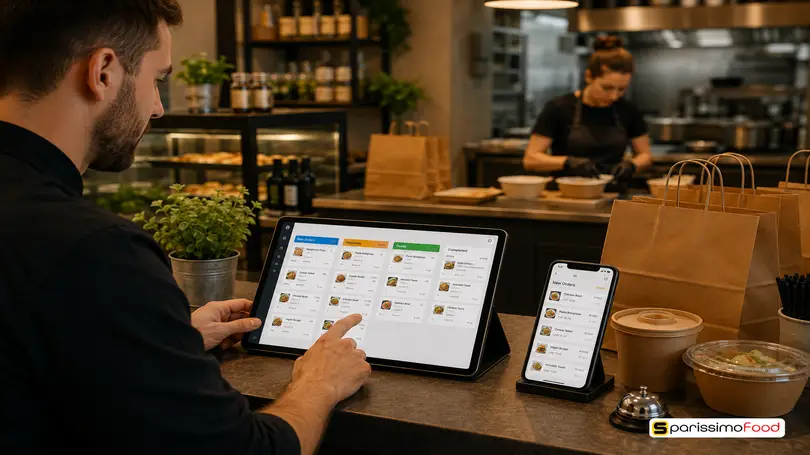
SparissimoFood’s kitchen throttling tools are built directly into the manager app dashboard, designed specifically for this scenario.
During a Friday night rush, your manager can:
- Extend the delivery time shown to incoming online customers with one tap — immediately reducing the incoming order queue pressure
- Pause new online orders for a defined time window without affecting in-progress orders
- Pre-schedule peak-hour adjustments for known busy windows — so the system automatically manages itself without interrupting the head chef
The result is a kitchen that can handle a full dining room and a healthy online order volume simultaneously, because the two channels are no longer competing for the same capacity at the same time.
The Post-Service Debrief: How Good Kitchens Get Better
Peak hour management is not a one-time fix. Every service teaches you something, but only if you capture what happened.
After every service above 70% capacity, conduct a 10-minute debrief. The questions are always the same:
- What ran out before we expected it to?
- Which station fell behind, and why?
- Were there any tickets that took longer than 12 minutes?
- What would we do differently next Friday?
The answers get logged — not mentally noted, but physically or digitally logged — and reviewed at the following week’s pre-service meeting. Over three months, a kitchen that debriefs consistently becomes a fundamentally different operation from the one that does not.
Frequently Asked Questions
What is restaurant peak hour management?
Restaurant peak hour management is the set of operational systems — including pre-service prep, station role isolation, and kitchen throttling — that allow a restaurant kitchen to maintain quality and speed when order volume is at its highest. It focuses on preparation before service, not just effort during it.
How do I handle online orders during a restaurant rush?
The most effective tool is kitchen throttling: temporarily extending your quoted online delivery time or pausing new online orders when your kitchen reaches capacity. This prevents online orders from overwhelming a kitchen that is already managing a full dining room, protecting the quality of both channels.
Why does my restaurant kitchen fall apart during rush?
Kitchen breakdowns during rush are almost always a preparation failure rather than a pressure failure. The most common causes are: incomplete mise en place before service, no clear role isolation (everyone helping everyone), no expeditor managing the pass, and online orders arriving without any capacity management.
What is kitchen throttling in a restaurant?
Kitchen throttling is the practice of temporarily adjusting the delivery time shown to online customers — or pausing new incoming online orders — when the kitchen is at peak capacity. It protects food quality, prevents order backlog, and ensures both dine-in and delivery customers receive their meals at the promised standard.
How many staff do I need during restaurant peak hours?
This depends on your cover count and menu complexity, but a useful rule of thumb for a restaurant doing 80–120 covers per service: one cook per station (typically 3–4 stations), one expeditor at the pass, and one kitchen porter. Understaffing by even one person during peak hours disproportionately increases ticket times across the entire kitchen.
A restaurant that survives Friday nights without chaos did not get lucky. It built the system on Tuesday morning.

.Ds4FHhSq_ZxC9WE.webp "Restaurant Upselling Techniques That Don't Feel Pushy")






.CXCr6fQt_Z11gsYh.webp "Build a Branded Restaurant App Without Developers")
.y09Xtv8Z_1gH6f6.webp "Set Up Restaurant Online Ordering in Under a Week")
.B-Rl4IDw_Z204OoN.webp "Restaurant Loss Prevention and Theft Guide")

.DPpk5JZR_AlrVy.webp "Restaurant Communication During Peak Hours | Guide 2026")




.B6eEizW1_Z2bHQYl.webp "Restaurant Menu Pricing Strategies That Actually Protect Your Margins in 2026")
.CRszlDy5_2neUXu.webp "How to Migrate from GloriaFood Without Disruption: A Technical Step-by-Step Guide")
.kT6N2QP-_1Tp2j1.webp "GloriaFood Is Shutting Down on April 30, 2027 — What Every Restaurant Owner Needs to Do Now")