
Restaurant Customer Lifetime Value: Formula and Guide 2026

Quick Answer: Restaurant customer lifetime value is the total revenue a single guest generates across every visit they make to your restaurant. The customer lifetime value formula is: CLV equals Average Order Value multiplied by Purchase Frequency multiplied by Customer Lifespan. For a Swiss casual dining restaurant with a CHF 38 average order, two visits per month, and an 18-month customer lifespan, the baseline CLV is CHF 1,368 per customer. Increasing that by lifting average order value by CHF 6, purchase frequency from two to three visits per month, and customer lifespan from 18 to 30 months produces a CLV of CHF 4,320, more than three times the baseline. The six tactics that move those three numbers are: optimise your digital menu for higher order values, run a points-based loyalty program, engage customers between visits with personalised email, identify and prioritise your highest-value guests, shift repeat customers from third-party delivery to your direct channel, and run post-visit follow-up sequences that convert first-time guests into regulars.
Most Swiss restaurant owners track weekly revenue. A smaller number track average order value. Very few calculate their CLV, which is the metric that explains whether the marketing and retention effort they put in is actually compounding into profit.
A restaurant generating CHF 800,000 in annual revenue from 2,000 unique customers has an average revenue per customer of CHF 400 per year. Whether that CHF 400 comes from a single visit or from twelve visits makes an enormous difference to the cost of generating it and the stability of the revenue it represents. Customer lifetime value makes that distinction visible.
What Is Restaurant Customer Lifetime Value
Restaurant customer lifetime value, abbreviated as CLV, is the total gross revenue or profit a guest generates from their first visit to your restaurant to their last. It is a forward-looking metric that captures the cumulative value of the relationship, not just the most recent transaction.
CLV matters for three operational reasons.
First, it tells you how much you can afford to spend on acquiring a new customer. If your average CLV is CHF 1,368, spending CHF 30 to bring in a new customer through advertising or a first-visit discount makes commercial sense. Spending CHF 120 does not, unless you have evidence that a specific acquisition channel produces customers with above-average lifetime value.
Second, customer lifetime value shows you which customers to prioritise when resources are limited. A customer who visits twice a month for two years is worth dramatically more than a customer who visits once and never returns, even if their average order values are identical. Directing appreciation gestures, loyalty rewards, and re-engagement sequences toward your highest-CLV customers generates a better return than spreading those efforts uniformly.
Third, CLV helps you measure whether your retention investments are working. A loyalty program or email marketing sequence that increases your average customer lifespan from 18 months to 24 months increases your average CLV by 33% from that lever alone, without requiring a single new customer.
According to the 2026 Toast and Resy Regulars Report, just 7% of a restaurant’s guests can account for up to 50% of its total orders. That 7% represents your highest-CLV customers, and losing even a fraction of them does not dent revenue gradually. It collapses it.
The Customer Lifetime Value Formula for Restaurants
The customer lifetime value calculation for restaurants uses three inputs.
CLV equals Average Order Value multiplied by Purchase Frequency multiplied by Customer Lifespan.
Each input is defined as follows:
Average order value is the mean revenue per transaction across all channels. Calculate this by dividing total revenue by total number of orders for a given period. For a Swiss casual dining restaurant, a typical average order value is CHF 32 to CHF 45.
Purchase frequency is the average number of visits or orders a customer makes within a defined period, typically a month or a year. Calculate this by dividing total orders in the period by total unique customers in the same period.
Customer lifespan is the average number of months or years a customer remains active before lapsing. A customer who last visited six months ago is typically considered lapsed. In a restaurant with no active retention program, average customer lifespan typically runs 12 to 18 months.
Step-by-Step Customer Lifetime Value Calculation: Swiss Restaurant Example
Step 1: Calculate average order value
In a given month, your restaurant generates CHF 58,000 in food revenue from 1,450 orders.
Average Order Value equals CHF 58,000 divided by 1,450, which equals CHF 40.
Step 2: Calculate purchase frequency
In the same month, those 1,450 orders came from 680 unique customers.
Purchase Frequency equals 1,450 divided by 680, which equals 2.1 orders per customer per month.
Step 3: Estimate customer lifespan
Based on your order data, the average customer places their last order 16 months after their first. Your customer lifespan is 16 months.
Step 4: Calculate CLV
CLV equals CHF 40 multiplied by 2.1 multiplied by 16, which equals CHF 1,344.
This is your baseline CLV. Each of the three inputs is a lever you can move through specific operational changes.
What Is a Good Customer Lifetime Value for a Swiss Restaurant?
CLV benchmarks vary significantly by restaurant format and average check size. As a general guide for the Swiss market:
Quick service and takeaway restaurants with an average order of CHF 12 to CHF 20 typically generate a CLV of CHF 350 to CHF 700 over 18 to 24 months.
Casual dining restaurants in the CHF 30 to CHF 50 average order range generate CLVs of CHF 1,000 to CHF 2,500 over the same period, with stronger retention tactics extending that to CHF 3,500 or more.
Mid-range and full-service restaurants with average orders of CHF 45 to CHF 80 can generate CLVs of CHF 2,000 to CHF 5,000 when strong loyalty and email retention are in place.
The absolute number matters less than its trajectory. A restaurant whose average CLV increased from CHF 1,200 to CHF 1,800 over 12 months is outperforming one with a static CLV of CHF 2,000, because it has a compounding retention system in place.
6 Tactics to Increase Restaurant Customer Lifetime Value
Tactic 1: Increase Average Order Value Per Visit
Average order value is the fastest-moving CLV lever because it changes with every single order. A 15% increase in average order value increases CLV by 15% without requiring a single additional visit or a longer customer relationship.
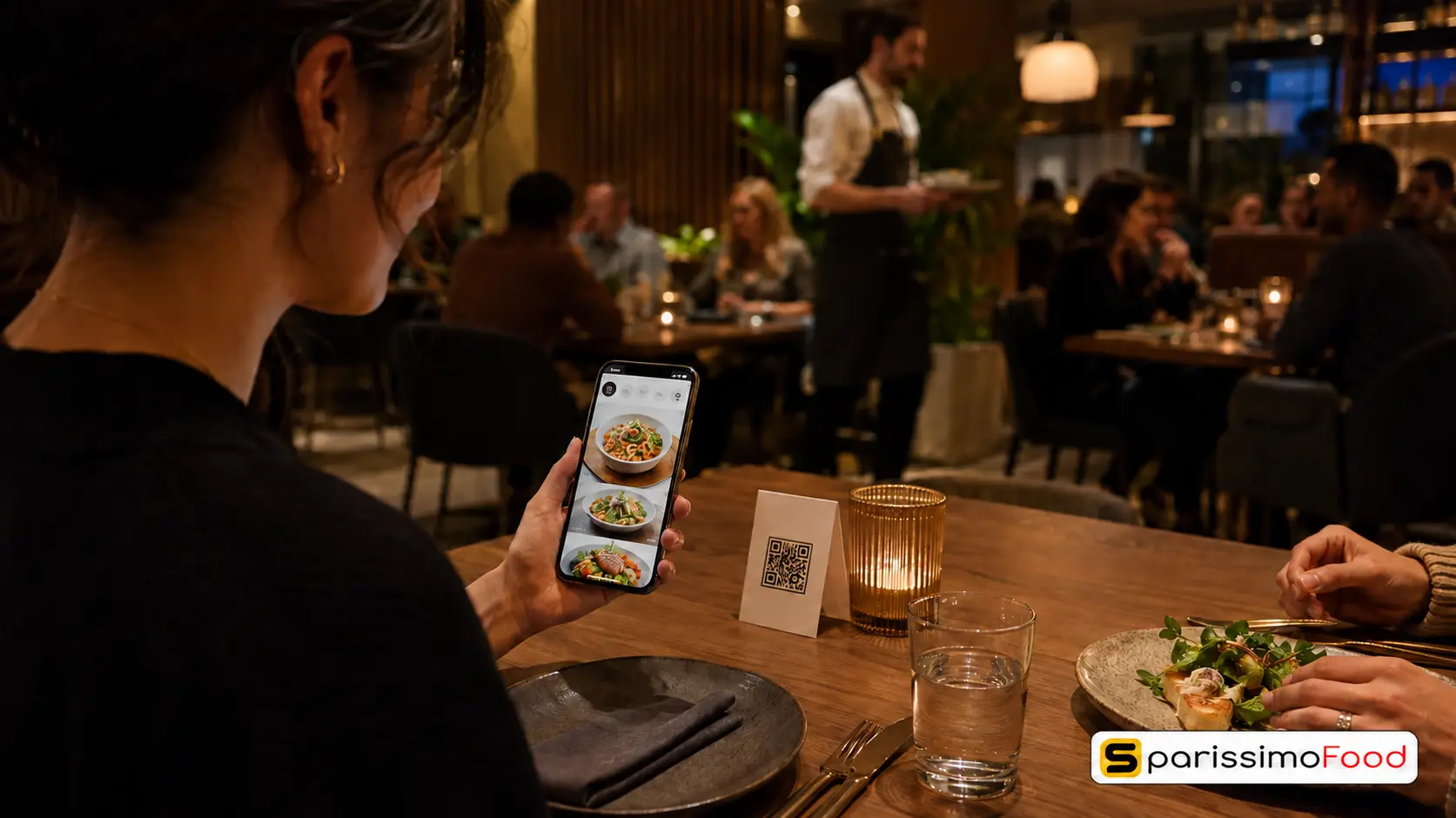
The most effective tactics for increasing average order value are digital menu optimisation, where high-margin items appear first in each category with photographs; bundle offers that combine a main, a side, and a drink at a price slightly below the à-la-carte total; and QR code dine-in ordering, where research consistently shows guests spend 10 to 20% more when browsing at their own pace without server time pressure.
For the full suite of tools to increase what each customer spends per visit, see our guide to increasing restaurant average order value.
Tactic 2: Run a Points-Based Loyalty Program
Purchase frequency is the CLV lever with the most direct connection to retention effort. The 2026 Toast and Resy Regulars Report found that enrolling a guest in a loyalty program lifts their return rate from approximately 7% to 30%, a fourfold increase in the probability of a repeat visit.
A simple points-based loyalty program where guests earn one point per CHF 1 spent and receive a CHF 10 reward at 100 points creates a return incentive within two to three visits at a typical average order value. The reward should be redeemable exclusively through your direct ordering channel, not through third-party platforms, which reinforces direct ordering behaviour alongside the retention mechanism.
The program must be simple enough to use consistently. Programs with complex redemption structures or poor mobile accessibility produce high sign-up rates but low active participation, which means the CLV benefit is not realised.
Tactic 3: Engage Customers Between Visits with Email and SMS
Customer lifespan is extended by staying present between visits. A guest who hears from your restaurant with a relevant, personalised message within 7 days of their last visit is significantly more likely to place a second order than one who hears nothing.
The three-message post-visit sequence covers the most critical window. A thank-you sent within 2 hours of order completion, a dish recommendation sent at day 3 based on what they ordered, and a re-engagement nudge at day 7 with a direct ordering link combine to convert a meaningful share of first-time visitors into second-time ones. That second visit is where the CLV relationship begins to compound.
For lapsed customers who have not ordered in 28 to 35 days, a re-engagement message with a time-limited incentive converts a subset back into active customers, extending their effective customer lifespan by months. For the complete guide to building these sequences, see our restaurant email marketing guide.
Tactic 4: Identify and Prioritise Your Highest-CLV Customers
Not all customers are at the same stage of their CLV trajectory. Your highest-value customers, those who are visiting frequently and spending above your average order value, are both your most profitable segment and your most at-risk. Losing a customer who visits three times a week is not equivalent to losing a customer who visits three times a year.
Use your ordering platform data to identify your top 20 to 30 customers by total spend or order frequency over the past 90 days. These are the customers who deserve your most direct appreciation gestures: a personal message from the owner, an exclusive invitation to a preview evening, a complimentary dish on a milestone visit. Protecting the lifetime value of your top cohort produces outsized financial returns relative to the cost of the gesture.
The second segment to monitor is customers who were previously in your top cohort but have not ordered in 30 to 45 days. These lapsed high-value customers are your highest-priority re-engagement targets. A personal, specific message referencing their order history converts a higher share back into active customers than any generic campaign.
Tactic 5: Shift Repeat Customers from Third-Party Platforms to Direct Ordering
Every repeat order placed through Just Eat or Uber Eats is an order from a customer whose contact data you cannot access, whose visit history you cannot track, and whose CLV you cannot calculate. Third-party platform orders generate revenue but produce no CLV data.
This is one of the most commercially important implications of the customer lifetime value framework for Swiss restaurants. You cannot manage what you cannot measure. And you cannot measure the CLV of a customer who orders anonymously through a marketplace.
Shifting a repeat customer from a third-party platform to your direct ordering channel generates three simultaneous benefits. The commission cost per order drops from 10 to 30% to 5 to 8%. The customer’s contact data becomes yours permanently. And every subsequent order they place through your direct channel is attributable to a named customer, making their CLV trackable and improvable.
For the specific bag insert, pricing differential, and email incentive tactics that move customers from platforms to your direct channel, see our guide to converting delivery app customers to direct orders.
Tactic 6: Reduce Customer Acquisition Cost to Improve CLV Ratio
Customer lifetime value is most powerful when measured relative to the cost of acquiring the customer. A CLV of CHF 1,368 produced by spending CHF 25 to acquire the customer represents a 55-fold return. The same CLV produced by spending CHF 300 on the acquisition represents a much weaker business case.
The most effective ways to reduce customer acquisition cost for Swiss restaurants are: generating positive Google reviews that drive organic discovery at zero marginal cost, building a referral mechanism where existing high-CLV customers introduce new customers, and concentrating paid acquisition on channels where first-time customers convert to repeat customers at above-average rates.
Every retention investment that increases CLV simultaneously improves the ratio of CLV to acquisition cost, because the acquisition cost stays fixed while the lifetime revenue grows. This is the compound effect that makes customer lifetime value the most strategically important metric in a restaurant.
How SparissimoFood Helps Increase Your Restaurant CLV
Increasing customer lifetime value requires two foundations: the ability to track individual customer behaviour over time, and the tools to act on that data through targeted engagement. SparissimoFood provides both.
Customer data from every direct order. Every guest who orders through SparissimoFood is a named customer in your platform. Their order history, order frequency, and cumulative spend are all recorded and attributable to a specific individual. This is the data that makes a CLV calculation possible and meaningful. Third-party platform orders produce revenue but no named customer data. Direct orders through SparissimoFood produce both.
Purchase frequency data for CLV tracking. SparissimoFood’s manager dashboard shows order frequency and total spend by customer over any period you select. This data tells you directly which customers are in your top CLV cohort, which are at risk of lapsing, and which first-time customers have made a second or third order and are developing into regulars.
Loyalty integration to extend customer lifespan. SparissimoFood’s platform supports a points-based loyalty structure that accumulates automatically with each direct order. Every time a customer earns and redeems a reward, their active customer lifespan extends by the time it took to accumulate those points. Over 12 months, a well-structured loyalty reward cycle can extend average customer lifespan by 6 to 9 months, which directly increases the average CLV of your active customer base.
Lower commission per order increases per-order profitability. SparissimoFood starts at CHF 49 per month with an 8% commission on the Starter plan, and CHF 79 per month with a 5% commission on the Business plan. When you calculate CLV on a gross profit basis rather than revenue, the commission rate per order directly affects the CLV output. Shifting a customer from Just Eat commission of 25 to 30% to a SparissimoFood commission of 5 to 8% increases the gross profit generated by every order in that customer’s lifetime. For a CLV of CHF 1,344 in revenue, at 29% commission that produces CHF 954 in commission-net revenue. At 6%, it produces CHF 1,263. The customer lifetime value increases by CHF 309 per customer from the commission difference alone, before any improvement in order value, frequency, or lifespan.
Explore the current plan options at manage.sparissimofood.com/plans.
Frequently Asked Questions
What is the customer lifetime value formula for restaurants? The customer lifetime value formula for restaurants is: CLV equals Average Order Value multiplied by Purchase Frequency multiplied by Customer Lifespan. Average order value is your mean revenue per transaction. Purchase frequency is the average number of orders a customer places per month. Customer lifespan is the average number of months a customer remains active before lapsing. A Swiss casual dining restaurant with a CHF 40 average order, 2 orders per month, and an 18-month customer lifespan has a baseline CLV of CHF 1,440 per customer.
What is a good customer lifetime value for a Swiss restaurant? A good CLV for Swiss casual dining, with average orders in the CHF 30 to CHF 50 range, is CHF 1,200 to CHF 2,500 over 18 to 24 months without active retention effort. With a loyalty program, post-visit email sequences, and direct ordering relationships, CLV in the same format can reach CHF 3,500 to CHF 5,000. The trajectory of your CLV, whether it is growing or declining over consecutive 90-day periods, is more important than the absolute number.
Why can I not calculate customer lifetime value for my Just Eat orders? Third-party delivery platforms do not share individual customer contact or order history data with restaurants. Each order appears as revenue, but it is not attributable to a named customer. This means you cannot track whether a guest has ordered twice or twenty times through the platform, and you cannot calculate, segment, or act on their CLV. Direct ordering through your own channel is the only way to build a named customer database from your delivery business and make CLV measurement possible.
How long does it take to see improvement in CLV? The two fastest-moving CLV components are average order value, which changes with every order and can show a measurable increase within 30 days of menu and upselling changes, and purchase frequency, which responds to loyalty program enrolment within two to three visit cycles. Customer lifespan improvements take longer to measure because they are only visible in data collected over 6 to 12 months. Track your 30-day return rate, the percentage of first-time customers who place a second order within a month, as the leading indicator of lifespan improvement.
How does a loyalty program affect customer lifetime value in a restaurant? A loyalty program increases CLV through two of the three formula components. It increases purchase frequency by giving customers a reason to return specifically to earn rewards. And it increases customer lifespan by creating an ongoing incentive structure that keeps your restaurant top of mind. The 2026 Toast and Resy Regulars Report found that loyalty program enrolment lifts a guest’s return rate from approximately 7% to 30%. Over an 18-month period, that lift in return probability produces a proportional increase in the number of orders attributed to each enrolled customer, which flows directly into a higher calculated CLV.
The restaurant that knows what each customer is worth makes every decision differently, from how much to spend on a re-engagement email to how much to invest in a Friday night appreciation gesture.
.Ds4FHhSq_ZxC9WE.webp "Restaurant Upselling Techniques That Don't Feel Pushy")

.CXCr6fQt_Z11gsYh.webp "Build a Branded Restaurant App Without Developers")
.y09Xtv8Z_1gH6f6.webp "Set Up Restaurant Online Ordering in Under a Week")
.B-Rl4IDw_Z204OoN.webp "Restaurant Loss Prevention and Theft Guide")
.DPpk5JZR_AlrVy.webp "Restaurant Communication During Peak Hours | Guide 2026")
.B6eEizW1_Z2bHQYl.webp "Restaurant Menu Pricing Strategies That Actually Protect Your Margins in 2026")
.CRszlDy5_2neUXu.webp "How to Migrate from GloriaFood Without Disruption: A Technical Step-by-Step Guide")
.kT6N2QP-_1Tp2j1.webp "GloriaFood Is Shutting Down on April 30, 2027 — What Every Restaurant Owner Needs to Do Now")