
How to Improve Restaurant Table Turnover Rate (Without Rushing Guests)
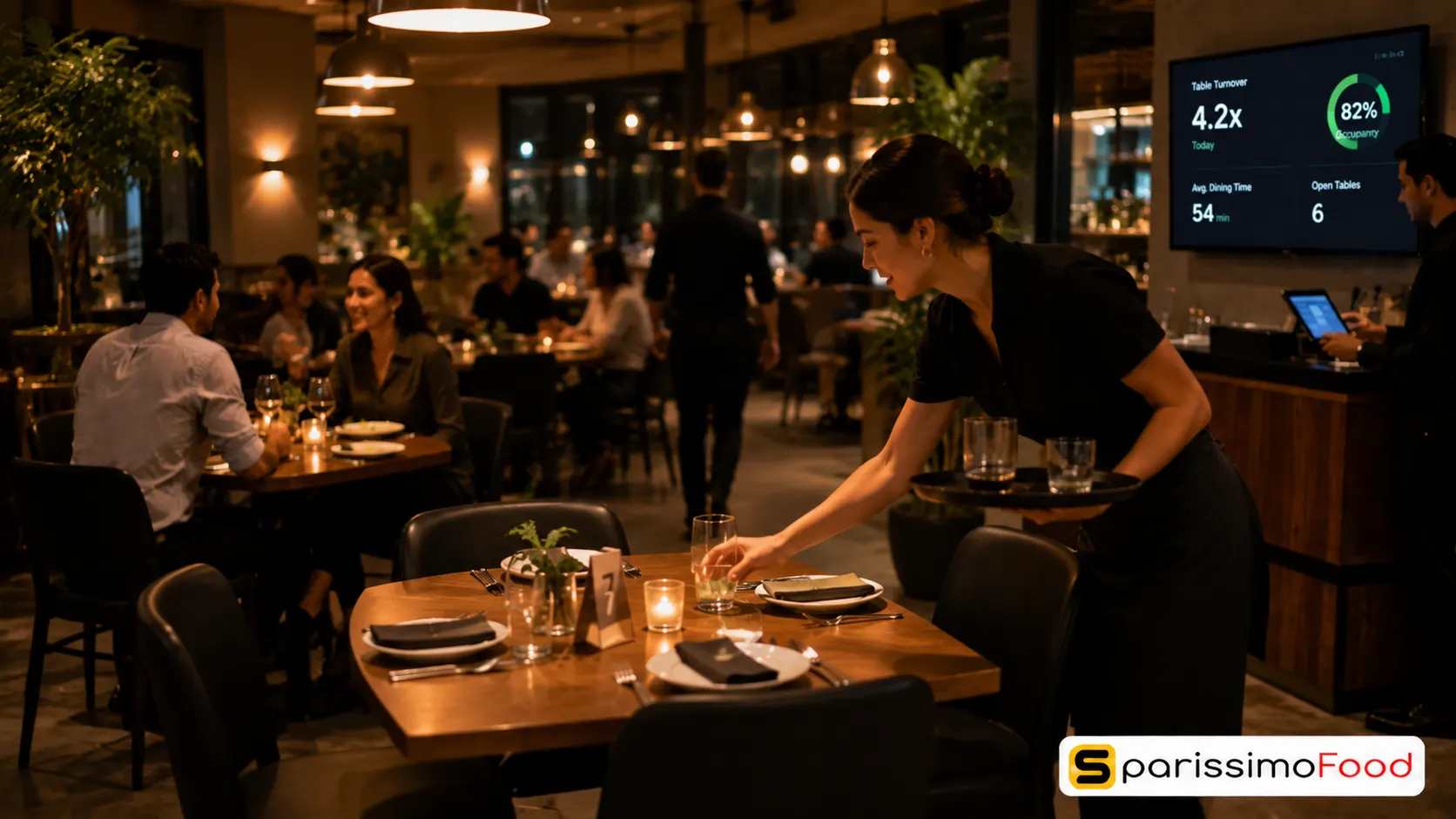

Quick Answer: Improving restaurant table turnover rate is not about making guests feel hurried; it is about eliminating the invisible delays that waste time between courses, at the point of ordering, and especially at the moment of payment. The three highest-impact levers are: (1) reducing dead time at the start and end of the meal using QR code ordering and self-pay technology; (2) streamlining kitchen communication so food arrives without unnecessary waiting; and (3) using reservation and table management data to plan seating sequences before service begins.
A full dining room is a great problem to have. But a full dining room where tables are sitting idle for fifteen minutes because a bill has not been brought, or where a party has finished eating but there is no server available to clear, that is a revenue problem.
The difference between a restaurant turning each table 2.5 times per service and one turning it 3.5 times per service is often not the guests. It is the dead time, the minutes that accumulate between courses, before the first order is taken, and especially after the meal is over but before the table is cleared and reset.
This guide covers the specific, practical changes that eliminate that dead time without making a single guest feel rushed.
What Is Restaurant Table Turnover Rate?
Restaurant table turnover rate is the number of times a single table is occupied by a different party during one service period. If a table seats guests at 18:00, they leave at 19:30, and a second party sits down at 19:45 and leaves at 21:00, that table has turned over twice.
The formula is simple:
Table Turnover Rate = Number of Parties Served ÷ Number of Tables
For a dinner service running from 18:00 to 23:00, a casual restaurant should realistically aim for 2 to 3 turns per table. A quick-service restaurant may achieve 4 to 6. A fine dining restaurant may intentionally target 1.
The goal is not to maximise turns in isolation — it is to maximise revenue per available seat per hour while preserving the guest experience that brings people back.
Where Table Time Is Actually Being Lost
Before changing anything, understand where the time goes. Track these five windows across a week of service:
- Greeting lag: Time between a table being seated and a server making first contact.
- Order lag: Time between first contact and the order being placed.
- Food delivery lag: Time between the order being confirmed and the first course arriving.
- Between-course lag: Dead time between courses being cleared and the next arriving.
- Payment lag: Time between guests signalling readiness to pay and the table being freed.
In most restaurants, the biggest losses are at steps 2 and 5. Guests who cannot get a server’s attention to order, and guests who have to wait 10–20 minutes after finishing their meal to settle the bill.
Both of these problems are solvable with technology.
Strategy 1: Use QR Code Table Ordering to Eliminate Order Lag
The single most effective change most table-service restaurants can make to reduce order lag is to give guests the ability to order from their own phone the moment they sit down — without waiting for a server.
QR code ordering works as follows:
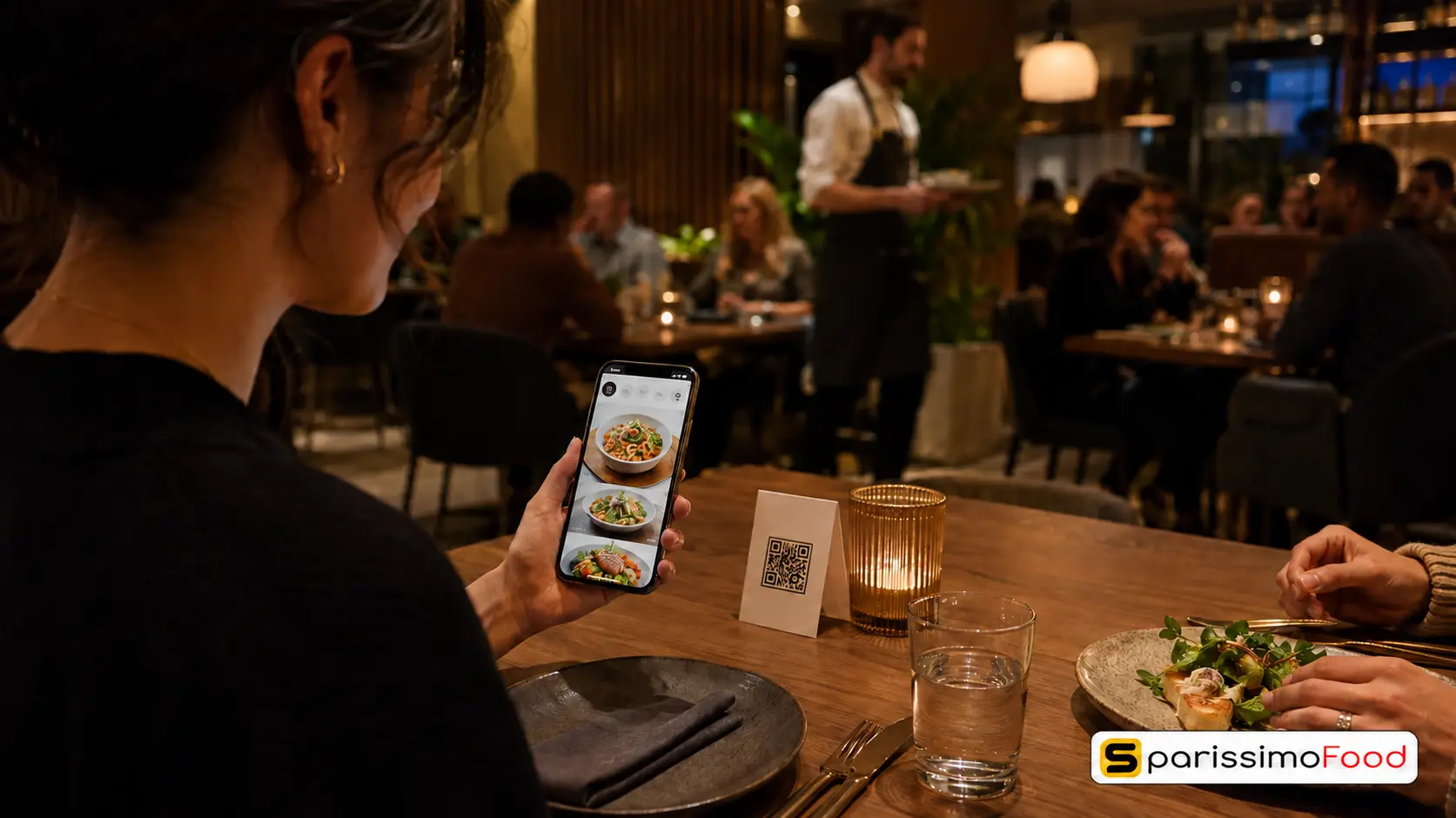
- Each table has a unique QR code (printed on the table, a card, or a tent)
- Guests scan it with their phone camera — no app download required
- The full digital menu loads instantly
- Guests browse, customise their order, and confirm it directly
- The order prints or appears on the kitchen display system immediately
What this changes operationally:
- Servers no longer spend time distributing menus and taking initial orders — they focus on hospitality, upselling, and problem-solving
- Orders reach the kitchen faster, because there is no middle step where a server needs to be free
- Tables that are comfortable ordering independently often order more, because they are not rushed during the ordering conversation
What this does not do: This does not eliminate the need for servers. A QR code ordering system supplements the team — it removes a bottleneck, not a role.
Strategy 2: Solve the Biggest Time Leak — Payment
Payment is where most restaurants lose the most unnoticed time. The sequence is familiar: guests finish their meal, signal for the bill, wait for a server to be free, wait for the bill to be printed and brought, wait for a card machine to be collected and returned. In a busy service, this sequence can consume 15–20 minutes.
That is 15–20 minutes where your table is occupied by a party who has finished their experience and would, in many cases, be happy to leave sooner if the process were simpler.
The solution: self-payment at the table
QR code table systems that include a built-in payment step allow guests to split the bill, add a tip, and pay directly from their phone — at their own pace, without needing a server to initiate or complete the transaction.
The impact on table turnover is direct and significant. When payment becomes self-service, the payment lag collapses from 15 minutes to under 2 minutes in the majority of cases.
Important note on the guest experience: Self-payment should always be optional. Some guests prefer the traditional interaction of paying with a server. The system should support both — and servers should still actively offer to bring the machine for any guest who prefers it.
Strategy 3: Smarter Seating and Reservation Management
Faster individual service means nothing if you have no structured plan for how tables are filled, sequenced, and managed across a full service.
Stagger your reservations: Do not allow all large parties to be booked for the same 60-minute window. A table of 8 that arrives at 19:00 alongside three other large parties creates a simultaneous kitchen surge that extends ticket times for every table in the restaurant. Stagger bookings by party size and arrival time to create a manageable, rolling flow of orders.
Pre-assign tables before service: Know exactly which table each reservation is going to before the first guest walks through the door. Last-minute table assignment decisions during service eat clock time and create front-of-house confusion.
Set realistic reservation windows: If your average table time for a 2-person party is 75 minutes, do not book two parties of 2 into the same table with a 60-minute gap. Either extend the reservation window or implement a soft close — a point in the service at which walk-ins are directed to shorter-duration seating while the booked party finishes.
Track your actual average meal duration by party size: A party of 2 and a party of 6 do not take the same amount of time. Use your POS or booking system data to calculate the real average duration by cover count. Then use those numbers — not estimates — to drive your reservation spacing.
Strategy 4: Streamline the Menu to Speed Up Kitchen Output
Long menus and highly complex dishes slow down table turnover at the kitchen end. If a signature dish requires 25 minutes of preparation during peak hours, it creates bottlenecks that push back ticket times for every other table in the restaurant.
Menu engineering for turnover:
- Identify your slowest-preparing dishes using kitchen ticket time data from your POS
- For dishes with consistently long preparation times during peak hours, consider offering them exclusively during off-peak periods
- Ensure your high-selling, high-margin dishes are also your fastest to prepare — these should be your most prominent menu items
- Reduce menu complexity: every additional modifier (sauces on the side, allergy substitutions without a clear system) adds handling time
The goal is not to cut menu items that guests love. It is to understand which items are creating kitchen friction, and to manage them strategically rather than letting them slow down every table in the room.
Strategy 5: Train Staff to Read the Table — Not Watch the Clock
The most important thing a server can do to improve table turnover without making guests feel rushed is to read the table’s natural pace and respond to it, rather than imposing an external clock.
Signals that a table is ready to move forward:
- Menus placed down or pushed to the side (ready to order)
- Cutlery arranged centrally on the plate (finished eating)
- Eye contact being made with passing staff (looking for attention)
- Conversation shifted away from food and toward settling the evening
Practical staff training points:
- Clear courses promptly when a guest signals they are finished — do not wait for the entire table to finish before clearing the first guest
- Always ask if guests would like to see a dessert menu rather than automatically printing the bill. This gives the table control while opening a revenue opportunity
- Introduce the option to pay by phone early: “Whenever you are ready, you can also pay directly from the QR code on the table — completely your choice.” This plants the seed without pressure
How SparissimoFood Helps Improve Table Turnover
SparissimoFood’s QR code table ordering and self-payment system is built specifically for this operational challenge.
When you use SparissimoFood’s dine-in QR feature:
- Each table gets a unique, permanent QR code that guests scan to view the full menu, place orders, and pay — all from their phone
- Orders go directly to the kitchen display or printer — no order relay through a server required
- Guests can split the bill by item or pay in full — and complete payment without waiting for staff
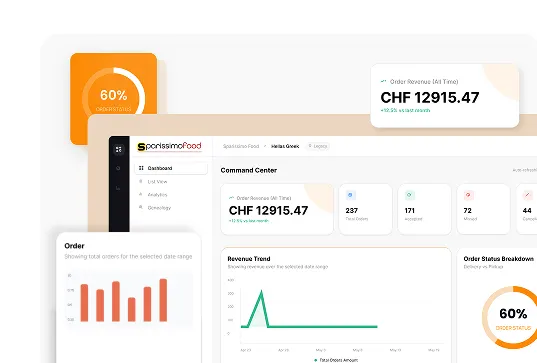
- The manager dashboard shows real-time table status: which tables are ordering, which are mid-meal, and which are approaching payment
The result: order lag collapses, payment lag collapses, and your servers redirect their attention from administrative tasks to the high-value interactions that turn first-time guests into regulars.
For restaurants managing multiple locations, SparissimoFood’s unified dashboard tracks turnover metrics and average seat duration across every site — giving you the data to make operational decisions on a per-location basis.
Frequently Asked Questions
What is a good restaurant table turnover rate?
A good table turnover rate depends on your restaurant type. For a casual dining restaurant during a dinner service, 2.5 to 3.5 turns per table is a strong benchmark. Quick-service restaurants may target 4 to 6 turns. Fine dining restaurants often intentionally hold at 1 to 1.5 turns to protect the guest experience. The right number is the one that maximises your revenue per seat per hour without compromising the experience that keeps guests returning.
How do I increase table turnover without rushing guests?
The most effective approach is to eliminate invisible dead time rather than speeding up the guest’s experience. Use QR code ordering to remove the order lag at the start of the meal, and self-payment technology to collapse the payment lag at the end. Guests who are in control of both of these touchpoints naturally move at a comfortable pace — and the total meal duration is shorter without anyone feeling hurried.
What causes slow table turnover in restaurants?
The most common causes are: long order lag when servers are occupied and guests cannot get attention, slow kitchen ticket times caused by menu complexity or understaffing, and payment delays at the end of the meal. Reservation staggering problems — where too many large parties arrive simultaneously — also create systemic slowdowns that affect every table in the room.
Does QR code ordering actually improve table turnover?
Yes, consistently. QR code ordering removes the primary bottleneck in the first half of the meal: the wait for a server to be free before orders can be placed. In restaurants that implement QR table ordering alongside self-payment, average total meal durations typically reduce by 12 to 20 minutes per table without any change to the quality of the food or hospitality.
How do I calculate my restaurant’s table turnover rate?
Divide the total number of parties served at a specific table (or across all tables) during a service period by the number of tables. For example, if you served 60 parties across 20 tables during a dinner service, your table turnover rate is 3. Track this weekly to identify trends and measure the impact of any operational changes you make.
The restaurant that turns its tables 3.5 times instead of 2.5 times per service does not pressure its guests. It eliminates the invisible time that nobody — guests or staff — actually wanted to spend waiting.
.Ds4FHhSq_ZxC9WE.webp "Restaurant Upselling Techniques That Don't Feel Pushy")


.CXCr6fQt_Z11gsYh.webp "Build a Branded Restaurant App Without Developers")
.y09Xtv8Z_1gH6f6.webp "Set Up Restaurant Online Ordering in Under a Week")
.B-Rl4IDw_Z204OoN.webp "Restaurant Loss Prevention and Theft Guide")
.DPpk5JZR_AlrVy.webp "Restaurant Communication During Peak Hours | Guide 2026")
.B6eEizW1_Z2bHQYl.webp "Restaurant Menu Pricing Strategies That Actually Protect Your Margins in 2026")
.CRszlDy5_2neUXu.webp "How to Migrate from GloriaFood Without Disruption: A Technical Step-by-Step Guide")
.kT6N2QP-_1Tp2j1.webp "GloriaFood Is Shutting Down on April 30, 2027 — What Every Restaurant Owner Needs to Do Now")