
How to Increase Restaurant Average Order Value | Switzerland 2026

Quick Answer: Average order value (AOV) is the average amount each customer spends per transaction. The formula is: AOV = Total Revenue ÷ Number of Orders. For a Swiss restaurant processing 80 orders per day, increasing AOV by CHF 5, from CHF 29 to CHF 34, generates an additional CHF 144,000 in annual revenue with no new customers, no new staff, and no increase in rent. The most effective ways to increase restaurant AOV are: strategic menu engineering, digital and QR-code upselling, bundled offers, frictionless payment (including TWINT), minimum delivery thresholds, and staff training in suggestive selling. Every one of these can be implemented without raising your base prices.
Most restaurants chase growth the same way: more covers, more marketing spend, more delivery platform listings. But there is a faster, cheaper lever that the majority of Swiss operators underuse entirely, increasing how much each existing customer spends per order.
You do not need a new customer to earn CHF 5 more. You need a better menu structure, a smarter ordering flow, and a team that knows how to recommend.
What Is Average Order Value — and How Do You Calculate It?
Average order value (AOV) is the mean revenue generated per customer transaction, across all channels: dine-in, takeaway, and delivery.
The formula:
AOV = Total Revenue ÷ Number of Orders
Example: if your restaurant generates CHF 58,000 in revenue across 2,000 orders in a month, your AOV is CHF 29.
Track AOV separately for each channel. Your dine-in AOV will typically be higher than delivery AOV. Your lunch AOV will differ from dinner AOV. These gaps point directly to where your opportunities are.
Measure AOV monthly rather than annually, monthly tracking reveals the impact of menu changes, seasonal promotions, and upselling training within weeks of implementation.
What Is a Good AOV for a Swiss Restaurant?
Swiss restaurants operate in one of the highest-cost hospitality markets in Europe. Benchmarks vary significantly by format:
| Restaurant Format | Typical Swiss AOV Range |
|---|---|
| Quick service / takeaway | CHF 12–22 |
| Casual dining (pizza, kebab, bistro) | CHF 25–40 |
| Mid-range (sit-down, full service) | CHF 40–70 |
| Fine dining | CHF 80–150+ |
If your AOV sits at the lower end of your format’s range, the strategies in this article will have the greatest impact. If you are already at the upper end, the goal is protecting that AOV while improving the mix of high-margin items within it.
Why AOV Outperforms Customer Acquisition in Switzerland
Acquiring a new restaurant customer in Switzerland is expensive. Between delivery platform commissions of 10–30%, paid advertising, and promotional discounts, the cost of bringing in a first-time customer consistently erodes the margin that customer generates.
A customer you already have in your dining room or on your ordering platform costs nothing to serve an additional CHF 5.
The CHF impact is significant. Consider a casual Italian restaurant in Zurich with 80 daily orders at a current AOV of CHF 29:
| Scenario | Daily Revenue | Annual Revenue |
|---|---|---|
| Current: CHF 29 AOV | CHF 2,320 | CHF 847,000 |
| +CHF 5 AOV (CHF 34) | CHF 2,720 | CHF 993,000 |
| Additional revenue | +CHF 400/day | +CHF 146,000/year |
That CHF 146,000 is generated without a single additional customer, without additional rent, and without additional core staff. It comes from serving the same number of people better.
This is why the most profitable Swiss restaurant operators treat AOV as a primary metric, not a secondary one. For more context on how menu pricing decisions interact with revenue, see our restaurant menu pricing strategies guide.
7 Proven Strategies to Increase Restaurant AOV in Switzerland
1. Engineer Your Menu Like a Salesperson
Your menu is your highest-volume sales tool. Every item on it is either working for you or against you. Menu engineering is the discipline of arranging, naming, pricing, and designing your menu to maximise both revenue and margin, without pressuring the customer.
The starting point is a four-quadrant analysis of every item based on two variables: popularity (how often it is ordered) and contribution margin (how much profit it generates):
- Stars — high popularity, high margin. Feature prominently. Add a photo if possible.
- Plowhorses — high popularity, low margin. Consider modest repricing or portion adjustment.
- Puzzles — high margin, low popularity. Give them a “Chef’s Pick” label or place them in high-attention zones.
- Dogs — low popularity, low margin. Remove them. They complicate the kitchen and dilute menu focus.
Research from Cornell University’s hospitality programme shows that placing your highest-margin items in the Golden Triangle of a menu, top centre, top right, and upper left, increases selection of those items by up to 27%. On a QR or digital menu, the equivalent is featuring these items in your top slots and using high-quality photos.
One additional tactic: remove the currency symbol (CHF) from item prices on your physical or digital menu. Research consistently shows this reduces the psychological “pain of paying” and increases average spend, particularly on mid-tier and premium items.
2. Use Digital and QR Ordering to Upsell Without Pressure
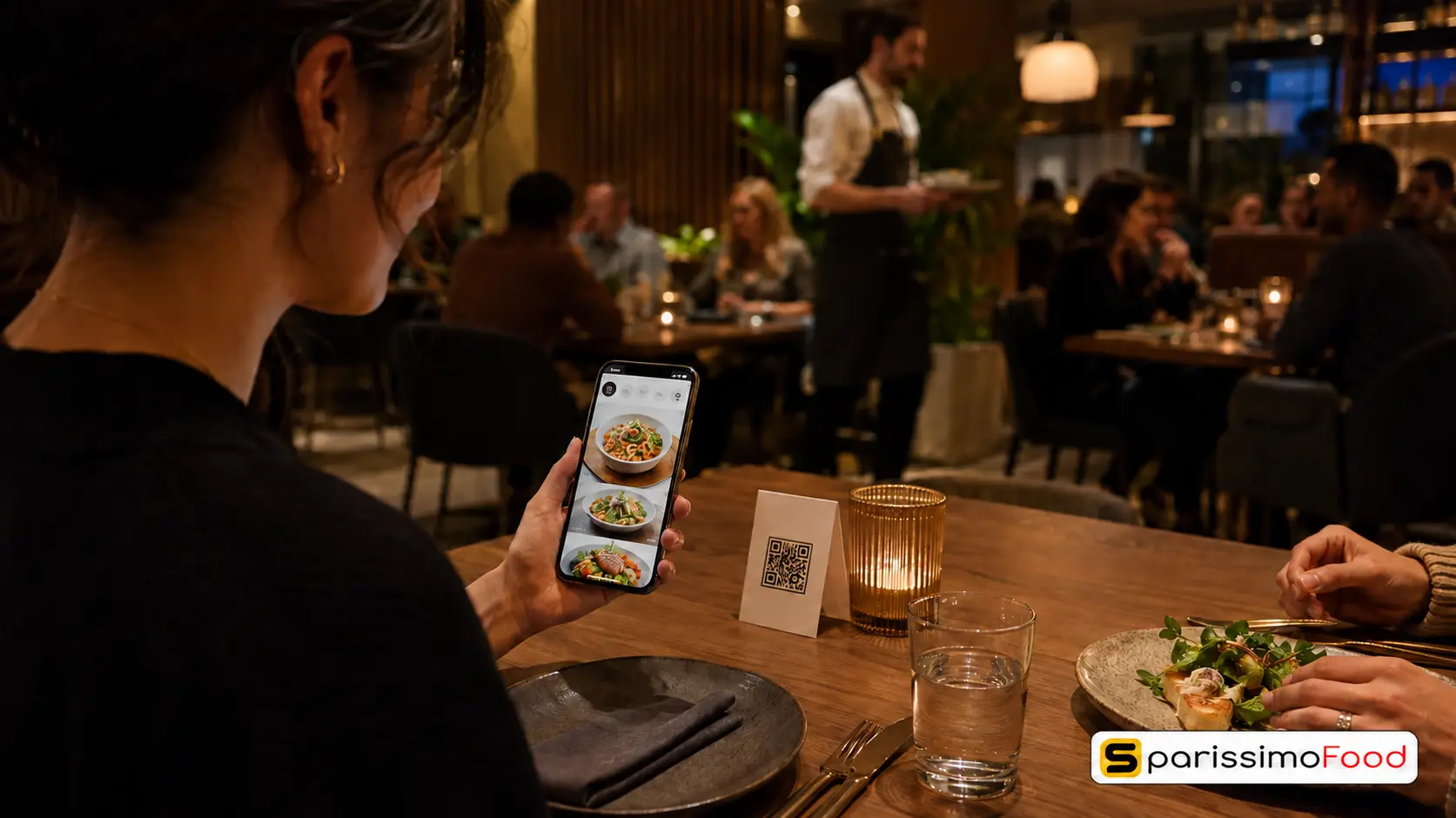
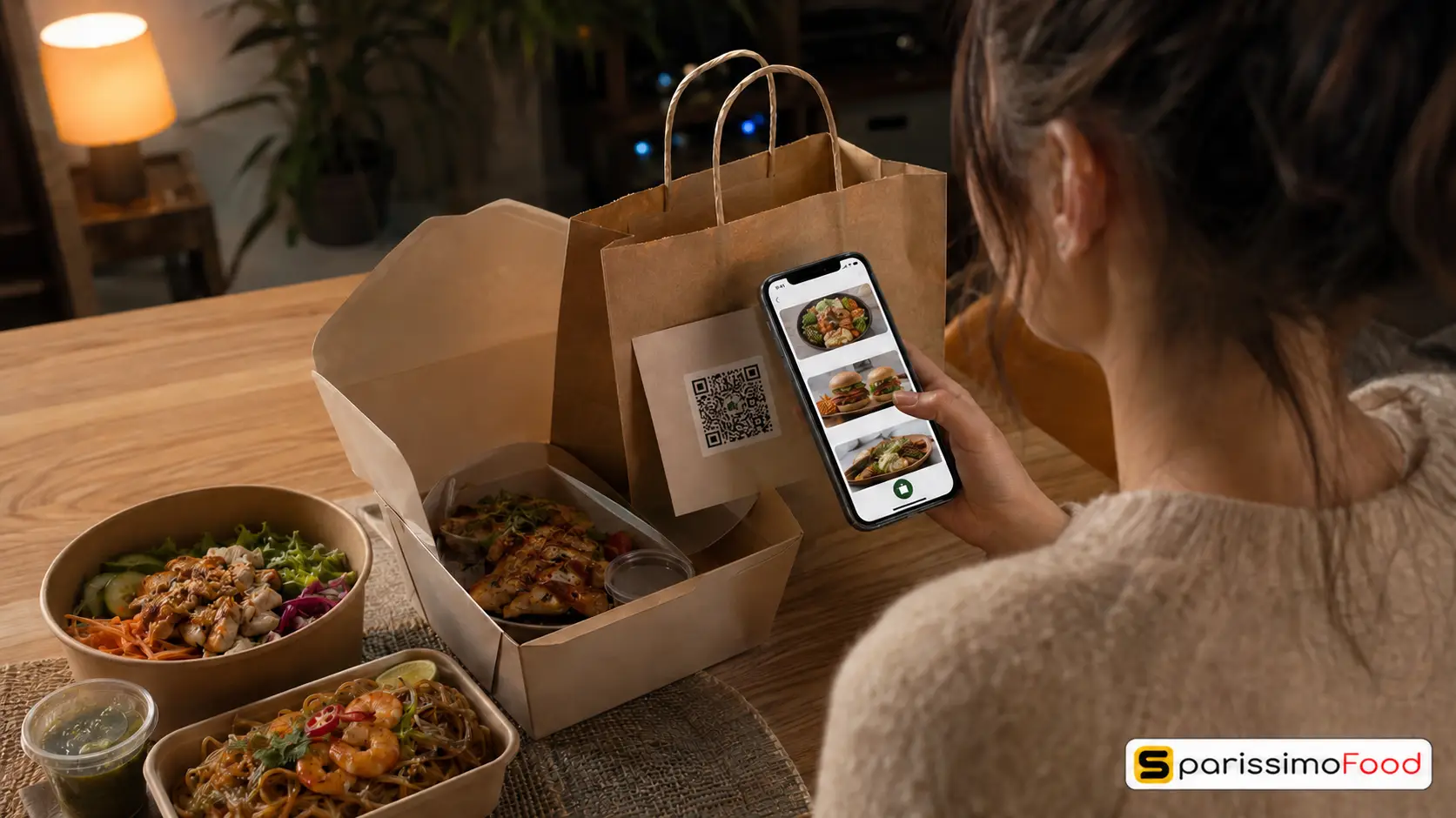
The most effective upselling in 2026 happens digitally, not verbally. When customers browse via QR code or an online ordering platform, they experience zero social pressure. They take time to explore the menu. They are more likely to add items than when a busy server asks verbally.
According to hospitality technology studies, digital ordering environments, QR menus, kiosks, and online ordering platforms, increase average order size by 15–30% compared to traditional verbal ordering. The mechanism is simple: customers spend more time with the menu and encounter add-on suggestions at the right moment.
Effective digital upselling in practice:
- Suggest “Add a side of Rösti (CHF 4.50)” immediately after a main is added to cart
- Offer “Complete your meal, add a dessert for CHF 6.90” before checkout
- Display “Popular with this dish” recommendations based on real order data
- Prompt drinks when a meal-only order is detected
The key is relevance and timing. A wine suggestion at checkout feels like noise. A wine suggestion immediately after a beef dish is added to cart feels like hospitality.
3. Create Bundles That Increase Perceived Value
Bundled offers work because they shift the customer’s frame of reference from “how much am I spending” to “how much am I saving.” A correctly priced bundle generates a higher transaction value and a lower perceived cost simultaneously.
Effective Swiss restaurant bundle approaches:
Lunch set menu — starter, main, and coffee for CHF 22.90, where the à la carte equivalent is CHF 27. The customer perceives value; you move three items instead of one.
Family share bundle — two mains, one large side, and a shared dessert for CHF 58, instead of CHF 64 à la carte. Group orders consistently drive higher AOV than individual ones.
Delivery add-on bundle — “Add a bottle of still water and a dessert for CHF 7.50 more.” Delivery customers already cannot browse a physical menu; bundles bridge that gap.
Track bundle performance the same way you track individual items. A bundle that reduces your margin even with higher ticket size is not a good bundle. Aim for bundles where the combined contribution margin is higher than any single item the customer would have ordered alone.
4. Set Minimum Order Thresholds for Delivery
This is one of the most underused AOV tactics in Swiss restaurants. A minimum delivery order, set at a level slightly above your current delivery AOV, creates a behavioural incentive for customers to add items.
The mechanism: if your current delivery AOV is CHF 26 and you set a CHF 32 free-delivery minimum, approximately 25–35% of customers close to that threshold will add an item to qualify. That is pure AOV increase driven entirely by order flow structure.
Effective thresholds for Swiss casual dining: CHF 30–40 for delivery, depending on your average check size. Set it no more than CHF 8–10 above your current delivery AOV, beyond that, you risk cart abandonment rather than upsell.
Pair the threshold with a visible progress indicator: “You’re CHF 4.50 away from free delivery, add a dessert?” This prompt is the digital equivalent of a well-timed server suggestion.
5. Enable TWINT — Then Make Paying Effortless
In Switzerland, friction at the payment stage directly reduces AOV. When a customer hesitates at checkout, for any reason, they second-guess add-ons they were comfortable adding moments earlier. Frictionless payment protects the high-ticket order you have already built.
TWINT is Switzerland’s dominant mobile payment method, used by over 5 million Swiss users. Restaurants that offer TWINT integration in their digital ordering flow, particularly for QR-code dine-in, report lower cart abandonment rates and maintained order values at checkout. A customer who has assembled a CHF 35 order is more likely to complete it via a single TWINT tap than via a slower card process.
If your online ordering or dine-in QR flow does not yet integrate TWINT, this is a straightforward change with a direct impact on completed order value. For a full breakdown of payment processing costs and options for Swiss restaurants, see our online ordering cost guide for Switzerland.
6. Train Your Team in Suggestive Selling — With Specific Scripts
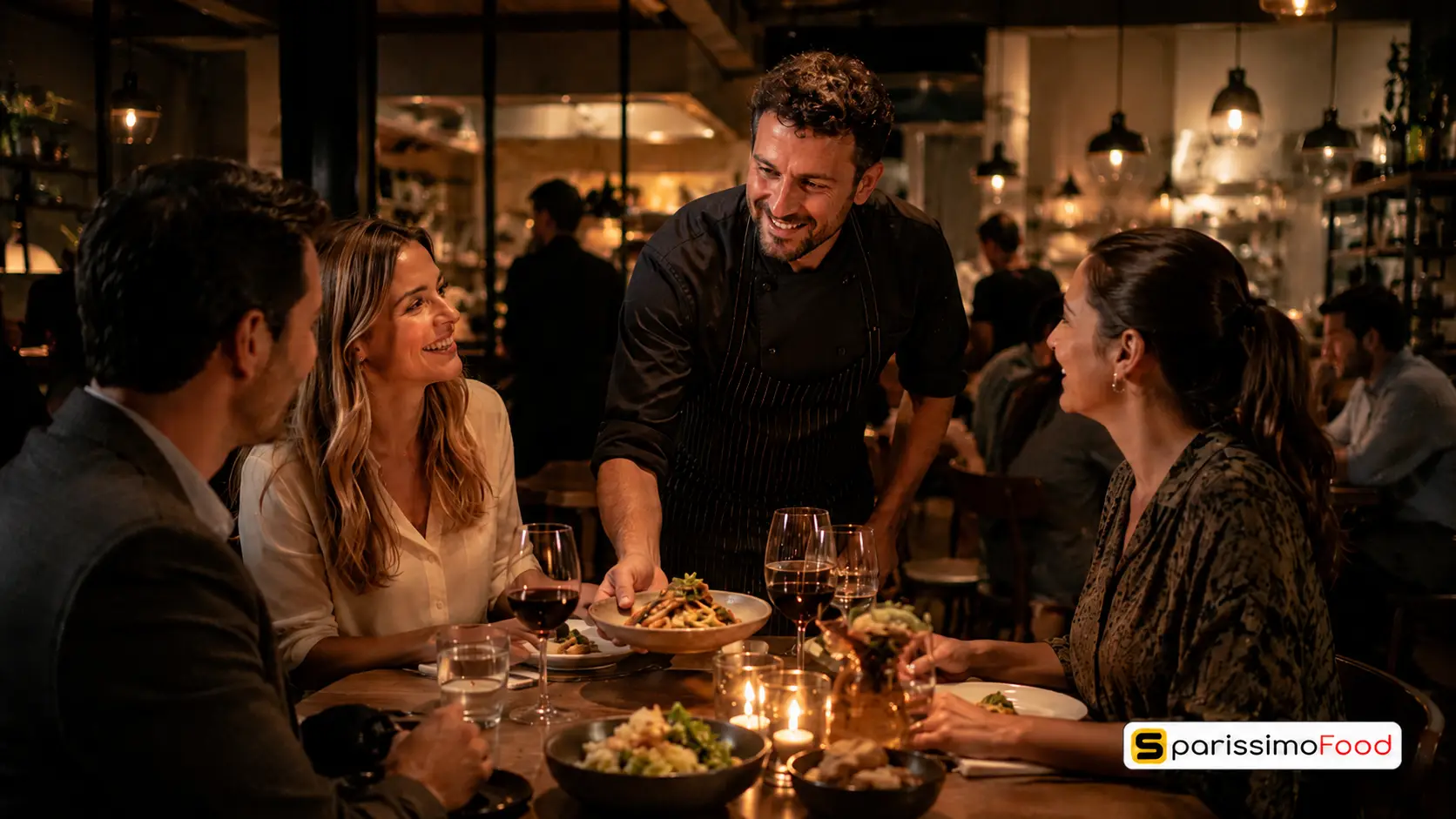
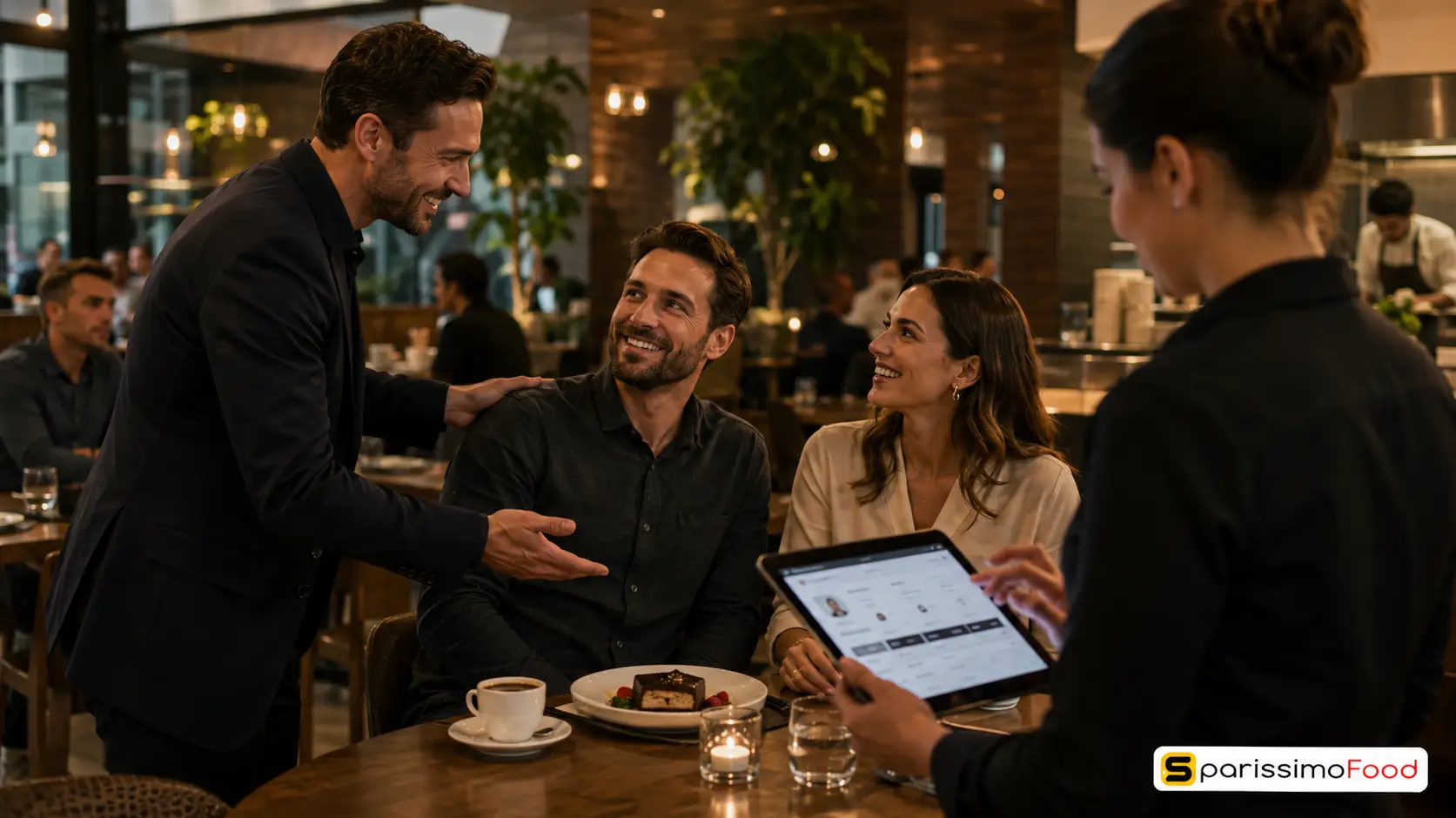
Server upselling only works when it feels like genuine recommendation, not sales pressure. The difference between a suggestion that increases the bill and one that earns a bad review is specificity and timing.
Train your team to use attachment scripts tied to actual items:
- “The Côtes du Rhône pairs particularly well with the lamb, would you like a glass?” (not “Can I get you a drink?”)
- “Our Rösti comes as an add-on for CHF 4.50, most people get it with the veal” (not “Can I get you a side?”)
- “We have a house-made tiramisù today if you’d like to finish with something sweet” (offered after the main, not at the start)
Train the timing as much as the script. Drink suggestions land best at the moment of seating. Dessert suggestions land best when the main is cleared. An end-of-meal offer, “Can I get you a coffee?”, is the single easiest way to add CHF 4–6 per table with a 40–60% acceptance rate.
Research on add-on upselling in restaurants consistently shows that specific, timed suggestions raise AOV by 10–20% without guests feeling pressured.
7. Use Your Analytics to Track AOV by Daypart, Channel, and Item
You cannot improve what you do not measure. Most restaurant operators track total revenue. Far fewer track AOV by daypart, by ordering channel, or by server, and this is where the real opportunities are hidden.
A Monday lunch AOV of CHF 18 compared to a Saturday dinner AOV of CHF 44 is not just a timing difference. It is a menu design question, a bundle opportunity, and a staffing training prompt. If your delivery AOV is consistently 20% below your dine-in AOV, you need a delivery-optimised menu and better upsell prompts in the digital ordering flow.
Real-time analytics allow you to test a change, a new bundle, a repositioned item, a new suggestive selling script, and see its impact on AOV within days. Without data, you are making menu and pricing decisions based on intuition. With data, you make them based on evidence.
AOV tracking also helps you manage margin, not just revenue. A higher AOV that is driven by more low-margin items is not necessarily better than a lower AOV with better item mix. Track average contribution margin per order alongside AOV for a complete picture. See how this connects to overall table revenue in our table turnover rate guide.
How SparissimoFood Helps Increase Your Restaurant’s AOV
Every strategy in this article either requires or is significantly accelerated by the right digital ordering infrastructure. SparissimoFood is built to support all of them.
Menu Builder and Item Placement. SparissimoFood’s menu builder lets you apply menu engineering principles directly: position your high-margin Stars in prominent slots, add photos to the items you want to sell more of, create “Chef’s Pick” labels, and structure your menu around bundles. These are not cosmetic changes, they are the same levers that drive meaningful AOV increases in digital ordering environments.
QR Dine-In Ordering. When guests order via QR code at the table, they browse longer, explore the full menu, and add items without social pressure. This is the most consistent channel for higher-than-average digital AOV. SparissimoFood’s QR dine-in system integrates with your kitchen and allows you to insert upsell prompts, a suggested side, a recommended drink, a dessert offer, at the right moment in the order flow.
TWINT Integration. SparissimoFood supports TWINT as a payment method across its ordering channels. This means the high-value orders your menu engineering and digital upselling build are completed without friction ,protecting the ticket size all the way to payment.
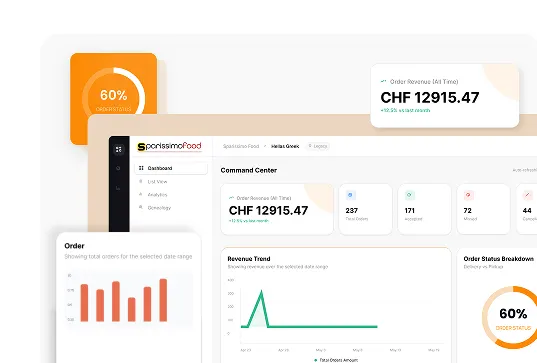
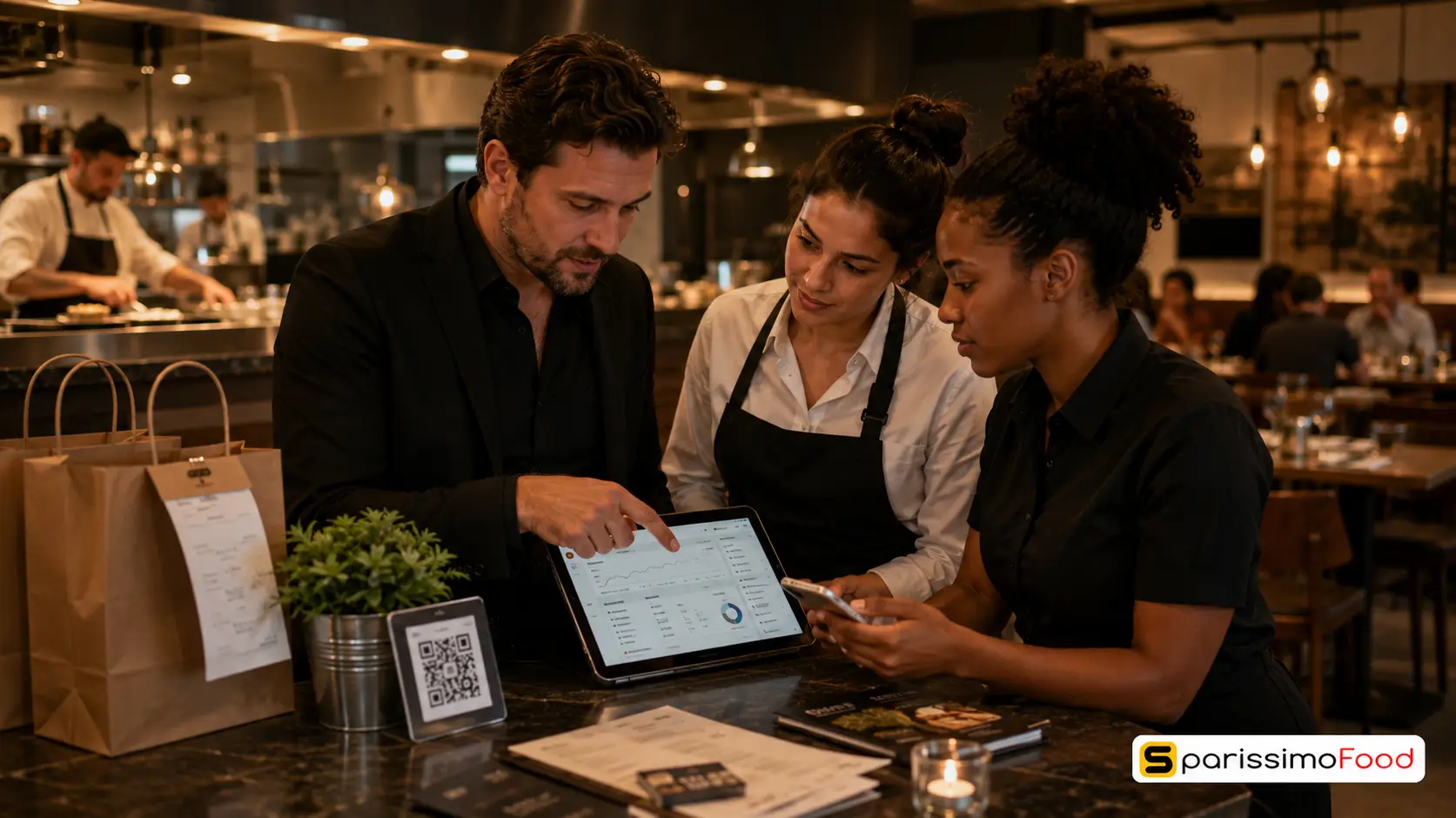
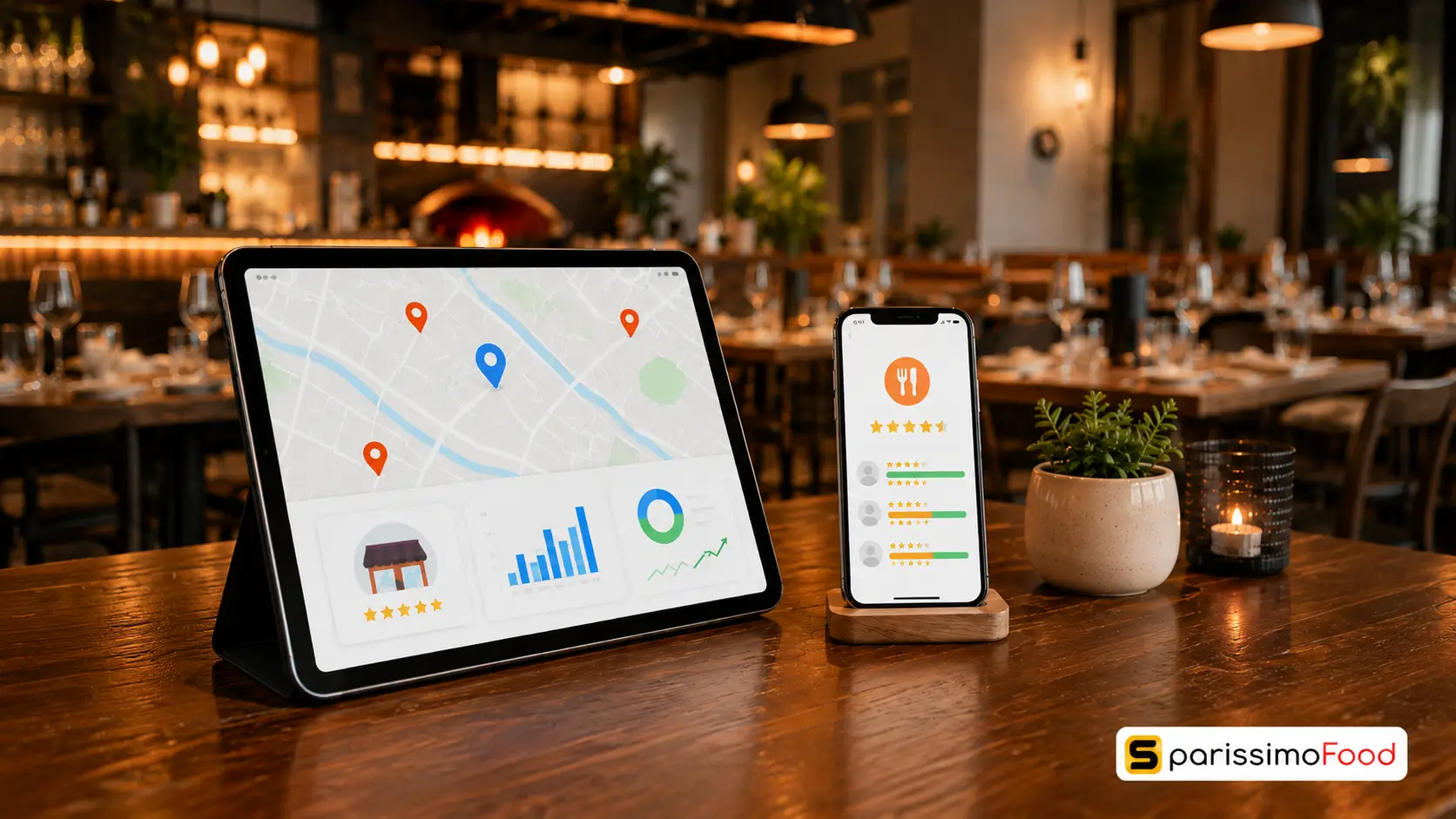
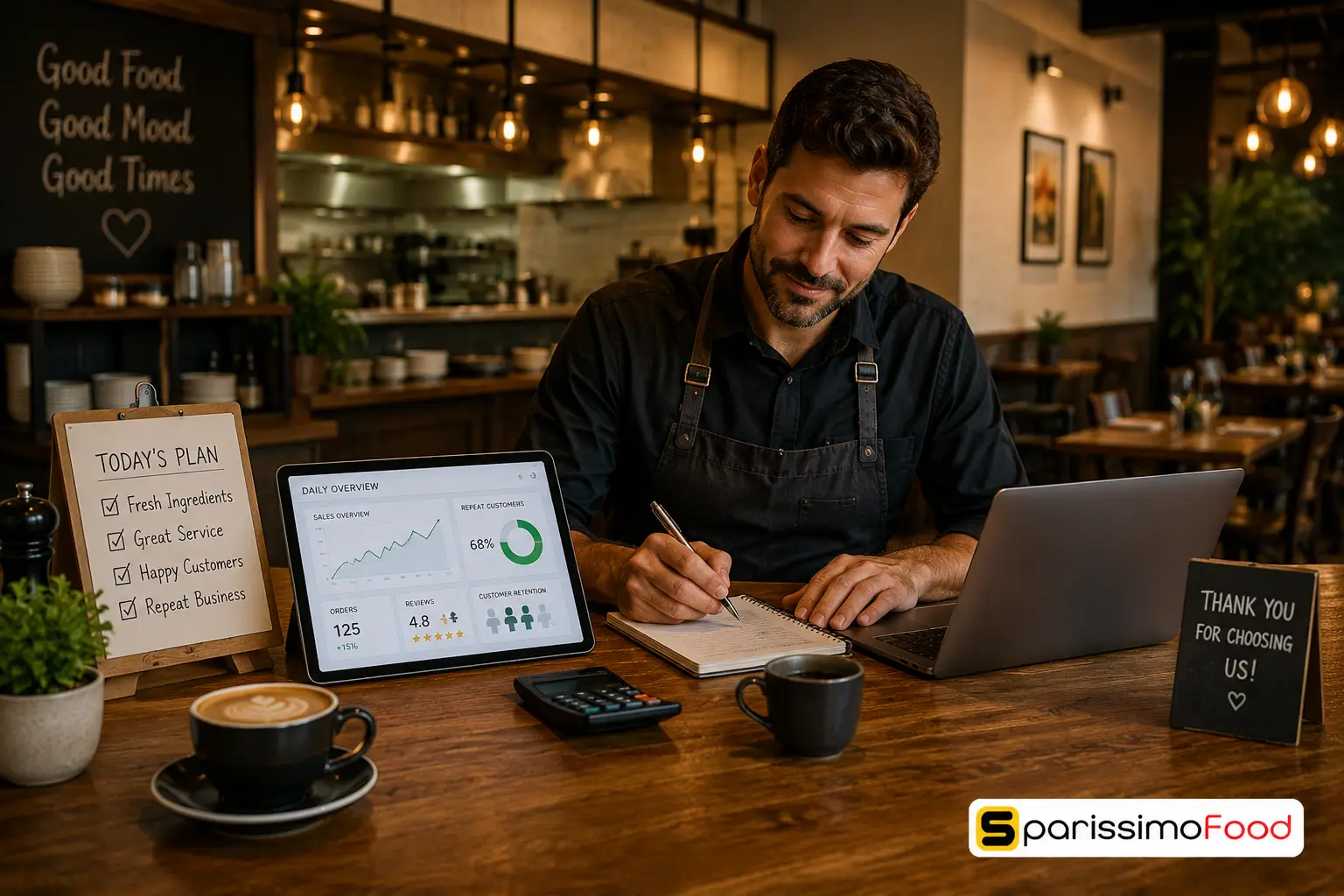
Analytics Dashboard. SparissimoFood’s manager dashboard gives you real-time visibility into order volume, revenue, and item performance. This is the data layer that allows you to act on AOV opportunities rather than guess at them.
SparissimoFood starts at CHF 49/month with a commission of 5–8% per order, significantly lower than third-party delivery platforms at 10–30%. When you shift more orders to your own direct channel, you keep more of the revenue that your higher AOV generates. Explore the current plan options at manage.sparissimofood.com/plans.
Frequently Asked Questions
What is the average order value formula for restaurants? The formula is: AOV = Total Revenue ÷ Number of Orders. For example, if your restaurant generates CHF 87,000 across 3,000 orders in a month, your AOV is CHF 29. Calculate this across each channel separately, dine-in, takeaway, and delivery often produce different AOV figures, each requiring different interventions to improve.
What is a good average order value for a Swiss restaurant? It depends on format. Swiss quick-service restaurants typically see AOV between CHF 12 and CHF 22. Casual dining, pizza restaurants, kebab shops, Italian bistros generally sits between CHF 25 and CHF 40. Mid-range full-service restaurants range from CHF 40 to CHF 70. If your AOV is consistently at the lower end of your format’s range, menu engineering, bundling, and digital upselling will have the most immediate impact.
Does QR ordering increase average order value? Yes, consistently. Research in hospitality technology environments shows that digital ordering QR menus, kiosks, and online ordering platforms increases average order size by 15–30% compared to traditional verbal ordering. The primary reason is browsing behaviour: customers using digital menus explore more items, encounter more add-on prompts, and are not under social pressure to decide quickly. They also respond more willingly to digital upsell suggestions than to verbal ones from busy servers.
How does removing currency symbols affect restaurant spending? Research consistently shows that removing the CHF symbol from menu prices increases average spend. The explanation is psychological: the currency symbol triggers a “pain of paying” response that focuses the customer on cost rather than the dish. When prices appear as plain numbers (“28” rather than “CHF 28”), the customer’s attention stays with the food description, and they are more comfortable selecting higher-priced options. This is particularly effective in digital menus and QR ordering flows.
What is the best upselling technique for restaurants? The most effective upselling technique is specific, timed suggestion rather than generic offers. “The Côtes du Rhône pairs particularly well with the lamb” outperforms “Can I get you a drink?” because it provides genuine value and requires no decision effort from the guest. For drinks, suggest at seating. For sides, suggest when the main is ordered. For desserts, suggest when the main is cleared. Research shows well-executed suggestive selling raises AOV by 10–20% without guest discomfort.
The restaurant that earns CHF 5 more per order than its competitor, with identical rent, staff, and ingredients is the one that stays open.
.Ds4FHhSq_ZxC9WE.webp "Restaurant Upselling Techniques That Don't Feel Pushy")
.CXCr6fQt_Z11gsYh.webp "Build a Branded Restaurant App Without Developers")
.y09Xtv8Z_1gH6f6.webp "Set Up Restaurant Online Ordering in Under a Week")
.B-Rl4IDw_Z204OoN.webp "Restaurant Loss Prevention and Theft Guide")
.DPpk5JZR_AlrVy.webp "Restaurant Communication During Peak Hours | Guide 2026")
.B6eEizW1_Z2bHQYl.webp "Restaurant Menu Pricing Strategies That Actually Protect Your Margins in 2026")
.CRszlDy5_2neUXu.webp "How to Migrate from GloriaFood Without Disruption: A Technical Step-by-Step Guide")
.kT6N2QP-_1Tp2j1.webp "GloriaFood Is Shutting Down on April 30, 2027 — What Every Restaurant Owner Needs to Do Now")