
Restaurant Email Marketing: Examples and Best Practices | Switzerland 2026

Quick Answer: Email marketing generates CHF 35 to CHF 42 in revenue for every franc spent, making it the highest-ROI marketing channel available to independent restaurants. The six campaigns every Swiss restaurant needs are: a welcome email with a first-order offer, a first-visit follow-up asking for feedback, a win-back sequence for lapsed customers, a monthly specials email, a seasonal and event promotion, and a birthday or milestone email. All of these require one prerequisite: you must own your customers’ email addresses. Every order placed through Just Eat or Uber Eats generates a customer whose contact data you will never see. Every order placed through your own direct channel gives you a contact you can market to forever.
Most Swiss restaurant owners are excellent at feeding people and poor at marketing to them between visits. A guest who enjoyed your Zürich-style veal last Friday is thinking about dinner again this Thursday. If another restaurant’s email arrives in their inbox on Wednesday afternoon and yours does not, you know who gets the booking.
Email marketing is not complicated. It is consistent. And the restaurants that run even three or four automated campaigns consistently outperform those that send occasional handwritten newsletters when they remember.
Why Restaurant Email Marketing Delivers Better ROI Than Any Other Channel
A January 2026 study cited by Verified Emails found that businesses across industries earned between CHF 36 and CHF 42 for every CHF 1 spent on email marketing, with top performers earning more than CHF 70. For restaurants, that return takes specific forms: more repeat visits, filled seats on quiet Tuesdays, fewer last-minute no-shows, and direct orders that bypass third-party commissions.
Email is also the only marketing channel that a restaurant fully controls. Google can update its algorithm. Instagram can change how posts are distributed. Meta can raise advertising costs overnight. None of those variables affect an email list you own. How well your emails perform depends entirely on how well you write them and who you send them to.
For Swiss restaurants operating in a high-cost environment where every table needs to work hard, the ability to re-engage existing customers at near-zero marginal cost is not a nice-to-have. It is a structural advantage.
Step 1: Build Your Email List, the Foundation You Cannot Skip
Every email campaign in this guide requires one thing first: an email address. This seems obvious, but it is where most Swiss restaurant owners are starting from almost nothing, for a predictable reason.
The Third-Party Platform Problem
If a significant portion of your delivery orders come through Just Eat, Uber Eats, or comparable platforms, you are generating customers whose contact information you will never access. These platforms explicitly retain customer data as a condition of their service. You get the order and the commission bill. They keep the relationship.
This matters for email marketing because there is no workaround. You cannot build a marketing list from customers you cannot contact. You cannot run a win-back campaign for a guest whose email address you have never seen.
The only way to build a restaurant email list is through channels where you control the relationship: your own website ordering, your QR dine-in system, your table reservations, and your in-person interactions.
Where Swiss Restaurant Customers Share Their Email Addresses
Direct online ordering. Every order placed through your own ordering platform is an opportunity to collect an email address. Request it at checkout as a requirement for order confirmation. Guests who receive their order updates by email are also conditioning themselves to open communications from you.
QR-code dine-in ordering. When guests order at the table via QR code, they interact with your digital system. Requesting an email address at the start of the table order, framed as the means of receiving their receipt, generates high opt-in rates with minimal friction.
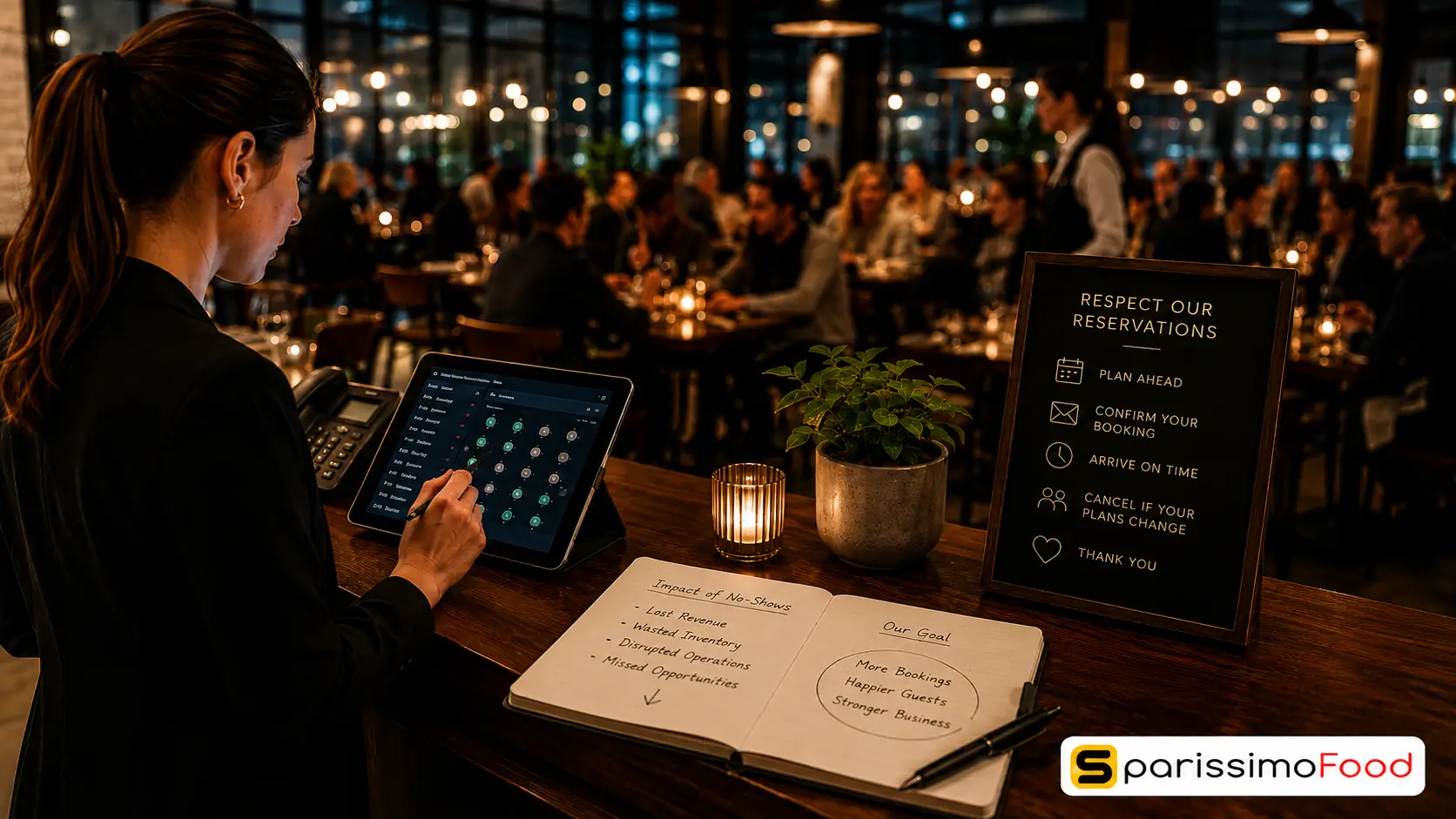
Reservation confirmation. A guest who books a table provides their email address as part of the booking process. Ensure that booking confirmation includes a clear opt-in to your marketing communications.
In-person at checkout. Train front-of-house staff to mention your email newsletter during the payment process. A specific value proposition works better than a generic ask: “We send a monthly specials email and occasional exclusive offers to our regulars. Would you like to be included?”
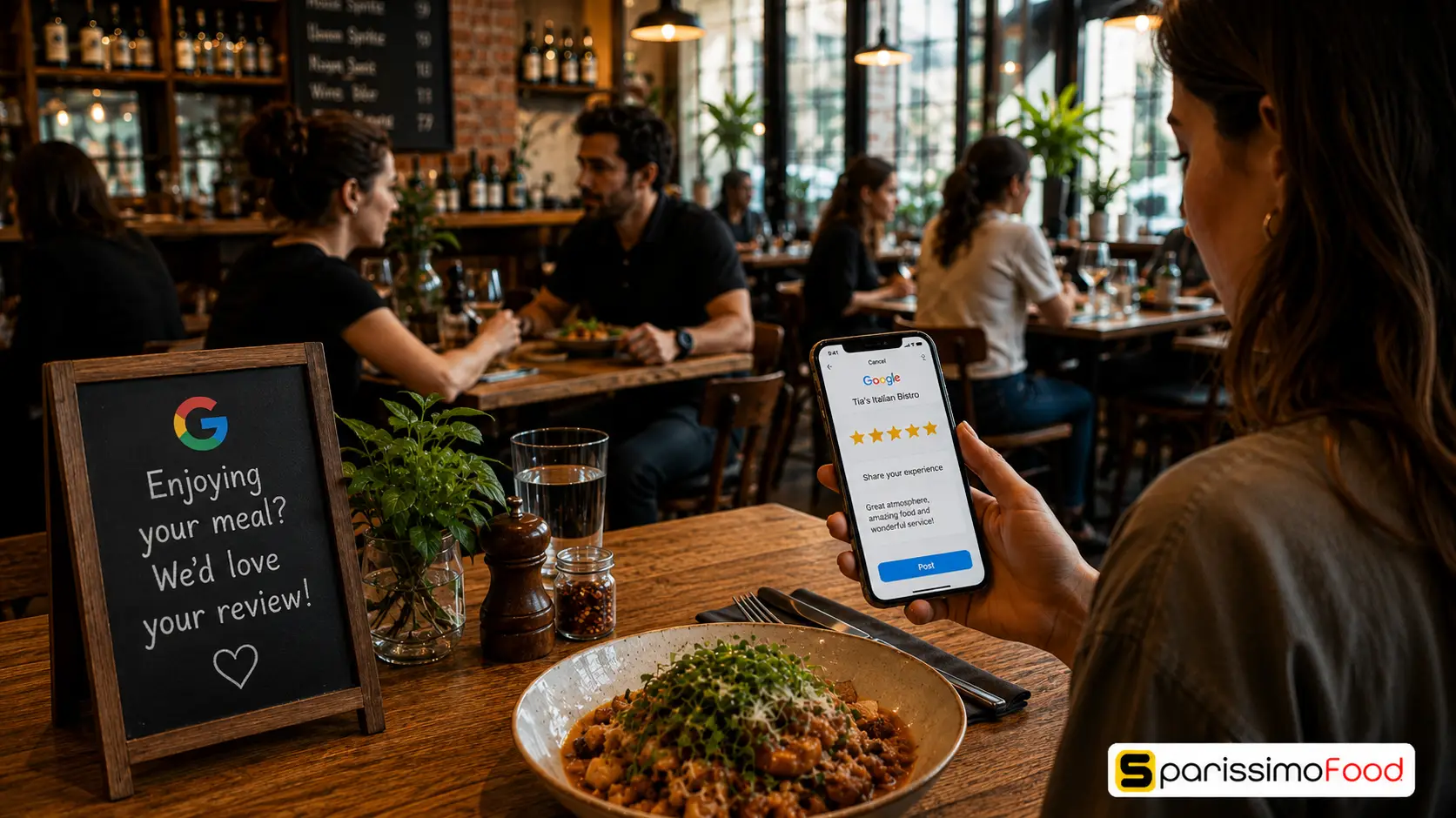
Your Google review requests. Guests who leave a positive review are already positively disposed towards your restaurant. A follow-up thank-you that includes a newsletter sign-up link converts a subset of these guests into email subscribers. See our guide on getting more Google reviews for how to generate a consistent flow of these conversations.
Swiss Data Protection Requirements (nDSG)
The revised Swiss Data Protection Act (nDSG), in force since September 2023, requires that restaurants collect email addresses only with clear, informed consent, provide a simple and immediate opt-out mechanism in every email, and maintain a privacy policy that describes how customer data is used. Buying email lists or adding customers to marketing lists without their explicit agreement is not compliant.
The practical implication: build your list organically through the channels above, include an unsubscribe link in every email, and do not send marketing emails to customers who have not opted in.
The 6 Email Campaigns Every Swiss Restaurant Should Run
Campaign 1: The Welcome Email
When to send: Immediately when a customer provides their email address for the first time, whether through an online order, a reservation, or a sign-up form.
Purpose: Set the expectation for what they will receive from you, and give them an immediate reason to order again soon.
What to include: A short, warm welcome. A clear statement of what your emails will offer them (specials, event invitations, exclusive offers). A first-order incentive such as 10% off their next direct order or a free side dish on their next visit.
Subject line examples:
- “Welcome to Marco’s: your 10% off first order is inside”
- “You’re on the list. Here’s your welcome gift from [Restaurant Name]”
Why it works: Engagement is highest in the first 48 hours after a guest provides their contact information. A welcome email that arrives within minutes converts that interest into immediate action. Automated welcome emails that include a tangible offer consistently generate CHF 800–1,200 per month for restaurants with a healthy order volume.
Campaign 2: The First-Visit Follow-Up
When to send: 2–4 hours after a customer’s first order is completed.
Purpose: Capture feedback while the experience is fresh, generate a positive review if the meal was good, and recover the guest if something went wrong.
What to include: A brief, personal-feeling message (“How was your first visit?”). A simple 1-5 star rating link. If they rate 4 or 5 stars, direct them immediately to leave a Google review. If they rate 1, 2, or 3 stars, direct them to a feedback form and commit to a personal response.
Follow-up within 7 days: Send a second email recommending specific dishes based on what they ordered, with a note such as: “Guests who enjoyed our veal schnitzel often love our seasonal risotto next.”
Subject line examples:
- “How was your meal at [Restaurant Name]? One quick question”
- “We’d love your feedback: takes 30 seconds”
Why it works: A first-time customer is not yet a profitable one. The second visit is where profitability begins. This campaign bridges the gap and simultaneously builds your Google review count, which drives new customer discovery. For more on managing your online reputation alongside email, see our guide on reducing restaurant no-shows for how reservation communication connects to the customer relationship.
Campaign 3: The Win-Back Email
When to send: Automatically triggered when a customer who has previously ordered two or more times has not placed an order in 45 days.
Purpose: Re-engage lapsed regulars before they permanently shift to a competitor.
What to include: A personal-feeling subject line using their first name. A reminder of what they previously ordered (if your system captures this). A time-limited incentive such as 15% off their next order, valid for 7 days.
Subject line examples:
- “We miss you, [Name]: here’s 15% off to come back”
- “[Name], it’s been a while. Your table is waiting”
Escalate if needed: If the first win-back email is not opened within 7 days, send a second with a slightly stronger offer. If a third email generates no response, remove the customer from your active campaign list to protect your sender reputation.
Why it works: Lapsed regulars already know and like your food. They are not lost customers; they are distracted ones. A well-timed message with a tangible reason to return converts a meaningful percentage back into active guests at a fraction of the cost of acquiring a new customer.
Campaign 4: The Monthly Specials Email
When to send: Once per month, typically Tuesday or Wednesday afternoon. Swiss restaurant guests tend to plan midweek and weekend dining during Monday-Wednesday, making Tuesday-Wednesday the highest-impact send window.
Purpose: Keep your restaurant front of mind, drive traffic during quieter periods, and give regulars a reason to visit this specific week rather than some week eventually.
What to include: One or two featured dishes with a high-quality photograph. A short, sensory description of each dish (“Slow-braised veal cheek with seasonal root vegetables and a Chasselas reduction”). A clear call to action linking directly to your reservations page or online ordering platform.
Subject line examples:
- “This week at Marco’s: three autumn specials you won’t find anywhere else”
- “New on the menu: your Thursday evening just got better”
Why it works: A restaurant owner in our broader research base who sends a weekly specials email consistently generates CHF 400–600 in attributable additional orders each send. Monthly cadence maintains engagement without creating inbox fatigue. The key is a high-quality photograph; it is the single most impactful element in a specials email.
Campaign 5: Seasonal and Event Promotions
When to send: 5–7 days before a significant dining occasion, with a reminder 24–48 hours before.
Key occasions for Swiss restaurants: Mother’s Day (high reservation demand, send 10 days ahead), Valentine’s Day (send 14 days ahead for group bookings, 7 days for couples), Christmas period (December 1 for December booking windows), New Year’s Eve, and local events relevant to your city or canton.
What to include: A specific offer tied to the occasion. A reservation link with a note on availability (“Only 8 tables remaining for Saturday evening”). A special menu or set menu that simplifies the decision and increases average spend.
Subject line examples:
- “Mother’s Day is this Sunday: reserve your table before we’re full”
- “Christmas menu at [Restaurant Name]: now taking bookings”
Why it works: Seasonal emails have among the highest open rates in restaurant marketing because they arrive when guests are already thinking about dining occasions. The combination of urgency (“limited availability”) and occasion relevance produces significantly higher conversion rates than general promotional emails. Email for seasonal occasions also reduces last-minute no-shows by creating a confirmed commitment earlier in the planning cycle, complementing the reservation management strategies in our no-show reduction guide.
Campaign 6: Birthday and Milestone Emails
When to send: Automatically on the customer’s birthday month, or on the anniversary of their first order.
Purpose: Create a moment of genuine appreciation that strengthens loyalty without relying on discount-driven promotions.
What to include: A personalised message using the customer’s first name. A birthday offer such as a complimentary dessert on their next visit in the current month, or a 20% discount on a meal for two. A clear expiry date to create urgency.
Subject line examples:
- “Happy birthday, [Name]! Your gift from [Restaurant Name] is inside”
- “A birthday treat from us, [Name], valid all this month”
Why it works: Birthday emails consistently achieve open rates 2–3 times higher than standard promotional emails. The personalisation element signals that you know your customer as an individual, not as a transaction, which is the psychological foundation of guest loyalty. Birthday campaigns are also an effective way to increase average order value, since birthday occasion diners typically spend 15–25% more than a standard visit. For more on maximising revenue per visit, see our guide to increasing restaurant average order value.
Email Best Practices for Swiss Restaurants
Write subject lines in your guest’s language. If your restaurant serves primarily a German-speaking neighbourhood in Zurich or Bern, write your subject lines in German. If you operate in the French-speaking canton of Vaud, write them in French. Open rates for localised subject lines are measurably higher than English or generic German ones.
Keep emails short. Swiss diners are busy professionals. An email that can be read in 30 seconds and acted on in one click outperforms a long-form newsletter every time. One photo, one offer, one call to action. Nothing more.
Send at the right time. Tuesday and Wednesday afternoons between 12:00 and 13:30, and between 17:30 and 19:00, consistently produce the highest open rates for Swiss restaurant emails. Avoid Monday mornings and Friday evenings.
Use a restaurant email address, not a personal one. Email sent from info@yourrestaurant.ch has significantly higher deliverability than email sent from a generic Gmail or Hotmail address. Set up a branded email address before you send your first campaign.
Test your subject lines. Send the same email with two different subject lines to two halves of your list and measure which performs better. After six months of this practice, you will have specific data about what language, what offers, and what tone resonates with your guests in particular.
Send at a consistent frequency. One to two promotional emails per month is the recommended cadence. Too few and guests forget you. Too many and they unsubscribe. Automated campaigns (welcome, win-back, birthday) run on top of this without affecting the perceived frequency, because they feel personal rather than promotional.
How to Measure Your Email Marketing Results
Track these five metrics to understand what is working:
Open rate: A healthy open rate for Swiss restaurant emails is 25–35%. Below 20% indicates subject line or timing problems. Above 40% indicates a highly engaged, well-segmented list.
Click-through rate: 1–2% on a promotional email to a large list. Higher on automated personal emails like birthdays (often 4–8%).
Revenue attributed to email: Set up your online ordering platform to track orders that originate from email clicks. Restaurants with active email programs typically see 10–20% of direct ordering revenue driven by email campaigns.
List growth rate: Track how many new email addresses you collect each week. A restaurant processing 80 orders per week should be adding 20–40 new email addresses weekly if collection is set up at every touchpoint.
Unsubscribe rate: Under 0.5% per campaign is healthy. Above 1% suggests you are sending too frequently or your content is not sufficiently relevant.
How SparissimoFood Helps With Restaurant Email Marketing
Email marketing is only possible if you own your customers’ contact data. This is where the choice of ordering platform becomes a marketing decision, not just an operational one.
Customer Data Ownership. Every order placed through SparissimoFood captures the customer’s email address and phone number, which remain the property of the restaurant. Not the platform’s. This means that every direct order you process is simultaneously building the marketing asset that makes email campaigns possible. After 500 direct orders, you have 500 contacts you can reach at zero marginal cost for the rest of your restaurant’s life.
QR Dine-In Data Capture. SparissimoFood’s QR dine-in ordering system collects contact information at the table, giving you email addresses from guests who never place a delivery or takeaway order. These in-restaurant guests are often your highest-value regulars, and they represent a segment that competitors using only delivery-channel collection will never capture.
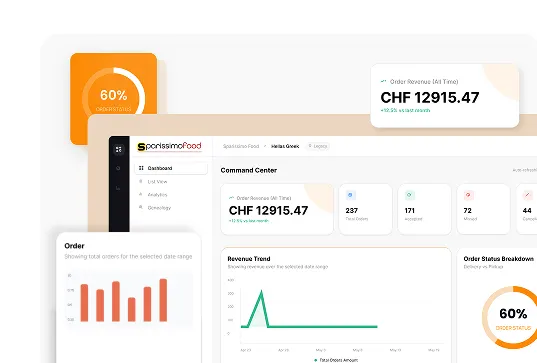
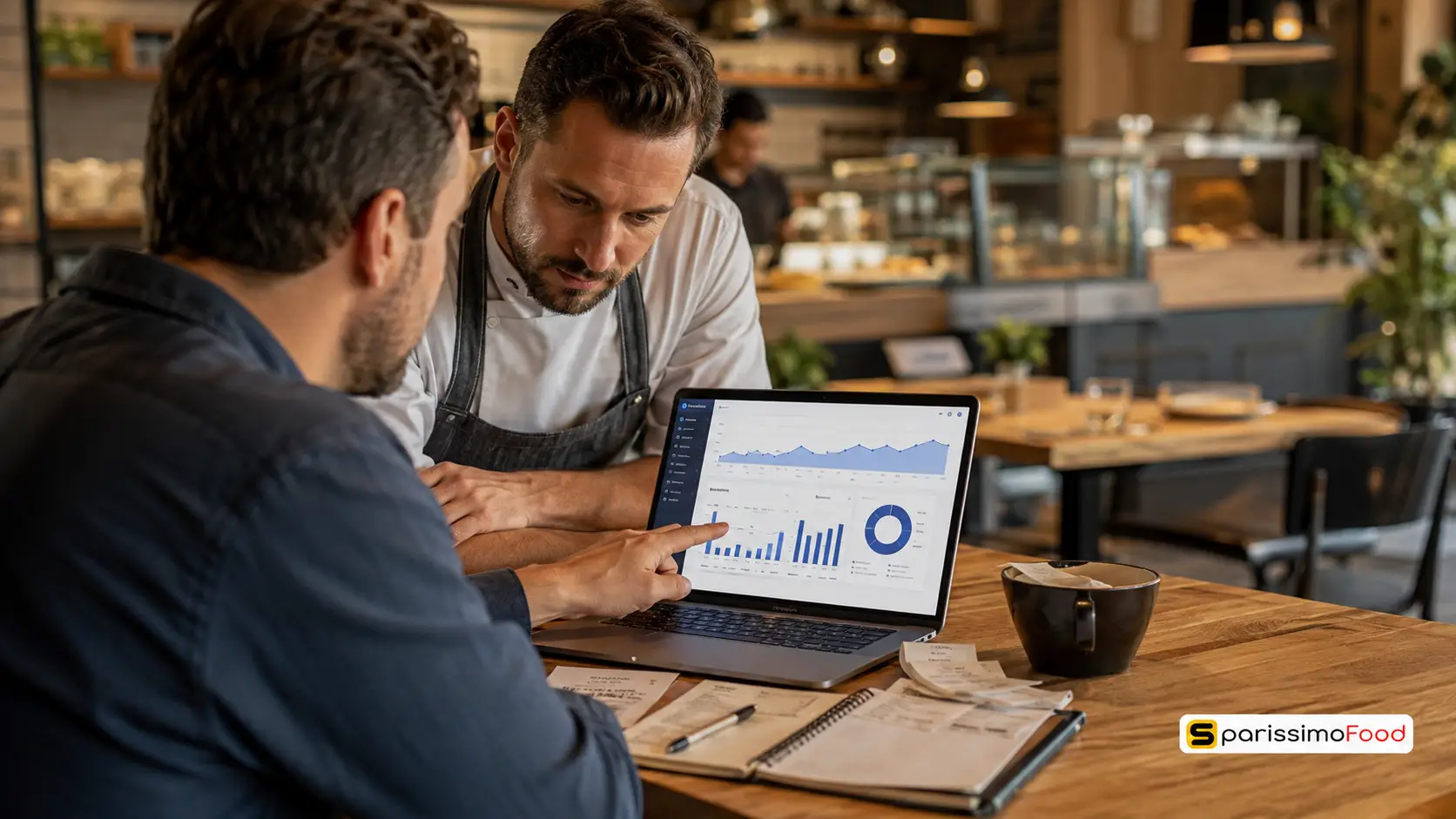
Analytics to Inform Your Campaigns. SparissimoFood’s manager dashboard shows you order volume by day and week, which dishes sell best and when, and how your direct ordering compares to other channels. This data tells you when to send your specials email for maximum impact, which dishes to feature, and which customers are approaching the 45-day inactivity threshold for your win-back campaign.
The Commission Contrast. When you shift a delivery order from Just Eat (10–30% commission) to SparissimoFood (5–8% commission), you recover CHF 7–8 per order in margin. That recovered margin can fund email marketing tools, improve the offers in your email campaigns, or simply stay in your business. Every direct order improves both the quality of your marketing data and the economics of your menu.
SparissimoFood starts at CHF 49/month on the Starter plan (8% commission) and CHF 79/month on the Business plan (5% commission). Explore the current plan options at manage.sparissimofood.com/plans.
Frequently Asked Questions
How often should a restaurant send marketing emails? One to two promotional emails per month is the recommended cadence for Swiss restaurants. This frequency maintains guest awareness without generating inbox fatigue or unsubscribes. Automated campaigns, including welcome emails, first-order follow-ups, win-back sequences, and birthday emails, run in addition to this cadence because they are triggered by individual customer behaviour rather than broadcast to the full list. Guests experience them as personal messages, not marketing.
What should the subject line of a restaurant email include? An effective restaurant email subject line should be specific, create a degree of urgency or intrigue, and ideally include either the guest’s name or a specific dish or offer. Subject lines under 50 characters perform better on mobile devices, where the majority of Swiss email is now read. Tested examples that consistently achieve above-average open rates include: “[Name], your table is waiting”, “This week only: our spring menu launches Thursday”, and “It’s been a while, here’s something for your next visit.”
Can Swiss restaurants legally collect customer email addresses? Yes, provided the collection is transparent and consensual. The Swiss Data Protection Act (nDSG), revised and in force since September 2023, requires that customers provide explicit, informed consent before being added to a marketing list. This means clearly stating at the point of collection that the email address will be used for marketing communications, and providing a straightforward opt-out mechanism in every email sent. Collecting emails through an online ordering checkout, where the purpose is clearly stated during sign-up, is compliant with nDSG requirements.
What is the return on investment for restaurant email marketing? A 2026 study cited by Verified Emails found that businesses across industries earned between CHF 36 and CHF 42 for every CHF 1 invested in email marketing, with top performers exceeding CHF 70. For independent Swiss restaurants, the return takes the form of more frequent repeat visits, higher average order values from loyal customers, and a reduction in the cost of customer acquisition. Restaurants that build email lists through direct ordering and run six to eight automated campaigns typically attribute 10–20% of their direct ordering revenue to email over time.
What is the most effective email type for restaurants? Automated milestone emails, including welcome emails, first-order follow-ups, and birthday messages, consistently outperform broadcast promotional emails on all key metrics. They achieve open rates of 40–60% compared to 25–35% for general promotions, and they generate revenue on autopilot without manual effort once configured. The win-back campaign targeting lapsed customers who have not ordered in 45 days is particularly high-impact: these guests already know and like your restaurant and require only a reason and a reminder to return.
A guest who ate at your restaurant last Friday and receives your email next Wednesday is not being marketed to. They are being reminded.
.Ds4FHhSq_ZxC9WE.webp "Restaurant Upselling Techniques That Don't Feel Pushy")
.CXCr6fQt_Z11gsYh.webp "Build a Branded Restaurant App Without Developers")
.y09Xtv8Z_1gH6f6.webp "Set Up Restaurant Online Ordering in Under a Week")
.B-Rl4IDw_Z204OoN.webp "Restaurant Loss Prevention and Theft Guide")
.DPpk5JZR_AlrVy.webp "Restaurant Communication During Peak Hours | Guide 2026")
.B6eEizW1_Z2bHQYl.webp "Restaurant Menu Pricing Strategies That Actually Protect Your Margins in 2026")
.CRszlDy5_2neUXu.webp "How to Migrate from GloriaFood Without Disruption: A Technical Step-by-Step Guide")
.kT6N2QP-_1Tp2j1.webp "GloriaFood Is Shutting Down on April 30, 2027 — What Every Restaurant Owner Needs to Do Now")