
Convert Delivery App Customers to Direct Orders: 8 Swiss Tips
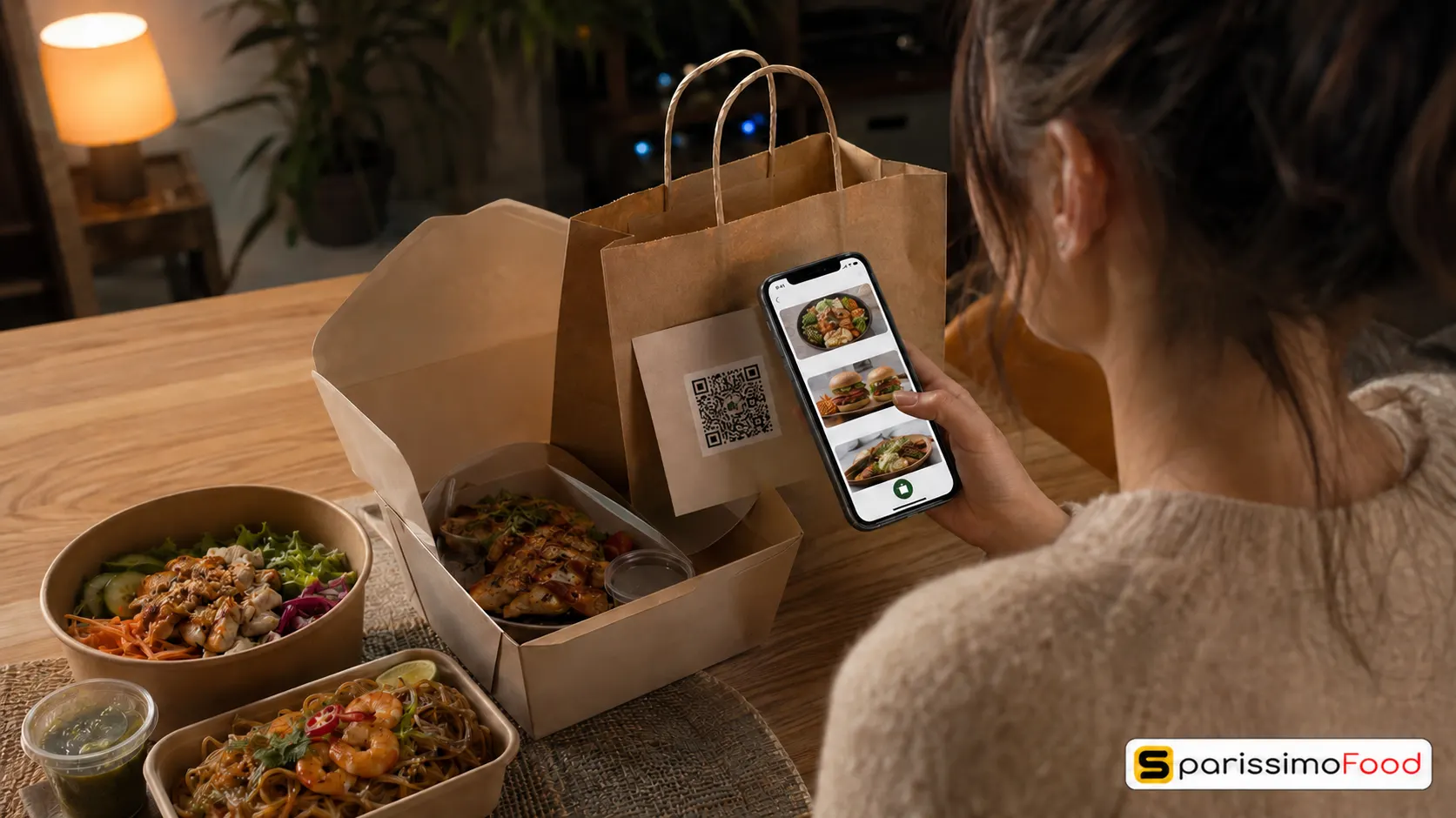

Quick Answer: Converting delivery app customers into direct orders requires shifting third-party platforms from revenue sources to customer acquisition channels. Swiss operators can migrate diners by placing high-converting QR vouchers inside delivery bags, offering exclusive direct menu bundles, and implementing first-party loyalty programs. Owning guest data allows restaurants to reclaim margins lost to aggregator commissions.
Relying on third-party delivery apps is a costly trap for Swiss restaurants. Platforms like Just Eat and Uber Eats charge steep commissions ranging from 25% to 30% on every order. In high-cost Swiss cantons like Zurich, Geneva, and Bern, these fees destroy your operating margins.
Furthermore, aggregators hide customer contact details. You do not own the guest relationship. They own your customers and charge you repeatedly for access.
Whether you are an independent owner like Marco, a manager like Fatima, or a multi-location operator like Stefan, this dependency limits your growth. For Marco, losing 30% per pizza erodes profitability. For Fatima, handling app delivery glitches creates operational stress. For Stefan, losing customer data prevents consistent marketing across multiple locations.
Marco runs a busy Italian pizzeria in Winterthur. He noticed that despite processing dozens of delivery orders every evening, his bank balance barely moved. High aggregator commissions ate up his hard-earned profit. Fatima, managing a popular burger venue in Bern, struggled with driver delays and missing customer numbers during rush hours. Stefan, operating five locations across Zurich and Lucerne, realized he had zero insight into his regular diners because aggregators shielded customer data.
However, you can turn delivery apps to your advantage. Treat third-party apps as acquisition channels to attract new diners. Then, convert those diners into loyal direct orders.
This guide explains how to convert delivery app customers to direct orders systematically. We share proven, data-driven strategies for Swiss owners and managers.
The Financial Reality: Third-Party Commissions vs. Direct Ordering Margins
Many Swiss restaurant owners underestimate the financial damage of aggregator reliance. They see high transaction volumes on delivery portals. However, they ignore the net profit per ticket.
Let us look at a concrete Swiss financial calculation. Suppose a customer orders CHF 50 worth of food via Just Eat in Basel:
- Gross Order Value: CHF 50.00
- Third-Party Commission (30%): CHF 15.00
- Payment Processing Fee: CHF 1.50
- Net Revenue to Restaurant: CHF 33.50
From that remaining CHF 33.50, you must cover food ingredients, kitchen labor under L-GAV regulations, utilities, and rent. In Switzerland, food cost averages 30% (CHF 15.00) and labor averages 40% (CHF 20.00).
After accounting for operational expenses, third-party delivery orders often run at a net financial loss. You are essentially cooking food for free while the delivery platform takes the profit. To understand these costs in detail, read our breakdown of Just Eat commission costs in Switzerland.
Now, compare this with a direct online ordering channel. When a customer orders directly through your website:
- Gross Order Value: CHF 50.00
- Direct Platform Fee (5–8%): CHF 3.50
- Net Revenue to Restaurant: CHF 46.50
That represents an immediate margin improvement of CHF 13.00 per order. If your restaurant processes 400 delivery orders monthly:
- Monthly Savings: 400 orders × CHF 13.00 = CHF 5,200.
- Annual Profit Boost: 12 months × CHF 5,200 = CHF 62,400.
This extra profit flows directly to your bottom line. It covers your fixed overheads and strengthens your business against economic downturns. Discover more about platform pricing in our guide on restaurant online ordering costs in Switzerland.
| Metric | Third-Party Aggregator (Just Eat / Uber Eats) | Direct Restaurant Ordering Channel |
|---|---|---|
| Commission Rate | 25% – 30% per order | 5% – 8% per order |
| Customer Data Ownership | Retained by App (Anonymous) | 100% Owned by Restaurant |
| Menu Price Control | Restricted / Subject to parity rules | Complete Freedom & Bundling |
| Net Margin on CHF 50 Order | CHF 33.50 | CHF 46.50 |
| Brand Loyalty | Belongs to Delivery App | Belongs to Your Restaurant |
Data from the Swiss Federal Statistical Office (FSO) confirms rising operating expenses in hospitality. Reclaiming your customer relationships is no longer optional. It is essential for long-term financial survival.
Furthermore, Swiss tax regulations treat takeaway and delivery orders differently. In Switzerland, takeaway food benefits from a reduced MWST rate of 2.6%, compared to the standard 8.1% rate for dine-in service. When ordering through third-party apps, complex invoicing often obscures these tax benefits. Operating your own direct channel simplifies MWST accounting and ensures you capture maximum tax efficiency on every order.
Consider driver logistics as well. Many Swiss operators assume third-party delivery is cheaper than hiring staff. However, hybrid delivery models or on-demand dispatch partners allow you to offer direct delivery without fixed fleet costs. The margin difference between a 30% commission and a low flat-rate dispatch fee is substantial.
Strategy 1: The In-Bag Packaging Funnel (Flyers, QR Codes, and Bounce-Back Vouchers)
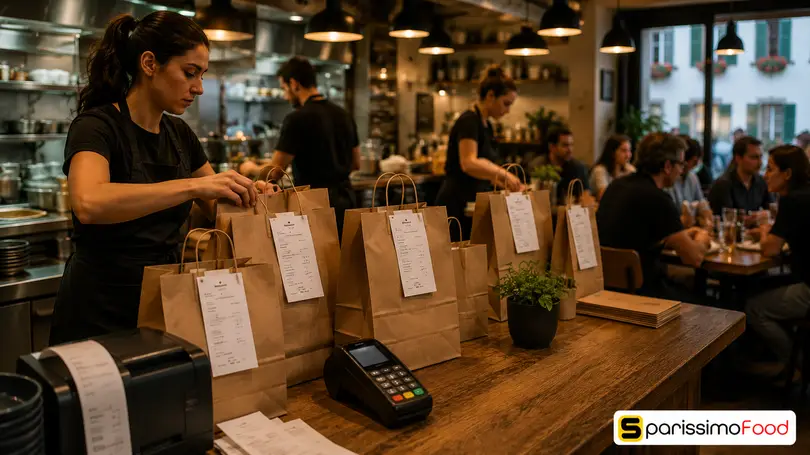
The moment a customer opens their takeout bag at home is your best marketing opportunity. The food is hot, the customer is hungry, and your brand has their full attention.
Do not deliver a plain bag with a generic third-party receipt. Use in-bag marketing to convert app buyers into direct customers.
Include a high-quality physical voucher card inside every delivery bag. The voucher must give the customer a clear financial reason to order directly next time.
Make your offer compelling. For example, offer CHF 10 off their next direct website order.
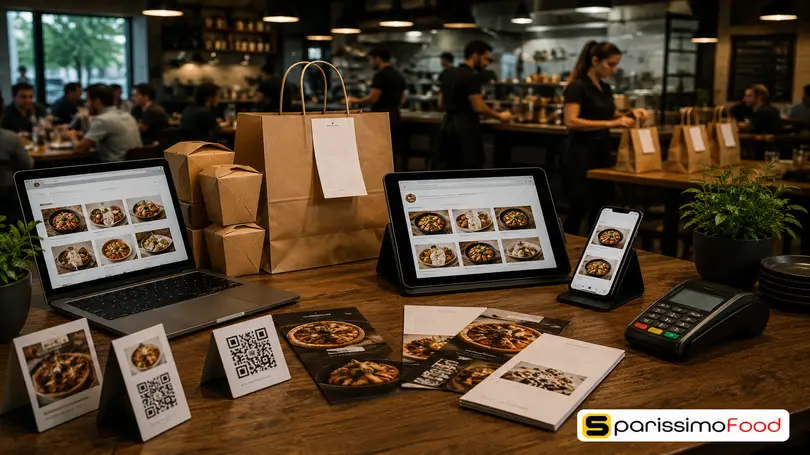
Use a prominent QR code on the flyer. Scanning the code with a Natel should open your direct online menu instantly. Do not send customers to a complex homepage. Send them directly to the ordering page.
Keep your call to action short and clear:
- Headline: “Support Local. Save Money.”
- Offer: “Get 15% off your first direct order with code DIRECT15.”
- Action: “Scan QR code or visit our website to order directly.”
Print QR codes on your pizza boxes, paper bags, and receipts. A simple sticker on the burger wrapper saying “Order direct next time for free delivery” catches the eye.
Track conversion rates by creating unique coupon codes for in-bag flyers. This data shows exactly how many third-party diners make the switch each month.
Ensure your packaging materials reflect quality. Cheap flyers get thrown away immediately. Thick cardstock with crisp printing signals a professional restaurant.
Train kitchen staff to place a flyer in every single third-party bag. Make bag stuffing a standard step in your order assembly process.
To boost response rates, add a personal touch to your in-bag inserts. A small hand-written note from the kitchen team saying “Enjoy your meal! Order direct next time to support our crew” builds an emotional connection that corporate delivery apps cannot match.
You can also experiment with scratch-off voucher cards. Customers love the interactive element of scratching a card to reveal a discount code. This gamified approach significantly increases redemption rates compared to standard paper flyers.
Use branded tamper-evident tape on your takeout boxes. Print a message directly on the tape: “Sealed fresh for you. Order direct next time on our website for faster delivery.”
Strategy 2: Strategic Price Tiering and Exclusive Direct Menu Engineering
Price parity rules on third-party apps often prevent you from listing lower prices on your website. However, you can use smart menu engineering to make your direct channel far more attractive.
First, list higher prices on third-party apps to cover their 30% commission. If a pasta dish costs CHF 22 on your direct menu, price it at CHF 27 on Just Eat. This price adjustment protects your profit margin on aggregator orders.
Second, create exclusive menu items available only on your direct ordering site. Customers love exclusivity. Offer special family combo meals, seasonal dishes, or chef specials exclusively on your website.
On delivery apps, offer only single items. On your direct platform, offer value bundles. For example, create a “Weekend Feast Bundle” containing two mains, a shared appetizer, and two drinks for CHF 65.
This bundling strategy increases your average check size while offering genuine value to the customer. To learn how menu structure influences buying decisions, read our guide on restaurant menu pricing strategies.
Third, offer customizable meal modifiers only on your direct site. Allow direct customers to choose custom sauces, extra toppings, or premium sides. Third-party platforms limit these options.
Display clear banners on your direct ordering site highlighting these perks. Let visitors know that direct orders get larger portions, exclusive dishes, and better deals.
Review your menu performance quarterly. Remove low-margin items from third-party apps entirely. Keep your best-selling, high-margin dishes on your direct portal to drive traffic.
Consider offering limited-edition seasonal items exclusively through direct ordering. For instance, introduce a truffle fondue burger during winter months available only on your website. This creates urgency and forces fans of your cuisine to order directly. Implement seasonal menu rotations to keep your direct channel fresh. Highlight limited-time Swiss seasonal ingredients e.g., fresh wild mushrooms in autumn or white asparagus in spring exclusively on your direct site. Seasonal urgency encourages repeat orders from regular guests.
Furthermore, offer exclusive beverage pairings on your website. Partner with local Swiss microbreweries or wineries to create meal-and-drink bundles. Third-party apps restrict alcohol delivery rules or complicate licensing, giving your direct site a unique selling point.
Strategy 3: Digital Touchpoint Optimization (Google Business Profile & Social Links)
When a customer searches for your restaurant on Google, third-party apps actively bid on your brand name. If you do not claim your digital touchpoints, Just Eat will capture your orders.
Optimize your Google Business Profile immediately. Ensure the primary “Order Online” button links directly to your first-party ordering page, not to Uber Eats or Just Eat.
Google allows you to set a preferred order link. Select your direct ordering site as the primary choice. This simple update redirects search traffic away from expensive commission platforms.
Update your social media profiles on Instagram and Facebook. Place your direct ordering link in your bio. Use clear stickers e.g., “Order Direct Here” on your Instagram stories.
Run local social media campaigns targeting nearby residents. Post appetizing videos of your signature dishes. Include a direct ordering button with an exclusive discount code for local followers.
Add a permanent notification banner to your official website. Display a clear message prompting visitors to order directly on your site for faster service and exclusive deals.
Ensure your website loads quickly on mobile devices. Most delivery orders are placed on a Natel. If your direct site takes more than three seconds to load, customers will switch back to a delivery app.
Monitor your Google search presence regularly. Search for your restaurant name in incognito mode. Verify that your direct link appears above aggregator ads.
Set up Google Local Services ads linked directly to your order page. By capturing high-intent local searches for “pizza delivery near me”, you gain direct customers at a fraction of aggregator commission costs. Google Maps is another critical channel for local discovery. Make sure your Google Maps listing features a direct link to your ordering portal. When Swiss workers search for a quick lunch on their phones, a direct “Order Online” link on Google Maps drives instant conversion without aggregator fees.
Add a direct ordering link to your WhatsApp Business profile. Many Swiss guests prefer messaging restaurants directly. Providing a automated WhatsApp ordering link creates a seamless mobile experience.
Strategy 4: Building First-Party Customer Data and Email/SMS Lists
Third-party delivery apps block access to customer data. They provide only a first name and a temporary phone number. This setup prevents you from marketing directly to your guests.
When customers order through your direct platform, you capture complete contact details. You collect their email address, mobile number, order history, and dining preferences.
This first-party data is your most valuable marketing asset. It allows you to build targeted remarketing campaigns at virtually zero cost.
Set up automated email campaigns for new direct customers. Send a welcome message 24 hours after their first order. Include a small discount on their next direct purchase.
Segment your customer list based on ordering habits. Send pizza promotions to guests who order on Friday nights. Send lunch specials to workplace customers on Tuesday mornings.
Use SMS marketing for time-sensitive promotions. Send a short text message on rainy evenings: “Skip the cooking tonight! Order direct from us and get free delivery. Tap link to order.”
SMS messages achieve an open rate above 90% within five minutes. This speed makes text marketing ideal for boosting slow evening sales.
Respect Swiss data protection laws (DSG). Always include an opt-in checkbox during direct checkout. Give customers full control over their communication preferences.
Collect guest feedback after direct orders. Send an automated survey asking: “How was your meal tonight?” Use positive responses to build your online reputation. Read our strategies on how to get Google reviews for your restaurant.
Analyze ordering frequency to re-engage inactive customers. If a regular guest has not ordered in 30 days, trigger an automated SMS with a “We miss you” discount to bring them back. Set up automated re-engagement workflows for dormant diners. If a direct customer has not placed an order in 60 days, trigger a friendly email with a CHF 10 discount. Automated win-back campaigns reactivate lapsed guests before they drift back to third-party delivery apps.
Create birthday automation flows. Ask direct customers for their birth date during registration. Send them a CHF 15 gift voucher on their birthday to encourage a celebratory feast with friends.
Strategy 5: Launching a Direct-Only Loyalty Program
Loyalty programs build habit-forming behavior. If customers earn points every time they order directly, they have a strong incentive to avoid third-party apps.
Design a simple, rewarding loyalty scheme. For example, give customers 10 points for every CHF 1.00 spent on your direct platform.
Allow them to redeem points for tangible food rewards. A customer might redeem 200 points for a free starter or 500 points for a free main course.
Third-party delivery apps cannot replicate your specific in-house loyalty rewards. This exclusivity makes your direct channel far more attractive over time.
Promote your loyalty program on every takeout bag and receipt. Remind customers that ordering on your website earns points toward free meals.
Offer instant sign-up bonuses. Give new users 50 free points when they create a direct ordering account. This instant reward lowers the barrier to registration.
Send automated progress updates via email or Natel text. Remind customers when they are close to unlocking a free dessert or main course.
Gamify the experience with tiered rewards. Create Silver, Gold, and VIP tiers for frequent diners. VIP members can enjoy perks like free delivery or priority kitchen preparation.
Keep reward redemption frictionless. Allow customers to apply points with a single click during online checkout.
Establish double-points days during slow mid-week periods. Offering double loyalty points on Monday and Tuesday evenings drives direct order volume when kitchen capacity is underutilized. Run seasonal double-points campaigns during slow periods. For instance, offer double loyalty points during quiet November weeks before the December holiday rush. This targeted promotion keeps your kitchen busy and reinforces the habit of ordering directly on your website.
Incorporate surprise rewards into your program. Occasionally drop a secret bonus dish or free drink into a loyal customer’s direct order. Delight creates word-of-mouth recommendations among neighbors.
Strategy 6: Staff Education and Transparent Customer Messaging
Many diners use third-party apps simply because they do not understand how delivery platforms operate. They assume apps are neutral services that help local restaurants.
Educate your customers about the real cost of delivery apps. Honest, transparent messaging builds strong community support.
Train your front-of-house staff to educate pickup guests. When a customer picks up a phone order, the waiter can thank them for ordering directly and explain how it supports local jobs.
Place tasteful table tents in your dining room. Display a simple message asking guests to support your team by ordering direct on your website.
Share your story on social media. Explain how third-party commissions impact independent Swiss restaurants. Customers appreciate authenticity and actively choose to support local businesses when informed.
Ensure your service team handles direct delivery orders with extra care. Pack direct orders neatly and include a hand-written thank-you note on the box.
When direct customers experience superior service, they feel validated in their choice. This positive experience reinforces their habit of ordering directly.
Conduct monthly staff meetings to review direct ordering growth. Share commission savings with your team through performance bonuses. When staff benefit from direct sales, their enthusiasm increases. Track staff performance by issuing unique referral links or codes to your front-of-house team. Reward employees who generate the highest number of direct customer sign-ups each month. Internal sales incentives motivate your team to advocate for direct ordering enthusiastically.
Partner with local community groups and sports clubs. Offer exclusive direct ordering discount codes to club members. This builds deep local goodwill that third-party delivery algorithms cannot compete with.
Create a “Support Local Dining” initiative in your town. Collaborate with neighboring independent restaurants to co-promote direct ordering. Collective educational campaigns carry greater weight with local diners.
Strategy 7: Comparing Low-Commission Platforms for Swiss Operators
To convert delivery app diners successfully, your direct ordering software must perform flawlessly. A clunky ordering site will cause customers to abandon their carts and return to Just Eat.
Evaluate ordering software based on features that matter for retention:
- Mobile Performance: Fast loading times on Natel browsers.
- Payment Options: Full integration with Swiss payment methods, especially TWINT, credit cards, and Apple Pay.
- Data Control: Complete ownership of customer contact lists without export restrictions.
- Order Pacing: Ability to throttle kitchen tickets during peak rushes.
Many software solutions advertise low fees, but you must evaluate total operational costs. Explore choices in our review of the best low-commission online ordering platforms.
Choose a software solution that offers transparent, predictable pricing. A low fixed monthly fee paired with a small per-order commission provides the best balance of affordability and ongoing technical support.
Ensure your direct portal integrates cleanly with your point-of-sale (POS) system. Automatic ticket printing prevents kitchen confusion and speeds up order fulfillment.
Test your ordering flow weekly. Place a test order on your Natel to verify that checkout is smooth and payments process instantly. Check for hidden payment processing markups when evaluating software providers. Some ordering platforms advertise low monthly fees but charge extra credit card transaction fees. Ensure your provider offers transparent fees and supports direct TWINT payouts without delays.
Make sure your ordering platform includes automated driver dispatch if you do not employ full-time delivery drivers. On-demand delivery driver integration allows you to offer direct delivery without managing a permanent driver fleet.
Priorities platforms that offer automated guest notifications. Live SMS tracking updates e.g., “Your pizza is in the oven” or “Driver is 2 minutes away” build customer trust in your direct service.
How SparissimoFood Helps With Converting Delivery App Customers to Direct Orders
Migrating diners away from high-commission delivery apps requires robust digital infrastructure. SparissimoFood provides a complete, Swiss-focused platform designed to turn third-party buyers into loyal direct orders.
The platform includes a modern website builder that creates responsive, fast-loading ordering portals. Your site comes fully integrated with TWINT and standard credit card payments, allowing Swiss customers to complete checkouts in seconds.
SparissimoFood gives you 100% ownership of your customer data. You can export contact lists anytime and launch automated marketing campaigns to re-engage past diners. Furthermore, the built-in menu manager allows you to set up exclusive direct bundles and digital modifiers, maximizing your profit per ticket.
To protect your kitchen from rush-hour chaos, SparissimoFood features advanced kitchen throttling tools. You can pace incoming orders during peak times, ensuring high food quality and on-time deliveries. SparissimoFood supports multi-language ordering in English, German, and French. This feature is vital for Swiss restaurants serving diverse local and international populations. Your guests can order smoothly in their preferred language, boosting conversion rates across all cantons.
SparissimoFood offers three predictable pricing tiers tailored for Swiss restaurants:
- Starter: CHF 49 per month plus 8% commission per order. Includes table reservation tools for CHF 2.50 per reservation.
- Business: CHF 79 per month plus 5% commission per order. Table reservations cost CHF 2.00 each.
- Professional: CHF 148 per month plus 5% commission per order. Table reservations cost CHF 1.50 each.
Every plan includes a 14-day free trial with no credit card required. Explore how our system protects your margins on our pricing plans.
Frequently Asked Questions
How do I convince delivery app customers to order directly from my restaurant? To convince delivery app customers to order directly, place physical voucher cards with QR codes inside every third-party delivery bag. Offer a clear financial incentive, such as CHF 10 off their first direct order or exclusive menu bundles that are not available on aggregator apps.
Why are third-party delivery apps bad for restaurant profitability in Switzerland? Third-party delivery apps charge Swiss restaurants commissions between 25% and 30% per order. Combined with high Swiss labor and ingredient costs, these steep fees eliminate net profit margins, forcing restaurants to cook food at a financial loss.
Can I charge higher prices on Just Eat or Uber Eats than on my own website? Yes, Swiss restaurant operators can adjust prices on third-party delivery apps to offset high commission fees. Raising aggregator prices while keeping your direct website prices lower creates a clear financial incentive for guests to order directly from your site.
How does customer data ownership help increase direct restaurant orders? Owning your customer data allows you to collect guest email addresses and mobile numbers. With this information, you can send targeted email promotions, birthday offers, and SMS alerts to encourage repeat direct orders without paying third-party platform fees.
What payment methods are essential for a direct restaurant ordering system in Switzerland? A direct restaurant ordering system in Switzerland must support TWINT, credit cards (Visa and Mastercard), and Apple Pay. Offering TWINT is critical, as it is the most popular mobile payment method among Swiss diners and ensures a fast, frictionless checkout experience.
Treat delivery apps as temporary discovery tools, but build your long-term business on direct customer relationships.
.Ds4FHhSq_ZxC9WE.webp "Restaurant Upselling Techniques That Don't Feel Pushy")
.CXCr6fQt_Z11gsYh.webp "Build a Branded Restaurant App Without Developers")
.y09Xtv8Z_1gH6f6.webp "Set Up Restaurant Online Ordering in Under a Week")
.B-Rl4IDw_Z204OoN.webp "Restaurant Loss Prevention and Theft Guide")
.DPpk5JZR_AlrVy.webp "Restaurant Communication During Peak Hours | Guide 2026")
.B6eEizW1_Z2bHQYl.webp "Restaurant Menu Pricing Strategies That Actually Protect Your Margins in 2026")
.CRszlDy5_2neUXu.webp "How to Migrate from GloriaFood Without Disruption: A Technical Step-by-Step Guide")
.kT6N2QP-_1Tp2j1.webp "GloriaFood Is Shutting Down on April 30, 2027 — What Every Restaurant Owner Needs to Do Now")