
How to Increase Restaurant Profit Margins | Switzerland 2026

Quick Answer: Restaurant profitability is the result of two variables: revenue and costs. Every lever that improves your margin falls on one of those two sides. In Switzerland, where the average net profit margin for restaurants runs between 3% and 9%, the fastest route to a higher margin is not raising prices. It is reducing your prime cost (food + labour combined) below 65% of revenue, shifting delivery orders away from high-commission platforms, and increasing revenue per table without increasing seat count. A Swiss restaurant generating CHF 800,000 in annual revenue that moves from a 4% to a 7% net margin earns an additional CHF 24,000 in net profit, with no new customers and no additional rent.
Most Swiss restaurant owners measure their profitability once a year, when the accountant produces the figures. By then, the decisions that determined those figures were made months ago: the supplier contracts signed in January, the staffing choices made in March, the menu prices set and never reviewed since the rebranding in 2022.
Profit is not an outcome. It is a consequence of dozens of operational decisions made throughout the year. The operators who understand this finish the year at 8% or 9%. The ones who do not finish at 3% or less.
What Is a Restaurant Profit Margin, and What Is the Swiss Benchmark?
A restaurant’s net profit margin is the percentage of total revenue remaining after all costs: food, labour, rent, utilities, insurance, marketing, and platform commissions.
Net Profit Margin = (Total Revenue − Total Expenses) ÷ Total Revenue × 100
A restaurant generating CHF 800,000 in revenue with CHF 760,000 in total costs produces CHF 40,000 in net profit, a margin of 5%.
According to industry data from Gastro Suisse, Swiss restaurants typically operate within a net margin range of 3% to 9%, with the average independent restaurant sitting closer to 4–5%. Top-performing operators in casual and mid-range dining consistently reach 8–10% by controlling costs with the same discipline they apply to their food.
The gross profit margin, by contrast, deducts only cost of goods sold (COGS), meaning ingredients and direct materials, before overhead and labour:
Gross Profit Margin = (Revenue − COGS) ÷ Revenue × 100
Tracking both matters. Gross profit margin tells you whether your menu is priced correctly. Net profit margin tells you whether your business model is sustainable.
The Four Cost Lines That Determine Swiss Restaurant Profitability
| Cost Category | Swiss Target Range | What Happens If You Miss It |
|---|---|---|
| Food cost (COGS) | 27–30% of revenue | Every % above target destroys 1% of net margin |
| Labour cost | 33–37% of revenue | Swiss wages leave no room for 40%+ labour |
| Overhead (rent, utilities, etc.) | 15–20% of revenue | Fixed costs cannot be cut short-term |
| Net profit | 3–9% of revenue | What remains after the above three |
Prime cost, the sum of food cost and labour, is the single most important metric for day-to-day profitability management. In Switzerland, a sustainable prime cost sits between 60% and 65% of revenue. Above 68%, most restaurants will not cover their overhead and will post a loss.
The Five Profit Levers Every Swiss Restaurant Operator Controls
Profitability has exactly two drivers: more revenue from the same cost base, or lower costs from the same revenue base. Every practical action falls into one of five levers.
Lever 1: Increase Revenue Per Order, Not Customer Count
The cheapest revenue you will ever generate comes from a customer already sitting in your dining room or already on your ordering platform. They have already paid for themselves in terms of the fixed cost of the table, the server’s time, and the kitchen’s preparation.
Increasing your average order value (AOV) by CHF 5 per transaction across 80 daily orders produces CHF 146,000 in additional annual revenue with zero additional customer acquisition cost, zero additional rent, and no increase in your seat count.
The tactics: menu engineering (positioning high-margin items in the Golden Triangle of your menu), digital upselling via QR-code ordering, bundle offers, minimum delivery thresholds, and staff training in specific, timed suggestive selling. Each of these is covered in detail in our guide to increasing restaurant average order value.
What this does to your profit margin: If your current net margin is 5% on CHF 800,000 revenue (CHF 40,000 net profit), and AOV improvements generate CHF 60,000 in additional revenue with minimal incremental cost, your net profit can approach CHF 90,000, a margin of approximately 9.5%. The fixed cost base barely moves; the top line does.
Lever 2: Increase Revenue Per Seat, Not Seat Count
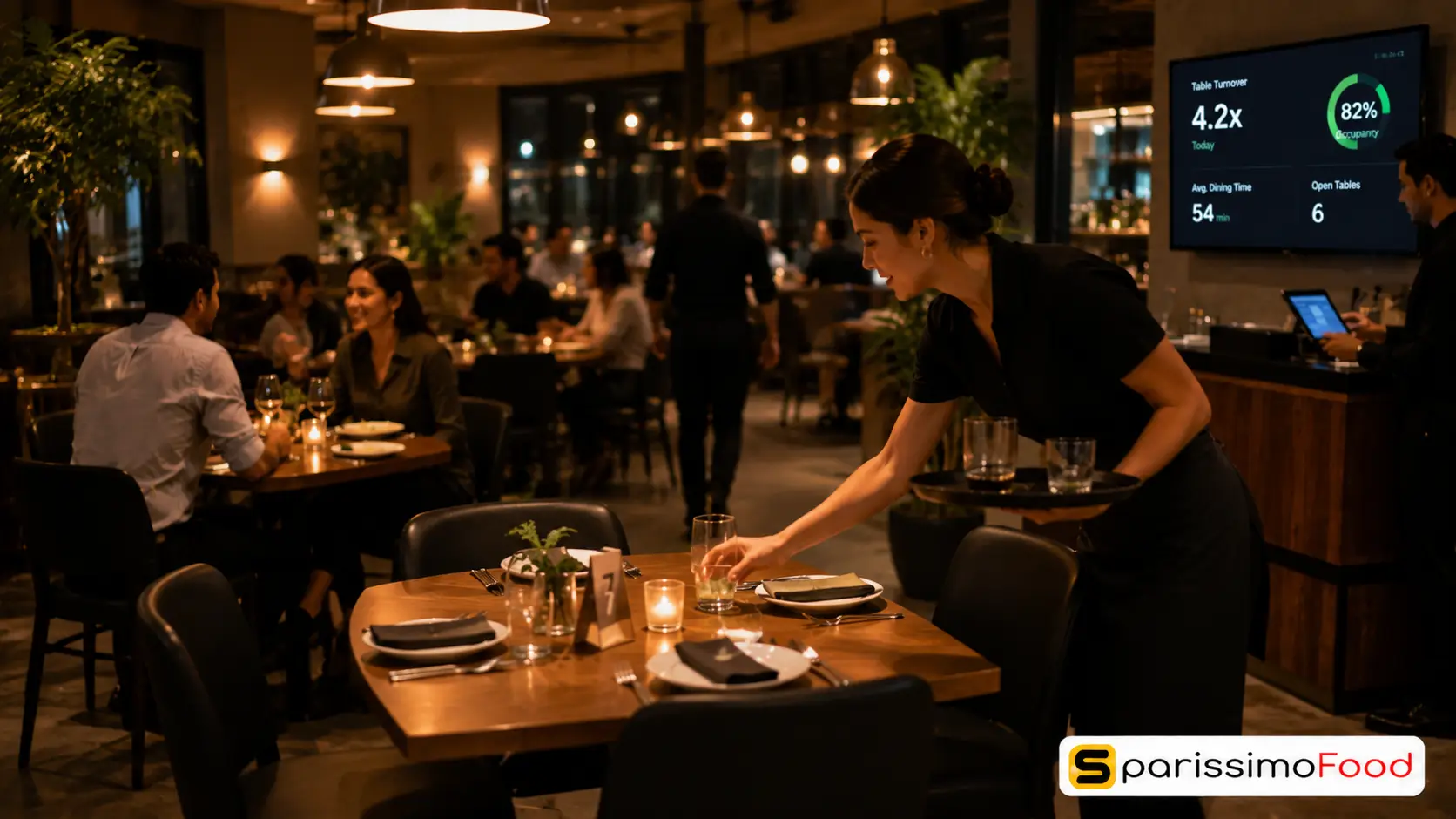
Table turnover rate is the number of times a table is occupied per service. A restaurant with 30 covers and an average occupancy time of 90 minutes can serve 2 seatings per 3-hour service at 100% occupancy. At 120 minutes average per table, it can only serve 1.5.
That 30-minute difference per table per service translates directly into revenue. A restaurant with CHF 38 AOV and 30 covers that turns its tables 2.0 times rather than 1.5 times in a dinner service earns CHF 570 more per service: CHF 38 × 30 × 0.5 extra turns = CHF 570. At 250 dinner services per year, that is CHF 142,500 in additional annual revenue from the same dining room.
The practical improvements: QR-code ordering (reduces time from seating to first order), integrated digital payment (reduces time from last course to table cleared), and reservation system management to reduce gaps between seatings. A full breakdown of these tactics is available in our table turnover rate guide.
Lever 3: Shift Delivery Revenue to Your Direct Channel
This is the single fastest margin improvement available to any Swiss restaurant currently using Just Eat, Uber Eats, or a comparable aggregator platform as a primary delivery channel.
Third-party delivery commissions in Switzerland run 10–30% per order. On a CHF 35 delivery order via Just Eat:
| Revenue and Cost Breakdown | CHF |
|---|---|
| Menu price | 35.00 |
| Platform commission (27%) | −9.45 |
| Payment processing (~2%) | −0.70 |
| Packaging | −1.50 |
| Food cost (30% of base) | −10.50 |
| Net per order (before labour and overhead) | 12.85 |
That CHF 12.85 must still cover kitchen labour, server time, and a share of fixed overhead. In most Swiss operations, this results in near-zero or negative net margin per delivery order. Every third-party delivery order fulfilled at current prices is either breaking even or losing money.
Shifting the same order to a direct online ordering platform at a commission of 5–8% fundamentally changes this calculation. If you run that same CHF 35 order through a platform charging 6%:
| Revenue and Cost Breakdown | CHF |
|---|---|
| Menu price | 35.00 |
| Direct platform commission (6%) | −2.10 |
| Payment processing (~1.5%) | −0.53 |
| Packaging | −1.50 |
| Food cost (30%) | −10.50 |
| Net per order (before labour and overhead) | 20.37 |
CHF 7.52 more per order: recovered margin that covers your kitchen team. At 50 delivery orders per week, that is CHF 376 per week in recovered margin, or approximately CHF 19,600 per year. For the full breakdown of what Just Eat and Uber Eats cost Swiss restaurants per order, see our Just Eat commission guide.
Lever 4: Control Your Prime Cost Weekly
Prime cost is the sum of your food cost (COGS) and labour cost for a given period. It is the single most actionable metric in restaurant management because it is the one you can influence week to week.
Prime Cost % = (Food Cost + Labour Cost) ÷ Total Revenue × 100
For a Swiss restaurant generating CHF 20,000 in weekly revenue:
| Scenario | Food Cost | Labour Cost | Prime Cost | Prime Cost % |
|---|---|---|---|---|
| Underperforming | CHF 6,500 | CHF 8,200 | CHF 14,700 | 73.5% |
| Target | CHF 5,800 | CHF 7,200 | CHF 13,000 | 65.0% |
| Outperforming | CHF 5,400 | CHF 6,800 | CHF 12,200 | 61.0% |
The difference between the underperforming and the target scenario is CHF 1,700 per week, or CHF 88,400 per year. That CHF 88,400 does not require a new revenue source. It requires managing food cost and scheduling more precisely.
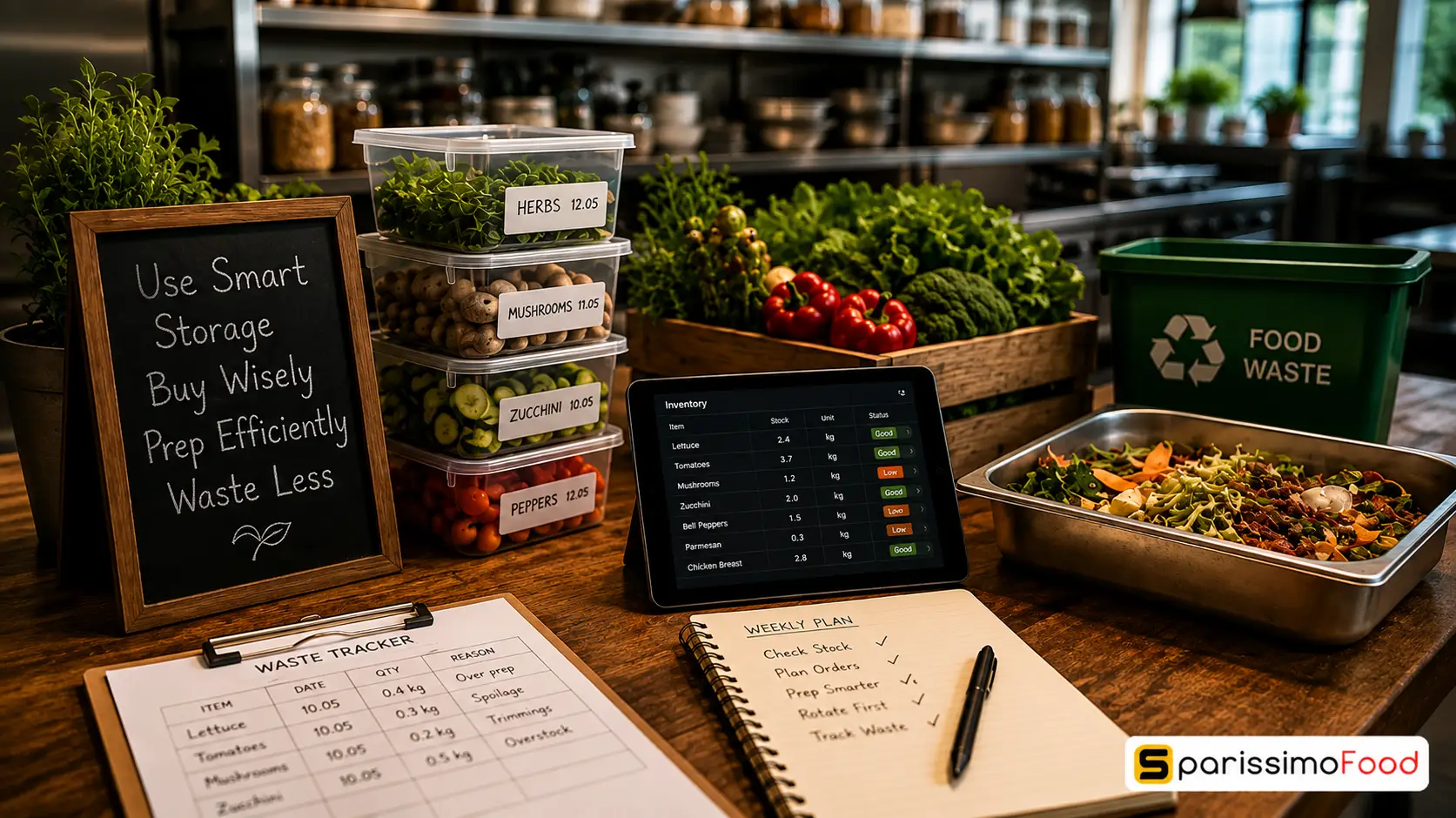
Reducing food cost requires accurate recipe costing (knowing the exact ingredient cost per dish), portion control, weekly inventory counts to catch waste and shrinkage before they compound, and supplier price monitoring. The restaurant recipe management guide covers the systems behind this. Our restaurant loss prevention guide addresses the shrinkage and theft component, which typically accounts for 2–5% of revenue in unmanaged operations.
Reducing labour cost requires matching scheduling to actual demand. A restaurant overstaffed by one cook on a quiet Tuesday is paying CHF 200–300 in unproductive labour. Across a year of quiet periods, this accumulates quickly. Schedule to your order volume data, not to habit.
Lever 5: Review and Reprice Your Menu Every Six Months
Swiss food wholesale prices rose 11.4% between 2022 and 2025, according to the Swiss Federal Statistical Office. A menu priced in 2023 and unchanged since is generating 4–6 percentage points less gross margin than its owner intended. Over a full year of service, this compounds into a significant and invisible profit leak.
Price reviews are not optional. They are routine maintenance. The practical process: every six months, re-cost your ten highest-volume dishes at current supplier prices. Identify any item where your actual food cost percentage has drifted more than 3 percentage points above your target. Prioritise in that order: reprice first, then adjust portion sizes, then renegotiate the supplier contract.
A well-engineered menu that prices dishes correctly for your Swiss cost structure is the foundation every other profitability lever rests on. If your menu is underpriced, upselling generates less margin. If your food cost is running at 34% when you need 29%, higher table turnover does not help. It accelerates the loss. For the step-by-step process of correctly costing and pricing each dish, see our guide on how to price a restaurant menu.
How SparissimoFood Helps Increase Restaurant Profitability
SparissimoFood operates on the revenue side and the cost side of your profitability equation simultaneously.
Direct Ordering Channel: Margin Recovery. SparissimoFood is a direct online ordering platform that lets your customers order from you without routing through Just Eat or Uber Eats. The commission is 5–8% per order compared to the 10–30% that aggregators charge. For every CHF 1,000 of delivery revenue you shift from an aggregator to your direct channel, you recover CHF 170–220 in gross margin immediately, with no operational change to how you prepare or deliver the order.
SparissimoFood starts at CHF 49/month on the Starter plan (8% commission) and CHF 79/month on the Business plan (5% commission). The payback on the monthly fee for a restaurant doing CHF 5,000/month in delivery volume is reached after approximately the first CHF 700–900 in orders redirected from aggregators. Everything after that is recovered margin.
Customer Data Capture: Repeat Revenue Without Acquisition Cost. Every direct order placed through SparissimoFood captures the customer’s contact information, specifically email and phone, which the restaurant owns directly and not the platform. This data enables targeted re-engagement: a message to customers who have not ordered in 30 days, a promotion to your top 50 customers during a slow period, a birthday offer. Repeat customers cost nothing to acquire. They are the cleanest revenue on your P&L.
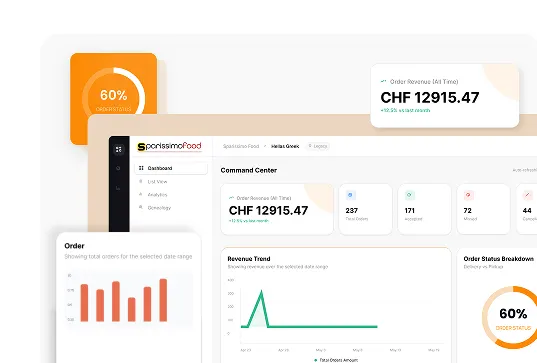
Analytics Dashboard: Prime Cost Visibility. SparissimoFood’s manager dashboard gives you real-time order volume data by day, week, and channel. This is the operational input for both scheduling (labour cost management) and inventory planning (food cost management). A restaurant that staffs to actual demand rather than habit, informed by real order flow data, runs a structurally lower labour cost than one that schedules by feel.
Explore current plan options at manage.sparissimofood.com/plans.
Frequently Asked Questions
What is the average net profit margin for a restaurant in Switzerland? Swiss restaurant net profit margins typically range from 3% to 9%, according to Gastro Suisse and broader European hospitality research. The average independent casual dining restaurant sits closer to 4–5%. Restaurants at the upper end of this range, achieving 8–10%, consistently share three characteristics: they manage prime cost below 65% of revenue, they review and reprice their menus at least twice per year, and they generate a meaningful share of their delivery revenue through direct channels rather than aggregator platforms.
What is prime cost and why is it the most important metric in restaurant profitability? Prime cost is the sum of food cost (cost of ingredients) and direct labour cost, expressed as a percentage of revenue. The formula is: Prime Cost % = (Food Cost + Labour Cost) ÷ Total Revenue × 100. It is the most actionable profitability metric because it covers the two largest and most controllable cost categories in any restaurant. A Swiss restaurant with prime cost above 68% will typically not cover its overhead and will post a loss. A restaurant with prime cost below 62% has the structural room to be profitable. Track prime cost weekly, not monthly.
What are the fastest ways to increase restaurant profitability? The three fastest levers, in order of speed and control: (1) shift delivery orders from third-party platforms (10–30% commission) to a direct ordering channel at 5–8% commission. This improves per-order margin immediately with no operational change; (2) re-cost your highest-volume dishes and reprice any item where food cost percentage has drifted above target, which recovers margin without impacting revenue; (3) audit your weekly schedule against actual order volume data and eliminate overstaffed periods, which reduces labour cost without affecting service quality.
What food cost percentage should a Swiss restaurant target? Swiss restaurants should target a food cost of 27–30% of revenue, which is lower than the 28–35% often cited in US-focused guides. The reason is structural: Swiss labour costs consume 33–37% of revenue, which is higher than most other markets. Running food cost at 33% on top of 37% labour leaves only 30% for overhead and profit, which is insufficient to cover Swiss rent, utilities, insurance, and platform costs while producing a viable net margin. Every percentage point of food cost reduction converts directly to net margin.
How does delivery platform commission affect restaurant profit margins? Third-party delivery platforms in Switzerland charge 10–30% commission per order. This means that for every CHF 35 delivery order processed through Just Eat or Uber Eats, the restaurant retains approximately CHF 12–14 before food cost, and often less than CHF 5 after food cost, packaging, and payment processing. In most Swiss restaurants, delivery orders via aggregator platforms produce near-zero or negative net margin at current menu prices. Shifting even a portion of delivery volume to a direct channel with 5–8% commission recovers CHF 6–8 per order in gross margin, which is the difference between a loss and a profitable channel.
A restaurant’s profit margin is not what the market allows. It is what the operator builds, one operational decision at a time.

.Ds4FHhSq_ZxC9WE.webp "Restaurant Upselling Techniques That Don't Feel Pushy")





.CXCr6fQt_Z11gsYh.webp "Build a Branded Restaurant App Without Developers")
.y09Xtv8Z_1gH6f6.webp "Set Up Restaurant Online Ordering in Under a Week")
.B-Rl4IDw_Z204OoN.webp "Restaurant Loss Prevention and Theft Guide")


.DPpk5JZR_AlrVy.webp "Restaurant Communication During Peak Hours | Guide 2026")


.B6eEizW1_Z2bHQYl.webp "Restaurant Menu Pricing Strategies That Actually Protect Your Margins in 2026")
.CRszlDy5_2neUXu.webp "How to Migrate from GloriaFood Without Disruption: A Technical Step-by-Step Guide")
.kT6N2QP-_1Tp2j1.webp "GloriaFood Is Shutting Down on April 30, 2027 — What Every Restaurant Owner Needs to Do Now")