
Restaurant Marketing Ideas That Drive Orders | What Works

Quick Answer: Most “restaurant marketing ideas” guides list 30 to 50 tactics with no order of operations, which is exactly why so few restaurants act on more than two or three of them. The tactics that actually move orders fall into three tiers, run in sequence: fix discovery first (a Google Business Profile with regular photos gets roughly 42% more direction requests), then capture the guests you already have into a direct-channel list you can message for close to nothing (SMS gets read within minutes, and loyalty members already make up 39% of restaurant visits), and only then spend time on community and social tactics. Running these out of order, a social contest before a working SMS list, a paid ad before your Google listing even points to your own ordering page, is the single biggest reason restaurant marketing budgets underperform.
A restaurant owner scrolling a “50 restaurant marketing ideas” article on a slow Tuesday night has maybe 45 minutes and no marketing department. The list doesn’t tell them which three of the fifty actually matter for a single-location restaurant with a modest monthly marketing budget, so most of it never gets done.
That’s the real problem with most restaurant marketing content: length instead of sequence. This guide covers fewer tactics, in the order that produces orders, with the Swiss-specific numbers behind each one, and links through to the full playbook for each tactic that deserves more than a paragraph.
Why Most “Restaurant Marketing Ideas” Lists Don’t Drive Orders
Search “restaurant marketing ideas” and the results converge on the same format: 10, 26, or 50 tactics, ranked by nothing in particular, mixing a CHF 0 Google Business Profile fix with a CHF 2,000 interior redesign as if they belonged on the same list.
Three problems repeat across almost all of them. First, no prioritisation: a photo contest and a functioning direct-order page get equal billing, even though one takes twenty minutes and the other determines whether every other tactic on the list has anywhere to send a guest. Second, vanity metrics stand in for revenue: likes, followers, and impressions get cited as proof a tactic “works,” without connecting to an actual order. Third, almost none of it is Switzerland-specific: no CHF numbers, no TWINT, no mention of the consent rules that govern SMS and email marketing here, which matters because a US-written guide’s advice on text-message timing or payment options doesn’t transfer directly.
None of that means the individual tactics are bad. A loyalty programme, an SMS list, a better Google listing, community partnerships, all of these work. What’s missing from most lists is the order to run them in, and that order matters more than the total count.
The Three-Tier Priority Framework
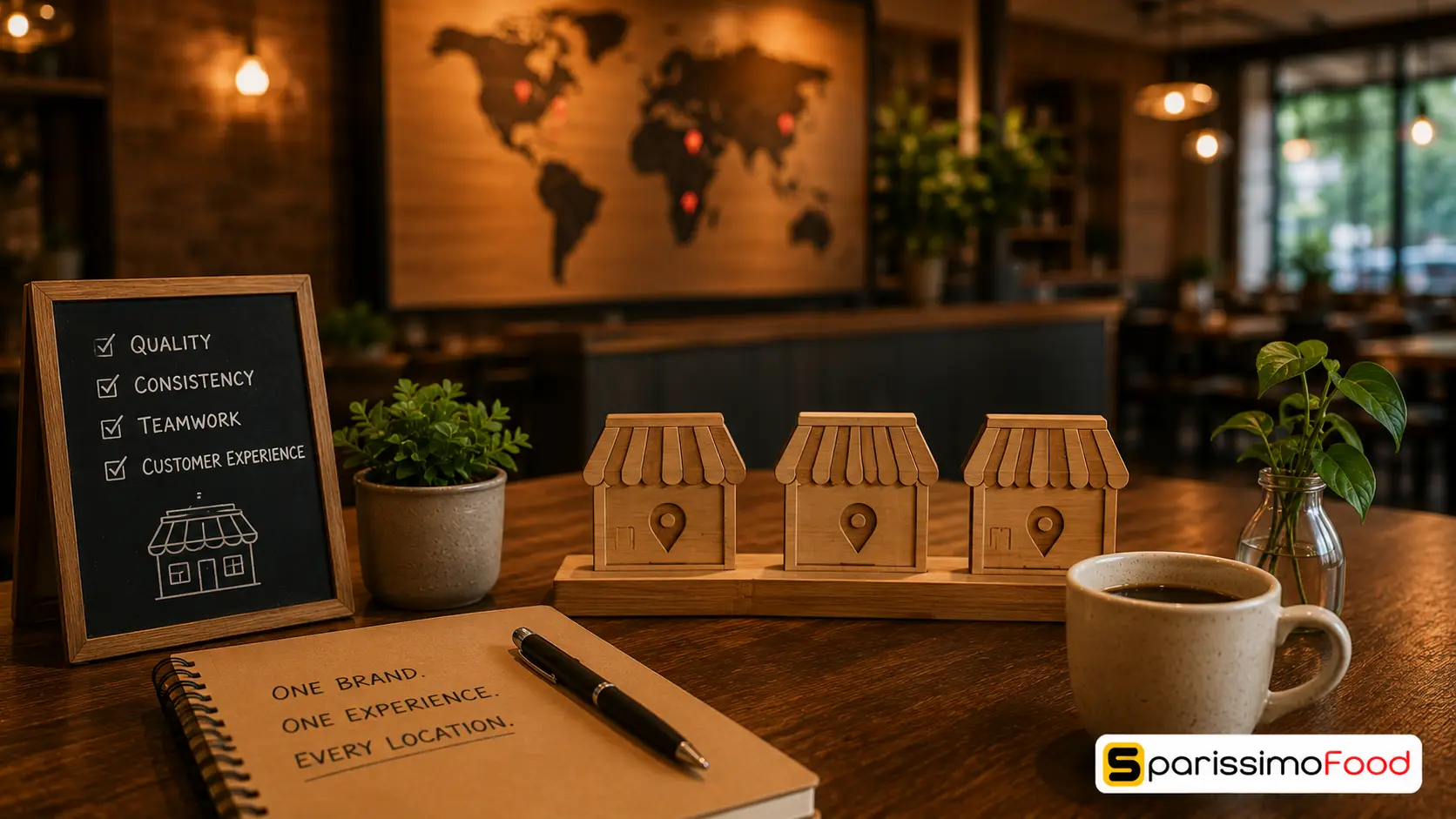
Every restaurant marketing tactic falls into one of three tiers, and the tiers have a dependency: each one only pays off once the tier before it works.
Tier 1: Get found and get chosen. A complete Google Business Profile, a working review flow, and an ordering link that actually points to your own page. If this tier is broken, every guest a later tactic sends your way lands somewhere that loses them.
Tier 2: Turn guests into repeat direct orders. SMS, email, and loyalty rewards, all running on data you own, not a marketplace’s. This is where most of the compounding return lives, because messaging an existing guest costs a fraction of acquiring a new one.
Tier 3: Local and community amplification. Partnerships, events, and social content that widen your reach. These work, but only after Tier 1 and Tier 2 are in place to catch and keep the extra guests they bring in.
Spending on Tier 3 while Tier 1 is broken is the most common and most expensive mistake: a restaurant sponsors a local youth team, drives a wave of new visibility, and loses a meaningful share of that traffic to a Google listing that still links to a third-party marketplace, or a checkout that abandons 70% of started orders before payment. Fix the leak before you pay to fill the funnel.
Tier 1: Get Found and Get Chosen
This tier costs close to nothing and takes an afternoon, which is exactly why skipping it is the most avoidable mistake on this list.
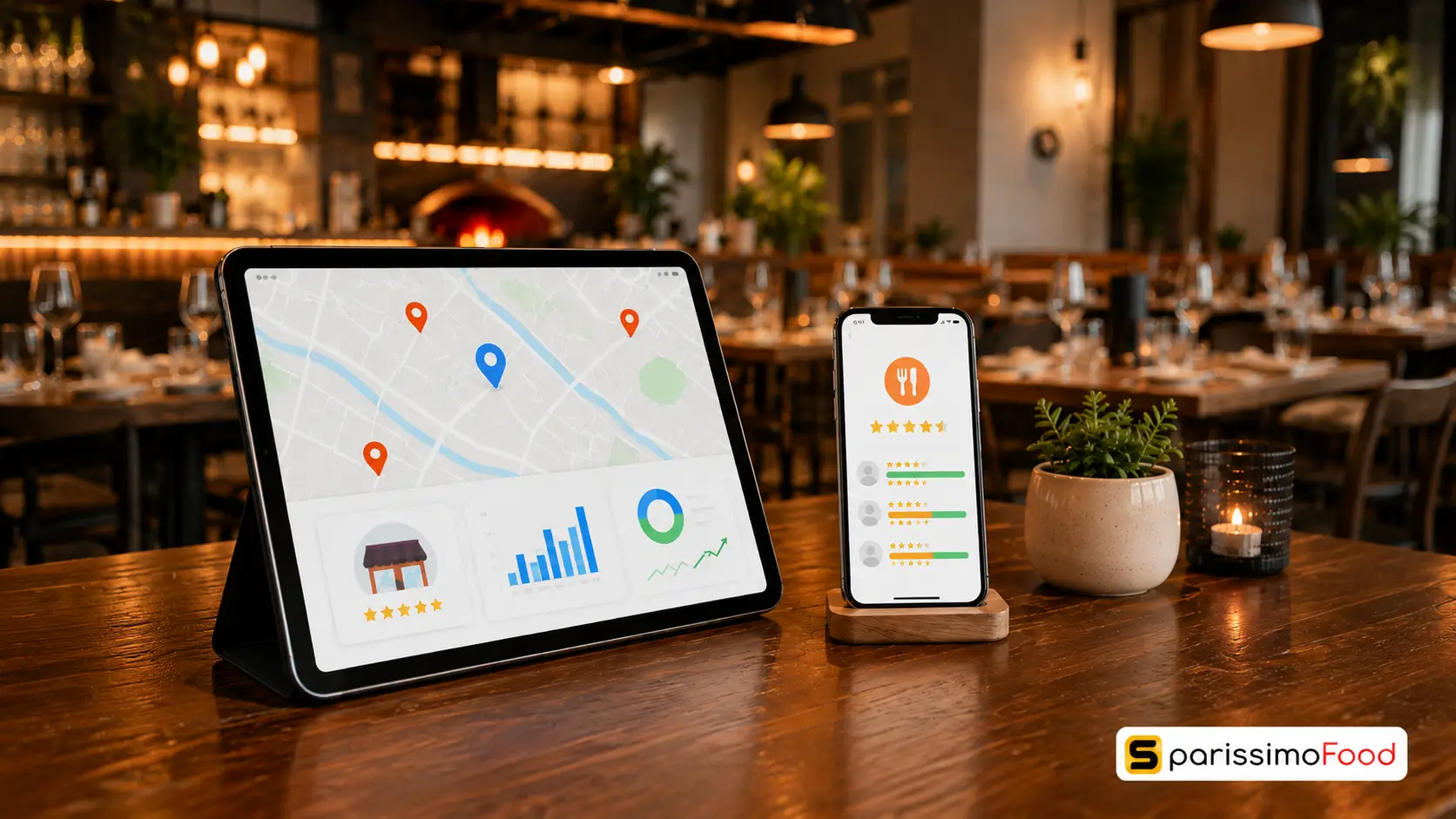
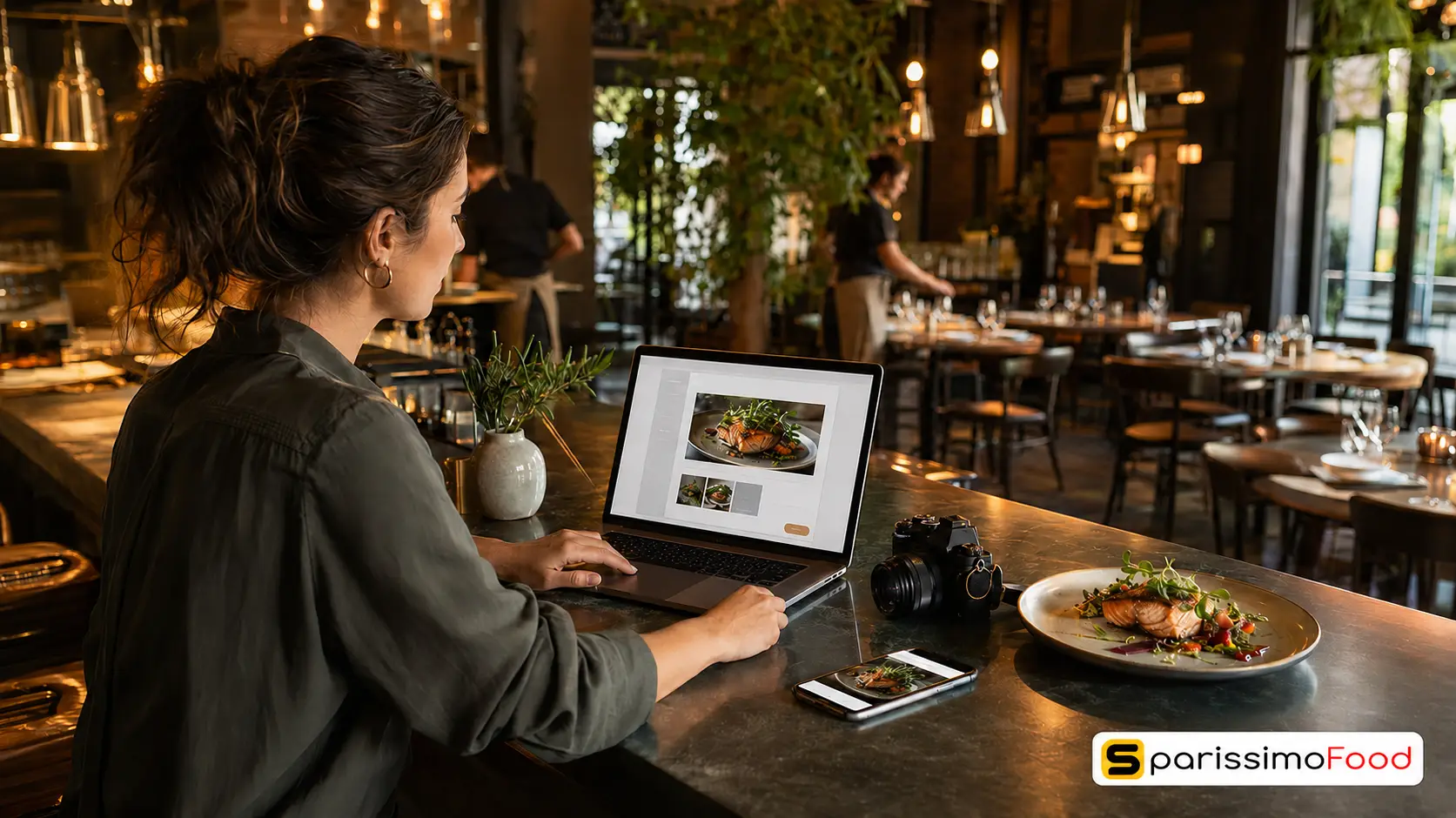
Complete your Google Business Profile and keep it current. Hours, menu link, photos, and attributes (outdoor seating, dietary options) all belong there, filled in fully rather than left at the defaults from when the listing was first claimed. Google’s own reporting on business profiles found that listings with regularly updated photos get roughly 42% more direction requests, and 90% of people say they’re more likely to visit a business that has photos on Search and Maps. A photo taken on a phone this week outperforms professional photos from three years ago that nobody’s looked at since.
Check which ordering link Google is actually showing. By default, Google Business Profile often surfaces a third-party marketplace’s ordering link rather than your own, the same default-link problem covered in our guide to setting up online ordering. Every guest who taps that link and orders is paying a marketplace commission you never had to give up; correcting one setting is the single highest-leverage five minutes on this entire list.
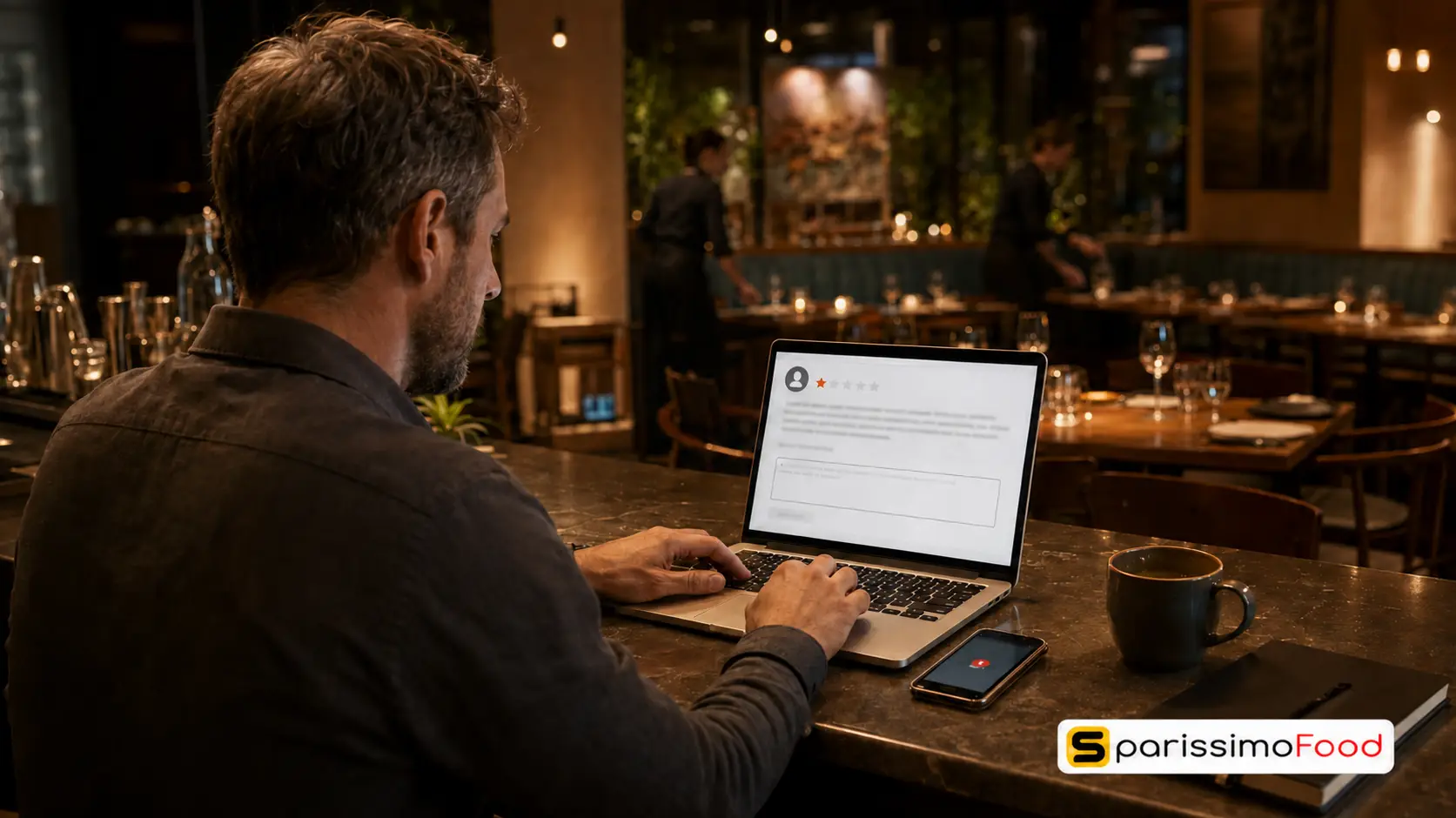
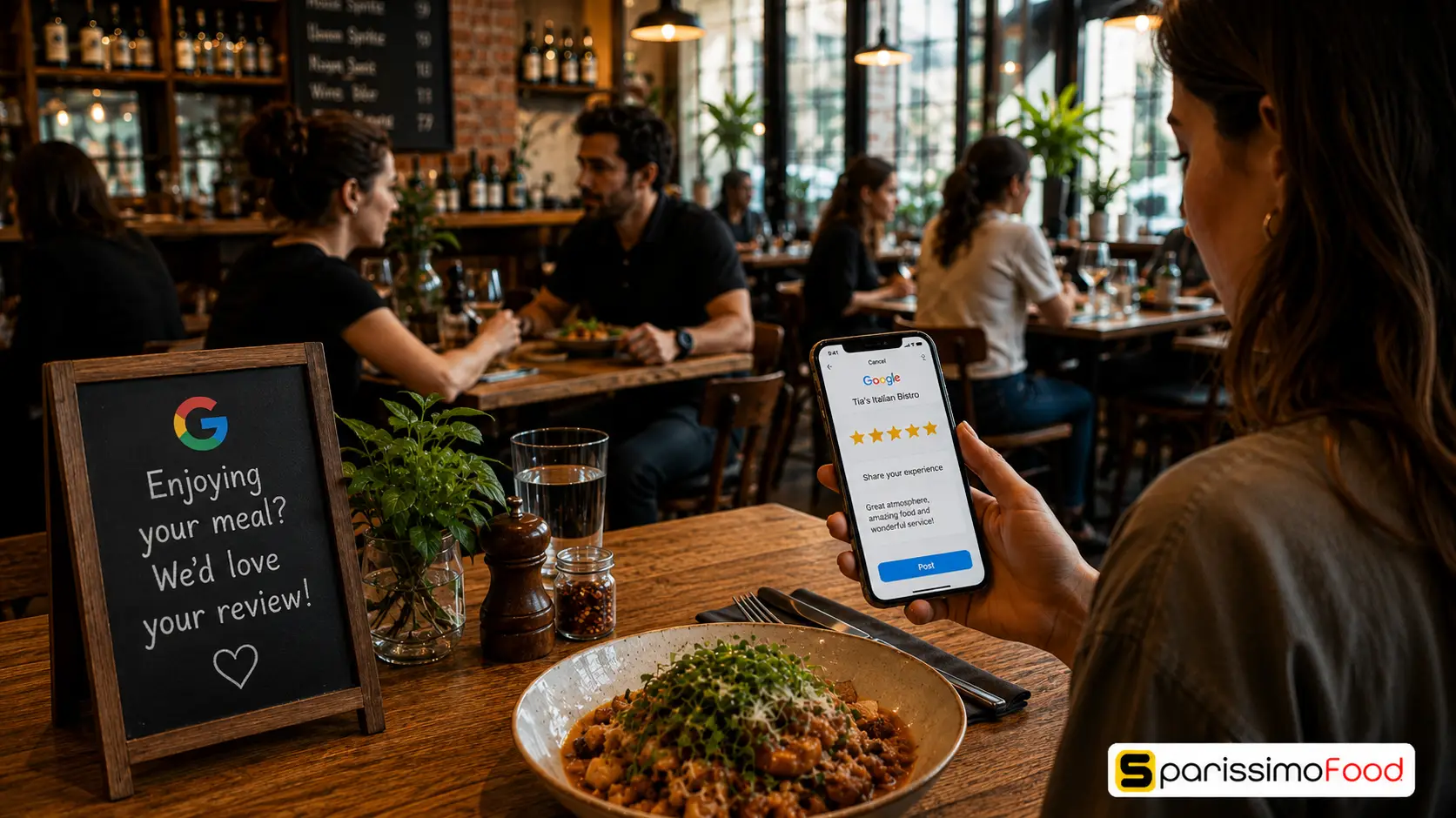
Build a review flow that doesn’t rely on guests remembering to leave one. A QR code on the receipt or table tent, linked to a short prompt, converts far more reliably than hoping someone opens their laptop later that night. Review volume and response rate both factor into local search ranking, so a restaurant that replies to every review, good or bad, within a day or two consistently outranks one that never responds at all.
None of this requires a marketing budget. It requires an hour, once, and then ten minutes a week to keep photos and reviews current.
Tier 2: Turn Guests Into Repeat Direct Orders
This is where restaurant marketing actually compounds, because the guest already knows you. Reaching them again costs a fraction of what it cost to reach them the first time, and it doesn’t depend on an algorithm’s mood that week.
SMS is the highest-read channel available to a restaurant, by a wide margin. Text messages get read within minutes for roughly nine in ten recipients, against email’s closer-to-one-in-five open rate. Our full guide to automated SMS marketing covers the five sequences worth building first (welcome offer, reservation reminder, win-back for lapsed guests, post-visit review request, milestone reward) and the Swiss consent rule under the Federal Act Against Unfair Competition (UWG) that most SMS guides, written for the US market, get wrong entirely.
Loyalty is the single most-researched restaurant marketing tactic, and the data backs it, when it’s built on real ordering data. Loyalty members made up 39% of all restaurant visits in 2024, roughly double their share in 2019, and members visit their enrolled restaurant at close to twice the rate of non-members. Our guide to what actually makes loyalty programmes work walks through the second-visit rate, the one number most restaurants never measure, and the 30-day window after a first reward redemption that decides whether a programme sticks.
A worked example, at a scale most independent restaurants can recognise. A restaurant with 400 guests in its direct-channel list (captured through checkout, a QR-code table order, or a reservation) sends one monthly SMS offer. At a typical Swiss SMS rate of CHF 0.05 to 0.10 per message, reaching the full list costs CHF 20 to 40. If 8% redeem a CHF 6 discount at a CHF 34 average order value, that’s 32 orders and roughly CHF 1,088 in revenue, against a total campaign cost, discount plus sending, of around CHF 230. That gap, a few hundred francs spent against over a thousand in revenue, is the entire case for building this tier before spending on anything in Tier 3.
A name for the number worth tracking: the Owned-Reach Ratio. Owned-Reach Ratio = (guests in your SMS, email, or loyalty list) ÷ (average monthly guest count) × 100. A restaurant with 1,200 monthly guests and 300 captured contacts has a 25% ratio, meaning three-quarters of the people who already walked through the door or ordered once are unreachable except by luck. If that ratio sits below roughly 30–40%, the highest-leverage next step isn’t a new acquisition tactic; it’s fixing the capture mechanism, most often converting delivery-app guests into direct, contactable orders, since a marketplace order never hands back a phone number or email at all.
None of this works if the destination it points to leaks guests. An SMS offer that links to a checkout abandoning 70% of started orders, the industry-wide pattern covered in our checkout abandonment guide, converts a fraction of what the same offer would convert on a checkout that shows the delivery fee early and accepts TWINT. Fixing checkout isn’t a separate project from marketing; it’s the last three metres of every marketing campaign this tier runs.
Tier 3: Local and Community Marketing That Fits an Independent Restaurant
Tier 3 is where most generic marketing lists spend the majority of their word count, sponsorships, influencer partnerships, theme nights, photo contests, because it’s the most fun to write about. It’s real, and it works, but only after the first two tiers are catching what it brings in.
Local partnerships cost nothing but a conversation. A cross-promotion with a nearby gym, salon, or coworking space, “show your receipt from next door for 10% off,” introduces your restaurant to guests who already trust a business one street over. It costs nothing beyond the discount itself and takes one conversation to set up.
Community sponsorship builds slow, durable recognition. Sponsoring a local youth sports team, a school event, or a Verein active in the neighbourhood puts your name in front of families who eat out regularly, at a cost that’s usually a few hundred francs a season rather than a recurring line item. It won’t move next week’s numbers, but it compounds the way a loyalty programme does: slowly, and in your favour.
Social content works best as a byproduct, not a project. A phone, natural light, and a weekly fifteen-second video of something being plated or poured outperforms a polished, infrequent campaign, because consistency matters more than production value on every platform guests actually use to decide where to eat. Keep it to what fits inside an already-busy shift; a restaurant with no dedicated marketing person doesn’t need a content calendar, it needs one habit that survives a Friday night.
User-generated content is free advertising you don’t have to make yourself. A branded hashtag on a table tent and a habit of resharing tagged posts costs nothing and puts your food in front of a guest’s entire network, at zero production cost to you.
The 90-Day Sequence: What to Run First, Second, and Third
Trying all three tiers simultaneously is how a restaurant ends up three months in with a half-finished Google listing, an SMS platform nobody’s used, and a sponsored youth team jersey, and no clear read on what any of it did.
Weeks 1–2: Tier 1, in full. Complete the Google Business Profile, fix the ordering link, set up the QR-to-review flow. Cost: close to zero, mostly time.
Weeks 3–6: Tier 2, built once and left running. Set up the welcome and reminder SMS sequences, calculate your current Owned-Reach Ratio, and if it’s low, prioritise capture (QR inserts, a feedback survey at checkout) over content creation. Budget: roughly CHF 100–250 a month for a single-location restaurant, mostly SMS sending costs and modest reward funding, a fraction of what a single paid social campaign typically costs for a comparable reach.
Weeks 7–12: Tier 3, one tactic at a time. Pick one local partnership and one recurring content habit, not five of each. Measure whether Tier 1 and Tier 2 are actually catching the traffic Tier 3 sends before adding a second Tier 3 tactic on top.
The restaurants that get real results from “restaurant marketing ideas” aren’t running more tactics than their competitors. They’re running three tiers in the right order instead of fifty tactics in no order at all.
How SparissimoFood Helps With Restaurant Marketing
The three tiers above only compound if the data behind them lives in one place instead of scattered across a marketplace, a separate SMS tool, and a spreadsheet nobody updates.
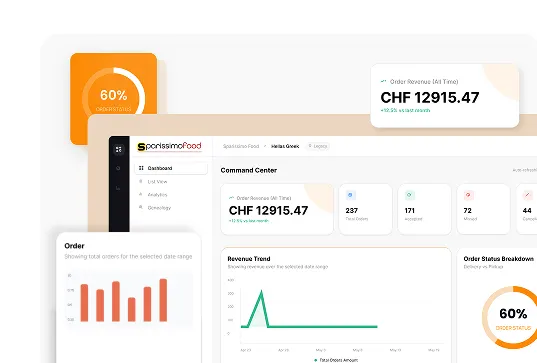
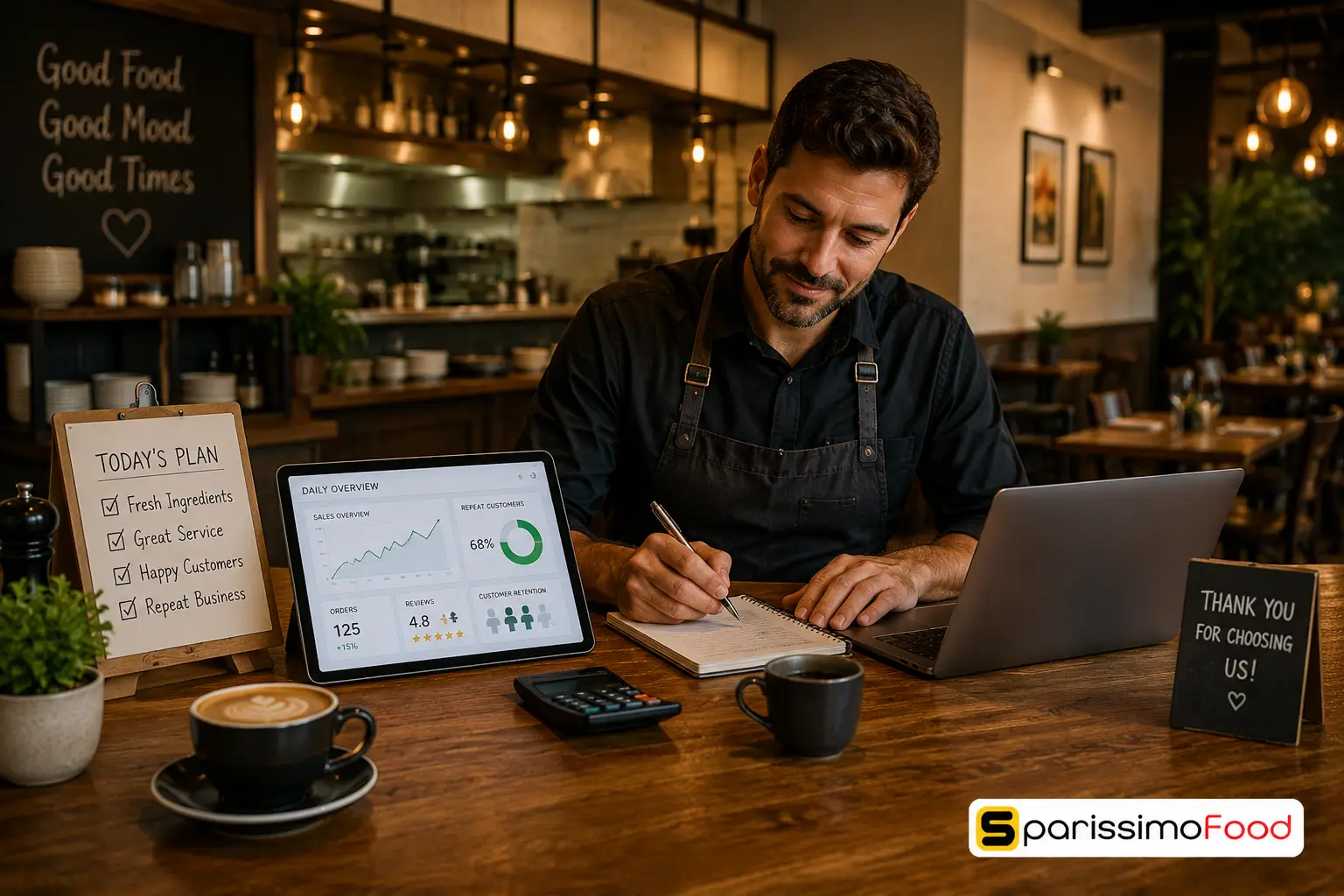
Every guest contact captured through SparissimoFood, whether at checkout, a QR-code table order, or a reservation, belongs to your restaurant, which is what makes the Owned-Reach Ratio in Tier 2 something you can actually calculate and improve rather than estimate. The manager dashboard shows order volume and repeat-guest activity in real time, so the worked SMS and loyalty economics above are numbers you can pull, not guess at. Because TWINT is built into checkout natively, an SMS offer or a Google listing link converts without the payment-method friction that quietly kills a share of every Tier 1 and Tier 2 campaign.
Pricing runs on the same predictable plans across the platform: Starter at CHF 49/month with an 8% commission, Business at CHF 79/month with 5%, and Professional at CHF 148/month, also at 5%, with a branded app and marketing support (Google and Facebook/Instagram ads run on your behalf) included on the higher tiers. None of that is commission-free; it’s a lower, predictable commission than the 25–30% a marketplace takes, with the ordering data, loyalty tracking, and SMS capture that make the tiers above possible sitting in one system instead of four.
The 14-day free trial requires no credit card, enough time to run Tier 1 in full and see the first Tier 2 sequence go out before deciding anything.
Frequently Asked Questions
What are the most effective restaurant marketing ideas for an independent restaurant?
For a single-location restaurant with limited time, the highest-leverage tactics are a complete, current Google Business Profile, a corrected ordering link, and an SMS or email list built from guests you already have. These cost little or nothing and typically outperform paid advertising, because they convert people who’ve already found you rather than trying to find new ones.
How much should a restaurant spend on marketing?
There’s no fixed number that works for every restaurant, and chasing a percentage-of-revenue benchmark matters less than sequencing spend correctly. Free and low-cost tactics, a complete Google listing, review capture, an SMS or email list, come first, because they convert guests who already found you; paid acquisition only makes sense once those foundations are catching the traffic they’d send.
Should a restaurant prioritise social media or SMS and email marketing?
SMS and email marketing, built on guests you already have, typically outperform social media for driving actual orders, because open rates on a text message (around 90%) or a well-segmented email dwarf what an average social post reaches organically. Social media still matters for discovery and brand, but it belongs in Tier 3, after a direct-channel list exists to convert the attention it generates.
Do restaurant loyalty programmes actually help with marketing?
Yes, when they’re built on real ordering data rather than a stamp card nobody tracks. Loyalty members made up 39% of restaurant visits in 2024 and visit their enrolled restaurant at close to twice the rate of non-members, but the effect depends on connecting rewards to actual guest behaviour rather than running a generic points system.
What’s the fastest restaurant marketing idea to implement this week?
Checking and correcting the ordering link on your Google Business Profile. It takes about five minutes, costs nothing, and if it’s currently pointing to a third-party marketplace, every guest who clicks it and orders is a commission you didn’t have to pay.
Fifty marketing ideas with no order of operations is a list. Three tiers, run in sequence, is a system, and only one of them fits inside a Tuesday night.
.Ds4FHhSq_ZxC9WE.webp "Restaurant Upselling Techniques That Don't Feel Pushy")

.CXCr6fQt_Z11gsYh.webp "Build a Branded Restaurant App Without Developers")
.y09Xtv8Z_1gH6f6.webp "Set Up Restaurant Online Ordering in Under a Week")
.B-Rl4IDw_Z204OoN.webp "Restaurant Loss Prevention and Theft Guide")
.DPpk5JZR_AlrVy.webp "Restaurant Communication During Peak Hours | Guide 2026")
.B6eEizW1_Z2bHQYl.webp "Restaurant Menu Pricing Strategies That Actually Protect Your Margins in 2026")
.CRszlDy5_2neUXu.webp "How to Migrate from GloriaFood Without Disruption: A Technical Step-by-Step Guide")
.kT6N2QP-_1Tp2j1.webp "GloriaFood Is Shutting Down on April 30, 2027 — What Every Restaurant Owner Needs to Do Now")