
How to Handle Customer Complaints in a Restaurant


Quick Answer: To handle customer complaints in a restaurant, listen without interrupting, match your response to how serious the problem actually is, and close the loop within the same visit, or within 24 hours if it happened online. Guests whose complaint gets fixed quickly return roughly 82% of the time, against just 19% when nothing is done at all, so speed matters more than generosity. Most unhappy guests never complain in the first place, they simply stop booking, which is why a written compensation policy beats staff improvising in the moment.
Roughly 96% of dissatisfied restaurant guests never say a word before they simply stop booking, according to research from TARP, the Technical Assistance Research Programs, that has been revalidated across 20 countries. In Switzerland, only about 5% of guests leave any feedback at all, and restaurants answer fewer than 6% of the reviews they do receive, according to a 2025 analysis of guest data from over 1,200 Swiss venues. The handful of complaints that do reach you are a small, skewed sample of a much larger problem, and how you handle each one decides which side of that silence a guest ends up on.
Why Most Unhappy Guests Never Say a Word
A guest who complains is doing you a favour. Global research on service failures found that 96% of dissatisfied customers never raise the issue with the business at all: they tell friends, leave a quiet one-star review months later, or simply book somewhere else next time. By the time you notice, the damage is already done, and you rarely find out why.
The stakes are higher in Switzerland than the averages suggest. Foratable’s 2025 analysis of guest data from over 1,200 Swiss restaurants found that 64.2% of guests visit a restaurant exactly once, and only 35.8% become repeat guests at all. When most of your guests were never coming back anyway, the ones who do return, and who are frustrated enough to say something, are disproportionately valuable. Losing one badly handled complaint from that smaller group costs more than the same mistake would at a restaurant with a naturally loyal base.
PwC research puts a number on how fast that loss happens: 32% of customers stop doing business with a brand after a single bad experience, restaurant or otherwise. On the other side of that same coin, Qualtrics XM Institute research found that 83% of customers feel more loyal to a brand after a complaint is resolved well, which is the entire argument for having a real process instead of leaving it to whichever server happens to be on the floor that night.
What Silence Costs You in CHF, Not Just Reputation
Put a number on one regular guest before deciding whether a comp is worth it. A guest who orders CHF 35 on average and visits once a month is worth CHF 420 a year to your restaurant, before any word of mouth or repeat referrals are counted.
TARP’s data, revalidated across 20 countries and reported by researcher John Goodman in Competitive Advantage, gives four repurchase rates depending on how a complaint is handled: 82% of guests who suffered a real loss buy again if it’s resolved quickly, 54% do if the fix comes too slowly, only 19% do if nothing is resolved at all, and just 9% of guests who never complained in the first place come back after a bad experience.
Applied to that CHF 420-a-year guest, the gap between a fast fix and no fix is stark: CHF 344 in expected annual value if you resolve it quickly, against CHF 80 if you ignore it, a difference of CHF 264 a year from a single guest, repeating every year they would otherwise have stayed. A tighter kitchen during rush prevents some of these complaints before they start, but the ones that do happen are cheap to fix by comparison: comping a CHF 25 main course to resolve a moderate complaint on the spot protects a swing worth more than ten times that amount in the first year alone.
The Restaurant Complaint Severity Framework: How to Handle Complaints by Type
Every competitor guide on this topic says to offer a fair resolution. None of them say what fair actually costs. Without a number, staff either give away too much on a slow Tuesday or too little on a rushed Friday, and both mistakes are expensive: over-comping erodes margin, under-comping loses the guest anyway. A written severity framework, sized to your average check, removes the guesswork.
The tiers below use a CHF 35 average check as the baseline. Adjust the actual amounts to match your own average order value, but keep the structure and the authority levels.
| Tier | Typical complaint | What to give | Who decides | Response time |
|---|---|---|---|---|
| 1: Minor | Slow drink refill, a dish a few minutes late, a minor seasoning miss | A small on-the-spot gesture: free coffee, dessert, or drink, roughly CHF 5–8 | Any server, no manager needed | Immediately, at the table |
| 2: Moderate | Wrong dish, cold food, a wait 20+ minutes past what was quoted, a billing error | Remake or comp the affected item, or 20–30% off the bill, typically CHF 15–35 | Shift lead or senior server, manager informed the same shift | Before the bill arrives |
| 3: Severe | Foreign object in food, suspected food poisoning, an allergen mistake, a guest treated rudely enough to leave upset | Full comp of the affected meal or the table’s bill, plus a documented incident report | Manager or owner only | Manager at the table within minutes, written follow-up within 24–48 hours |
Two rules make this work in practice. First, staff need the authority written down, not implied: telling them to ask a manager if unsure quietly trains servers to escalate everything, which slows down Tier 1 fixes that should take ten seconds. Second, Tier 3 complaints, anything touching health, safety, or an allergen, need a different posture entirely: don’t verbally accept blame before you’ve confirmed what actually happened, but do move fast and visibly, since a guest who feels dismissed on a safety issue is the one most likely to post a public review that same evening.
Leaving comp decisions to instinct instead of a framework like this is its own source of margin leakage: a generous night here and a stingy one there adds up to a line on the P&L nobody can explain at month’s end.
A Four-Step Way to Handle Customer Complaints at the Table
The steps themselves aren’t a secret: listen, confirm, act, follow up. What’s missing from most training is what to actually say at each step.
Listen without building your defence. Let the guest finish before responding. Interrupting to explain why the kitchen is slow tonight tells the guest their problem matters less than your excuse.
Confirm what happened before you apologise for it. Saying “so the pasta arrived cold and you’d already waited 25 minutes, is that right” does two things: it shows you were listening, and it lets you check the order against the actual ticket time before promising a fix you can’t back up. If the order came through a QR code or an online menu, the timestamp is right there instead of a guess.
Act at the level the tier calls for, out loud. Telling a guest “I’m going to remake that and take it off your bill, it’ll be out in five minutes” is a Tier 2 response a server can make on the spot, no manager trip required. Naming the fix out loud, rather than just doing it quietly, is what makes the guest feel the problem was actually heard rather than just absorbed.
Follow up if the complaint was serious enough to remember. A short message the next day costs nothing and is the step almost every restaurant skips: something as simple as thanking the guest again for their patience and hoping the rest of the visit went well turns a one-time fix into a reason to come back.
Complaints by Category: Food, Service, Billing, and Safety
Not every complaint calls for the same conversation, even within the same severity tier.
Food complaints are usually about a gap between menu description and what arrived. If a dish was under-described, a “mild curry” that wasn’t, fix the menu copy as well as the plate, or the same complaint repeats next week.
Service complaints, slow attention or a distracted server, are often a symptom of scheduling, not attitude. If the same section keeps generating complaints during the same two-hour window, that’s a rota problem before it’s a training problem, and comping meals without fixing the schedule just pays the same cost every week.
Billing complaints, an item charged twice or a table-side surcharge nobody explained, tend to escalate fast because guests read them as dishonesty rather than error. Show the itemised bill, correct it immediately, and don’t make the guest argue for a refund they’re clearly owed.
Health and safety complaints, hair or a foreign object in food, a guest reporting illness after eating, or an allergen served despite a stated allergy, are the one category where speed matters more than generosity and where you should say less, not more, until you know more. Apologise for the experience without confirming a cause you haven’t verified, document what was ordered and served, and involve a manager immediately. If illness is reported, note it and follow your food safety procedure rather than debating the diagnosis at the table.
Answering Complaints Online: Google, TripAdvisor, and Delivery Apps
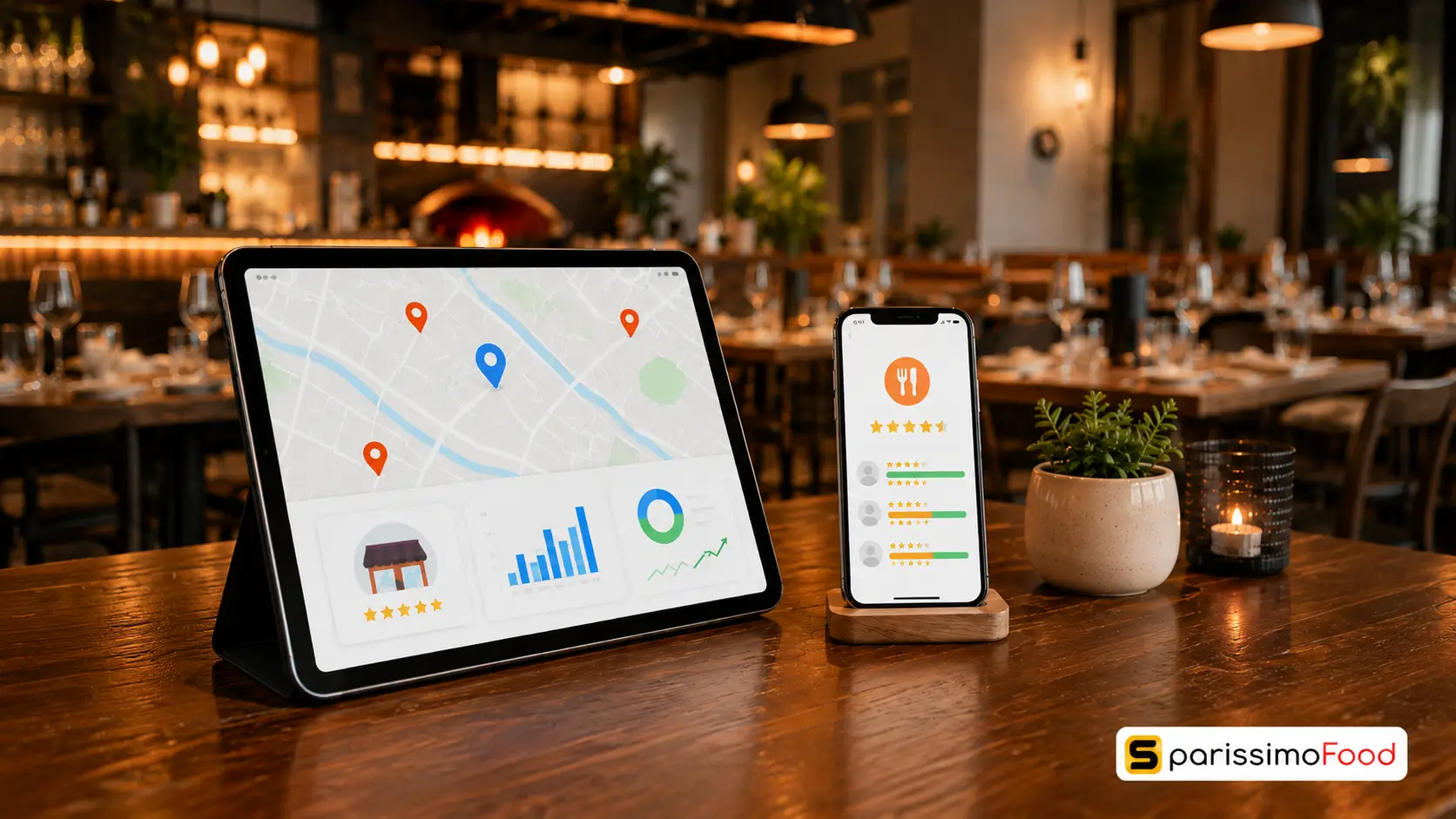
A complaint that never reaches your floor staff usually reaches Google instead. Foratable’s Swiss data found that online reservations generate reviews at nearly double the overall rate, 8.97% versus a 5% average, averaging 4.76 stars, yet the restaurants studied answered only 5.73% of them. Most Swiss restaurants are sitting on decent ratings and simply not replying to the small number of negative ones that would benefit most from a response.
That gap matters because guests are watching how you respond, not just what happened. ReviewTrackers research found that 94% of consumers say a negative review has convinced them to avoid a business, and restaurants specifically are among the categories most affected by visible complaints about cleanliness or service. Recent survey data also shows most consumers expect a reply within one to three days, and a thoughtful response to a negative review measurably increases trust, even among people who never had the bad experience themselves.
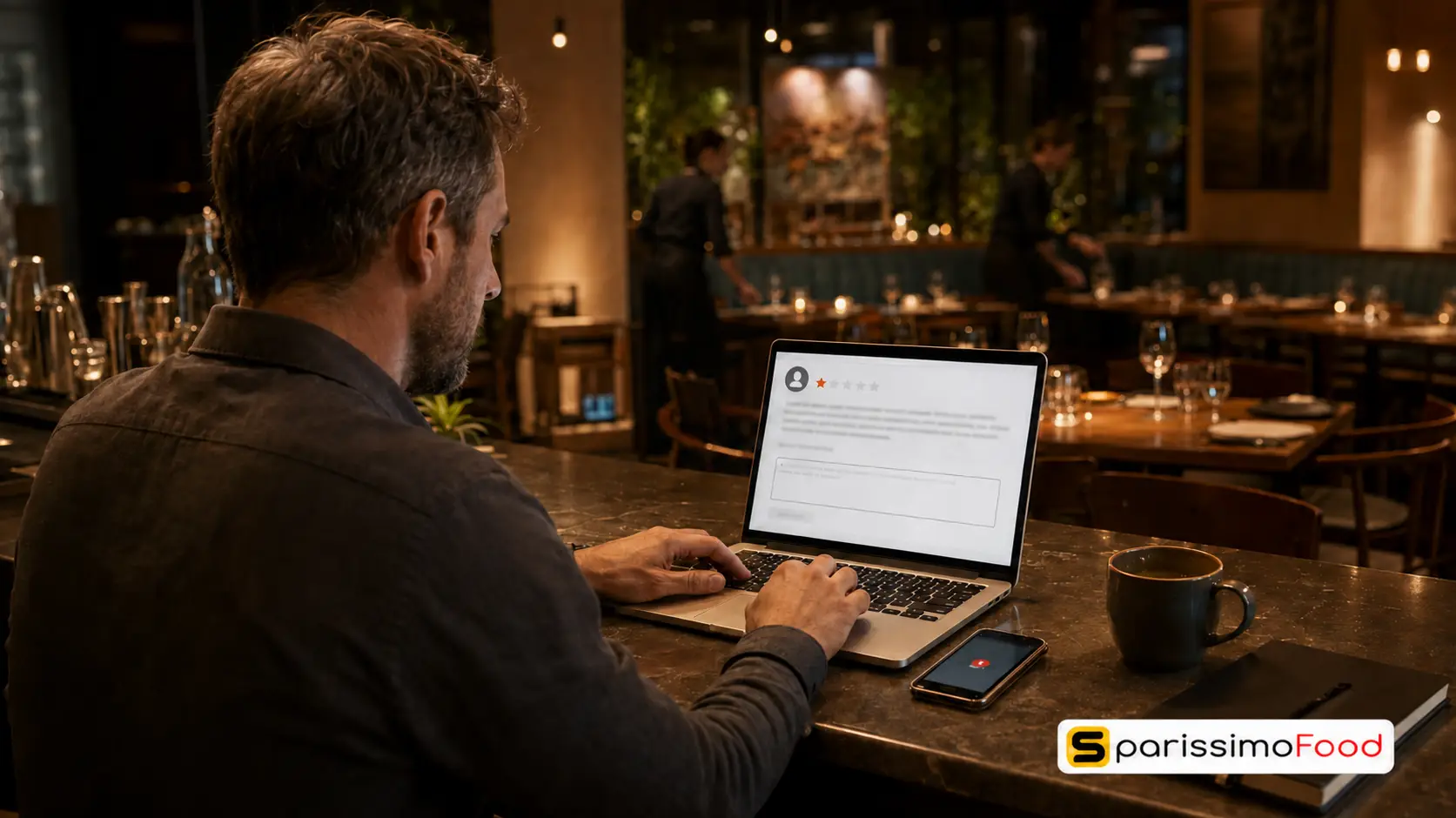
A workable public reply is short, specific, and takes the details offline: something like “we’re sorry the wait on Saturday didn’t match what we aim for, that’s on us, please reach out so we can make it right.” Never argue the facts publicly, even when the review is unfair, since the guest reading it later is judging your tone, not refereeing the dispute. If a review praises a dish or a server by name, reply to that one too: restaurants that respond to both positive and negative reviews read as more attentive than ones that only show up when something goes wrong.
Training Staff So Not Every Complaint Reaches You
A severity framework only works if staff actually use it without checking with you first for every Tier 1 fix. That means three things in practice: write the tiers down somewhere staff can see mid-shift, not buried in a handbook nobody reopens after week one; run a five-minute review of the week’s logged complaints at your regular team meeting, not to assign blame but to spot the same complaint happening on the same shift twice; and treat a complaint log as diagnostic data, not paperwork, since a spike in cold food complaints on Friday dinners is a kitchen timing problem, not twelve unrelated bad nights.
Staff also need to know a comp isn’t a personal favour they’re doing the guest, it’s a business decision inside a policy, which takes the emotional weight off a server who might otherwise either over-give out of guilt or under-give out of fear of being blamed later.
How SparissimoFood Helps With Restaurant Complaint Handling
The severity framework above only works if you can actually check what happened, and that’s usually the missing piece: a guest says the order was wrong, and without a timestamped record, it becomes their word against a server’s memory during a busy shift.
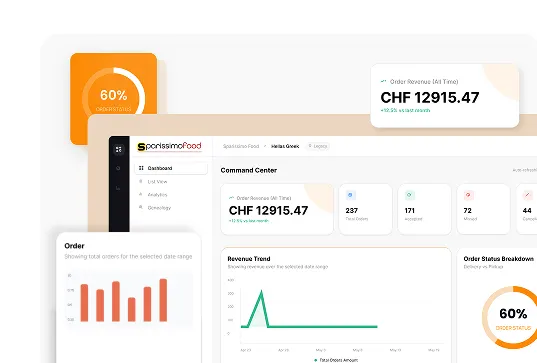
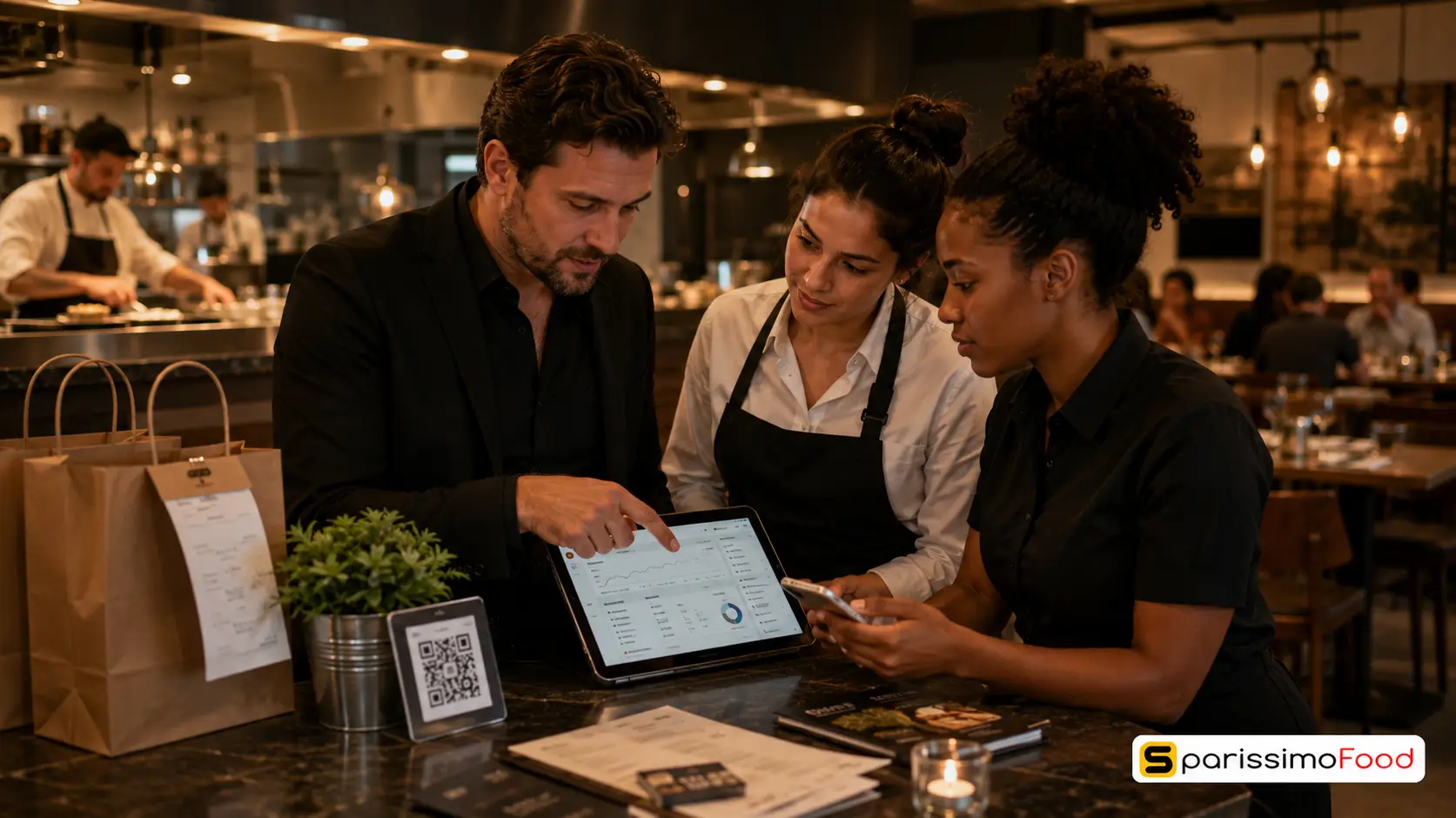
Every order placed through SparissimoFood, whether via table QR code, online checkout, or the optional branded app, is logged with the exact items and time, so a manager can confirm a complaint against the real ticket in seconds rather than guessing. The manager dashboard also shows patterns across shifts, so if Tier 2 complaints about cold food keep clustering around the same Friday window, that shows up as data rather than as a feeling.
Because guest contact details captured through SparissimoFood belong to the restaurant rather than a marketplace, the follow-up message described earlier, a short note the day after a resolved complaint, can go out directly rather than through a platform that owns the relationship instead of you.
None of this is commission-free. SparissimoFood runs on a monthly plan plus a per-order commission: CHF 49/month plus 8% on the Starter plan, CHF 79/month plus 5% on Business, and CHF 148/month plus 5% on Professional. What it buys, for this specific problem, is a record of what actually happened instead of two conflicting stories at a busy table. The 14-day free trial doesn’t require a credit card, which is enough time to log a week of real complaints and see whether a pattern was worth knowing.
Frequently Asked Questions
How much should a restaurant comp for bad service?
There’s no universal percentage, but a workable rule is to size the comp to the tier of the problem, not the guest’s tone. A minor issue, like a slow drink refill, calls for a small gesture worth roughly CHF 5–8. A moderate failure, a wrong or cold dish, calls for comping that item or 20–30% off the bill, typically CHF 15–35 on an average Swiss check. A severe issue, a health or safety problem, calls for comping the full meal or bill and involving a manager directly.
What should you say first when a guest complains?
Confirm what happened before you apologise for it. Repeating the specific problem back, such as noting the table was seated 20 minutes past the reservation time, shows you were listening and lets you check it against the actual booking or order record rather than promising a fix based on assumption. Apologising immediately without confirming the facts can leave staff agreeing to something that turns out to be wrong.
Should servers or only managers be allowed to comp meals?
Both, at different thresholds. Minor complaints, worth a small gesture, should be resolvable by any server on the spot, since sending every small issue to a manager slows down fixes that should take seconds. Moderate and severe complaints, anything involving a discount over a set amount, a full comp, or a health and safety concern, should require a shift lead or manager, both to protect margin and to make sure serious issues get proper documentation.
How fast should a restaurant respond to a negative online review?
Within one to three days at most. Most consumers now expect a reply in that window, and a slower response reads as indifference even if the underlying issue was resolved in person. Keep the public reply short and specific, acknowledge what went wrong without arguing the details, and move the conversation offline by inviting the guest to contact the restaurant directly.
Does handling a complaint well actually make guests more loyal than if nothing had gone wrong?
For some guests, yes, a pattern researchers call the service recovery paradox: a guest whose real problem gets fixed quickly and visibly can end up more loyal than one who never had an issue at all, because the resolution demonstrates something a flawless visit never tests. It only works when the recovery is fast and genuine; a slow or grudging fix does not produce the same effect and can make the original complaint worse.
A complaint handled well costs one dish and buys back a year of visits nobody else bothered to protect.
.Ds4FHhSq_ZxC9WE.webp "Restaurant Upselling Techniques That Don't Feel Pushy")






.CXCr6fQt_Z11gsYh.webp "Build a Branded Restaurant App Without Developers")
.y09Xtv8Z_1gH6f6.webp "Set Up Restaurant Online Ordering in Under a Week")

.B-Rl4IDw_Z204OoN.webp "Restaurant Loss Prevention and Theft Guide")



.DPpk5JZR_AlrVy.webp "Restaurant Communication During Peak Hours | Guide 2026")




.B6eEizW1_Z2bHQYl.webp "Restaurant Menu Pricing Strategies That Actually Protect Your Margins in 2026")
.CRszlDy5_2neUXu.webp "How to Migrate from GloriaFood Without Disruption: A Technical Step-by-Step Guide")
.kT6N2QP-_1Tp2j1.webp "GloriaFood Is Shutting Down on April 30, 2027 — What Every Restaurant Owner Needs to Do Now")