
Why Customers Abandon Restaurant Checkout | Fix It Today
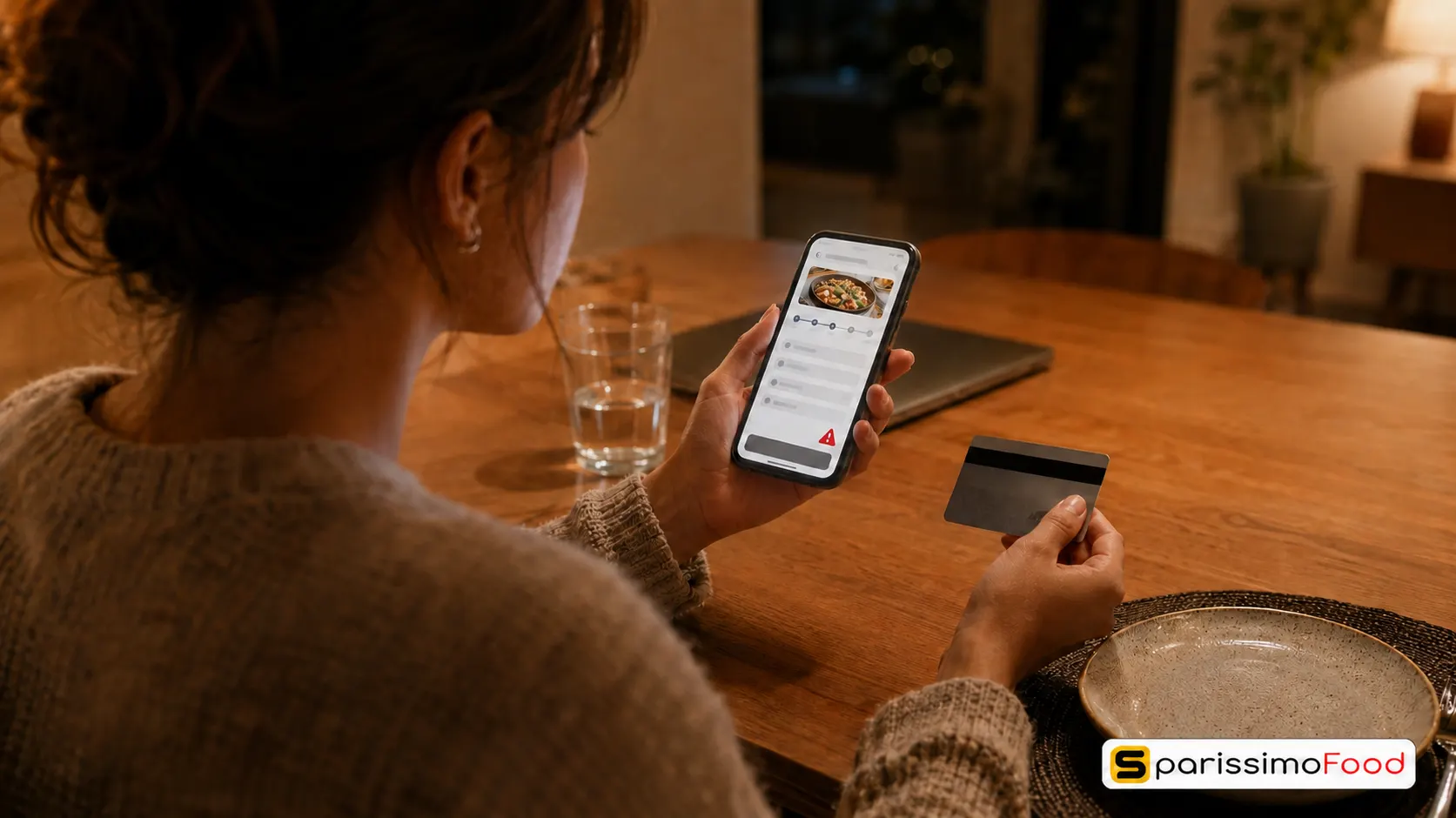

Quick Answer: Restaurant guests abandon checkout for five main reasons. A surprise cost appears too late in the process. TWINT or their preferred payment method is not available. The platform forces account creation before the first order. There are too many steps between selecting a dish and paying. And the delivery estimate is vague, too slow, or clearly optimistic. According to Baymard Institute research across 50 studies, roughly 70% of started online orders never complete. For a Swiss restaurant processing 400 checkout starts per month at a CHF 32 average order, fixing the top two friction points recovers approximately 60 additional completed orders monthly, worth CHF 1,920 in revenue from guests who were already on your ordering page and already intending to buy.
A guest opens your ordering page, spends three minutes building a CHF 34 cart, and closes the tab before paying. No error message. No complaint. No record of why. Just a checkout session that never became an order, a kitchen ticket, or a delivery.
Multiply that by every guest who does the same thing this month, and cart abandonment becomes one of the largest, most invisible revenue leaks on your profit and loss account.
How Much Checkout Abandonment Is Costing You in CHF
Baymard Institute, which has tracked cart abandonment across 50 separate studies, puts the average online cart abandonment rate at 70.22%. Seven in every ten checkout sessions that begin do not result in a completed order.
Restaurant ordering is not exempt from this pattern. If anything, food delivery orders are more time-sensitive and more easily abandoned than a retail purchase a guest can return to tomorrow. Hunger has a short window.
Run the maths on your own numbers. A restaurant receiving 400 checkout starts per month, at a CHF 32 average order, completing only 30% of them, generates 120 orders. Reduce the abandonment rate from 70% to 55% by fixing two or three friction points, and the same 400 checkout starts produce 180 completed orders. That is 60 additional orders, worth CHF 1,920 per month, recovered from guests who were already on your platform and already intended to buy.
This is not a marketing problem. You already had the customer. You lost them at the final step.
The Five Reasons Swiss Restaurant Guests Abandon Checkout
Understanding the specific causes gives you a clear repair list. Baymard’s research identifies a consistent set of triggers, and the pattern holds for restaurant ordering with some Switzerland-specific additions.
Reason 1: A Cost Appears Too Late
This is the single largest abandonment trigger across all e-commerce, accounting for approximately 40% of all abandoned checkouts. A guest builds a CHF 28 order and encounters a CHF 6.50 delivery fee for the first time at the payment screen. The surprise, not the amount, causes the abandonment.
Swiss restaurants have a legal advantage here that most do not use. Under Switzerland’s Preisbekanntgabeverordnung, the price shown for any menu item must already include the applicable MWST rate. Swiss restaurants cannot legally add tax as a line item surprise at checkout the way many other markets can. Delivery fees remain the one legitimate exception, and they are the most common abandonment trigger.
The fix is straightforward: display the delivery fee on the cart page, alongside the subtotal, before the guest reaches the payment step. The same guest who abandoned when they saw CHF 6.50 at checkout will typically complete the order when that same fee has been visible since they added their first item.
Apply the same logic to minimum order thresholds. If your minimum is CHF 25 and a guest is at CHF 20, display a progress indicator: “Add CHF 5 more to qualify for delivery.” A visible threshold converts. A threshold discovered at checkout does not.
Reason 2: TWINT Is Not Available
In Switzerland, this deserves its own category rather than being grouped with general payment friction. TWINT has over 5 million active users in Switzerland and represents a majority of Swiss mobile payment transactions. A checkout that offers only card entry asks Swiss customers to use a payment method many have actively moved away from.
The conversion impact is direct. A guest who has assembled a CHF 38 order, reached checkout, and found no TWINT option does not hunt for their physical card. A meaningful share simply close the page. This is not hesitation about the order. It is friction at the final moment.
TWINT merchant fees run approximately 1.3% per transaction with no fixed per-transaction charge. The cost of not offering it is the entire value of every order abandoned at payment for this reason.
Reason 3: Forced Account Creation
Requiring account creation before the first order is completed is the second most common abandonment trigger identified in checkout research. A guest who wants to try your restaurant for the first time encounters a registration form with name, email, password, and confirmation before they can pay. Many close the page.
The correct approach is guest checkout as default, with account creation offered as an optional step after the order is placed and confirmed. The guest already committed to the purchase. The friction of registration at that point is accepted by a much higher share of customers than when it is placed before the order.
A guest who orders as a guest provides contact information for their order confirmation anyway. That data is still captured. The loyalty program signup, the newsletter opt-in, and the account creation can all happen in the confirmation flow without blocking the first order.
Reason 4: Too Many Steps
Count the screens between “add to cart” and “order confirmed” on your own ordering platform, on your phone, on a mobile data connection, not on the restaurant WiFi. If the count is above three screens, each additional screen is a point where guests close the page.
A streamlined restaurant checkout needs four pieces of information before it can process an order: name, phone number or email for confirmation, delivery address or pickup selection, and payment. Every additional field beyond these four reduces completion rates.
Remove any field that is not operationally necessary. Remove any redirect to an external payment page that breaks the visual continuity of your ordering flow. Remove any step that asks the guest to confirm information they have already provided.
If your checkout requires more than three taps from “review order” to “order placed,” simplify it.
Reason 5: Delivery Estimates That Feel Dishonest or Too Slow
Twenty percent of checkout abandonment is linked to delivery timing. This is rarely about your actual kitchen speed. It is about the gap between the estimate shown and what the guest expects to receive.
An estimate of “25 to 30 minutes” during a Friday dinner service that you know will realistically take 50 minutes does not retain more orders. It converts a checkout abandonment into a delivery complaint and a negative review. An honest “50 to 60 minutes” shown during a peak period performs better in the long run because guests who commit to it have realistic expectations.
The second timing issue is vagueness. “Delivery soon” and “approximately 30 minutes” are not estimates. They are placeholders that make guests feel uncertain about what they have committed to. A specific window, even a wider one, converts better than an ambiguous phrase.
For the operational side of how to manage delivery estimates honestly during your busiest service windows, see our restaurant peak hour management guide.
The Checkout Repair Checklist for Swiss Restaurants
Fix 1: Move the Delivery Fee to the Cart Page
The delivery fee must be visible before the payment screen. Add it as a line item in the cart summary alongside the subtotal. Update your platform settings to display it from the moment a guest selects delivery as their fulfilment method, not at the final confirmation step.
If your platform does not support early fee display, this is a reason to reconsider your platform. The fix is not cosmetic. It directly addresses the largest single cause of checkout abandonment.
Fix 2: Add TWINT as a Primary Payment Option
TWINT should appear as the first payment option in your checkout flow, with card as the secondary. If your platform does not support TWINT natively, you are losing a significant share of Swiss orders at the payment step regardless of how well everything else in your checkout performs.
Confirm your TWINT integration is working correctly by placing a real test order via TWINT yourself before announcing any promotion. A broken TWINT integration on launch day is more damaging than not having it at all.
Fix 3: Enable Guest Checkout as the Default
Remove account creation as a prerequisite for the first order. Make it the default for new customers to check out as a guest. Present account creation as an option in the order confirmation, framed as a benefit: “Save your order details for next time. Create an account in one step.”
Track your guest checkout completion rate against your account-required completion rate if your platform provides this data. The difference is your conversion lift from this change.
Fix 4: Audit Your Checkout Step Count
Open your ordering platform on a phone using mobile data. Write down every screen or required interaction between “start checkout” and “order confirmed.” Count them.
Target three screens or fewer for the checkout sequence. Identify any screen that could be eliminated by pre-filling information the guest has already provided, removing optional upsells that interrupt the flow, or combining confirmation steps.
If you find a step that exists for technical reasons rather than customer experience reasons, raise it with your platform provider. Checkout simplification is a documented commercial priority, and most platforms have addressed common friction points in recent updates.
Fix 5: Set Honest Delivery Estimates by Service Period
Build two or three delivery estimate presets into your platform: one for quiet periods, one for busy periods, and one for peak service windows. Apply them manually at the start of each service based on your kitchen’s actual capacity.
If your platform supports kitchen throttling, use it to extend delivery estimates automatically when incoming order volume approaches your kitchen’s limit. A system that manages its own estimates accurately performs better for guests and reduces post-delivery complaints more than any manual adjustment can.
What Good Checkout Looks Like for a Swiss Restaurant
A guest-optimized restaurant checkout in Switzerland in 2026 has these characteristics:
The delivery fee, if applicable, is visible in the cart summary before the payment step. Menu item prices include MWST in accordance with Swiss pricing law. TWINT is the first payment option. Guest checkout is the default for new customers. The checkout sequence requires three screens or fewer. Delivery estimates are honest, specific, and updated for the current service period. The confirmation is immediate and arrives in the channel the guest used, either email or SMS.
None of these elements are technically complex. All of them require deliberate configuration. A checkout that scores on all six characteristics has a completion rate significantly above the industry average.
For the broader context of how checkout completion rate connects to your overall revenue per seat, see our guide to increasing restaurant average order value.
How SparissimoFood Helps Reduce Checkout Abandonment
Every friction point in this guide is either eliminated or manageable through the right platform configuration.
TWINT built in. SparissimoFood supports TWINT natively across all ordering channels: delivery, pickup, and QR dine-in. The payment method that accounts for the majority of Swiss mobile payments is present at every checkout, removing Reason 2 from your abandonment list entirely.
Delivery fee transparency. SparissimoFood’s checkout displays the delivery fee at the cart stage, not the payment stage. The fee your guest agreed to when selecting delivery is the fee they see at every subsequent step. No surprises.
Kitchen throttling for honest estimates. SparissimoFood allows your team to extend delivery time windows with a single tap during busy service periods. When your kitchen is at capacity, the estimate your guests see at checkout reflects actual conditions rather than an optimistic default. Honest estimates reduce post-delivery complaints and address Reason 5 from within the platform.
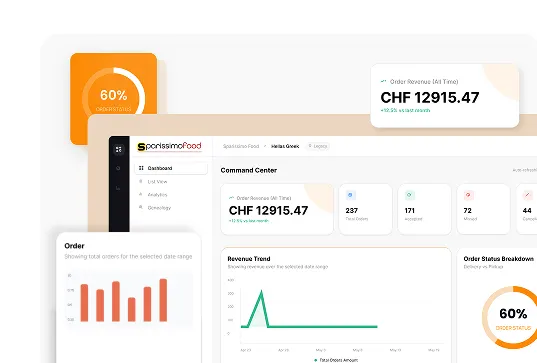
Manager dashboard for checkout data. SparissimoFood’s manager dashboard shows order volume by channel and time period. With enough data, you can identify whether specific service windows correlate with higher drop-off rates and adjust your delivery estimate presets accordingly.
SparissimoFood starts at CHF 49 per month with an 8% commission on the Starter plan, and CHF 79 per month with a 5% commission on the Business plan. For context on how these costs compare to third-party delivery platforms and how direct ordering economics affect your per-order margin, see our restaurant profitability guide. Explore the current plan options at manage.sparissimofood.com/plans.
Frequently Asked Questions
What percentage of restaurant orders get abandoned at checkout? Baymard Institute research across 50 e-commerce studies puts the average online cart abandonment rate at 70.22%. Restaurant ordering shows the same core triggers: surprise costs, forced accounts, and too many steps. The food-specific factor is time sensitivity. A retail purchase can wait until tomorrow. A dinner order has a window measured in minutes, which makes vague or unreliable delivery estimates a more acute abandonment trigger in restaurant ordering than in general e-commerce.
What is the single biggest reason restaurant customers abandon checkout? A cost appearing for the first time at the final payment screen is the largest single trigger, accounting for approximately 40% of checkout abandonment. For Swiss restaurants, this is almost always a delivery fee that was not displayed earlier in the ordering flow. The fix is to display the delivery fee at the cart stage alongside the subtotal, before the guest reaches the payment step. This single change typically produces the largest measurable improvement in checkout completion rate.
Does forcing customers to create an account really cause that much abandonment? Yes. Requiring account creation before order completion is consistently identified as one of the top two or three abandonment triggers in checkout research. Moving account creation to after the order is confirmed, presented as an optional benefit rather than a requirement, maintains the option for the restaurant while removing the friction for the guest. Most platforms support guest checkout as an option even if it is not enabled by default.
How much revenue can a Swiss restaurant recover by fixing checkout abandonment? The calculation depends on your order volume and your current abandonment rate. For a restaurant receiving 400 checkout starts per month at a CHF 32 average order, reducing abandonment from 70% to 55% by fixing the top friction points recovers approximately 60 additional completed orders monthly. At CHF 32 average, that is CHF 1,920 per month in recovered revenue from guests who were already on your ordering page.
Should Swiss restaurants show delivery fees before or after checkout? As early as possible, ideally at the cart stage when the guest selects delivery as their fulfilment method. Under Switzerland’s Preisbekanntgabeverordnung, menu item prices must already include MWST, so delivery fees represent the one cost that can still surprise a guest late in the process. Displaying them early removes the surprise and addresses the most common single cause of Swiss restaurant checkout abandonment.
Every abandoned checkout was a guest who opened your ordering page, spent time with your menu, and decided to buy. The checkout stopped them. The checkout is fixable.

.Ds4FHhSq_ZxC9WE.webp "Restaurant Upselling Techniques That Don't Feel Pushy")

.CXCr6fQt_Z11gsYh.webp "Build a Branded Restaurant App Without Developers")
.y09Xtv8Z_1gH6f6.webp "Set Up Restaurant Online Ordering in Under a Week")
.B-Rl4IDw_Z204OoN.webp "Restaurant Loss Prevention and Theft Guide")

.DPpk5JZR_AlrVy.webp "Restaurant Communication During Peak Hours | Guide 2026")

.B6eEizW1_Z2bHQYl.webp "Restaurant Menu Pricing Strategies That Actually Protect Your Margins in 2026")
.CRszlDy5_2neUXu.webp "How to Migrate from GloriaFood Without Disruption: A Technical Step-by-Step Guide")
.kT6N2QP-_1Tp2j1.webp "GloriaFood Is Shutting Down on April 30, 2027 — What Every Restaurant Owner Needs to Do Now")