
Instagram Marketing for Restaurants | The Complete Playbook
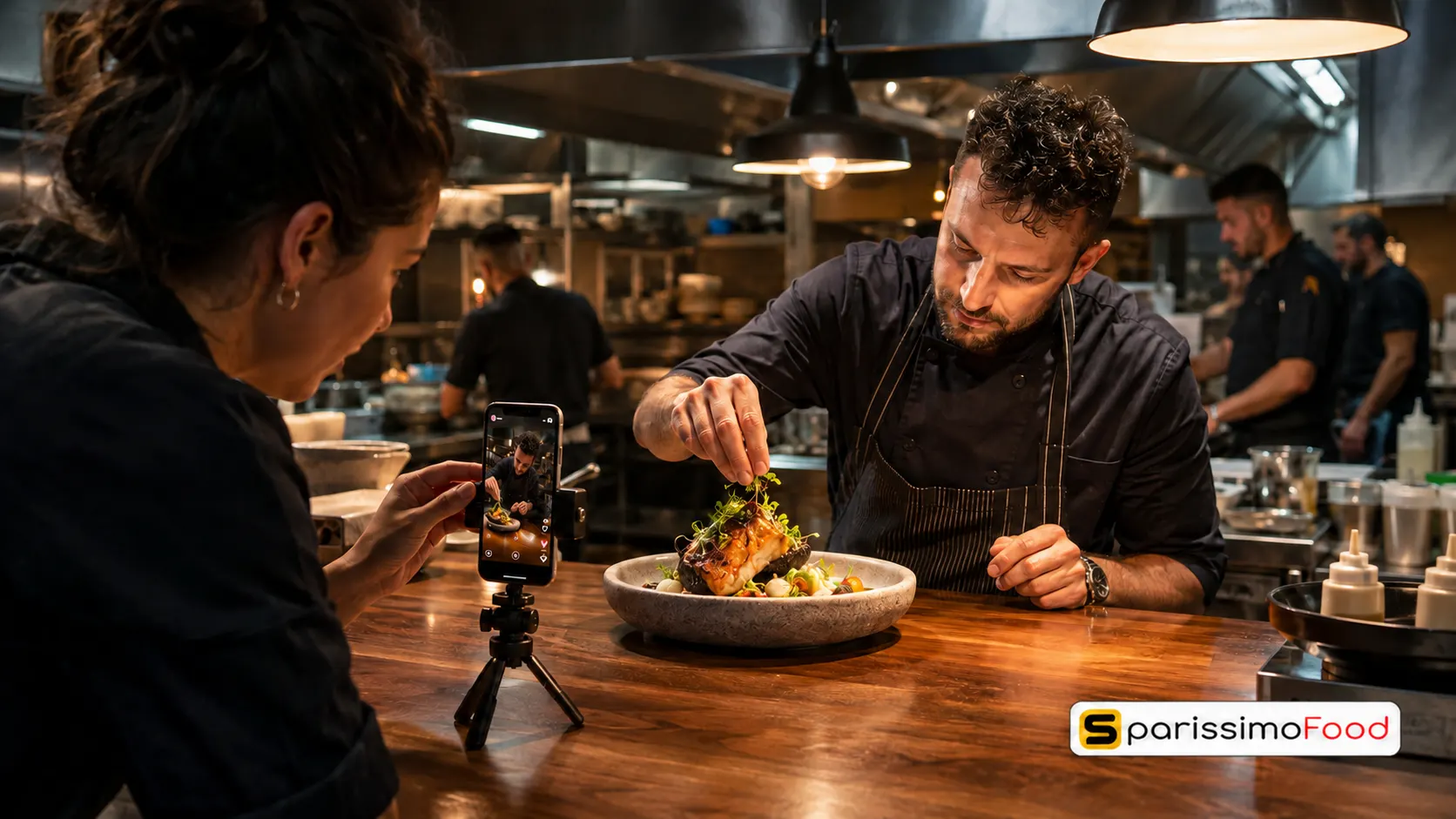

Quick Answer: Instagram works for restaurant marketing when it’s treated as a path from discovery to order, not a photo diary: a business profile built to convert, content made for the 2026 algorithm’s preference for videos people actually send to friends, and a bio link that leads straight to your own ordering page rather than a generic landing screen. In Switzerland, that path reaches a real audience: 4.25 million people, 46.9% of the population, are active on Instagram, and the platform’s own 2026 ranking signals now reward content that gets shared privately over content that just gets liked. Most restaurant Instagram advice stops at “post consistently and use hashtags”; the tactics that actually move orders are the ones that connect a follower to a completed order, not just a like.
Seventy-four percent of diners now use social media to help decide where to eat, and Instagram is usually the first place they check once a restaurant’s name comes up: the photos, the hours, whether the place looks like tonight’s kind of dinner. Most restaurant accounts post consistently and still see almost none of that turn into a booking or an order, because a good-looking feed and a working revenue channel are two different projects. This guide covers the version of Instagram marketing that closes that gap.
Why Instagram Still Decides Where People Eat in 2026
Sprout Social’s 2026 research on restaurants and social media puts diner reliance on social platforms at 74%, and found separately that 38% of people now prefer searching for a restaurant on social media over a traditional search engine. For a restaurant with no marketing department, that’s the first fact worth sitting with: a meaningful share of tonight’s potential guests are deciding on Instagram, not Google.
In Switzerland specifically, 4.25 million people, 46.9% of the population, were active on Instagram as of January 2026, and the single largest age group, at 29.8%, falls squarely in the 25-to-34 bracket that eats out and orders delivery most often. That isn’t a niche channel for a young target persona. It’s close to half the country, including the guests already walking through your door.
None of that guarantees a single order on its own. A restaurant with 3,000 followers and a strong-looking feed can still be doing nothing but broadcasting to people who already know about it, while every follower who’s never eaten there just scrolls past. The gap between a restaurant that looks good on Instagram and one that gets booked because of it comes down to a handful of specific decisions, not follower count.
Set Up a Restaurant Instagram Profile That Converts, Not Just Impresses
Switch to a business or creator account with the most specific category available, “Pizza Restaurant” or “Café” rather than a generic “Restaurant” catch-all where a closer match exists. This unlocks contact buttons, audience insights, and ad tools a personal account never gets.
Your bio has about two lines to answer three things: what you serve, where you are, and the one action you want a reader to take next. “Zurich’s Neapolitan pizza, Kreis 4, order direct via the link below” does more work than a tagline ever will.
The single most under-used field on a restaurant’s Instagram profile is the bio link. Point it directly at your ordering page, not a generic homepage or a link-in-bio tool with five options buried under one tap. Guests converting from a delivery-app habit to a restaurant’s own channel behave the same way here as everywhere else: the extra tap is the exact moment they reconsider and bounce.
Story Highlights work as a permanent menu for anyone landing on your profile cold: one for the current menu, one for hours and location, one for guest reviews or reshared photos. Refresh them seasonally rather than leaving last Christmas’s highlight live in August.
What Actually Gets Seen: Instagram’s 2026 Algorithm for Restaurants
Most restaurant Instagram guides still describe an algorithm from three or four years ago: post consistently, use up to 30 hashtags, hope volume gets rewarded. Instagram’s own 2026 ranking signals have moved on from that: the strongest single ranking factor for Reels is now Sends Per Reach, how often people privately send a video to a friend rather than just liking it.
Practically, that means a video worth sending beats a video worth admiring. A 20-second clip of a dish that makes someone think “you’d love this” earns a share that a beautifully lit static photo rarely does. Reels published under this system now average a 2.46% engagement rate, and Instagram has extended Explore eligibility to Reels up to three minutes long, provided people actually watch to the end, so a short behind-the-scenes sequence can outperform a ten-second loop.
Carousels got more room too: the slide limit doubled to 20, rewarding posts guests linger on and swipe through instead of scrolling past in half a second. A tasting-menu carousel or a step-by-step “how we make this” sequence uses exactly the dwell time the algorithm now tracks.
Hashtags matter less than they used to, and using fewer works better: Instagram’s current guidance is a “Rule of 5,” three to five specific, relevant hashtags rather than a wall of thirty generic ones. Pair that with a location tag on every post; local discovery still runs through geotags more reliably than hashtags alone.
Build a Content System That Survives a Busy Service
A restaurant with no dedicated marketing person doesn’t need a content calendar with fifty ideas on it. It needs three or four content buckets to return to without inventing something new every week: dish close-ups shot during prep, one recurring behind-the-scenes moment (the pass, the oven, the closing routine), guest and staff faces, and reshared guest content.
Batch the photography. Ten minutes before service, during a slow prep window, shooting three dishes on a phone under the pass light produces a week’s worth of feed content, and that consistency matters more than any single perfectly staged shot.
Reshared guest content does double duty: it fills the feed at zero production cost, and it’s the content guests trust most, since it comes from someone who already ate there rather than the restaurant’s own marketing voice. A branded hashtag on a table tent, paired with a habit of asking permission and resharing tagged posts, builds the same kind of trust that a strong Google review presence does, and turns scrolling followers into people who can picture themselves at your table.
The Step Most Instagram Guides Skip: Turning Followers Into Direct Orders
Most Instagram advice for restaurants stops at growing a following. Followers aren’t revenue; a guest who likes three posts and never orders looks identical, on a spreadsheet, to someone who never found the account at all.
The fix starts with the bio-link audit above, but it doesn’t end there. Check what actually happens when someone taps it, on their phone, on mobile data: does the ordering page load in under three seconds, does it show the menu without a login wall, and does it accept the payment method they’d actually use? The same friction points responsible for roughly 70% of restaurant checkouts abandoning before payment apply just as much to a guest arriving from a Story as to one arriving from an SMS campaign, and the same habit-switching problem that makes delivery-app guests hesitate applies here too.
DMs deserve the same attention as the ordering page. A guest who messages “do you deliver to X?” and waits four hours for a reply has usually already ordered somewhere else. Restaurants that treat Instagram as a channel guests actually order through, not just one they browse, generally also have their online ordering set up correctly in the first place; the fastest fix for a slow DM reply is often just pinning the ordering link as a saved quick-reply.
Influencers, UGC, and Local Collaborations on a Swiss Budget
A national food influencer with 200,000 followers costs more than most independent restaurants should spend and reaches an audience that mostly can’t get to you for dinner. A local micro-influencer with 5,000 to 15,000 followers in your own city typically charges CHF 100 to 300 for a visit and a post, plus the comped meal, and their entire audience already lives within realistic delivery or walking distance.
Under Swiss advertising rules, a sponsored or comped collaboration needs to be disclosed as advertising rather than folded in as if it were an organic review. This isn’t legal advice, so confirm the specifics with your own advisor before running a paid collaboration, but building the disclosure into your brief to the creator from the start avoids an awkward correction later.
The same restriction logic that works for delivery-app conversion applies to guests who arrive through an influencer: a first-visit offer that only redeems on a direct order, rather than a generic discount code, and a loyalty structure that rewards repeat direct visits, turns a one-off influencer spike into a guest you can actually track and re-engage afterward.
Paid Boosts: When and How Much to Spend on Instagram Ads
Organic reach alone won’t fill every Friday night, but paid promotion only earns its keep once organic content is already proving itself. Boosting a post nobody engaged with organically just spends money finding out why nobody engaged with it.
Here’s a worked example. Boosting one already-strong Reel a week at roughly CHF 10 to 15 per boost, targeted to a 5-kilometre radius, runs CHF 40 to 60 a month as a first test. If that reaches 8,000 local accounts and even 15 of them convert to a direct order at a CHF 35 average order value, that’s CHF 525 in revenue against CHF 50 in spend, before counting anyone who simply saved the post to order from later.
Keep targeting tight and local rather than broad. A restaurant advertising to all of Switzerland is paying to reach guests who will never physically get to a table; a 5-to-10-kilometre radius around the restaurant, refreshed seasonally, spends the same budget on people who could actually show up tonight.
The Metrics That Actually Predict Orders, Not Just Attention
Followers and likes are the easiest numbers to check and the least useful ones to act on. Neither tells you whether Instagram sent you a single paying guest this month.
Track three numbers instead: bio-link taps, the conversion rate once someone lands on your ordering page, and DM response time. If Instagram is driving traffic but few of those taps ever become an owned contact, that’s the same gap our guide to restaurant marketing ideas calls the Owned-Reach Ratio: the share of your actual guest base you can reach directly instead of hoping the algorithm shows them your next post.
A UTM-tagged link (add “?utm_source=instagram” to your ordering page link) shows up as its own line in most ordering platforms’ analytics, which turns “Instagram is going well” from a feeling into a number you can check every month alongside every other channel.
How SparissimoFood Helps With Instagram Marketing for Restaurants
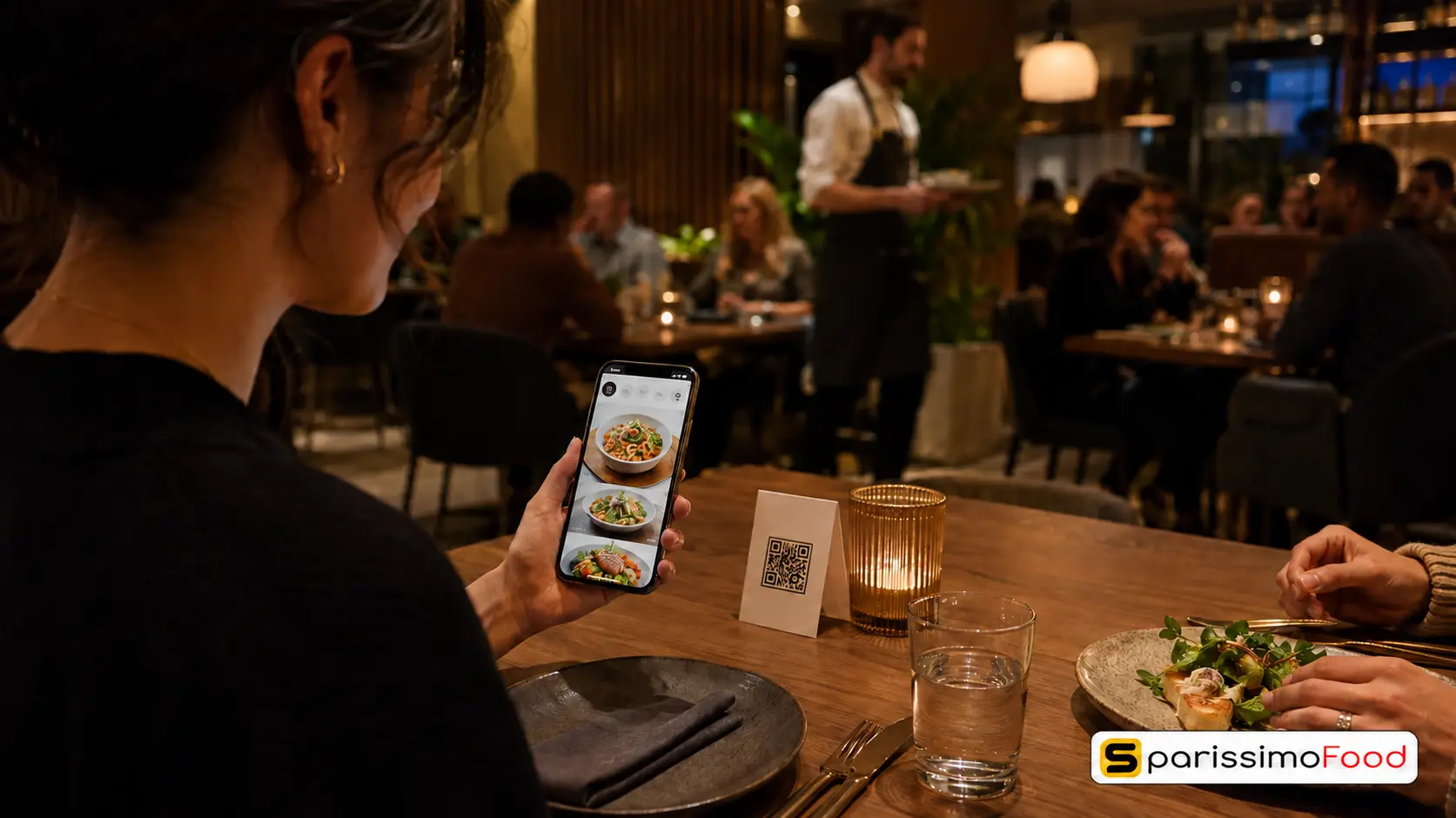
Everything above assumes the bio link actually leads somewhere that converts, the part most Instagram advice skips entirely. SparissimoFood’s ordering page runs as a standalone link built for exactly this: delivery, pickup, and dine-in via QR code, with native TWINT support, so a guest who taps through from a Reel or a Story doesn’t lose the sale at the one payment method more than three in five Swiss shoppers actually reach for.
On the Business and Professional plans, marketing support runs Google, Facebook, and Instagram ads on your behalf, using the same guest and order data already sitting in your manager dashboard rather than a separate ad account you’d have to configure and monitor yourself. The same dashboard shows order volume in real time, so a UTM-tagged Instagram link isn’t a number buried in a third-party analytics tool; it’s a line item next to every other channel bringing in orders.
Pricing runs on the same predictable plans across the platform: Starter at CHF 49/month with an 8% commission, Business at CHF 79/month with 5%, and Professional at CHF 148/month, also at 5%, with a branded app and the marketing support above included on the higher tiers. None of that is commission-free; it’s a lower, predictable commission than a delivery marketplace’s 25–30%, with the ordering page, guest data, and ad management that make Instagram traffic worth converting sitting in one system instead of three.
The 14-day free trial requires no credit card, enough time to fix the bio link, post a Reel built for the algorithm above, and see whether it actually shows up as orders before deciding anything.
Frequently Asked Questions
How often should a restaurant post on Instagram?
Three to four feed posts a week plus daily Stories is a sustainable benchmark for a restaurant without a dedicated marketing person. Instagram’s 2026 algorithm rewards consistency and content people actually send to others more than raw posting frequency, so one well-made Reel a week beats seven rushed photos nobody shares.
What’s the best type of content for a restaurant to post on Instagram in 2026?
Short Reels built to be sent to a friend, not just liked, currently perform best, since Sends Per Reach is Instagram’s strongest single ranking signal for the format. A 20-to-40-second clip of a dish, a plating moment, or a behind-the-scenes routine typically outperforms a static photo for reach, though photos still matter for a profile’s overall look.
Do restaurants need to pay for Instagram ads to see results?
No. A complete, converting profile with a working bio link and consistent Reels usually produces results before any ad spend, and boosting content that already performs organically is more efficient than paying to promote something nobody has engaged with yet. Paid ads work best as an amplifier for proven content, not a replacement for it.
How do I turn Instagram followers into actual restaurant orders?
Point the bio link directly at your own ordering page rather than a generic homepage or a multi-link tool, and treat every DM asking about hours, delivery, or availability as a potential order that needs a reply within minutes, not hours. Followers convert when the path from “I saw this” to “I ordered this” takes as few taps as possible.
Should a small restaurant manage Instagram in-house or hire an agency?
Most independent restaurants can manage Instagram in-house using a handful of content buckets, a batched weekly photo session, and thirty minutes a week checking DMs and comments, without needing an agency retainer. An agency becomes worth considering once Instagram is already converting and the bottleneck becomes content volume or ad management rather than strategy.
A follower who never orders costs you nothing and earns you nothing; the entire point of a restaurant Instagram account is closing that gap, one tapped link at a time.
.Ds4FHhSq_ZxC9WE.webp "Restaurant Upselling Techniques That Don't Feel Pushy")
.CXCr6fQt_Z11gsYh.webp "Build a Branded Restaurant App Without Developers")
.y09Xtv8Z_1gH6f6.webp "Set Up Restaurant Online Ordering in Under a Week")
.B-Rl4IDw_Z204OoN.webp "Restaurant Loss Prevention and Theft Guide")
.DPpk5JZR_AlrVy.webp "Restaurant Communication During Peak Hours | Guide 2026")
.B6eEizW1_Z2bHQYl.webp "Restaurant Menu Pricing Strategies That Actually Protect Your Margins in 2026")
.CRszlDy5_2neUXu.webp "How to Migrate from GloriaFood Without Disruption: A Technical Step-by-Step Guide")
.kT6N2QP-_1Tp2j1.webp "GloriaFood Is Shutting Down on April 30, 2027 — What Every Restaurant Owner Needs to Do Now")