
How to Handle Negative Restaurant Reviews | Guide 2026
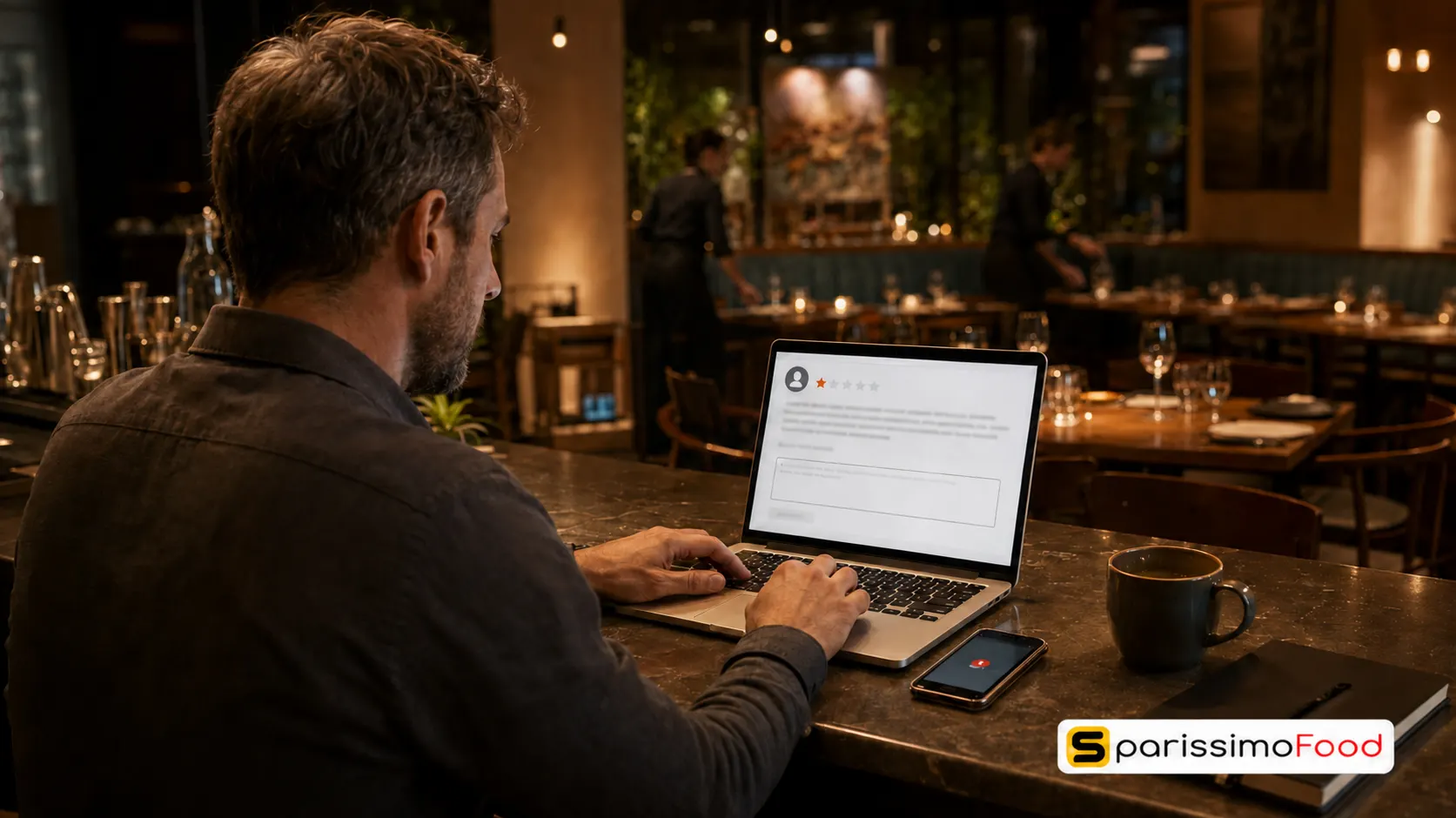

Quick Answer: A negative review is not the end of your restaurant’s reputation. It is a moment of public visibility that most owners handle badly and the best operators use strategically. The five-step framework: (1) Pause, categorise the review type, and investigate what actually happened. (2) Write a public response using the ATAP formula: Acknowledge the experience, Thank the reviewer, Address the specific issue, and Promise or invite a next step. (3) Keep the response short, professional, and in the same language as the review. (4) Follow up privately if you have the guest’s contact details. (5) Update your public response once the matter is resolved. Restaurants that respond to all reviews, positive and negative, are chosen by 88% of guests over restaurants that do not respond at all.
The notification arrives on a Tuesday morning. Two stars. “Cold pasta, slow service, felt ignored the entire evening.” Your first instinct is to fire back. Your second instinct is to delete the app and pretend it did not happen.
Neither response will help you. But there is a third way, and it is available to every Swiss restaurant owner regardless of the size of their team or the severity of the review.
Why Negative Reviews Have a Bigger Impact Than You Think
Research consistently shows that negative reviews have a disproportionate influence on purchasing decisions. A potential guest reading about your restaurant is not just absorbing the stars; they are reading how you respond to criticism. That response is often more revealing than the original complaint.
Consider these figures for context. A one-star increase in a restaurant’s Google rating correlates with a revenue increase of up to 9%. A restaurant with an average rating of 4.2 out of 5, with some visible negative reviews and thoughtful responses to all of them, is typically perceived as more trustworthy than a restaurant with a perfect 5.0 from a small number of reviews. Perfect scores are not credible; perfect responses are.
According to restaurant reputation research, 88% of diners say they are likely to visit a restaurant that responds to all reviews, compared to significantly lower rates for restaurants that do not engage. And 76% of Swiss consumers read online reviews before choosing a restaurant.
The platform landscape in Switzerland is different from the US market that dominates most English-language advice. Google My Business is by far the primary review platform in Switzerland, followed by TripAdvisor for tourist-facing restaurants and certain food delivery platform ratings. Yelp, which dominates much of the US advice literature on negative reviews, has minimal presence in Switzerland. Your primary review management effort should be on Google.
The Four Types of Negative Restaurant Reviews
Before you write a single word in response, identify which type of review you are dealing with. Each requires a different approach, and conflating them is how restaurants make their situation worse.
Type 1: Truthful Negative Reviews
A genuine guest had a genuine bad experience and is sharing it honestly. These are the majority of negative reviews Swiss restaurants receive. The pasta really was cold. The service really was slow. The bill really did take 25 minutes to arrive.
These reviews deserve your most thoughtful response and your most genuine internal action. They are free feedback from a paying customer that tells you something about your operation.
What to do: Acknowledge it fully, investigate what happened that evening, respond publicly within 24 hours, and where possible, reach out privately to make it right.
Type 2: Exaggerated or Emotionally Charged Reviews
A real guest who had a real problem but has expressed it in extreme terms. “The worst restaurant I have ever visited in my life” for a dish that was slightly underseasoned. These reviews are frustrating but they are not fraudulent.
What to do: Respond with calm professionalism. Do not match the emotional temperature of the review. Other readers will notice the contrast between the hyperbolic complaint and your measured response, and it will work in your favour.
Type 3: Unclear Reviews
A negative review without enough detail to identify the visit, the guest, or the specific complaint. “Terrible experience” with no further explanation.
What to do: Respond with a genuine invitation to share more. “We are sorry to hear you had a poor experience. We would like to understand what went wrong and make it right. Please contact us directly so we can look into this for you.” You cannot investigate what you cannot identify.
Type 4: Fake or Fraudulent Reviews
A review from someone who was never your customer, posted by a competitor, a bot, or someone with a personal grievance unrelated to dining. In Switzerland, this is less common than in some other markets, but it does occur.
What to do: Do not engage emotionally. Post a brief, professional response noting that you cannot find a record of this visit and inviting the person to contact you directly. Then report the review to Google using their review removal request tool in Google Business Profile support. Document everything before reporting in case the review disappears before your flagging is processed.
The ATAP Response Formula
Every public response to a negative review should follow four steps. This framework works for any type of truthful or exaggerated review and keeps your response focused, professional, and genuinely useful to future readers.
A: Acknowledge the experience. Start by recognising what the guest experienced, without qualifications or conditions. Not “We are sorry if you felt the service was slow” but “We are sorry your evening did not go as it should have.”
T: Thank the reviewer. Thank them sincerely for taking the time to leave feedback. This is not sycophantic; it is an acknowledgement that their feedback costs them time and benefits you if you act on it.
A: Address the specific issue. Reference the actual complaint specifically. Not “we will look into this” but “we understand that waiting 45 minutes for your main course during a busy Friday service is unacceptable, and it is not the standard we hold our kitchen to.”
P: Promise or invite a next step. Offer a concrete resolution or invite the guest to return. Either “We have contacted our team about this and have made a specific change to how we manage our peak service flow” or “We would love the chance to show you what a visit to our restaurant should really feel like. Please contact us directly so we can arrange something.”
Three Complete Response Examples
Example 1: Genuine Complaint (Cold Food, Slow Service)
The review: “Disappointing evening. The risotto arrived cold, and we waited over an hour for our mains. The staff seemed overwhelmed and nobody came to check on us. 2 stars.”
Your ATAP response:
“Thank you for taking the time to share this, and we are genuinely sorry your evening was not what it should have been. Waiting over an hour for your mains and receiving a cold risotto is not acceptable, and we completely understand your frustration.
We have spoken with our kitchen and service team about the service from that evening, and we have made adjustments to how we manage our table check-in routine during busy periods.
We would very much like the chance to restore your confidence in us. Please reach out to us directly, and we will arrange a complimentary dinner for you as our way of making it right. We hope to see you again.”
Why it works: Specific, genuine, acknowledges both failures, shows action taken, offers a real remedy.
Example 2: Exaggerated Complaint
The review: “Absolutely horrific. The worst pizza I have ever eaten in my entire life. Unbelievably bad. Never again.”
Your ATAP response:
“Thank you for leaving us a review, and we are sorry your visit disappointed you. We take all feedback seriously and would genuinely like to understand what did not work for you.
If you are willing to share more about your experience, please contact us directly. We stand behind the quality of our food and would like the chance to hear more about your visit.”
Why it works: Does not overreact to the extreme language. Does not become defensive. Expresses genuine interest in learning more. Other readers will draw their own conclusions from the contrast.
Example 3: Suspected Fake Review
The review: “Terrible place. Would never recommend. Avoid at all costs.” (No details, no visit date, reviewer has no prior reviews.)
Your ATAP response:
“We take all feedback seriously, but we are unable to find any record of a visit matching your profile in our system. We would genuinely like to understand what happened. Please contact us directly so we can investigate properly.
If there has been a misunderstanding, we are happy to address it. Our team is committed to ensuring every guest has a positive experience.”
Why it works: Professional, measured, invites clarification without accusation. Then report the review to Google through their review management tools.
What Not to Write in a Response
The temptation to defend yourself publicly is understandable. It will almost always make the situation worse. Specific language to avoid:
Do not minimise the experience. “We have hundreds of satisfied customers who love our risotto” invalidates the specific person reading the review. They feel dismissed, not heard.
Do not blame the guest. “If you had mentioned it during your visit, we could have addressed it immediately.” This is true, but it sounds accusatory in writing and alienates future readers.
Do not use passive-aggressive sarcasm. The internet is full of restaurant owners who thought they were being clever and ended up going viral for the wrong reasons. Every word you write is a permanent public document.
Do not use generic templates. Copy-pasted responses with the restaurant’s name inserted do more damage than no response at all. Guests can identify a template response immediately.
Do not match the emotional temperature. If the review is aggressive, your response should be calm. The contrast is powerful.
Do not include your restaurant’s name in a response to a negative review. If someone searches for your restaurant online and a negative review appears in the results, including your restaurant name in the response pushes that page higher in search rankings. Refer to “us” and “our team” rather than by name.
How to Prevent Negative Reviews Before They Are Posted
The most effective review management strategy is pre-emptive. A guest who feels genuinely heard during or immediately after their visit rarely feels the need to post a negative review publicly.
Collect real-time feedback during service. Train your floor team to conduct a table check-in between the starter and main course: “Is everything to your liking?” A genuine, unhurried question gives an unhappy guest the opportunity to raise their concern in the moment, when it can still be resolved.
Follow up after delivery orders. A guest who received a cold delivery order is very likely to post a negative review before your direct channel sends an automated follow-up. An email arriving within two hours of order completion asking “How was your meal?” can capture an unhappy customer before they reach Google. Our guide on reducing restaurant no-shows covers the reservation communication that also serves as a complaint-prevention mechanism.
Fix the operational causes, not just the review. If cold food appears repeatedly in your negative reviews, the review is not your problem. The kitchen or delivery workflow is. Responding perfectly to cold food complaints while not fixing the temperature issue in delivery packaging will generate the same complaint indefinitely. See our peak hour management guide for how to manage the kitchen pressure that most commonly leads to food quality complaints.
Build your positive review volume. A restaurant with 200 Google reviews averaging 4.3 is far more resilient against a negative review than a restaurant with 15 reviews averaging 4.8. One bad review among 200 is a footnote. One bad review among 15 is a quarter of your visible rating. Our guide to getting more Google reviews covers the specific tactics for building that volume consistently.
How SparissimoFood Helps You Manage Your Restaurant’s Reputation
Review management improves significantly when you have direct contact with your guests. Most negative reviews are posted by guests whose contact details you do not have and cannot reach privately before or after they write their review.
Customer Data Ownership Prevents Public Complaints. Every guest who orders directly through SparissimoFood provides their email address and phone number, which remain in your restaurant’s possession. When a guest has a poor experience, your team can reach out directly within hours of the order, acknowledge the issue, and offer a resolution privately. A guest who receives a genuine apology and a practical remedy before they have finished their evening rarely goes on to post a public negative review.
This is the most underappreciated advantage of owning your customer data. Third-party platforms like Just Eat or Uber Eats retain all customer contact information. When a guest receives a poor delivery order through one of those channels, your only opportunity to address the complaint is after they have already posted the review publicly. With direct ordering through SparissimoFood, you can act first.
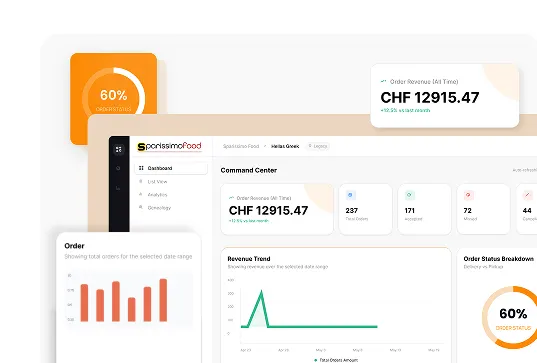
Analytics to Identify Complaint Patterns. SparissimoFood’s manager dashboard shows order volumes, kitchen performance data, and peak period metrics. If your negative reviews cluster around Friday dinner service, a look at your order volume data for that window will often reveal an operational issue, such as too many simultaneous delivery and dine-in orders creating kitchen overload, that is driving the complaints. Fixing the root cause is more effective than improving your response copy.
SparissimoFood starts at CHF 49/month with a commission of 5–8% per order, substantially lower than third-party platforms at 25–30%. Explore the current plan options at manage.sparissimofood.com/plans.
Frequently Asked Questions
How quickly should a restaurant respond to a negative review? Respond within 24 hours for any review rated 1 or 2 stars. For 3-star reviews, within 48 hours is acceptable. Speed of response signals to both the reviewer and future readers that you take feedback seriously. A review that sits unanswered for a week implies either that you did not see it or that you chose not to respond, neither of which reflects well on your operation. Set up Google My Business notifications so new reviews reach you immediately rather than being discovered days later.
Should a restaurant respond to every negative review? Yes. Every public negative review without a response is a negative data point for every future guest who reads it. Even a brief, genuine acknowledgement is better than silence. The one exception is a clearly fraudulent review where you have already submitted a removal request to Google. In that case, a short professional response is still appropriate, but do not engage further while the removal process is underway.
What should you do if a negative review contains false information? Respond calmly and correct the factual record without aggression. For example: “We are sorry your experience was disappointing. We would note that our pasta is freshly made daily and served immediately from the kitchen; we are not aware of any cold pasta leaving our kitchen that evening, and we would like to understand more about your specific experience. Please contact us directly.” Do not call the reviewer a liar. State the facts and invite clarification. If the review is entirely fabricated, submit a removal request through Google Business Profile support.
Can you ask a reviewer to change or delete their negative review? Yes, you can ask, but only after genuinely resolving the issue. If you have reached out privately, addressed the complaint to the guest’s satisfaction, and the issue is resolved, it is entirely appropriate to politely mention that you would appreciate them updating their review if their view of the experience has changed. Do not condition your resolution offer on them updating the review first; that is considered a form of review incentivisation and can violate platform policies.
How do you handle a negative review that was clearly left by a competitor? Document the review thoroughly: screenshots, dates, reviewer profile. Submit a removal request to Google citing the fraudulent nature of the review. Write a brief, professional public response noting that you cannot find any record of this visit. Do not accuse the competitor directly in your public response, even if you are certain who is responsible. Keep the tone factual and professional, and let the removal process handle the rest.
Every restaurant will receive a negative review. The ones that thrive are the ones that respond better than anyone else in their street.

.Ds4FHhSq_ZxC9WE.webp "Restaurant Upselling Techniques That Don't Feel Pushy")








.CXCr6fQt_Z11gsYh.webp "Build a Branded Restaurant App Without Developers")
.y09Xtv8Z_1gH6f6.webp "Set Up Restaurant Online Ordering in Under a Week")

.B-Rl4IDw_Z204OoN.webp "Restaurant Loss Prevention and Theft Guide")



.DPpk5JZR_AlrVy.webp "Restaurant Communication During Peak Hours | Guide 2026")





.B6eEizW1_Z2bHQYl.webp "Restaurant Menu Pricing Strategies That Actually Protect Your Margins in 2026")
.CRszlDy5_2neUXu.webp "How to Migrate from GloriaFood Without Disruption: A Technical Step-by-Step Guide")
.kT6N2QP-_1Tp2j1.webp "GloriaFood Is Shutting Down on April 30, 2027 — What Every Restaurant Owner Needs to Do Now")