
How to Reduce Restaurant Staff Turnover | Switzerland 2026


Quick Answer: The restaurant industry has one of the highest staff turnover rates of any sector, between 60% and 75% annually in many markets. In Switzerland, every single departure costs a restaurant between CHF 4,300 and CHF 9,200 once you account for recruitment, onboarding, and lost revenue. The most effective strategies to reduce restaurant staff turnover are: post schedules 14 days in advance and stick to them; run structured stay interviews every 6 months; build a written career path for every role; fix your peak-hour systems before they burn out your kitchen; pay fairly and explain why; and use operational data to match staffing to real demand. None of these require a large budget. They require consistency.
One in every three restaurant employees in Switzerland leaves within their first year. For kitchen staff, it is closer to one in two. Every departure costs you money, time, and the hardest thing to measure: consistency in the product you send to every table.
What Is the Restaurant Staff Turnover Rate and How Do You Calculate Yours?
Staff turnover rate is the percentage of employees who leave and need to be replaced within a given period typically measured annually.
The formula:
Turnover Rate (%) = (Number of staff who left ÷ Average number of staff) × 100
Example: if you have an average of 12 staff and 5 left during the year, your turnover rate is 41.7%.
Global hospitality consistently records annual turnover of 60–75%, the highest of any industry, according to Gastro Suisse and comparable European industry associations. In Switzerland, stronger labour protections keep the figure lower, but the Swiss hospitality sector still sees churn at roughly double the national cross-sector average.
A healthy benchmark for an independent restaurant: anything above 30% warrants a systematic review, not a casual conversation during service.
The Voluntary vs. Involuntary Distinction
Not all turnover is equal. Involuntary turnover, dismissals and fixed-term contracts ending, is generally low in Swiss restaurants. The problem is voluntary turnover: staff who decide to leave. That is the number you can influence, and it is the number this article addresses.
What Restaurant Staff Turnover Actually Costs in CHF
Most operators underestimate this by a factor of two.
The commonly cited benchmark is that replacing an employee costs 50–200% of their annual salary. In a Swiss restaurant context, the real breakdown for a front-of-house staff member earning CHF 4,200/month looks like this:
| Cost Category | CHF Range |
|---|---|
| Recruitment (job ads, interviews, reference checks) | 500–1,200 |
| Onboarding and training (4–6 weeks reduced productivity) | 2,000–3,500 |
| Overtime to existing staff covering the vacancy | 800–1,500 |
| Lost revenue from slower service and quality dips | 1,000–3,000 |
| Total per departure | CHF 4,300–9,200 |
For kitchen staff, a chef de partie earning CHF 4,500/month, the figure is higher. Their onboarding period runs 8–12 weeks, and the productivity impact on the kitchen during that window is greater than any front-of-house role.
A restaurant with 5 departures per year at the conservative end of this range is absorbing CHF 21,500 in hidden annual costs, before a single franc of advertising spend. That number does not appear on your profit and loss account. It is simply gone.
High staff turnover also increases the risk of operational loss and shrinkage. New staff are less familiar with your systems and reconciliation processes, which correlates with higher error rates and occasionally theft. If you have not read our restaurant loss prevention guide, it is worth reviewing alongside this article.
Why Restaurant Staff Really Leave
Perkbox will tell you: lack of development, lack of recognition, poor work-life balance, bad culture, bad management. All true. But restaurants have specific causes that generic HR content misses entirely.
1. Schedule Instability — The Number-One Driver Nobody Names
In European hospitality research, unpredictable scheduling ranks above pay as the leading driver of voluntary departure in the under-35 age group. Last-minute shift changes, irregular hours, and split shifts make it impossible for staff to plan anything outside of work. This matters more in Switzerland, where the cost of living means staff genuinely depend on predictable income.
The standard advice is to post schedules 7 days in advance. In practice, restaurants with the lowest turnover post 14 days in advance and change them rarely.
2. Peak-Hour Operational Chaos
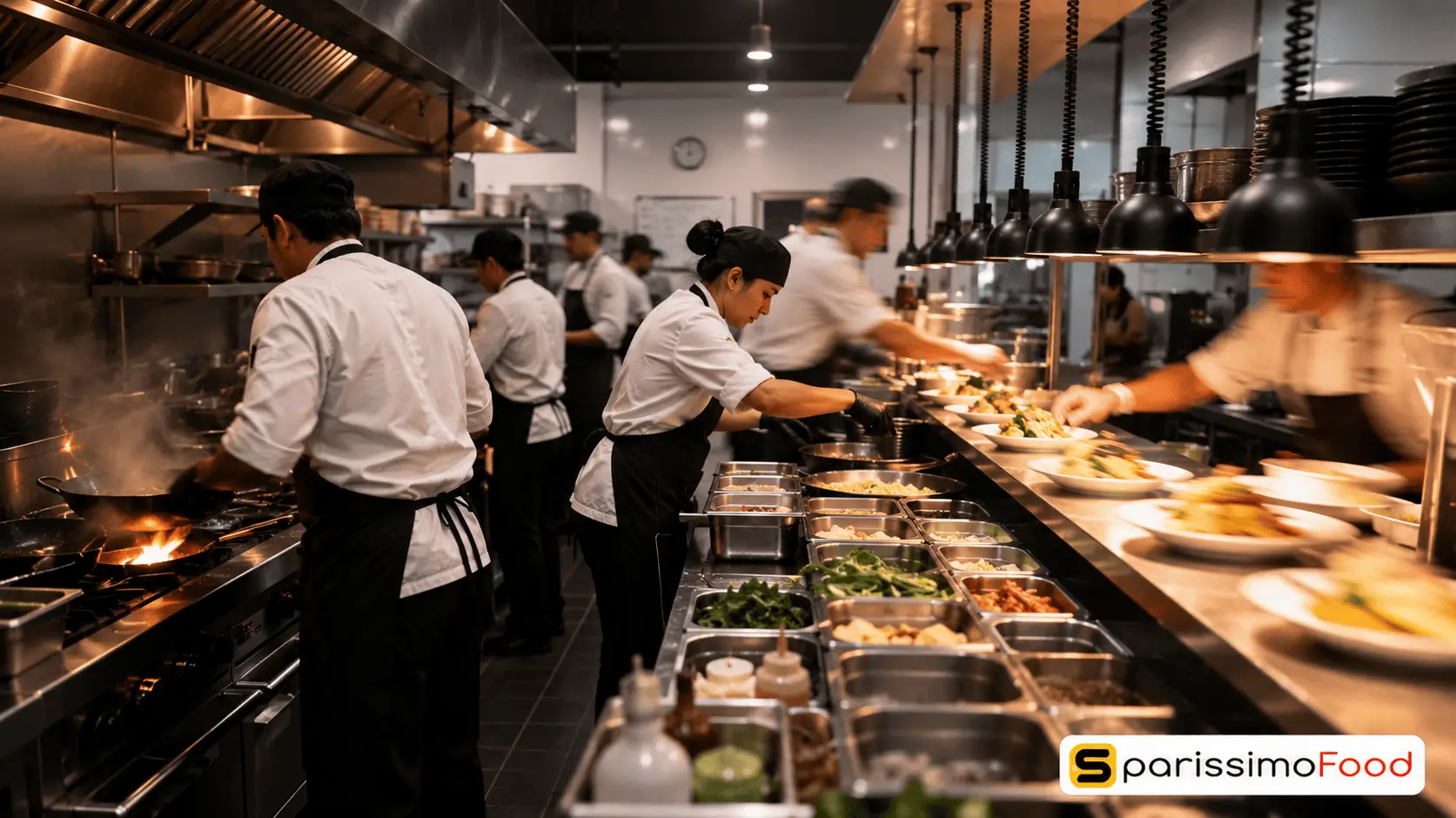
Kitchen burnout does not happen gradually. It happens during Friday dinner service when every station is backed up, the expeditor is absent, three delivery orders just arrived through the online platform, and the sous chef is shouting. Staff absorb that pressure directly. Repeat it often enough, and your best line cook starts looking for a calmer kitchen.
This is not a staffing problem. It is a systems problem. Restaurants that manage peak-hour flow with structured preparation, station ownership, and online order throttling have measurably lower kitchen turnover. For the operational detail, see our peak hour management guide.
3. No Visible Career Path
A server who has worked the same role for 18 months without a single conversation about what comes next has already mentally started looking elsewhere. Swiss hospitality workers increasingly expect to understand where a role leads, senior server, shift leader, junior manager, and what it takes to get there.
If you have never had this conversation explicitly, assume your staff have assumed the answer is nowhere.
4. Feeling Interchangeable
This affects restaurants with high walk-in volume and tourist-facing locations most acutely. When staff feel like a number rather than a contributor, when the manager does not know their strengths, their preferences, or what they did well last Friday, the psychological cost of staying drops to zero.
Recognition does not require a formal program. A team brief acknowledgement, a direct message after a difficult shift, a public thank-you in front of colleagues. These cost nothing.
5. Physical Demands Unmatched by Compensation
This is almost never discussed in HR content because it is specific to the industry. Standing for 10 hours, operating in 40°C kitchen heat, hauling supplies, absorbing customer frustration, the physical toll of restaurant work is real and continuous. When pay does not clearly compensate for it, and when basic respect is absent, staff look for different work.
Front-of-House vs. Back-of-House: Two Different Problems
Operators who treat FOH and BOH turnover as the same issue apply the wrong solutions to both.
Front-of-house turnover is most commonly driven by:
- Schedule instability and split shifts
- Tip income unpredictability (Switzerland’s tipping culture differs sharply from North American models, staff here cannot rely on tips as a significant income supplement)
- No clear growth path
- Relationship with the direct manager
Back-of-house turnover is most commonly driven by:
- Physical and psychological burnout from peak-hour pressure
- Kitchen hierarchy issues (a hostile kitchen culture remains more common in this sector than others)
- Pay that does not reflect actual skill level
- No investment in culinary development
The interventions overlap, better communication and better systems benefit everyone, but the priorities differ. Your kitchen team needs structured preparation routines, clear station ownership, and controlled peak-hour operations. Your service team needs stable scheduling, a visible career path, and consistent recognition.
6 Strategies to Reduce Restaurant Staff Turnover in Switzerland
1. Post Schedules 14 Days in Advance — and Stick to Them
This is the single highest-impact change most restaurants can make without spending a franc.
Implement a fixed rule: schedules are published every Monday for the following two weeks. Changes after publication require manager authorization and, where possible, compensation. Track how often you change posted schedules. If that number is high, the problem is in the planning process, not the scheduling.
2. Run Structured Stay Interviews Every 6 Months
Exit interviews tell you why someone left. Stay interviews tell you what is keeping them, and what might push them out.
The format should be simple: 20 minutes, off the floor, with three consistent questions asked every time:
- What do you enjoy most about working here?
- What frustrates you most, and is there anything we could change?
- What would need to happen for you to still be here in 12 months?
Document the answers. Review them. Act on at least one item per person and tell them you did. The act of asking, and demonstrably listening, improves retention before a single change is made.
3. Build a Written Progression Path for Every Role
Write down explicitly what it takes to move from server to senior server, from commis to chef de partie. What skills, what tenure, what performance benchmarks. Then share it with every member of staff, at hiring and at every stay interview.
When a new employee can see a written path, the internal question shifts from “when do I leave?” to “how do I get there?“
4. Fix Your Peak-Hour Operation Before It Burns Out Your Kitchen
If your kitchen regularly collapses during busy service, your back-of-house turnover will stay high regardless of pay or culture initiatives. The fix is operational, not financial.
Build a preparation checklist that requires every station to be signed off as ready before the first order is taken. Define station ownership rules so that every cook is responsible for their station during service and does not leave it without authorization. Use kitchen throttling during your busiest windows to prevent delivery order surges overwhelming the kitchen. For a full breakdown of how to build these systems, see our peak hour management guide.
5. Pay Fairly — and Explain What “Fairly” Means
Swiss restaurant wages are governed by the Landesgesamtarbeitsvertrag (L-GAV), the national collective labour agreement for the hospitality sector. According to lgav.ch, minimum wages range from CHF 3,470 to CHF 4,370 per month depending on qualification level and region.
Paying at the L-GAV minimum is not a retention strategy. It is the legal baseline. Restaurants with strong retention typically pay 5–15% above L-GAV minimums and communicate this clearly during the hiring process, not as a vague promise but as a specific figure compared against the minimum.
Equally: pay on time, every time. Inconsistent or delayed payroll is a low-profile but surprisingly common driver of voluntary departure in Swiss restaurants.
6. Use Operational Data to Staff More Intelligently
Turnover spikes are not random. They correlate with periods of understaffing, operational chaos, and poorly structured scheduling. If you have order volume data, you can identify your highest-stress windows and staff them accurately, reducing the workload spikes that burn people out.
This means overstaffed quiet periods are just as damaging as understaffed peaks: staff who cannot earn tips on slow Tuesday lunches begin to resent the schedule. Matching staffing to real demand, backed by data, is a retention tool as much as a cost management tool.
How SparissimoFood Helps With Staff Retention
Reducing turnover is partly a people strategy and partly an operational one. SparissimoFood contributes directly to the operational side.
Kitchen Throttling. The leading cause of back-of-house turnover is peak-hour chaos, specifically the collapse that happens when dine-in and delivery orders arrive simultaneously beyond kitchen capacity. SparissimoFood’s kitchen throttling feature lets your manager extend displayed delivery times or pause incoming online orders during your busiest windows with a single tap. The kitchen team operates in a controlled environment, not a reactive one. Less chaos means fewer resignations.
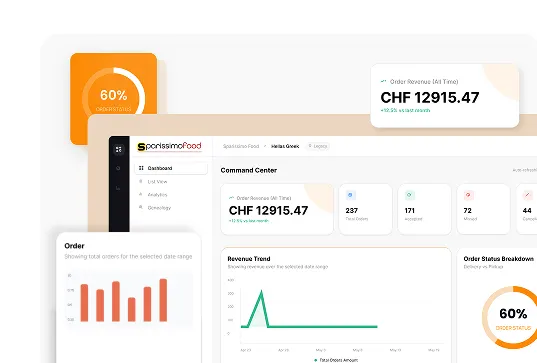
Manager Dashboard and Analytics. Understanding your order volume across the week gives you the data to build schedules that reflect real demand. The SparissimoFood dashboard gives managers real-time visibility into order flow — the same data that should be informing your staffing decisions. Over time, a kitchen that is correctly staffed for its volume is a kitchen with lower burnout rates.
Better Margin Creates Room to Invest in Your Team. When you reduce your dependence on third-party delivery platforms charging 10–30% commission per order, the margin you recover can be redirected to staff. SparissimoFood starts at CHF 49/month with a commission of 5–8% per order, significantly lower than Just Eat or Uber Eats. The restaurants that grow their direct ordering channel gain financial headroom to pay above the L-GAV minimum, fund training, or offer the pay rise that keeps a good chef from leaving.
Explore the current plan options at manage.sparissimofood.com/plans.
Frequently Asked Questions
What is the average staff turnover rate in Swiss restaurants? Switzerland does not publish a single annual hospitality turnover figure, but data from Gastro Suisse and European hospitality research consistently shows the sector running at double to triple the national cross-sector average. A realistic benchmark for an independent Swiss restaurant is 25–45% annual turnover. Above 50% requires an urgent operational and cultural review, not simply a pay increase.
How much does it cost to replace a restaurant employee in Switzerland? Replacing a front-of-house staff member in Switzerland costs CHF 4,300–9,200 when you include recruitment, onboarding, overtime coverage, and lost revenue from reduced service quality. For kitchen staff, particularly trained chefs, the figure is higher because onboarding takes longer and the productivity impact on the kitchen is greater. A chef de partie typically takes 8–12 weeks to reach full output after joining.
What is the number one reason restaurant staff leave? In European hospitality research, schedule instability ranks ahead of pay as the primary driver of voluntary departure in the under-35 demographic. Unpredictable hours, last-minute changes, and split shifts make personal life planning impossible. Restaurants that post schedules 14 days in advance and maintain consistency see measurably lower turnover than those that schedule week to week.
How do I calculate my restaurant’s staff turnover rate? The formula is: (Number of employees who left in the period ÷ Average number of employees in the period) × 100. If you have an average of 10 staff and 4 left during the year, your turnover rate is 40%. Measure quarterly rather than only annually, quarterly data reveals seasonal patterns and specific trigger points that an annual figure masks.
Is kitchen staff turnover different from front-of-house turnover? Yes, significantly. Front-of-house turnover is most commonly driven by schedule instability, limited growth path, and management relationship issues. Kitchen staff turnover is more commonly driven by physical and psychological burnout from peak-hour pressure, kitchen hierarchy issues, and the feeling that skills are not being fairly compensated or developed. The strategies that retain your kitchen team are not identical to those that retain your service team, though investment in better systems and clearer communication benefits both.
The restaurants with the lowest turnover are not necessarily the ones that pay the most — they are the ones that are the least chaotic to work in.

.Ds4FHhSq_ZxC9WE.webp "Restaurant Upselling Techniques That Don't Feel Pushy")










.CXCr6fQt_Z11gsYh.webp "Build a Branded Restaurant App Without Developers")
.y09Xtv8Z_1gH6f6.webp "Set Up Restaurant Online Ordering in Under a Week")

.B-Rl4IDw_Z204OoN.webp "Restaurant Loss Prevention and Theft Guide")



.DPpk5JZR_AlrVy.webp "Restaurant Communication During Peak Hours | Guide 2026")





.B6eEizW1_Z2bHQYl.webp "Restaurant Menu Pricing Strategies That Actually Protect Your Margins in 2026")
.CRszlDy5_2neUXu.webp "How to Migrate from GloriaFood Without Disruption: A Technical Step-by-Step Guide")
.kT6N2QP-_1Tp2j1.webp "GloriaFood Is Shutting Down on April 30, 2027 — What Every Restaurant Owner Needs to Do Now")