
Restaurant Menu Descriptions That Sell | Writing Guide 2026

How to Write Restaurant Menu Descriptions That Sell
Quick Answer: Restaurant menu descriptions are the words beneath each dish name that convert a browsing guest into an ordering one. Research from Cornell University’s hospitality program finds that evocative menu descriptions increase individual item sales by up to 27% and improve guest satisfaction without any change to the food itself. The five elements that make a description effective are: a sensory lead that activates the imagination, an origin or sourcing detail that builds trust, the method of preparation that signals quality, a concise flavour profile, and an honest close that does not over-promise. Apply these five elements across 30 to 50 words per dish, avoid generic adjectives like delicious and tasty, and update your descriptions every time an ingredient or price changes. On digital and QR menus, descriptions work even harder because guests cannot see, smell, or ask about the food in front of them.
A restaurant menu does one of two things: it lists food, or it sells food. The difference between those two outcomes is almost entirely in how the dishes are described.
Research cited in Cornell University’s hospitality program shows that well-crafted menu item descriptions increase the sales of individual items by up to 27%, purely through the power of language. No price change. No kitchen investment. No additional staff time. Just words that make the guest want what you are serving.
What Makes Restaurant Menu Descriptions Effective
Not all description length or style produces the same result. The research is specific: item descriptions that are evocative, credible, and concise outperform both bare-bones listings and overwrought prose.
The bare-bones failure looks like this: “Grilled salmon. CHF 28.” The guest receives a price and a cooking method. They have no reason to prefer it over anything else on the menu.
The overwrought failure looks like this: “A transcendent, lovingly crafted journey through the oceanic depths, featuring our hand-selected Norwegian salmon, kissed by the gentle whisper of an open flame.” This type of writing triggers scepticism before the guest reaches the end of the sentence.
Effective menu copy sits precisely between these two extremes. They are specific enough to create desire and honest enough to be believed. The cognitive principle of 7 plus or minus 2 items per menu category tells us that within each section, guests typically evaluate a small set of options. Every description competes within that small set. The dish that sounds most clearly worth ordering wins.
The 5 Elements of a Menu Description That Sells
Element 1: A Sensory Lead
The first phrase of an item description carries the most weight. It is what the eye lands on first, and it sets the frame for everything that follows.
Sensory language activates the part of the brain associated with actually experiencing the food. Words like crispy, slow-braised, charred, velvety, and stone-ground describe textures and processes that the reader can almost feel before the first bite.
The key rule: be specific, not superlative. “Crispy skin” is a promise the kitchen can keep. “Incredible” is a claim that tells the guest nothing and sounds like marketing.
Weak opening: “Delicious roasted chicken.” Strong opening: “Slow-roasted free-range chicken with golden, crispy skin.”
The second version makes the guest want the dish before they have read a single word about what it is served with.
Element 2: Origin or Sourcing
Menu engineering research shows that highlighting locally sourced or geographically specific ingredients increases item sales by up to 20%. Swiss diners respond particularly strongly to this signal. A cheese described as “Gruyère AOP” tells a Swiss guest about authenticity, regional identity, and quality in three words. An ingredient described as “from the Bündner Herrschaft” places the dish in a recognisable quality context.
Origin language also works for non-Swiss ingredients when the geography is associated with quality. “Atlantic cod” outperforms “fish.” “Tuscan white beans” outperforms “beans.” The specificity signals care.
One practical note for Swiss restaurants: do not use origin language you cannot support. A guest who asks where the lamb is from should receive an accurate answer. A description that says “local vegetables” should mean vegetables from a named or knowable local source.
Element 3: Method of Preparation
How a dish is made signals as much as what it is made from. The method tells the guest what kind of experience they are ordering.
“Slow-braised” communicates time, care, and tenderness. “Stone-ground” communicates artisan production. “Wood-fired” communicates heat, char, and tradition. These are not just descriptions. They are value signals.
In Swiss casual dining, the method of preparation is one of the strongest levers for justifying a higher menu price without raising it arbitrarily. A dish described with its preparation method appears to be worth more than the same dish described without it.
Element 4: A Concise Flavour Profile
After the sensory lead, origin, and method, the guest needs to know what the dish tastes like. This is the flavour profile sentence, and it should be brief.
“Finished with a lemon and herb butter.” “Served with a Chasselas reduction and seasonal greens.” “Paired with roasted garlic aioli and house-pickled vegetables.”
One clause. One supporting flavour note. Not a list of every component on the plate. A description that lists seven components tells the guest you are thorough. A description that selects the one most compelling supporting element tells the guest you have taste.
Element 5: An Honest Close
The close of a menu description is not a second pitch. It is a landing. A brief, specific statement that completes the picture without over-promising.
“A dish that requires patience and rewards it.” Or simply a named accompaniment: “Served with house-made focaccia.” Or a portion note that removes ambiguity: “Sized for one as a main or two as a shared starter.”
Honesty in the close is critical. A description that promises a life-changing experience and delivers a competent dish damages trust more than a simple, accurate description would have. Swiss guests in particular value descriptions that set realistic expectations and then meet them.
Before and After: Menu Description Examples
These examples show the transformation from a standard listing to a description that converts, using CHF-priced dishes at a Zurich casual restaurant.
Before: “Risotto with mushrooms. CHF 24.”
After: “Stone-ground Carnaroli risotto with slow-sautéed Pilzwald mushrooms, finished with aged Gruyère AOP and a handful of fresh thyme. A kitchen classic that takes 22 minutes and cannot be rushed.”
The revised version uses two origin signals, a method detail, a preparation time that signals care, and a close that turns what could be seen as a slow dish into a virtue.
Before: “Chicken with sauce. CHF 22.”
After: “Free-range Emmentaler chicken thigh, roasted until the skin crisps, resting in a white wine and tarragon jus. Served with a side of crushed new potatoes.”
The revision names the regional origin, describes the preparation result, and places the sauce as a specific and identifiable component rather than a generic one.
Before: “Chocolate dessert. CHF 12.”
After: “Warm Valrhona dark chocolate fondant with a liquid centre, served with a scoop of vanilla bean ice cream and a pinch of Fleur de Sel.”
The revision names the chocolate brand, describes the key experience, and uses the Fleur de Sel detail as the final note that signals precision.
These before and after transformations show how dish descriptions move from informational to persuasive without changing the dish, the price, or the kitchen.
Words That Work and Words to Avoid in Menu Writing
The language that increases orders is specific, sensory, and credible. The language that reduces orders is vague, generic, or exaggerated.
Words that work: Crispy, slow-braised, stone-ground, wood-fired, aged, house-made, hand-rolled, pan-seared, locally sourced, seasonal, vine-ripened, grass-fed, cave-aged, sustainably caught.
Each of these works because it says something true and specific that the guest can visualise.
Words to avoid: Delicious, tasty, amazing, incredible, fantastic, mouth-watering, sumptuous, exquisite.
These words function as fillers. They claim a positive quality without describing it. A guest reading “incredible flavour” learns nothing they could not have assumed. A guest reading “vine-ripened San Marzano tomatoes, slow-roasted for four hours” has a concrete mental image.
Structural phrases to avoid: “A journey for the senses,” “culinary masterpiece,” “lovingly crafted,” “a tribute to the season.”
These phrases belong to a register of menu writing that has been so widely mocked that they now trigger the opposite of the intended effect. They make experienced diners disengage.
How to Describe Food on a Menu for Digital and QR Ordering
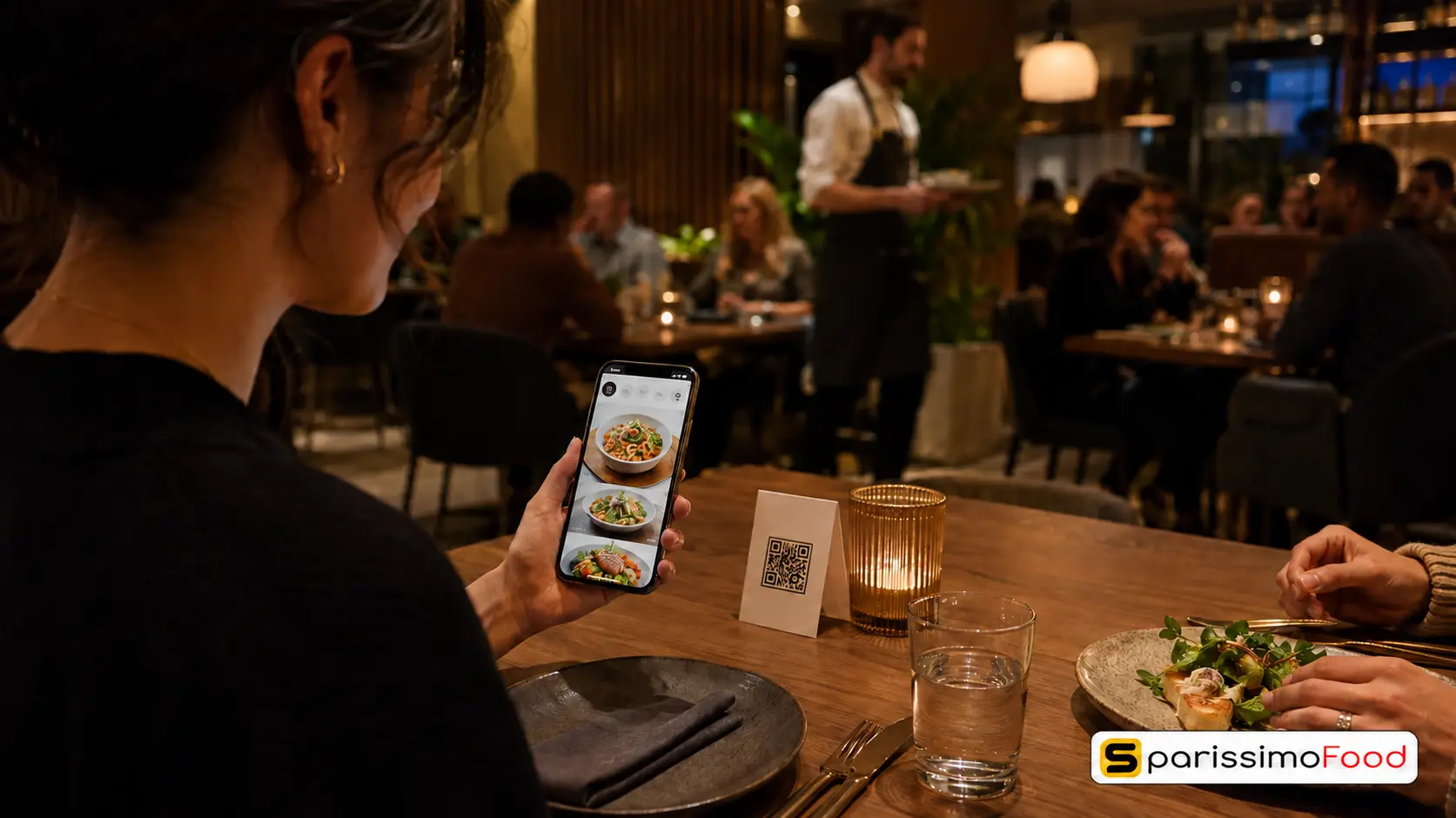
When guests order through a digital platform or QR code rather than reading a printed menu at a table, menu copy carries a different weight. The guest cannot see the dish being prepared. They cannot smell it. They cannot ask a server. The description is the only sensory input they have before they add to cart.
This changes three things.
First, the description must be complete enough to answer the most common questions without requiring a follow-up action. Allergen information, portion size, and key accompaniments should all be present. A guest who cannot find out whether a dish contains gluten without contacting the restaurant will select a different dish.
Second, the opening three words carry disproportionate weight on a mobile screen. Most guests on a QR ordering interface scan rapidly. The first three words of a description determine whether they stop to read the rest. Lead with the most appealing element, not the dish category.
Third, digital item descriptions should be updated whenever an ingredient changes. A description written for a seasonal ingredient that is no longer in the dish creates a gap between expectation and experience. On a printed menu, this requires a reprint. On a digital menu, it requires a three-second edit. Update immediately.
For more on optimising your digital menu for higher order values, see our guide to increasing restaurant average order value.
Writing Menu Descriptions for Swiss Restaurants Specifically
Swiss diners have specific expectations that should shape how you write menu descriptions for your restaurant.
Authenticity over aspiration. Swiss guests are less receptive to aspirational menu language and more responsive to honest, precise descriptions. A description that says exactly what the dish is, prepared how, using what, converts better than one that promises an experience.
AOC and AOP designations carry weight. When an ingredient carries a Swiss protected designation of origin, such as Gruyère AOP, L’Etivaz AOP, or Emmentaler AOP, include it. These designations tell a Swiss guest about quality and regional identity in a way that no marketing language can match.
Regional references build connection. A mushroom described as “from the forests above Zurzach” or a wine described as “from the Bündner Herrschaft” places your ingredient in a recognisable Swiss context. Guests from the region respond to this specificity with a familiarity and trust that generic origin language does not produce.
Multilingual menus. Many Swiss restaurants serve guests across German, French, Italian, and English language preferences. On a QR menu or digital ordering platform, descriptions in the guest’s language convert better than a single language for all guests. If your platform supports multilingual menus, write descriptions natively in each language rather than translating word-for-word. A French-speaking guest in Lausanne reads differently from a German-speaking guest in Zurich.
Swiss pricing transparency. Under Swiss pricing law, all menu prices must include MWST. Including the price immediately after the description, without an additional line showing tax, keeps the experience clean. Guests should never encounter a higher price at checkout than on the menu.
For the connection between strong menu descriptions and your broader pricing strategy, see our restaurant menu pricing strategies guide.
How SparissimoFood Helps You Write and Publish Menu Descriptions That Convert
The best restaurant menu descriptions only create value when they are visible to guests at every ordering touchpoint: your website, your QR table system, and your direct ordering platform. SparissimoFood connects all three with a single menu database.
One menu, all channels. When you write or update a description in SparissimoFood’s menu builder, it appears immediately across your direct ordering website, your delivery menu, and your QR dine-in system. You do not need to update three separate platforms. A seasonal ingredient change or a new dish description reaches every guest channel in seconds.
QR ordering where descriptions do the most work. SparissimoFood’s QR dine-in ordering puts your descriptions in front of every table guest without server mediation. On a mobile screen, your description is the sole selling tool. This is where the difference between a bare listing and a crafted description most directly affects order behaviour. Guests on QR menus who encounter well-written descriptions browse longer, consider more items, and spend more per order.
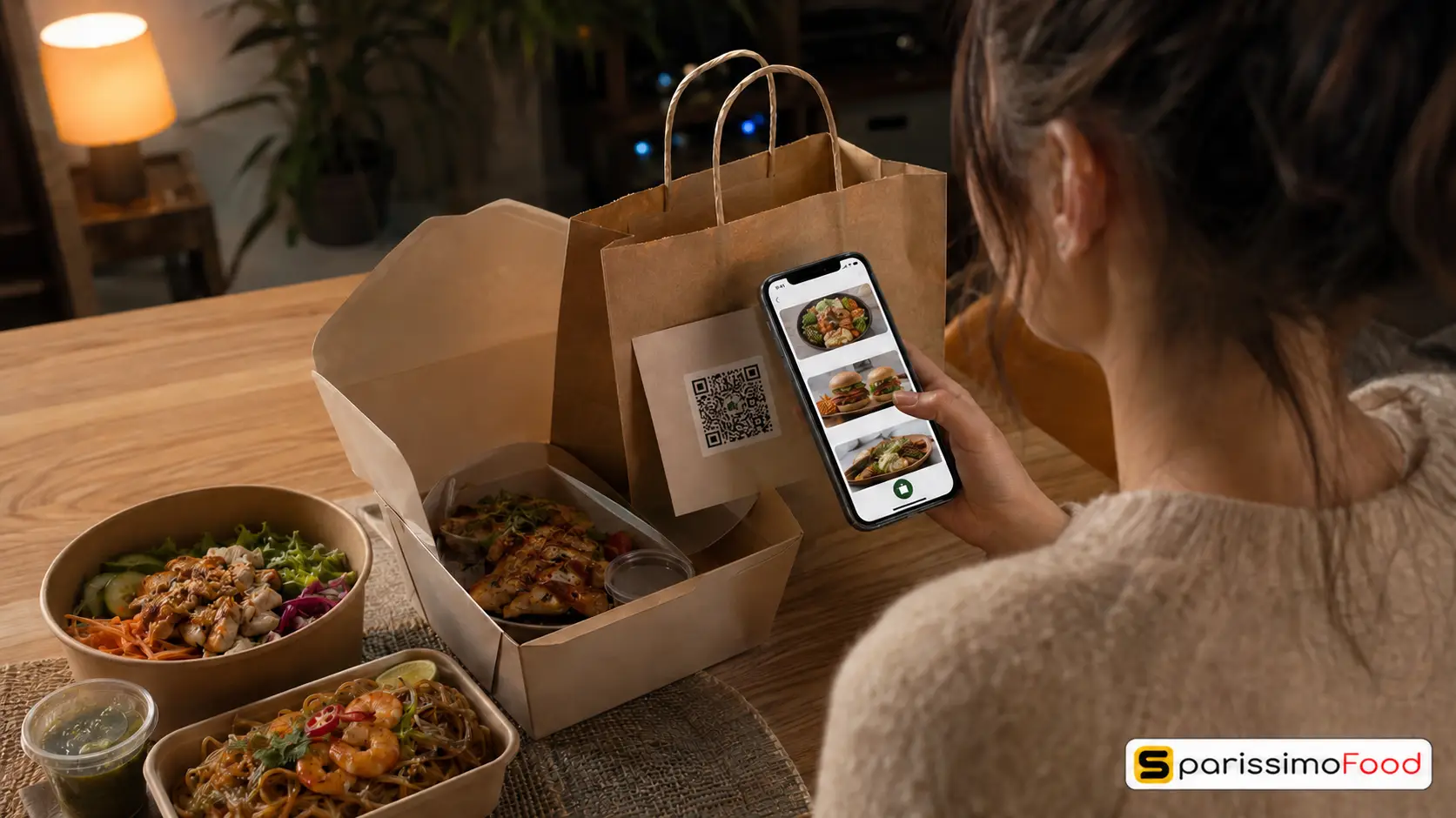
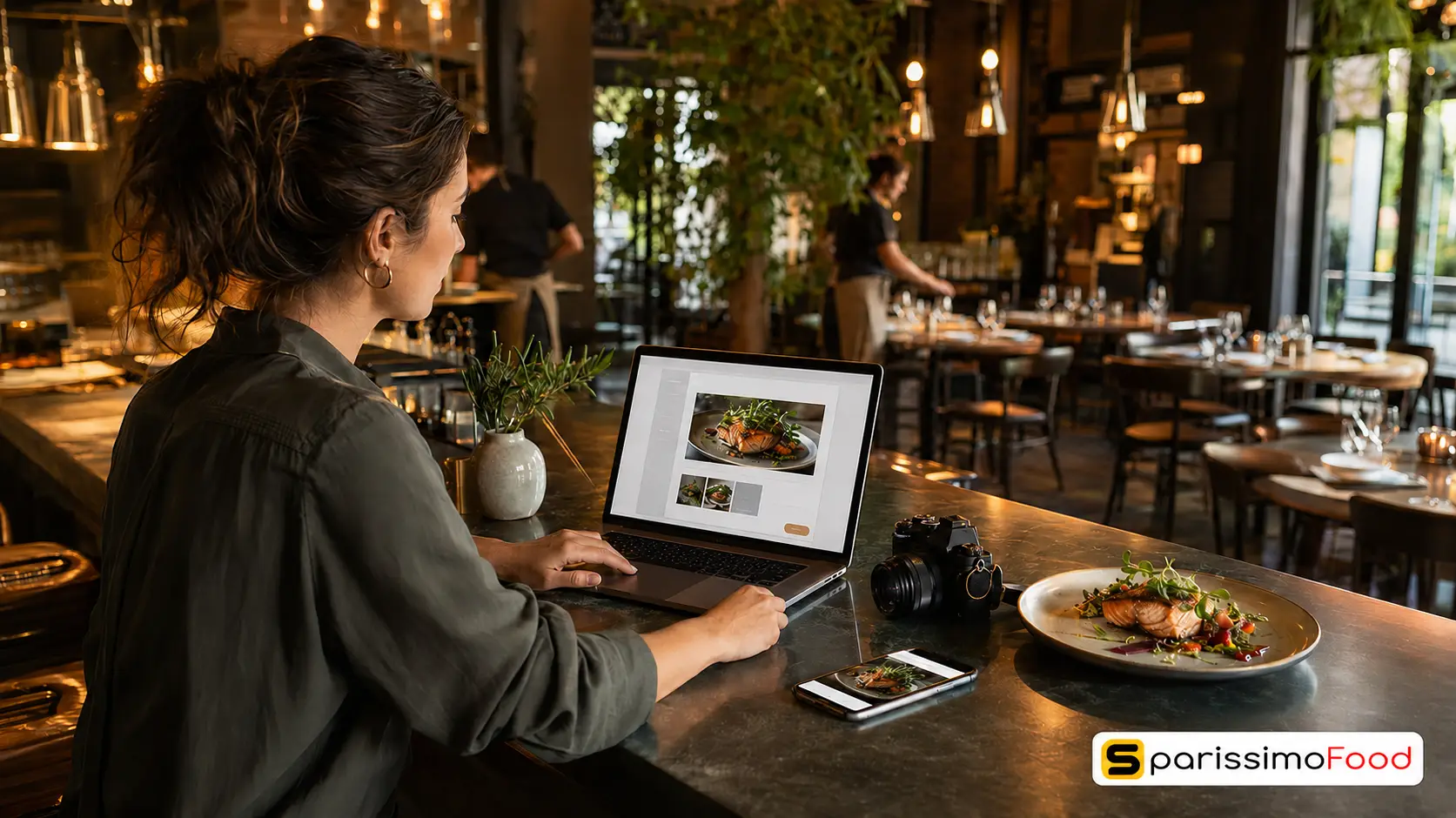
Photos alongside descriptions. SparissimoFood’s menu builder supports a photograph per item. The combination of a high-quality image and a well-written description is the most effective menu format available on any digital platform. Each image can be uploaded once and appears alongside the description on every channel.
Analytics to test description performance. SparissimoFood’s manager dashboard shows item-level order volumes over time. This data lets you identify which items are underperforming relative to their position on the menu, test a description rewrite, and measure whether order volume for that item changes in the following two weeks. Menu descriptions can be A/B tested through this method without any third-party tool.
SparissimoFood starts at CHF 49 per month with an 8% commission on the Starter plan, and CHF 79 per month with a 5% commission on the Business plan. Explore the current plan options at manage.sparissimofood.com/plans.
Frequently Asked Questions
How long should a restaurant menu description be? The ideal length for a menu item description is 25 to 50 words for a main course and 15 to 30 words for a starter or dessert. Within that range, every word should carry either a sensory, origin, or preparation detail. Longer descriptions do not convert better. A 60-word description written with the same density as a 30-word one loses the reader before the selling point is made.
What words make food sound more appealing on a menu? Sensory and preparation words consistently outperform generic adjectives. Words that describe texture, such as crispy, velvety, silky, and crumbly, and preparation methods, such as slow-braised, stone-ground, and wood-fired, create mental images that increase appetite. Origin words, such as Valrhona, Gruyère AOP, and grass-fed, add credibility. Avoid words like delicious, amazing, and incredible, which make a claim without conveying any specific information about the dish.
How do I write menu descriptions for a digital or QR menu? For digital and QR menus, lead with the most appealing element in the first three words, because mobile readers scan rather than read. Include allergen and portion information within the description because guests cannot ask a server for clarification. Update descriptions immediately when an ingredient changes, since digital menus allow instant edits that a printed menu cannot. Pair each description with a high-quality photograph, as the combination of image and text converts significantly better than text alone.
How often should I update my menu descriptions? Update your restaurant menu descriptions whenever an ingredient, preparation method, or accompaniment changes. Seasonal menus should receive fully rewritten descriptions with each rotation, because a description written for a winter ingredient reads incorrectly in summer and erodes trust. Beyond seasonal updates, review all descriptions once per year for accuracy and freshness. A description written three years ago may use language that feels dated or no longer reflects how the dish is prepared.
Do menu descriptions really increase sales? Yes, consistently and measurably. Research from Cornell University’s hospitality program finds that evocative menu item descriptions increase sales of individual items by up to 27% without any change to the dish or its price. Additional menu engineering research shows that highlighting locally sourced ingredients in descriptions can increase those item’s sales by up to 20%. The mechanism is that descriptions frame the guest’s expectation of the dish before they order, and a well-framed expectation produces both more orders and higher guest satisfaction with the outcome.
A menu description is not a label. It is the first course of the meal.
.Ds4FHhSq_ZxC9WE.webp "Restaurant Upselling Techniques That Don't Feel Pushy")
.CXCr6fQt_Z11gsYh.webp "Build a Branded Restaurant App Without Developers")
.y09Xtv8Z_1gH6f6.webp "Set Up Restaurant Online Ordering in Under a Week")
.B-Rl4IDw_Z204OoN.webp "Restaurant Loss Prevention and Theft Guide")
.DPpk5JZR_AlrVy.webp "Restaurant Communication During Peak Hours | Guide 2026")
.B6eEizW1_Z2bHQYl.webp "Restaurant Menu Pricing Strategies That Actually Protect Your Margins in 2026")
.CRszlDy5_2neUXu.webp "How to Migrate from GloriaFood Without Disruption: A Technical Step-by-Step Guide")
.kT6N2QP-_1Tp2j1.webp "GloriaFood Is Shutting Down on April 30, 2027 — What Every Restaurant Owner Needs to Do Now")