
Restaurant Communication During Peak Hours | Guide 2026
.DPpk5JZR_2ny1fU.webp "Restaurant Communication During Peak Hours | Guide 2026")

Quick Answer: Most kitchen breakdowns during peak hours are not caused by the volume of orders. They are caused by communication failures: unclear instructions, too many people talking to the kitchen at once, and information about problems arriving after the moment when something could still be fixed. The three-layer system that prevents this has a manager setting the framework before service, an expeditor owning all real-time communication at the pass, and FOH staff routing every kitchen message through that single expeditor. Add a structured 10-minute pre-service briefing and clear signals for common problems, and a kitchen handling 60 covers operates with the same calm as one handling 20.
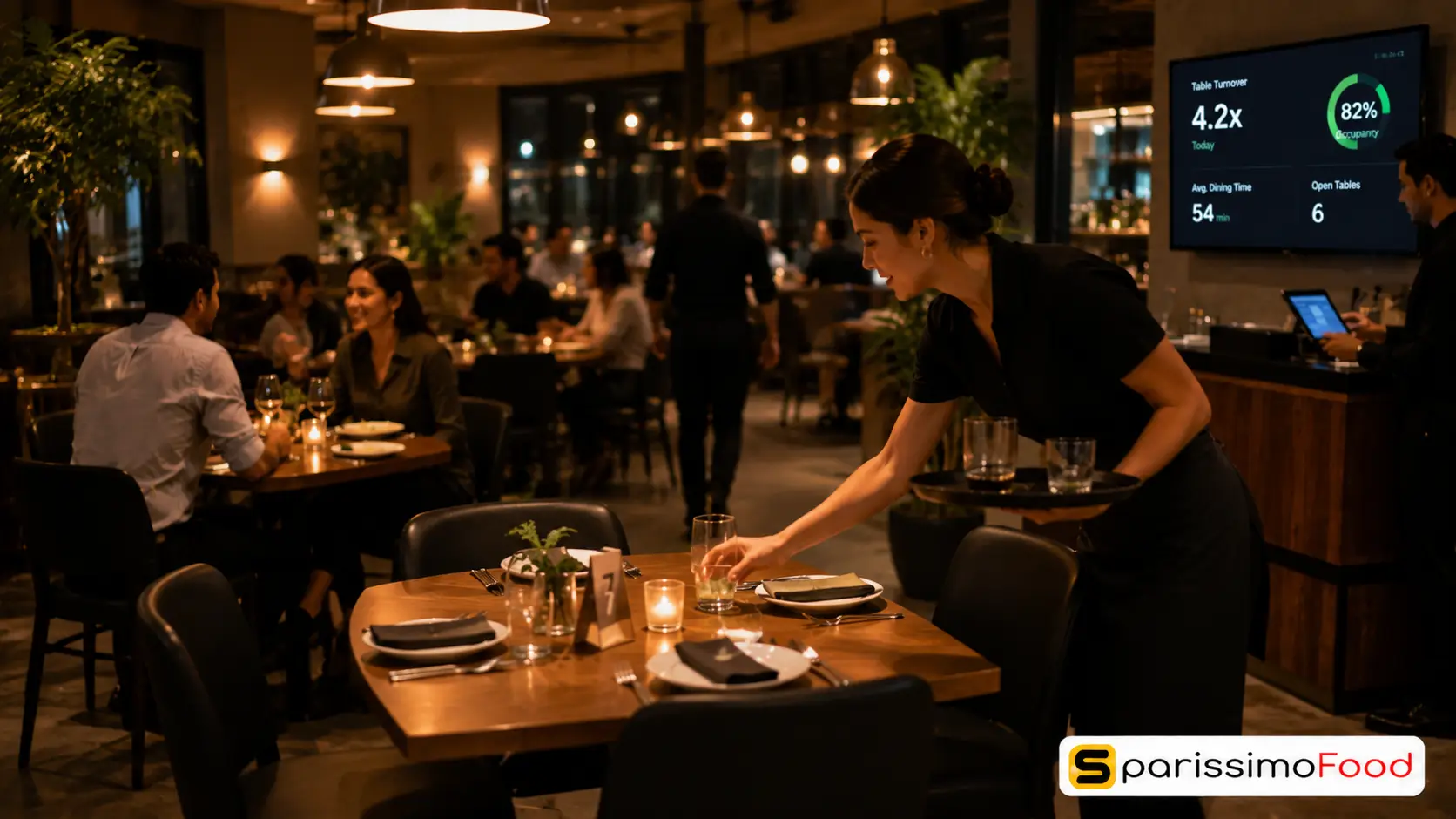
A restaurant with 30 covers fills up on a Friday at 19:30. By 20:00, three tables have been waiting 45 minutes for their mains. The kitchen is not overloaded. The prep was done correctly. The station assignments are clear. But four different servers have made four separate trips to the pass to ask about different tables, each interrupting the chef de cuisine at a different moment, each receiving partial information, none of it consistent.
The food is fine. The system is broken.
This article is about the communication system, not the kitchen operations. For the operational framework covering preparation checklists, station isolation, and kitchen throttling, see our restaurant peak hour management guide. This piece covers what happens when the kitchen is operationally ready but the information is not flowing correctly.
Why Communication Breaks Down During Peak Hours
Restaurant communication under pressure fails for three predictable reasons.
Too many communication channels. When every FOH team member communicates directly with the kitchen, the kitchen receives fragmented, overlapping information from multiple sources simultaneously. A chef de partie who is asked about table 7 by one server, table 12 by a second, and a modification on table 4 by a third within five minutes cannot respond accurately to any of them while executing service.
Information arrives too late. A table waits 55 minutes and the server then alerts the kitchen that the guest is unhappy. By this point, the meal is overdue, the guest’s experience is already damaged, and the kitchen is managing a crisis rather than preventing one. Good restaurant communication is anticipatory, not reactive.
Pressure changes tone. Under stress, commands replace requests, shouting replaces naming, and blame replaces problem-solving. Every minute that passes in an aggressive communication environment produces more errors and more stress, not fewer. Swiss kitchen culture, where staff expect clear systems and professional treatment, is particularly sensitive to this. According to Gastro Suisse, staff retention in Swiss hospitality is significantly correlated with quality of workplace communication and management style.
The solution is a communication architecture that routes information through defined channels, prevents overload at any one point, and uses agreed signals rather than improvised language during the rush.
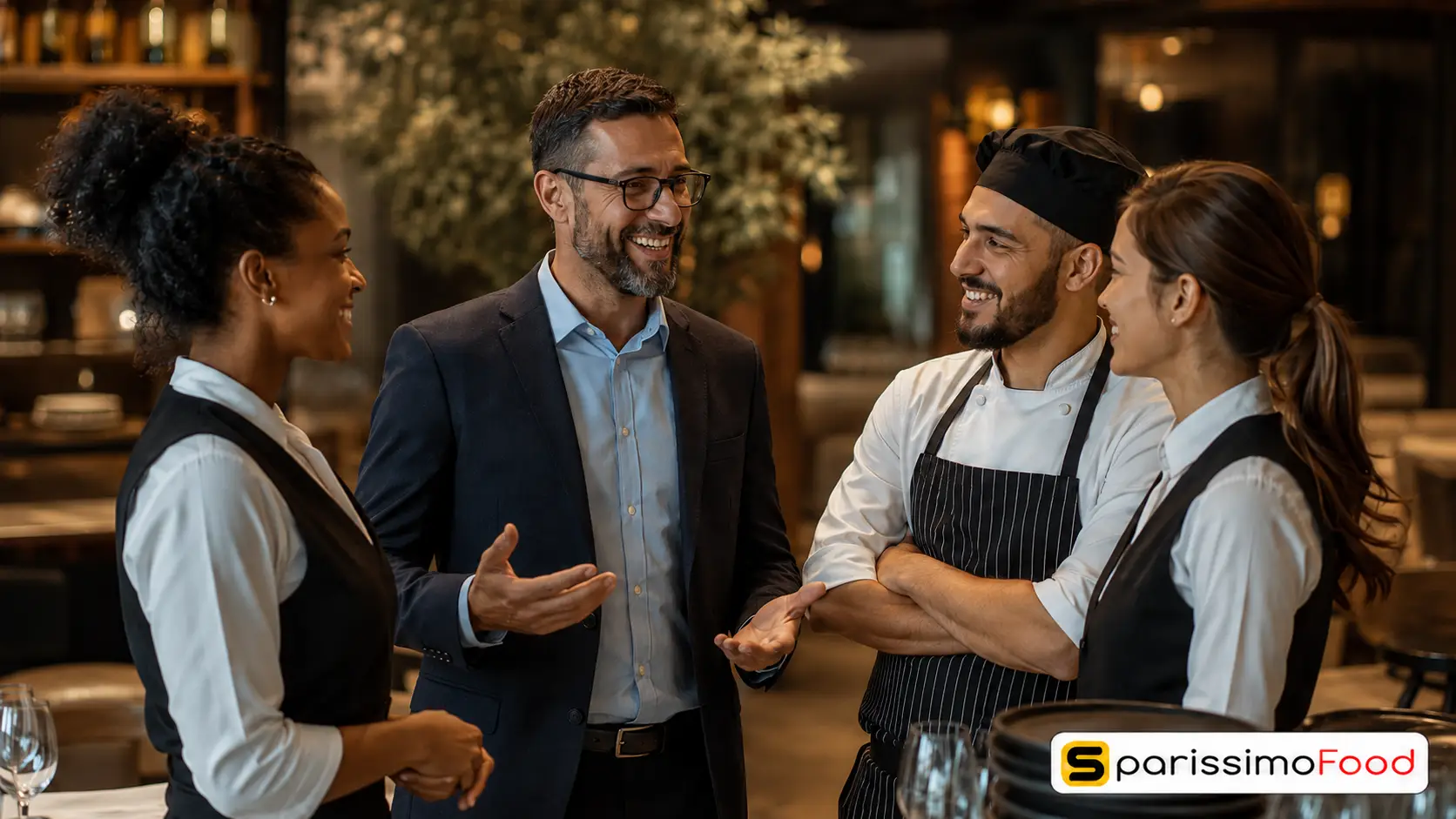
The 10-Minute Pre-Service Briefing
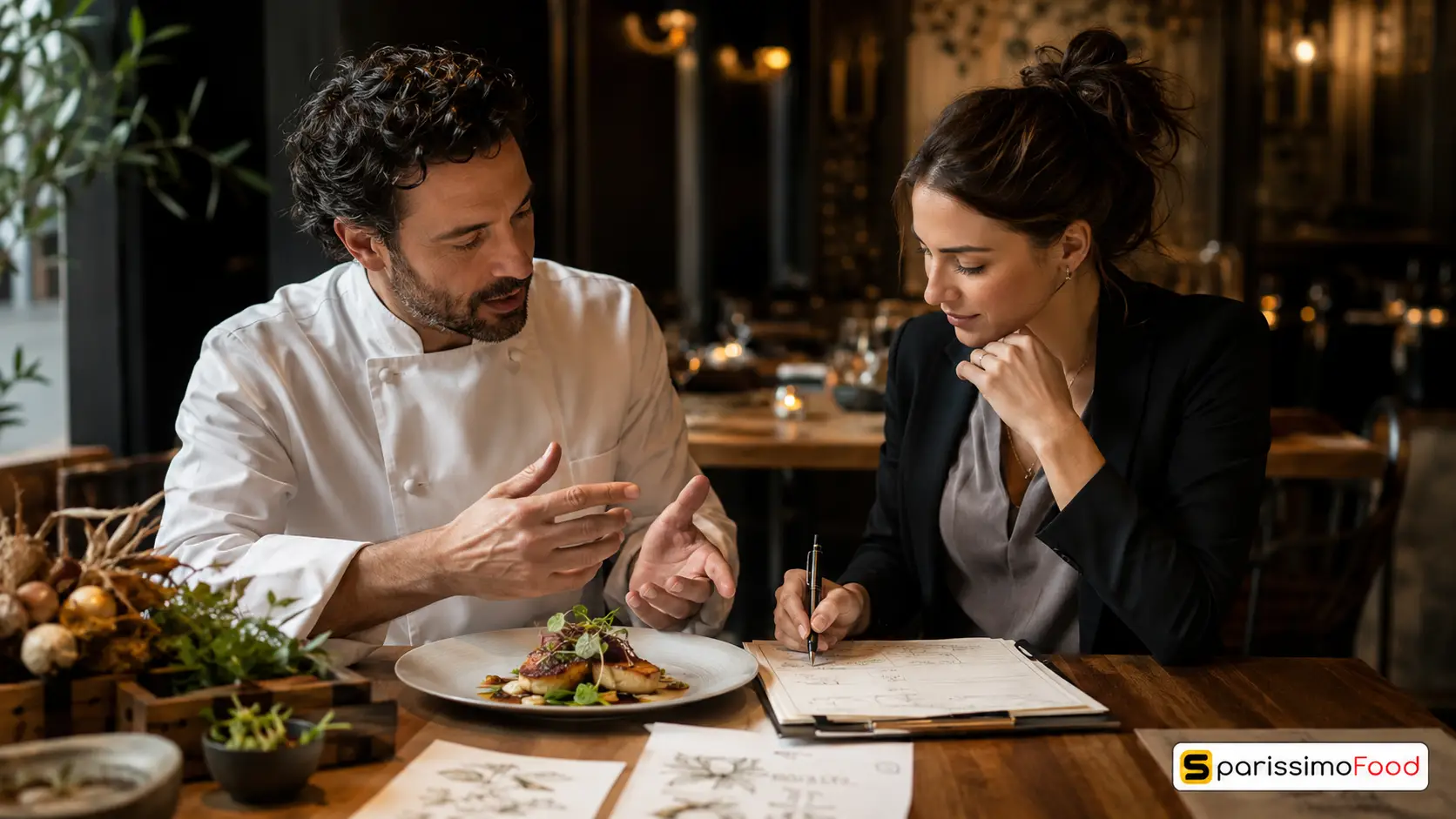
The most effective communication tool for any restaurant service is the one that takes place before the service starts. A structured 10-minute briefing before every service shift transforms a group of individuals into a team with shared information.
The briefing should cover five items in exactly this order:
1. Cover count and expected flow. How many covers are booked, when the main arrival windows are, and whether the booking pattern is clustered or spread. “We have 58 covers tonight. The main wave is 19:00 to 19:30. Two groups of 8 arrive at different times. Expect steady rather than spiking demand.”
2. Items running low or unavailable. Every FOH team member learns before service which dishes are limited in quantity or have been removed from the menu for this service. This eliminates mid-service conversations at the pass about 86’d items. “The sea bass special is limited to 12 portions. The wild garlic soup is off tonight.”
3. Special requirements for booked tables. Dietary restrictions, birthday celebrations, VIP guests, tables with children. FOH needs this before the guests arrive, not when they are seated. “Table 14 has a confirmed nut allergy. Table 8 is a birthday party for 6, confirmed dessert surprise.”
4. Service pacing decisions. If the kitchen is implementing a specific pacing protocol for this service, such as a 10-minute hold between starters and mains for larger tables, FOH must know this before any guest asks about timing. “For groups of 5 or more tonight, we are allowing 12 minutes between starter and main to manage the pass.”
5. The communication protocol for the evening. Who is expediting, which FOH team member is the primary communication link to the pass, and what signal to use when a table’s timing is becoming critical. This is stated explicitly at every briefing, not assumed.
This briefing takes 10 minutes maximum. It prevents dozens of mid-service conversations that each consume 2–3 minutes at the worst possible moment.
The Three-Layer Communication System During Service
Every kitchen functions best with a single, clearly defined information flow. This is the architecture that works for Swiss casual dining restaurants of 20 to 80 covers.
Layer 1: The Manager Sets the Framework
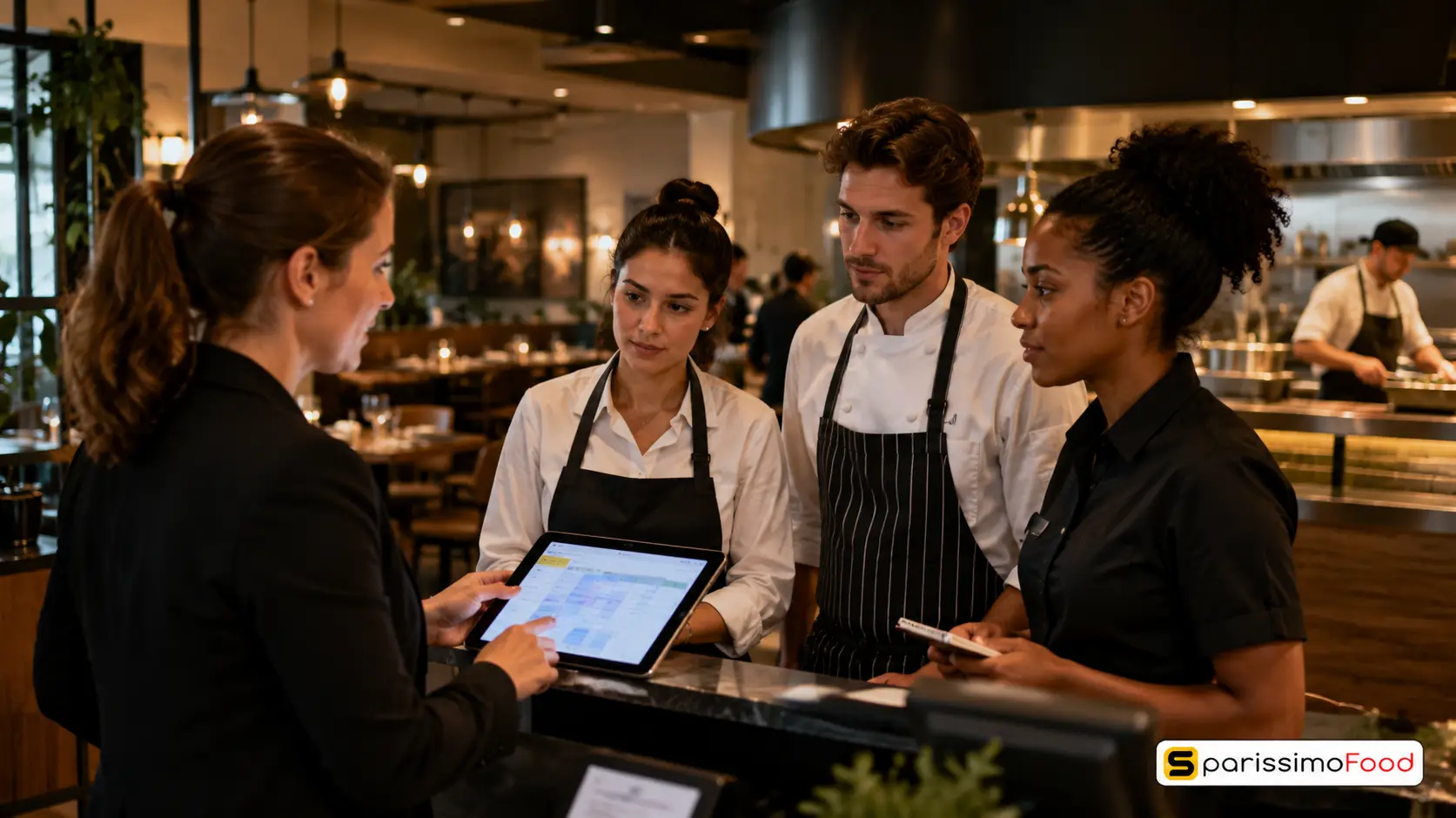
Before and during service, the manager or head of service holds the operational picture. They monitor the overall flow: tables seated, estimated covers remaining, any incoming issues from FOH, and whether the kitchen is ahead of, on, or behind the expected pace.
The manager does not communicate operational details directly to kitchen stations. Their role is to maintain overview and make adjustments at a system level: telling the expeditor to slow the fire on table groups, alerting FOH if a longer wait than expected is developing, or deciding to throttle incoming online orders if the kitchen is approaching capacity.
This separation of function is critical. A manager who runs to the pass every time a problem emerges is competing with the expeditor for the kitchen’s attention.
Layer 2: The Expeditor Owns the Pass
The expeditor is the single point of real-time communication between the kitchen and the dining room. Every order is called. Every plate is checked. Every timing question from FOH is answered at the pass by the expeditor. Nothing reaches a station directly from FOH.
The expeditor’s responsibilities during peak service:
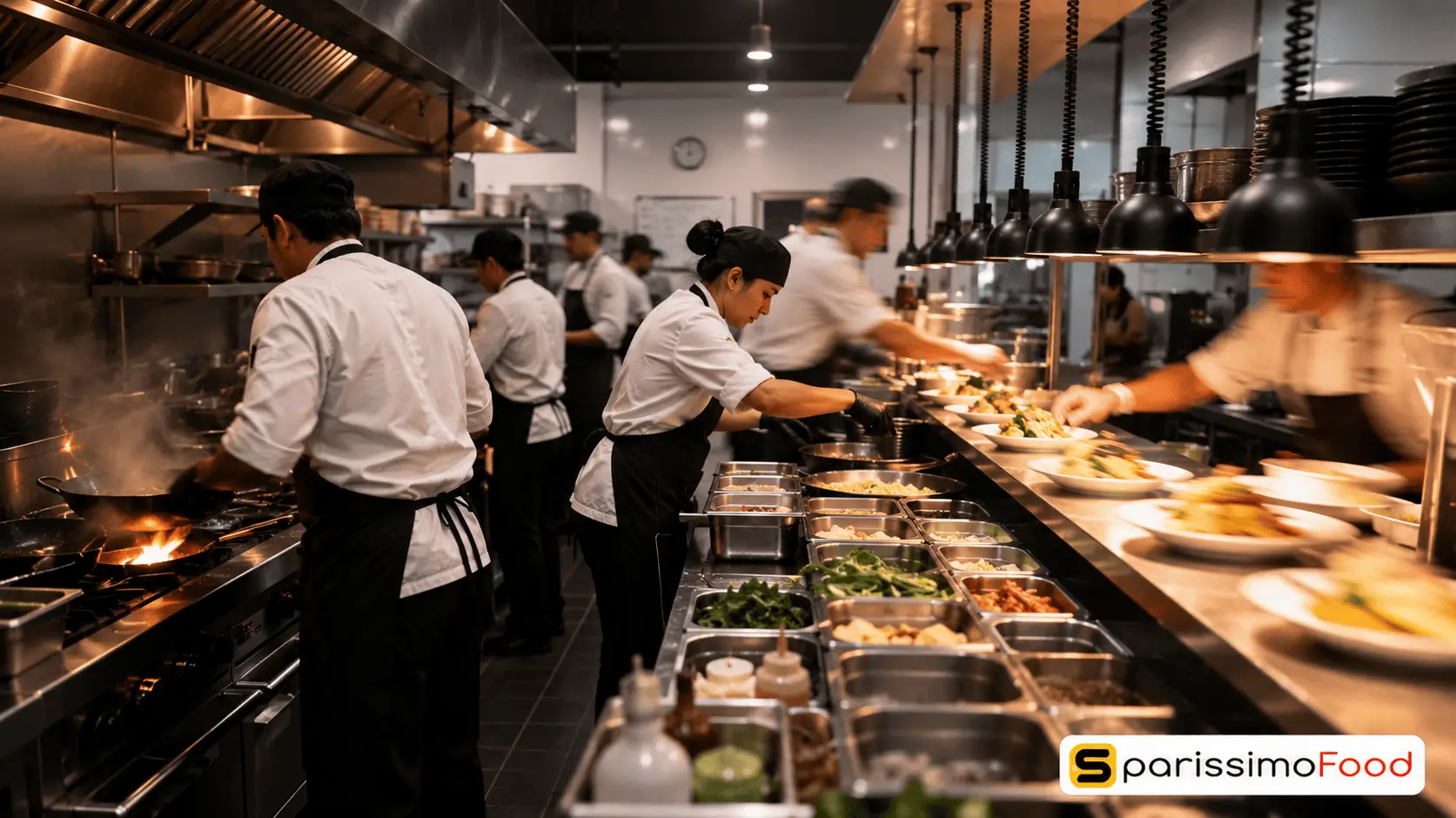
Calling orders as they fire to each station. “Firing table 7: one veal, one salmon, one pasta.” Checking every plate for accuracy before it leaves the pass. Calling timing updates proactively when a table is approaching a long wait. Receiving all FOH communication and deciding what reaches the stations and when.
The expeditor role does not require the senior chef. It requires the calmest, most organised person in the kitchen for that service. During a 60-cover Friday service, this is typically a sous chef or a senior line cook. The role can rotate by service, but the principle does not: one person owns the pass, all communication goes through them.
Layer 3: FOH Routes Everything Through the Expeditor
Every server, host, and floor manager communicates kitchen needs through the expeditor at the pass. Not through the stations. Not by calling across the kitchen. Not by talking to the chef de partie directly about their section.
This rule has one exception: genuine guest emergencies, such as a severe allergic reaction or a medical situation.
For every other situation: one FOH representative reaches the expeditor, delivers the message clearly and completely, and returns to the floor. The message format should be standardised. Not “table 6 has been waiting ages” but “table 6 fired their starters at 20:17, they are now at 21 minutes without mains.” Specific information allows a specific response. Vague complaints generate defensive conversations.
Restaurants that implement this three-layer system consistently report two measurable improvements: a reduction in mid-service verbal conflicts between FOH and BOH, and a reduction in dish refire requests, because timing problems are caught and communicated earlier.
Five Communication Mistakes That Slow Swiss Kitchens
1. Multiple FOH staff approaching the pass simultaneously. When three servers arrive at the pass at the same moment, the expeditor is pulled in three directions and all three tables wait longer than if the information had arrived sequentially. Designate one FOH communication point per service where possible, or implement a queuing convention at the pass.
2. Vague timing language. “Soon,” “almost ready,” and “just a few more minutes” communicate nothing actionable to FOH or to guests. Replace with specific time estimates. “Seven minutes” allows a server to return to their table and set an expectation. “Soon” does not.
3. Communicating problems at the moment they become crises. A table that has been waiting 40 minutes should have been flagged at 25 minutes, when the expeditor could still make an adjustment without affecting the guest experience. Establish a threshold: any table beyond 15 minutes without food after their starter is cleared gets proactively communicated to the expeditor before the guest raises it.
4. Using restaurant communication to assign blame during service. Mid-service is not the moment for accountability conversations. If a station is running behind, the expeditor calls for support or adjusts the pacing. Analysis of what went wrong happens in the post-service debrief, not at the pass during the Friday rush.
5. Ignoring the signal system. If the briefing established that the kitchen uses a raised hand signal to indicate “ready to fire” for a specific table, every FOH member needs to know that signal and respond to it. Unacknowledged signals break down within two services and the kitchen reverts to improvised verbal communication.
Guest Communication During Waits
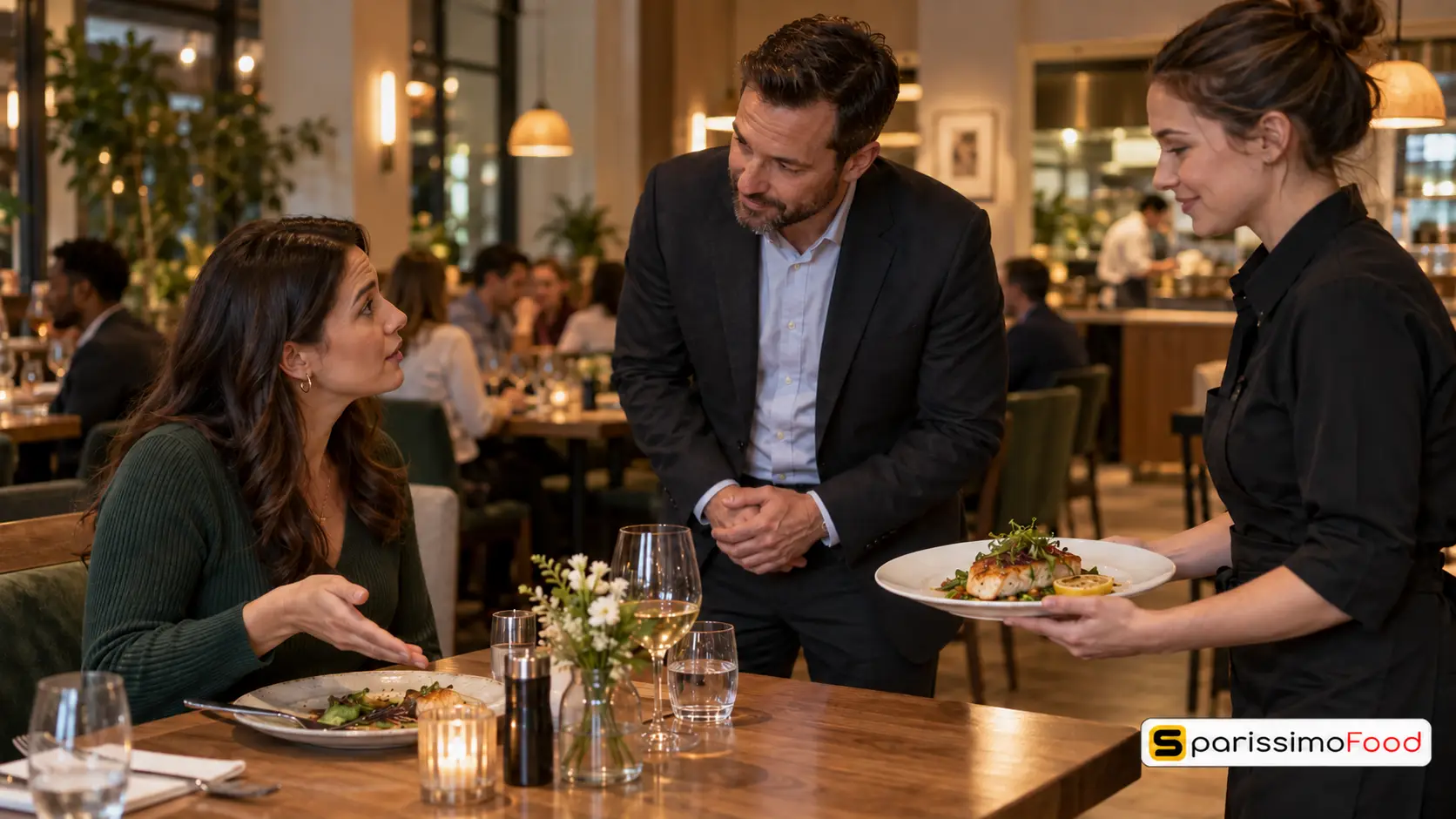
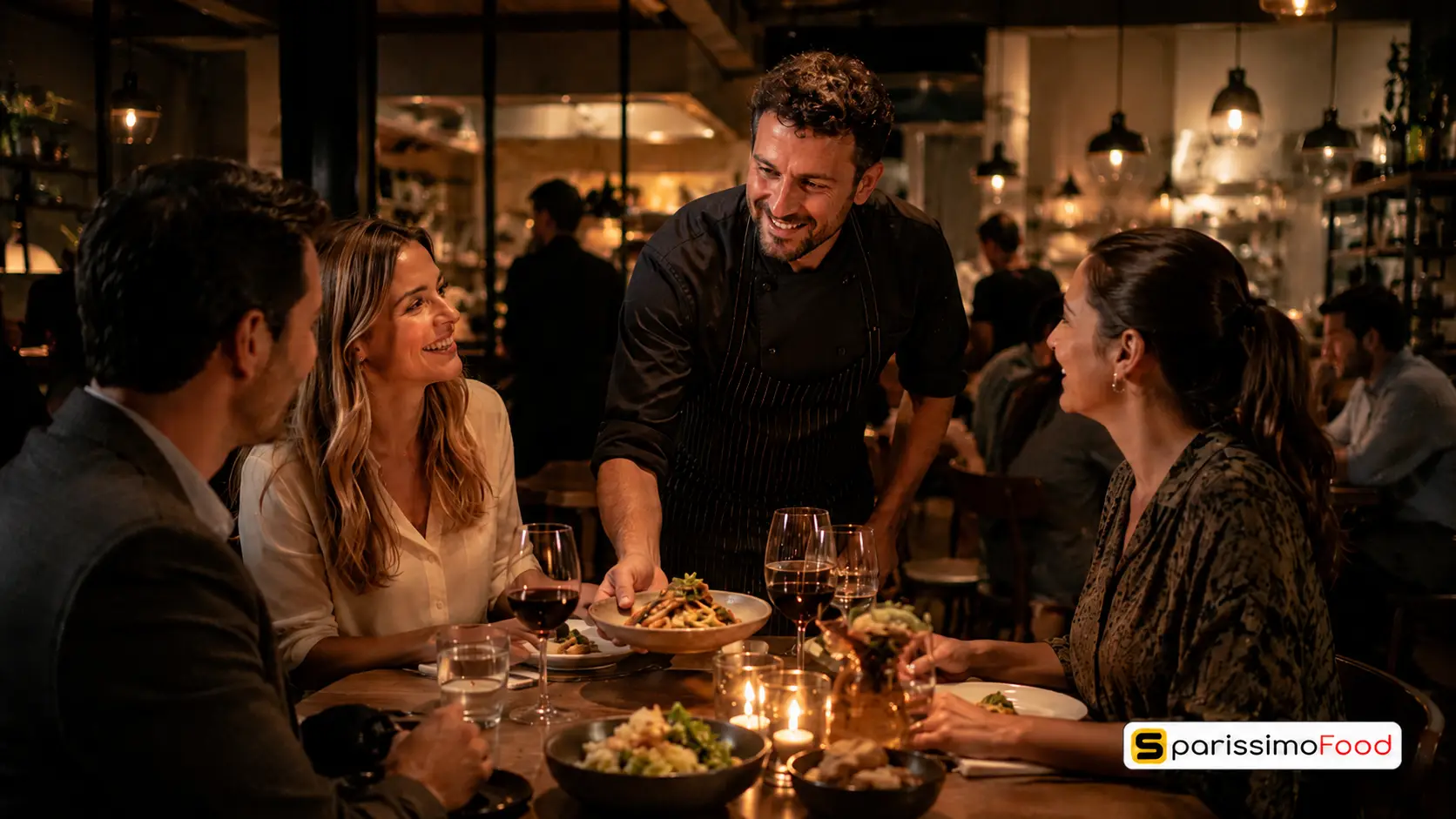
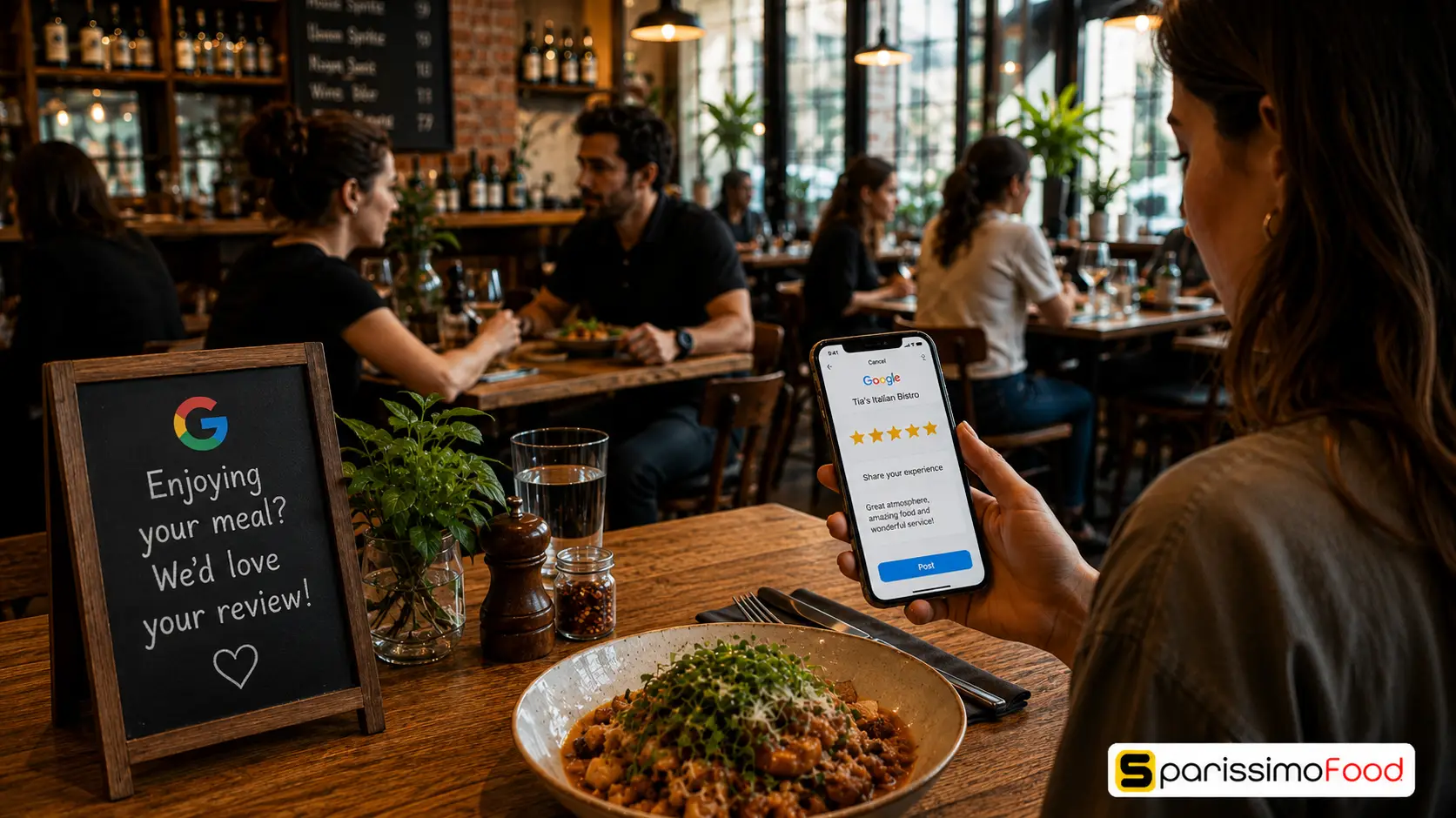
The communication that most restaurants overlook in peak hour management is the communication with guests themselves. A guest who waits 30 minutes for their main course without any acknowledgement becomes a 2-star Google review. A guest who waits 30 minutes and receives a genuine, specific update from their server at the 20-minute mark typically does not.
The protocol:
Set an honest expectation when you sense a table may wait. Not “everything should be out shortly” but “with our kitchen at full capacity tonight, your mains should be with you in about 10 minutes. Can I refresh your water or bring you some bread while you wait?”
A specific offer at the moment of delay converts passive frustration into active hospitality. It also gives the guest something to do: accept the water, the bread, the update. It resets their waiting clock emotionally.
Update once if the wait extends beyond the stated time. One proactive update is a service gesture. Multiple updates can feel like escalating alarm. “I want to let you know your mains are currently being plated. You should have them in the next three minutes” closes the loop.
Never give a table a specific estimate you cannot fulfil. Underestimating a wait and then missing it is more damaging than giving a longer honest estimate upfront. If you tell a table 10 minutes and the food arrives in 18, the 18-minute wait feels longer than if you had said 15 minutes.
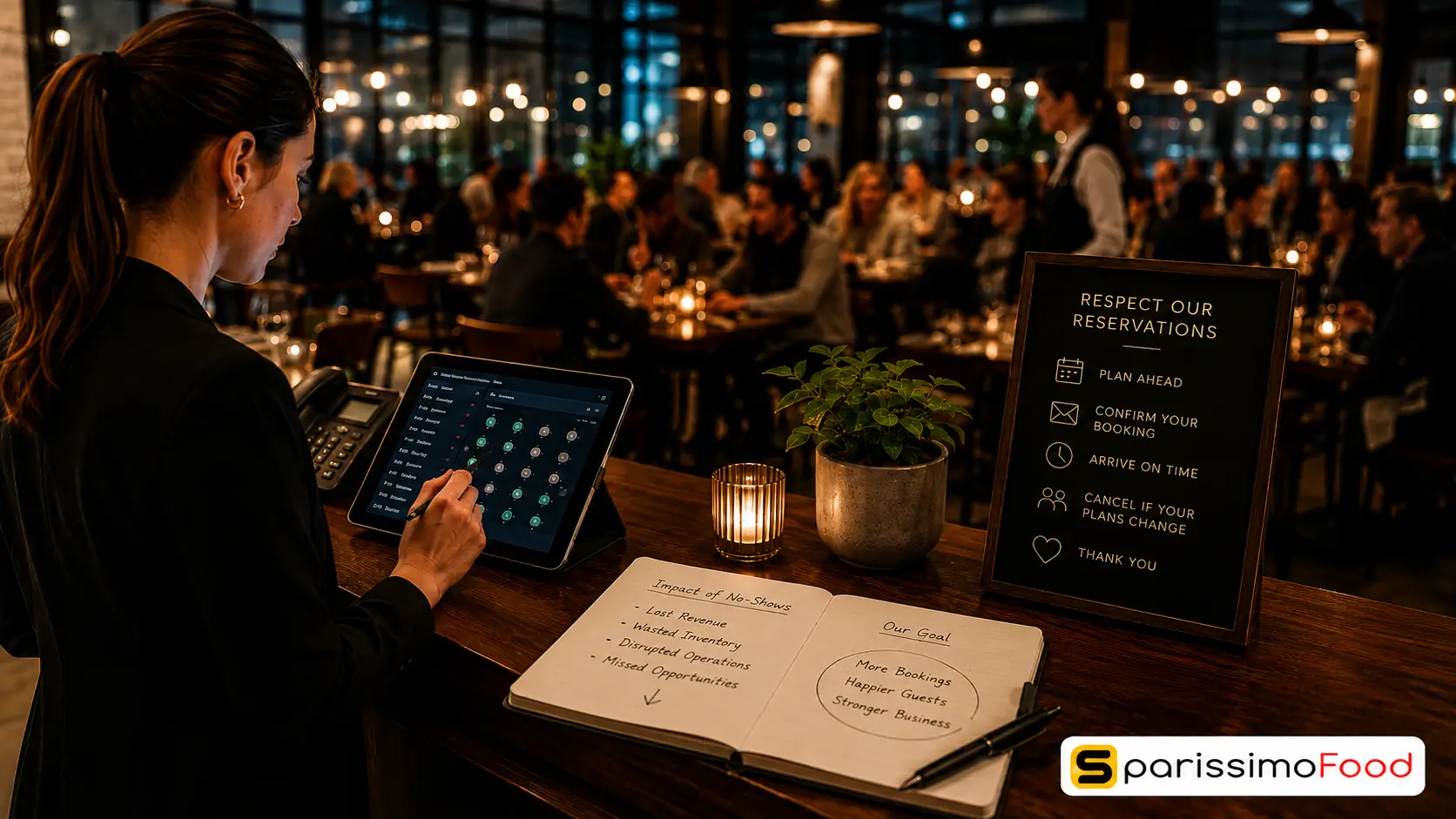
This approach to guest communication during waits directly reduces negative online reviews generated by peak-hour service friction, and reduces the demand for compensation such as complimentary dishes, which erode margins. For more on managing the reservation flow that prevents the timing problems from occurring, see our guide on reducing restaurant no-shows, which also covers reservation staggering.
Digital Tools That Reduce Verbal Overload
Good communication systems reduce the number of words that need to be spoken during peak service. Every verbal exchange during the rush consumes attention from someone who is simultaneously executing a service task.
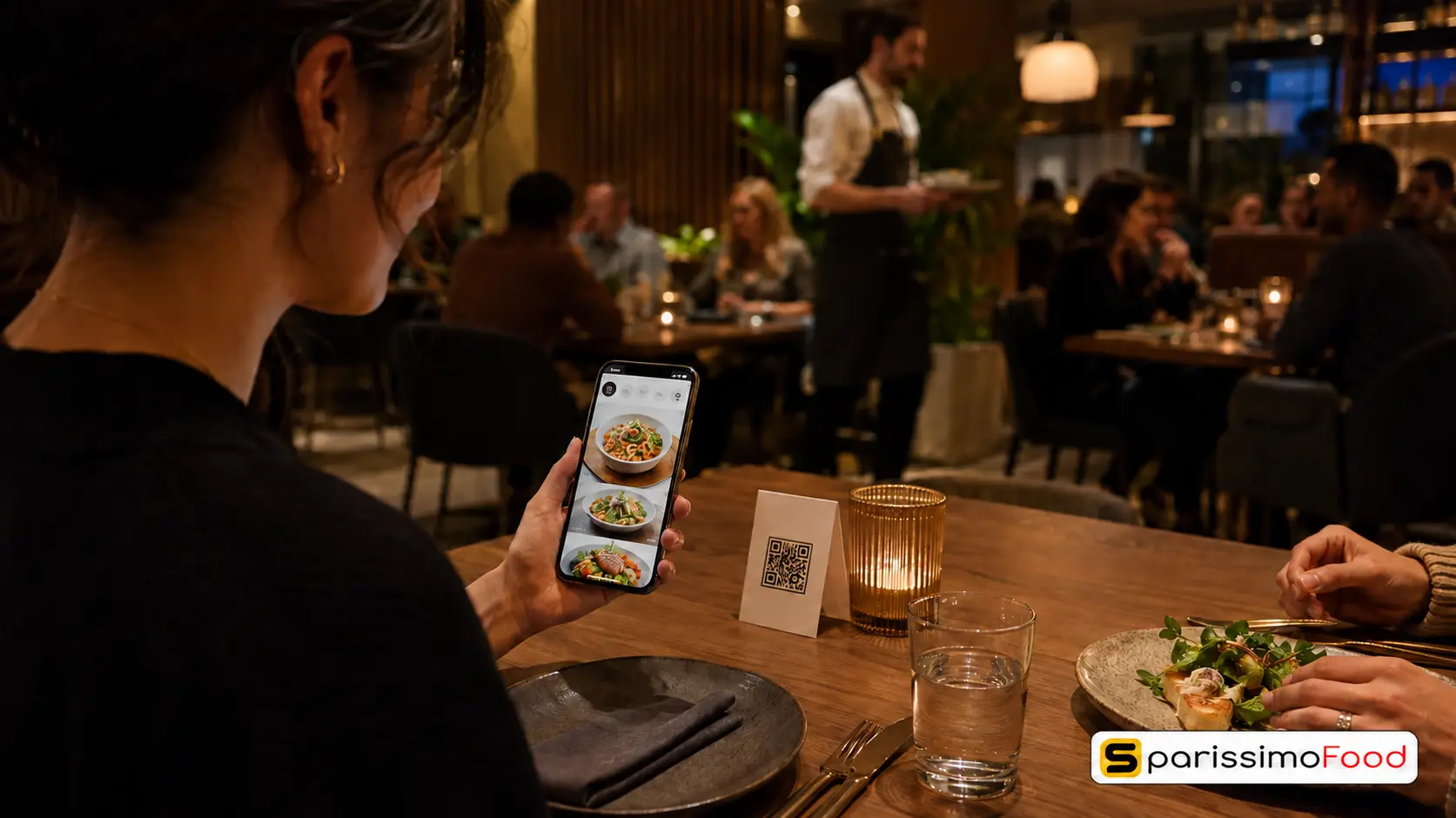
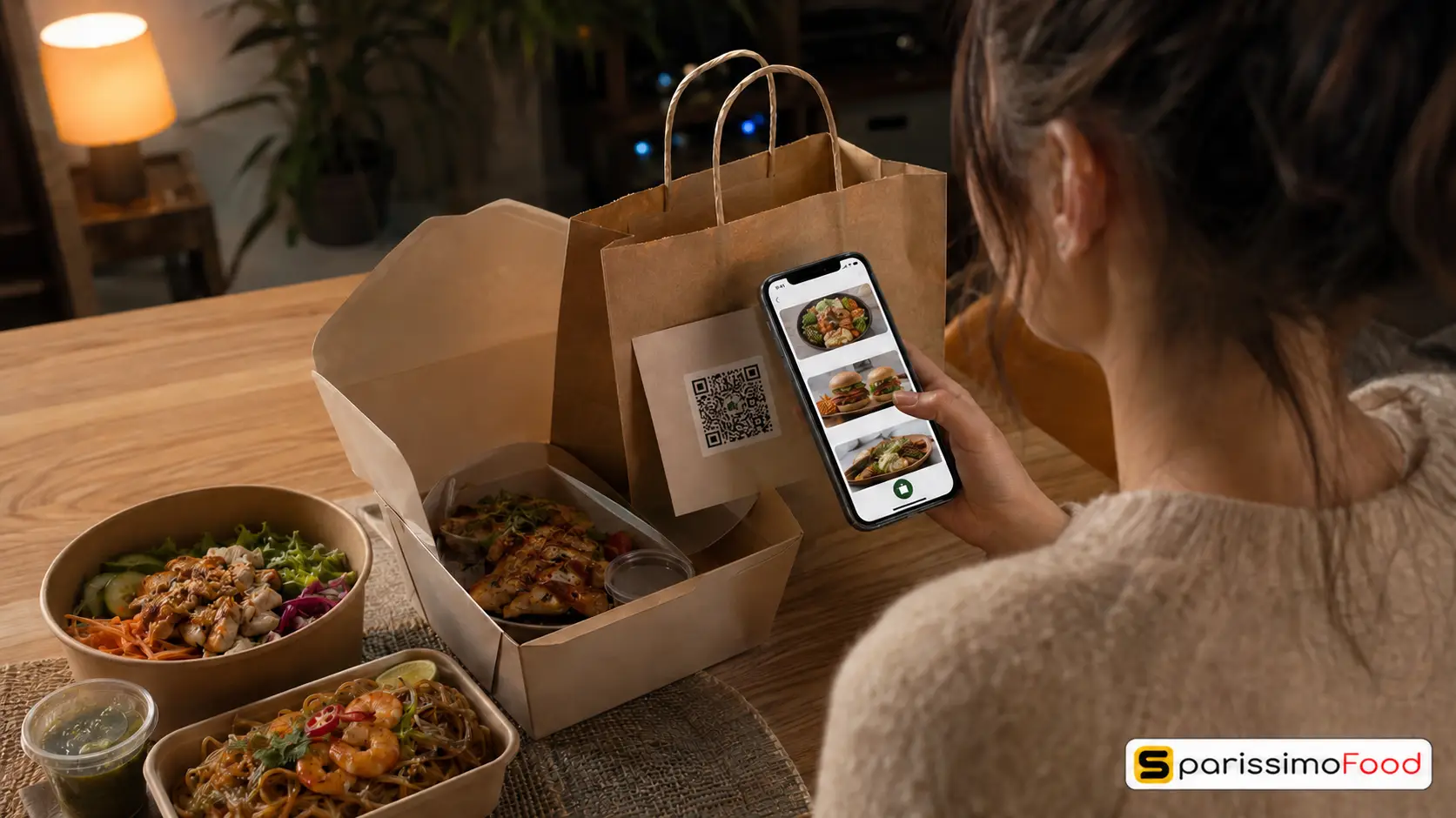
QR-code dine-in ordering. When guests order via QR code at the table, the order enters the kitchen system automatically, without any server transmitting it verbally or physically. This removes an entire category of communication task from peak service. The kitchen sees the order. The server sees the order. No verbal confirmation needed. Table modifications arrive in the same channel. For restaurants currently handling 60% of their orders verbally, shifting dine-in to QR ordering can reduce the volume of kitchen communication by 30–40% during peak periods.
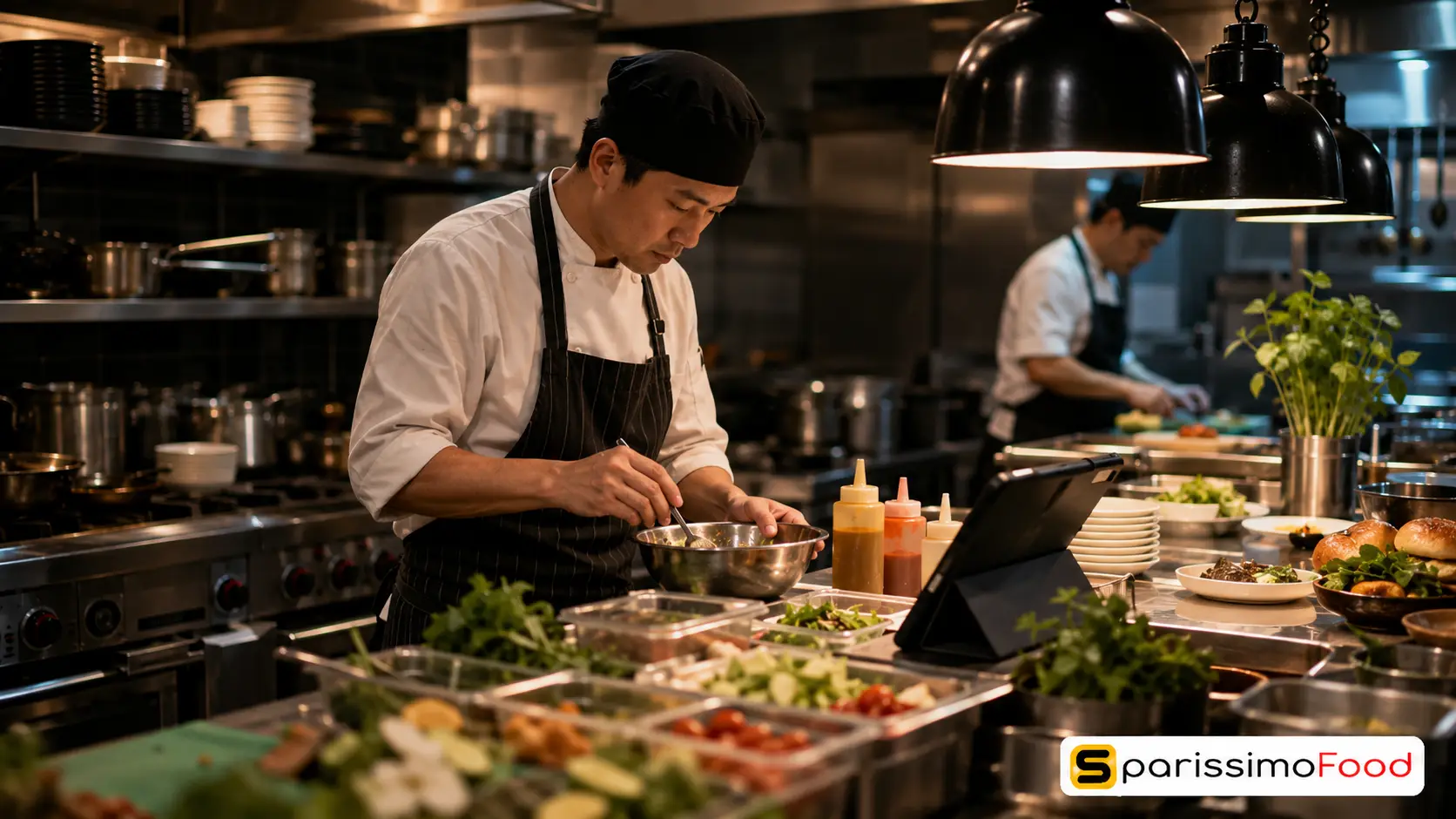
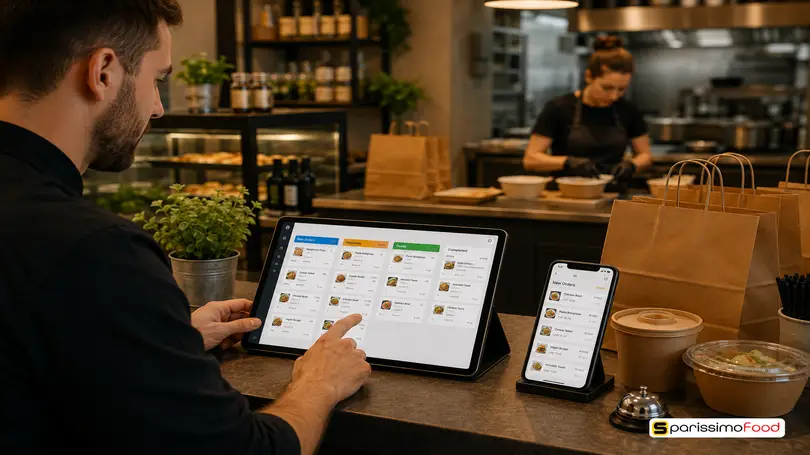
Kitchen display systems and digital order queues. A kitchen display that shows orders in real time by station, priority, and elapsed time removes the need for the expeditor to verbally call every order at the moment it fires. The station sees its queue and manages its own timing within the overall framework. The expeditor focuses on coordination and plate checks, not on reading every ticket aloud.
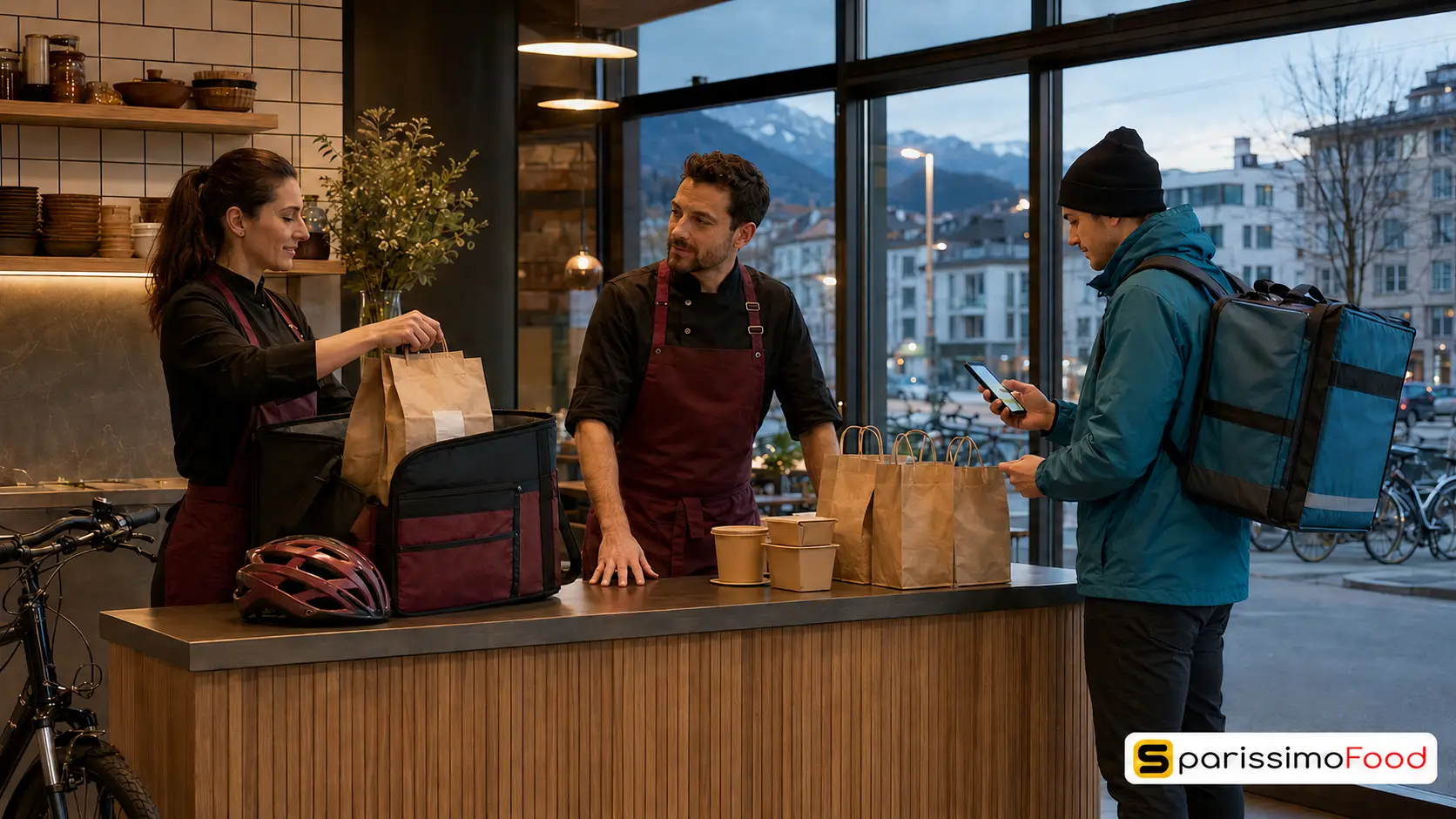
Online order throttling. When delivery and takeaway orders arrive simultaneously with a full dining room, the kitchen must process two categories of demand through the same stations. The ability to pause or extend the delivery window for a defined period without manual intervention removes one of the most common peak-hour communication crises: the delivery order that arrives when the kitchen is already at capacity and nobody has warned the delivery platform.
For the full operational detail on kitchen throttling and how to implement it in your specific service model, see our restaurant peak hour management guide.
How SparissimoFood Helps Communication During Peak Hours
The tools that reduce verbal overload during peak service are the same tools that build your direct ordering channel. SparissimoFood integrates both.
QR Dine-In Ordering. When guests at your tables order through SparissimoFood’s QR dine-in system, their orders go directly to your kitchen display without any verbal or physical transmission by the serving team. During a 19:30 Friday rush, this means a table of four that seats themselves, reviews the menu via QR code, and places their own order has generated zero communication load on your FOH team. Their order is already in the kitchen.
This is not only a convenience feature. It is a communication load reduction tool. The server assigned to that section handles the genuine hospitality tasks: bringing wine, checking in, reading the table. The operational communication happens automatically.
Kitchen Throttling. SparissimoFood’s manager dashboard allows the head of service to pause or extend delivery times for incoming online orders with a single tap, directly from the floor during service. When the kitchen is at 90% capacity and a wave of delivery orders is due to arrive, this single action prevents the communication crisis that follows when the kitchen is overwhelmed without warning.
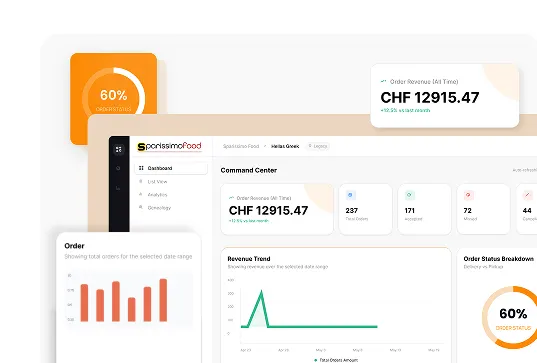
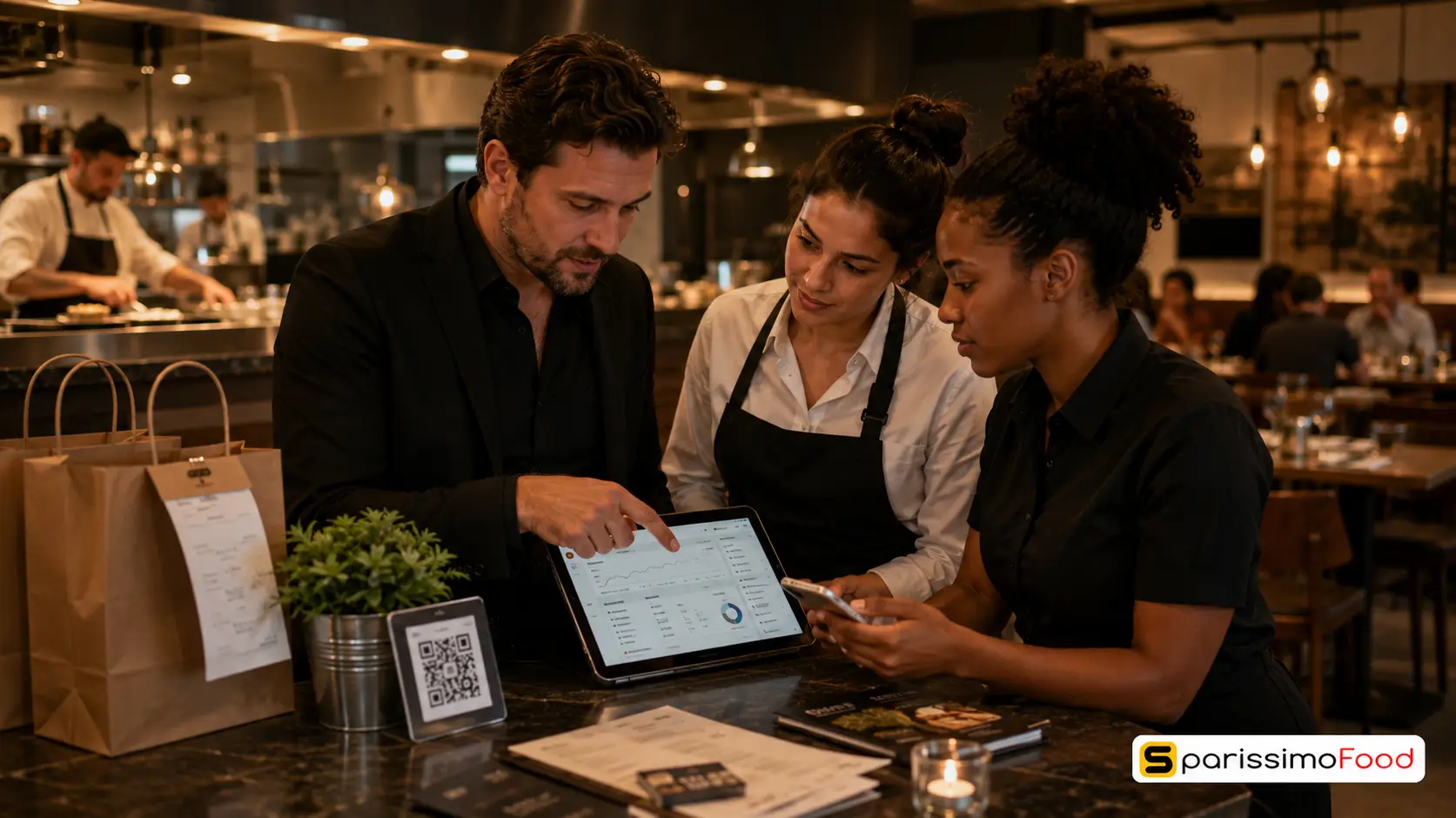
Manager Dashboard for Real-Time Oversight. The SparissimoFood analytics dashboard shows order flow in real time: which orders are in progress, when they were placed, which channel they came from, and the volume trends within the current service. A manager watching this screen can anticipate communication needs before they become problems: seeing a gap in orders about to be filled by a large booking, or identifying a station that is running behind based on order timing.
SparissimoFood starts at CHF 49/month with a commission of 5–8% per order, substantially lower than third-party delivery platforms at 10–30%. Explore the current plan options at manage.sparissimofood.com/plans.
Frequently Asked Questions
What is the expeditor role in a restaurant kitchen? The expeditor is the person at the kitchen pass who coordinates the timing and accuracy of all dishes leaving the kitchen during service. They call orders to stations, check plates before they leave the pass, and serve as the single communication point between FOH and BOH during peak service. In restaurants without a dedicated expeditor, this role is typically filled by the sous chef or the most senior line cook. The role does not require the head chef; it requires the calmest, most organised person available for that service.
How should FOH staff communicate with the kitchen during a rush? FOH should route all kitchen communication through the expeditor at the pass, not directly to kitchen stations. The communication format should be specific: include the table number, what was ordered and when, and the specific question or information being conveyed. “Table 6 fired their starters at 20:17 and are at 22 minutes without mains” is actionable. “Table 6 has been waiting a long time” is not. Only one FOH representative should approach the pass at a time where possible.
What should a pre-service restaurant briefing include? An effective pre-service briefing covers five items: the cover count and expected arrival pattern; any menu items that are unavailable or limited in quantity; special requirements for booked tables including allergies and celebrations; the pacing decisions the kitchen has made for the service; and the communication protocol for the evening, including who is expediting and how FOH should signal urgent timing issues. The briefing should take no more than 10 minutes and should happen before every service, not only before unusually busy ones.
How do you tell a table their food will be late without damaging the guest experience? Acknowledge the delay proactively before the guest raises it. Use a specific time estimate, not vague language. Make a concrete offer at the moment of the update: “Your mains should be with you in 10 minutes. Can I bring you some fresh bread while you wait?” Give one update if the wait extends past your estimate: “Your mains are being plated and will be with you in three minutes.” Do not give multiple updates, which escalate the guest’s sense of crisis, and never give a time estimate you are not confident you can meet.
How does QR-code dine-in ordering reduce peak-hour communication problems? When guests order through a QR code at the table, their order enters the kitchen system automatically without any verbal or physical transmission from the FOH team. This removes an entire category of communication task from peak service: the server no longer needs to carry the order to the pass or read it to the kitchen. During a busy service, this can reduce the total number of verbal kitchen exchanges by 30–40%, allowing the expeditor to focus on coordination and quality checks rather than order transmission.
A kitchen that communicates well during the rush is not a kitchen where everyone is talking more. It is one where far fewer words are needed.
.Ds4FHhSq_ZxC9WE.webp "Restaurant Upselling Techniques That Don't Feel Pushy")


.CXCr6fQt_Z11gsYh.webp "Build a Branded Restaurant App Without Developers")
.y09Xtv8Z_1gH6f6.webp "Set Up Restaurant Online Ordering in Under a Week")
.B-Rl4IDw_Z204OoN.webp "Restaurant Loss Prevention and Theft Guide")
.B6eEizW1_Z2bHQYl.webp "Restaurant Menu Pricing Strategies That Actually Protect Your Margins in 2026")
.CRszlDy5_2neUXu.webp "How to Migrate from GloriaFood Without Disruption: A Technical Step-by-Step Guide")
.kT6N2QP-_1Tp2j1.webp "GloriaFood Is Shutting Down on April 30, 2027 — What Every Restaurant Owner Needs to Do Now")