
Just Eat vs Uber Eats Switzerland: Real Cost

Quick Answer: Uber Eats’ live Switzerland pricing runs 15% commission when your own staff deliver, or 13% on Uber One member orders, rising to 32% when Uber’s own couriers deliver, or 35% on Uber One orders, plus a CHF 600 one-time activation fee. Just Eat charges 10 to 15% with your own drivers and 25 to 30% when its Scoober couriers deliver, with no published activation fee but a separate 1.8% payment processing charge. Run the numbers on a real order and Just Eat comes out marginally cheaper on both tiers, but the gap is small enough that coverage, order volume, and negotiated rates usually decide more than the headline percentage does. The bigger question most restaurants skip is how much volume either platform should carry once a direct ordering channel is running alongside it.
Type “Just Eat vs Uber Eats Switzerland” into Google and most of what comes back is either a consumer review comparing delivery speed, or a generic international guide with UK or US commission figures that have nothing to do with what either platform actually charges here. Restaurant owners deciding which app to list on, or which one to drop, need the Swiss numbers, not a global average.
Both platforms publish their own restaurant pricing, and both structures reward the same thing: restaurants that deliver their own orders pay meaningfully less than restaurants that hand delivery entirely to the platform. What differs is by how much, and what else gets bundled into that percentage.
Just Eat vs Uber Eats Switzerland: Commission Compared at a Glance
| | Self-delivery | Platform-delivered | Extra fees |
|---|---|---|---|
| Just Eat | 10–15% | 25–30% | ~1.8% payment processing, optional 3–7% in-app advertising |
| Uber Eats | 15%, or 13% on Uber One orders | 32%, or 35% on Uber One orders | CHF 600 one-time activation fee, processing bundled into the rate |
Two things stand out immediately. First, Just Eat’s self-delivery tier undercuts Uber Eats’ equivalent Plus plan, though not by much once Just Eat’s separate processing fee is added back in. Second, Uber Eats’ full-service Light plan tops out considerably higher than Just Eat’s courier tier, and an Uber One order pushes that even further to 35%, the highest published rate either platform charges in Switzerland.
Neither number tells you what actually lands in your account. For that, you need to run an order through both.
How Much Does Just Eat Charge Swiss Restaurants?
Just Eat, which operated as eat.ch before its rebrand and now sits under Just Eat Takeaway.com, doesn’t apply one flat rate. The percentage depends on who delivers the order.
If your own drivers handle delivery, commission typically falls between 10% and 15%, with higher-volume restaurants able to negotiate toward the lower end over time. If Just Eat’s own courier network, branded Scoober, delivers instead, commission rises to 25 to 30%. On top of whichever base rate applies, restaurants also pay roughly 1.8% in payment processing, and many face pressure to spend 3 to 7% of their app revenue on in-app advertising just to stay visible in a crowded category like pizza or Asian food in Zurich or Geneva. Our full breakdown of Just Eat’s Swiss commission structure walks through every layer, including the volume thresholds that unlock lower negotiated rates.
Just Eat does not publish a separate onboarding or activation fee, which keeps the upfront cost of joining lower than Uber Eats, even though the ongoing commission can land in a similar range once advertising spend is included.
How Much Does Uber Eats Charge Swiss Restaurants?
Uber Eats’ own Swiss merchant pricing page sets out two marketplace plans and one pickup-only option, and the structure is more transparent than Just Eat’s in one respect: the published rate already includes payment processing, order management, and analytics, so there’s no separate processing line to add back in.
Plus, Uber Eats’ self-delivery option, charges 15% commission, or 13% specifically on orders placed by Uber One members. Your own staff or contracted riders deliver, and you keep control of the delivery experience. Light, the full-marketplace option where Uber’s own delivery network handles the order, charges 32%, rising to 35% on Uber One orders. Pickup, for restaurants that only want listing and order management without any delivery component, is a flat 15%.
Every new restaurant also pays a CHF 600 activation fee, which covers a tablet, a printer, menu creation, professional photography, a window sticker, a welcome pack, and an onboarding training call. Uber Eats allows restaurants to opt out of individual pieces of that package, which can lower the upfront cost, though doing so typically means sourcing your own hardware or photography instead.
The Uber One dynamic is worth sitting with. A subscription that’s meant to drive customer loyalty actually cuts your commission if you deliver yourself, but raises it if Uber delivers for you, so which plan you’re on determines whether Uber One membership helps or hurts your margin.
Run the Numbers: What a CHF 45 Order Actually Nets You
Percentages hide the real comparison. Here is the same CHF 45 order run through both platforms, both delivery models, accounting for a 30% food cost, CHF 1.50 in packaging, and, where the restaurant delivers itself, a driver cost of roughly CHF 4.50 per delivery based on a CHF 27 per hour wage at six deliveries an hour.
| | Just Eat, own drivers, 13% | Just Eat, Scoober couriers, 28% | Uber Eats Plus, own drivers, 15% | Uber Eats Light, Uber couriers, 32% |
|---|---|---|---|---|
| Order value | CHF 45.00 | CHF 45.00 | CHF 45.00 | CHF 45.00 |
| Platform commission | −CHF 5.85 | −CHF 12.60 | −CHF 6.75 | −CHF 14.40 |
| Payment processing | −CHF 0.81 | −CHF 0.81 | included | included |
| Packaging | −CHF 1.50 | −CHF 1.50 | −CHF 1.50 | −CHF 1.50 |
| Food cost, 30% | −CHF 13.50 | −CHF 13.50 | −CHF 13.50 | −CHF 13.50 |
| Driver cost | −CHF 4.50 | n/a | −CHF 4.50 | n/a |
| Net to restaurant | CHF 18.84 | CHF 16.59 | CHF 18.75 | CHF 15.60 |
The self-delivery tiers land within 9 rappen of each other. That’s close enough that a restaurant already running its own drivers should choose based on which platform actually sends it more orders, not the commission alone. The full-service tiers are a different story: Uber Eats’ Light plan nets 99 centimes less per order than Just Eat’s Scoober tier, which compounds fast at volume. A restaurant doing 300 platform-delivered orders a month loses roughly CHF 297 more per month on Uber Eats Light than on Just Eat’s courier tier, before any Uber One orders push that gap wider still.
Coverage and Discovery: Where Each Platform Actually Wins
Commission is only half the decision. A cheaper platform that sends you five orders a week is worse than a pricier one that sends you fifty.
Just Eat’s geographic reach in Switzerland is genuinely wider. It covers towns and smaller cities across German-speaking, French-speaking, and Italian-speaking Switzerland where Uber Eats has never launched a delivery zone, a legacy of eat.ch’s early, fast-moving nationwide rollout before the rebrand. If your restaurant sits outside Zurich, Geneva, Basel, Bern, or Lausanne, Just Eat is often the only major marketplace actually operating in your postcode.
Uber Eats concentrates its strength in exactly those major cities, where order density is highest and the Uber One subscriber base is largest. In Zurich or Geneva specifically, restaurant owners frequently report Uber Eats sending comparable or higher order volume than Just Eat, driven by cross-promotion from Uber’s ride-hailing app and a customer base that already has payment details saved. Both platforms accept TWINT, so that particular payment friction doesn’t favour either one over the other.
The practical read: in a major city, test both and let six to eight weeks of order data settle the question. Outside the main urban centres, Just Eat’s coverage advantage usually makes the decision for you before commission enters the conversation.
Just Eat vs Uber Eats Switzerland: Which Should Your Restaurant Choose?
There is no single right answer, but the decision splits cleanly along three lines.
If you’re a new restaurant with no existing customer base, list on whichever platform actually operates in your area, and if both do, list on both. Discovery is the entire value of a marketplace at this stage, and paying 25 to 35% commission on orders you would not have gotten otherwise is a reasonable customer acquisition cost for the first several months.
If you already run your own delivery drivers, compare the self-delivery tiers directly: Just Eat’s 10 to 15% against Uber Eats’ 15%, or 13% on Uber One orders. The gap is small enough that order volume should decide, not commission, and there’s little reason not to run both if your driver capacity allows it.
If you rely entirely on platform couriers, the math favours Just Eat’s Scoober tier over Uber Eats’ Light plan by close to a full percentage point net, which is worth negotiating over if you’re processing meaningful volume, but is not worth abandoning a platform that’s genuinely sending you more orders.
None of these three paths treat either platform as a permanent home for your delivery revenue. Splitting repeat customers away from both platforms and onto a direct ordering channel typically recovers 8 to 12% of that volume within a few months, at a commission rate neither Just Eat nor Uber Eats comes close to matching. Our comparison of in-house delivery economics against third-party platforms covers the break-even point in more depth if you’re weighing whether to build a delivery team at all.
How SparissimoFood Helps Restaurants Choosing Between Just Eat and Uber Eats
Whichever way you split volume between Just Eat and Uber Eats, every order that stays on either marketplace pays a 15 to 35% commission before it reaches your account. SparissimoFood exists for the orders that can skip that commission entirely: repeat guests who already know your restaurant and don’t need a marketplace to discover it.
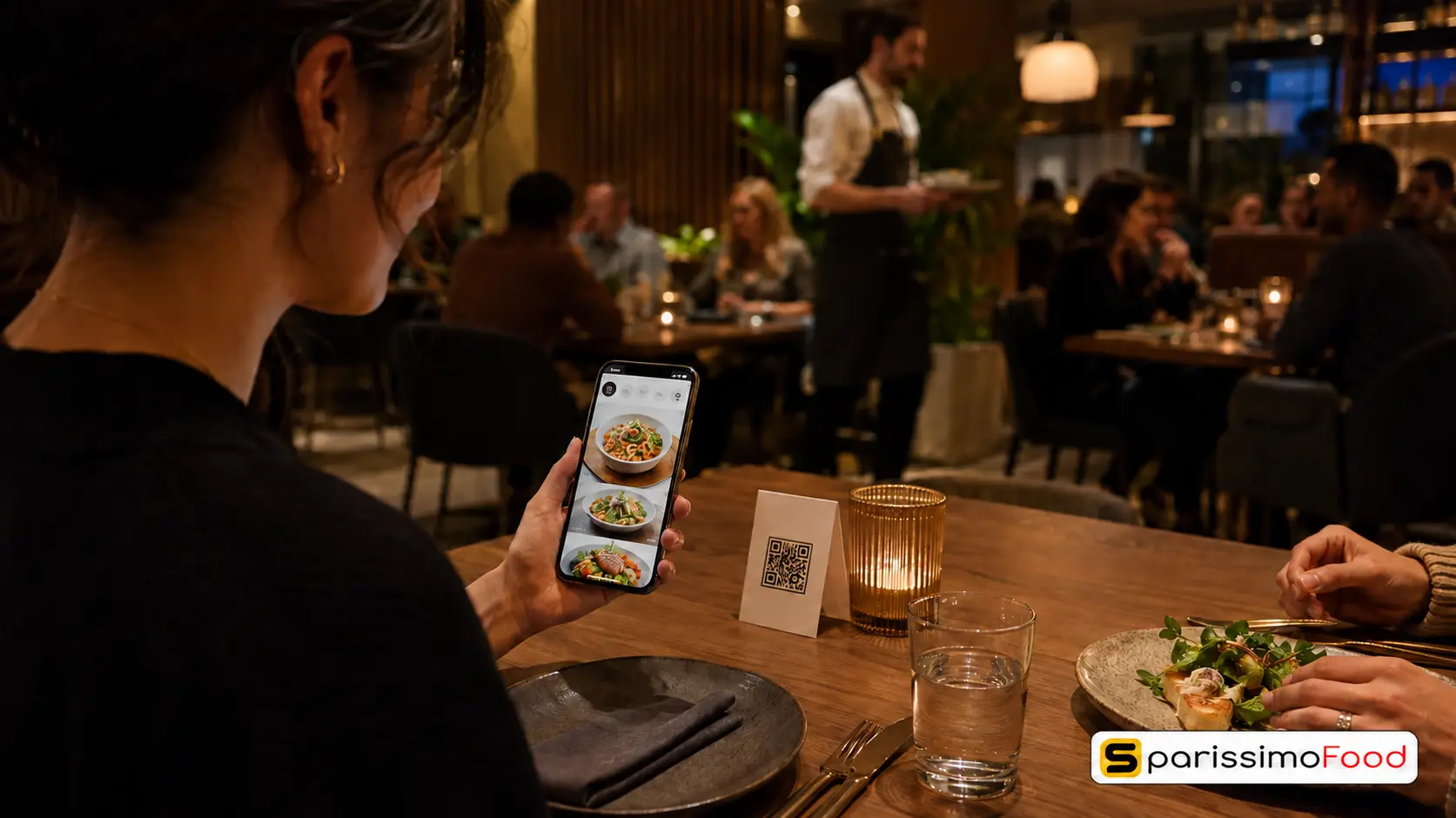
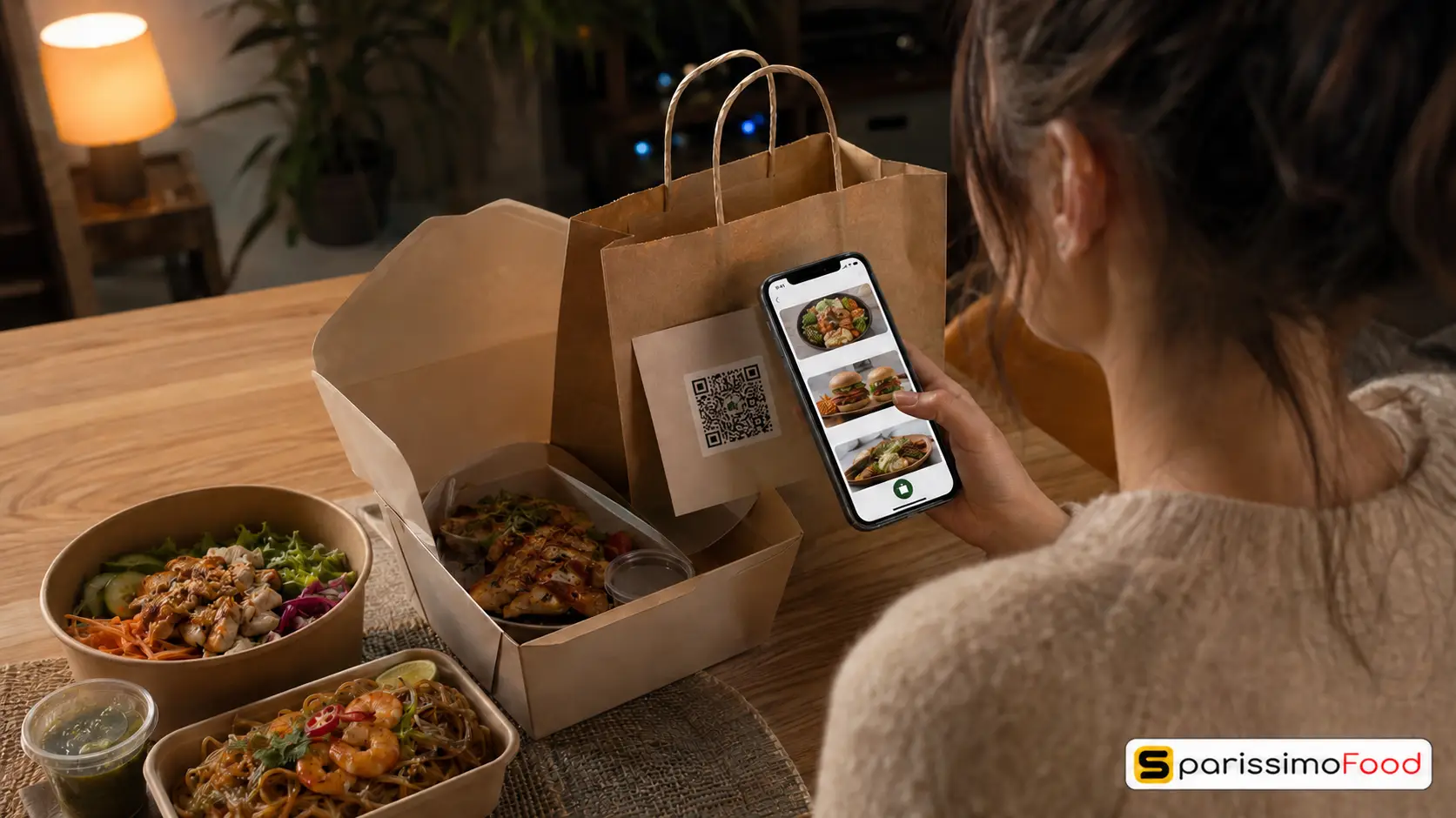
The platform runs delivery, pickup, and dine-in ordering via QR code from a single manager dashboard, with native TWINT support built in, so a guest moving from Uber Eats or Just Eat to your own ordering page doesn’t lose the payment method they’re used to. Every phone number and email captured through a direct order belongs to your restaurant outright, rather than living inside a marketplace account.
Pricing runs on predictable monthly plans rather than a percentage that scales against you as you grow: Starter at CHF 49 a month with an 8% commission, Business at CHF 79 a month with 5%, and Professional at CHF 148 a month, also at 5%. That’s meaningfully more than zero, but on the CHF 45 order example above, it undercuts every platform-delivered tier from both Just Eat and Uber Eats by a wide margin, and it never charges a CHF 600 activation fee to get started. The 14-day free trial requires no credit card, enough time to test a direct channel alongside whichever marketplace mix you land on.
Frequently Asked Questions
Is Just Eat or Uber Eats cheaper for Swiss restaurants?
It depends on the delivery model. For self-delivery, Just Eat’s 10 to 15% is close to Uber Eats’ 15%, or 13% on Uber One orders, with only a few rappen separating the two once Just Eat’s separate payment processing fee is added. For platform-delivered orders, Just Eat’s 25 to 30% Scoober tier is meaningfully cheaper than Uber Eats’ 32%, or 35% on Uber One orders.
Does Uber Eats charge a sign-up fee in Switzerland?
Yes. Uber Eats charges a CHF 600 one-time activation fee covering a tablet, printer, menu creation, professional photography, a window sticker, a welcome pack, and an onboarding call. Restaurants can opt out of individual components to lower that cost. Just Eat does not publish an equivalent activation fee.
Should a Swiss restaurant list on both Just Eat and Uber Eats?
For most restaurants in major cities, yes, at least initially. The two platforms have different strengths: Just Eat covers more towns and smaller cities, while Uber Eats concentrates volume in major urban centres. Testing both for six to eight weeks and comparing actual order volume against commission paid is more reliable than picking one from pricing alone.
What is Uber One and how does it affect restaurant commission?
Uber One is Uber’s paid customer membership program that offers delivery fee discounts and other perks to subscribers. For restaurants, it cuts both ways: orders from Uber One members lower your commission to 13% on the self-delivery Plus plan, but raise it to 35% on the full-service Light plan, so its effect depends entirely on which plan your restaurant is on.
Is there a cheaper alternative to Just Eat and Uber Eats for Swiss restaurants?
A direct ordering channel is the closest thing to a genuine alternative, since it removes the marketplace commission entirely for any customer who orders directly rather than through an app. Platforms like SparissimoFood charge a flat monthly fee plus a lower fixed commission on direct orders, and work best alongside Just Eat and Uber Eats rather than replacing them outright, since marketplaces still handle new-customer discovery that a direct channel can’t.
The restaurant that wins isn’t the one that picks a side between Just Eat and Uber Eats. It’s the one that knows exactly what each order actually nets, on both platforms, before deciding where the next customer should land.






.Ds4FHhSq_ZxC9WE.webp "Restaurant Upselling Techniques That Don't Feel Pushy")







.CXCr6fQt_Z11gsYh.webp "Build a Branded Restaurant App Without Developers")
.y09Xtv8Z_1gH6f6.webp "Set Up Restaurant Online Ordering in Under a Week")
.B-Rl4IDw_Z204OoN.webp "Restaurant Loss Prevention and Theft Guide")



.DPpk5JZR_AlrVy.webp "Restaurant Communication During Peak Hours | Guide 2026")




.B6eEizW1_Z2bHQYl.webp "Restaurant Menu Pricing Strategies That Actually Protect Your Margins in 2026")
.CRszlDy5_2neUXu.webp "How to Migrate from GloriaFood Without Disruption: A Technical Step-by-Step Guide")
.kT6N2QP-_1Tp2j1.webp "GloriaFood Is Shutting Down on April 30, 2027 — What Every Restaurant Owner Needs to Do Now")