
TheFork vs Direct Online Booking for Swiss Restaurants
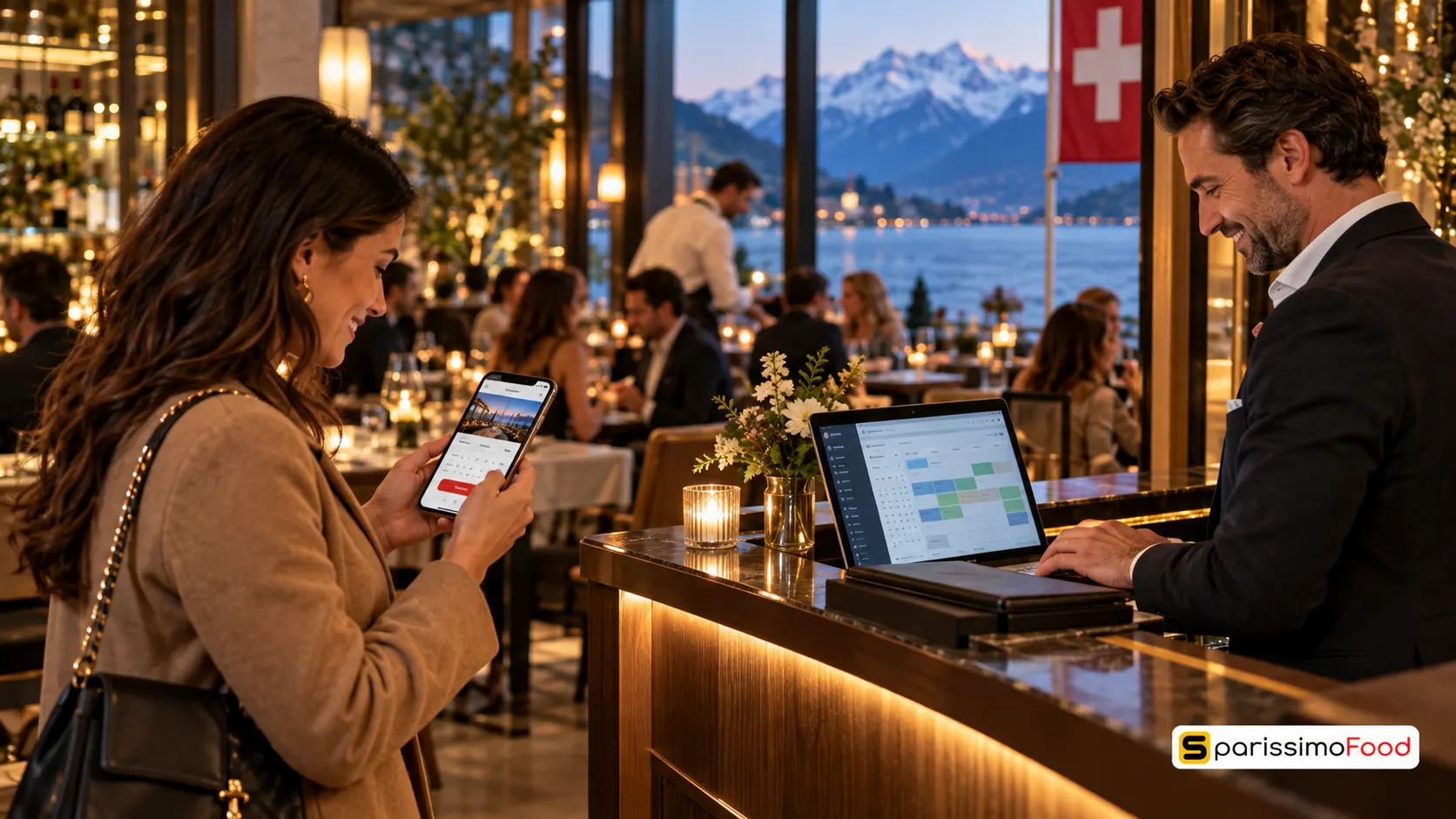

Quick Answer: For most Swiss restaurants, TheFork vs direct online booking is not an either-or choice. Direct booking suits guests who already know you, because the booking runs on your own page and the guest’s contact details stay with you. TheFork suits guests who have not found you yet. With an illustrative fee of CHF 3 per guest and CHF 65 average spend, a TheFork listing pays for itself once about 7% of its guests are new to your restaurant.
Only 2.24% of guests who reserved through foratable in 2025 failed to show up, according to the Lunchgate No-Show Report 2026, reported by the Hotellerie Gastronomie Zeitung. That is a low rate, so for many Swiss restaurants the bigger reservation question is the channel: which booking brought the guest, and what did it cost? This guide compares TheFork vs direct online booking on reach, cost, guest data and control, with CHF examples you can rerun with your own numbers.
TheFork vs Direct Online Booking: The Comparison at a Glance
| | TheFork marketplace listing | Direct online booking |
|---|---|---|
| Who brings the guest | TheFork’s diner network, app and website, plus partner channels such as Tripadvisor and the Michelin Guide | Your own channels: website, Google profile, Instagram, QR codes and regulars |
| Fee model | A fee on marketplace bookings, based on a percentage of the average bill per guest, according to TheFork | A monthly subscription, and with some systems a small fee per reservation |
| Fixed monthly cost | TheFork Manager plans, Performance and Enterprise, with pricing on request | Depends on the system |
| Guest contact details | Bookings land in TheFork Manager, where you can build your own guest database | Captured at booking and stored in your own system |
| Booking page | Your restaurant page inside TheFork, with reviews and offers | Your own page, your own branding |
| No-show tools | Reconfirmation by email and SMS, card guarantees and prepayments in TheFork Manager | Depends on the system: SMS reminders, waitlist, card guarantee |
| What the diner sees | Availability across restaurants, verified reviews and offers of up to 50% | Your menu, your offers and one clear booking button |
The table shows the core trade. TheFork brings diners from outside your own audience, while direct online booking serves guests you already reach and keeps the booking relationship with you.
What TheFork Gives a Swiss Restaurant
TheFork lists more than 50,000 restaurants across 11 European countries, as stated in American Express’s June 2026 acquisition announcement. It also has dedicated listing pages for Swiss cities such as Zurich and Geneva. For a restaurant, four things come with a listing.
- Discovery. Diners browse availability and reviews in one place. A new bistro in Zurich can receive bookings before it has built an audience of its own.
- Partner reach. TheFork Manager lists partner channels including Tripadvisor and the Michelin Guide.
- Offers for slow slots. TheFork shows diners special offers of up to 50%, and restaurants can activate offers for the quiet hours they want to fill, such as Tuesday lunch.
- Management software. TheFork Manager covers floor plans, no-show tools and a guest database.
On cost, TheFork states that bookings from TheFork, Tripadvisor and partners carry a fee based on a percentage of the average bill per guest. TheFork Manager has two plans, Performance and Enterprise, with pricing on request. Your own rate is shown in TheFork Manager under billing, so check it before running the numbers below.
TheFork also offers a booking widget for your own website and social channels. Bookings that arrive that way are listed as included, without the marketplace fee. That makes TheFork a direct channel too, which is worth knowing before you compare systems.
What Direct Online Booking Gives a Swiss Restaurant
Direct online booking means the guest reserves on a page you control. The link sits on your website, your Google Business Profile, your Instagram bio and a QR code on the table or receipt. Three things stand out.
1. The guest relationship. The guest’s name and phone number are captured at booking and stored in your own system. Under Switzerland’s revised Data Protection Act, you stay responsible for how you store and use them. The Federal Data Protection and Information Commissioner publishes the official guidance.
2. Control over the rules. You decide opening hours, group sizes, set menus, deposits and cancellation windows. A tasting-menu evening can require a card guarantee, while a quiet Wednesday can stay open and informal.
3. A predictable cost structure. Direct booking systems typically charge a monthly subscription and sometimes a small fee per reservation. You pay for the system, not for each guest the marketplace sent.
Direct booking is not free, and it does not create demand by itself. It converts guests who already arrive at your page. To make the link easy to find, our guide to ranking higher on Google Maps covers the profile settings that matter.
Run the Numbers: When Does a TheFork Listing Pay for Itself?
A guest who would have booked with you anyway adds no revenue but still carries the fee. A guest who is genuinely new adds the full contribution of the visit. The listing pays off when contribution from new guests exceeds the fee on all marketplace guests.
Contribution per guest = average spend per guest − food cost per guest
Break-even share of new guests = fee per marketplace guest ÷ contribution per guest
The example uses CHF 65 average spend and 30% food cost, so contribution is CHF 45.50 per guest. Labour is already scheduled, which matches the assumptions in our no-show prevention guide.
TheFork does not publish a single rate, so the fees below are illustrations, not TheFork prices.
| Illustrative fee per guest | Break-even share of new guests at CHF 65 spend | Break-even share at CHF 120 spend, contribution CHF 84.00 |
|---|---|---|
| CHF 2 | 4.4% | 2.4% |
| CHF 3 | 6.6% | 3.6% |
| CHF 4 | 8.8% | 4.8% |
Now take 200 guests a month through TheFork at an illustrative CHF 3 each. Fees come to CHF 600 a month.
| Share of guests who are new | New guests | Contribution from new guests | Net after CHF 600 fees |
|---|---|---|---|
| 5% | 10 | CHF 455 | −CHF 145 |
| 15% | 30 | CHF 1,365 | CHF 765 |
| 30% | 60 | CHF 2,730 | CHF 2,130 |
| 50% | 100 | CHF 4,550 | CHF 3,950 |
The listing breaks even at about 14 new guests out of 200. Above that, it earns more than it costs.
One adjustment matters. If you run a TheFork offer, lower the average spend by the discount before applying the formula. A 30% offer on a CHF 65 menu leaves CHF 45.50 in revenue against CHF 19.50 of food cost, so contribution drops to CHF 26.00. At CHF 3 a guest, break-even then rises from 6.6% to 11.5%.
To measure your own share, tag the source of every booking and count first-time guests who are not yet in your guest database. That is a reasonable starting proxy for new guests. Review it once a month.
What Swiss No-Show Data Means for Both Channels
Lunchgate’s report, based on 2025 foratable reservations, adds Swiss detail that applies to any booking channel.
- Overall rate: 2.24% of reserving guests did not appear.
- Timing: almost a third of no-shows came from same-day reservations, and the rate falls the further ahead a booking is made.
- Weekday: Monday had the highest no-show rate.
- Group size: smaller groups had higher rates, while large groups had the lowest rate but caused the most damage because walk-ins rarely replace them.
The cost is easy to calculate. A no-show table of four at CHF 65 per head and 30% food cost loses CHF 182 in contribution. Reminders, reconfirmation and card guarantees for large groups help on TheFork and on a direct page alike. TheFork Manager lists reconfirmation by email and SMS, card imprints and prepayments, and direct systems offer similar tools. The data comes from foratable bookings, so your own rate may differ.
TheFork vs Direct Online Booking by Restaurant Type: Which Fits Yours?
New restaurant with no regulars. Start with a TheFork listing for discovery, and put a direct booking link on your Google profile from day one.
Established neighbourhood restaurant. Lead with direct booking for regulars. Keep TheFork for off-peak slots where new diners fill empty tables.
City centre or tourist area. Visitors often search in an app before they know a restaurant. Keep both channels, and use the direct page for repeat guests.
Fine dining and set menus. Direct booking handles deposits and tasting-menu rules well. A higher average spend also lowers the break-even share, as the CHF 120 column above shows.
Restaurant full most evenings. Demand is already there, so a direct page with a waitlist usually covers it. Use TheFork offers only for the weak slots.
Multi-location operator. Run the numbers per location. A city-centre site and a suburban site rarely have the same share of new guests.
How to Move Repeat Guests to Direct Booking and Keep TheFork Running
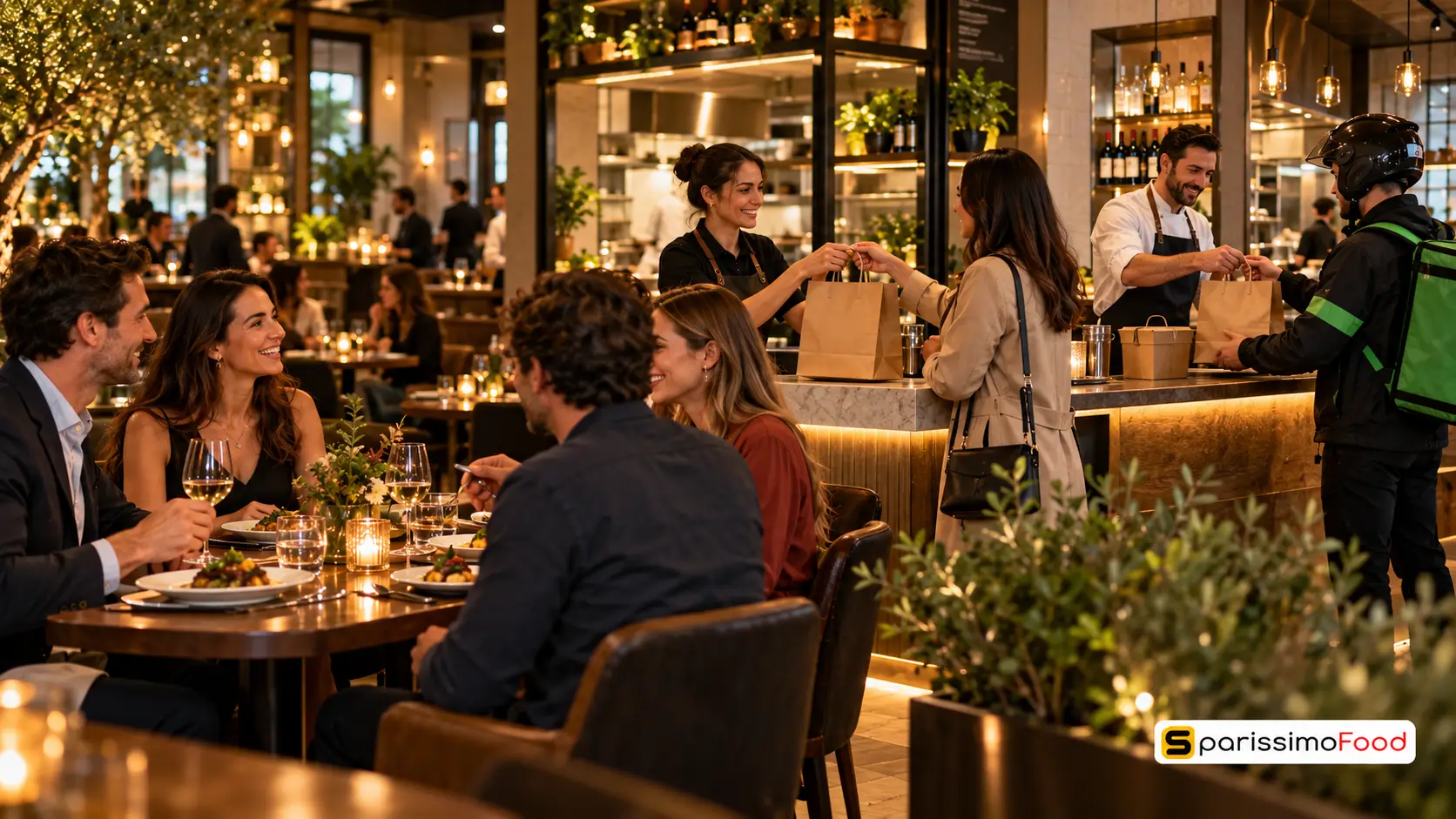
Running both channels works when you guide returning guests to your own page without removing the listing.
- Put the booking link where guests already look. Add it to your Google Business Profile, website and Instagram bio.
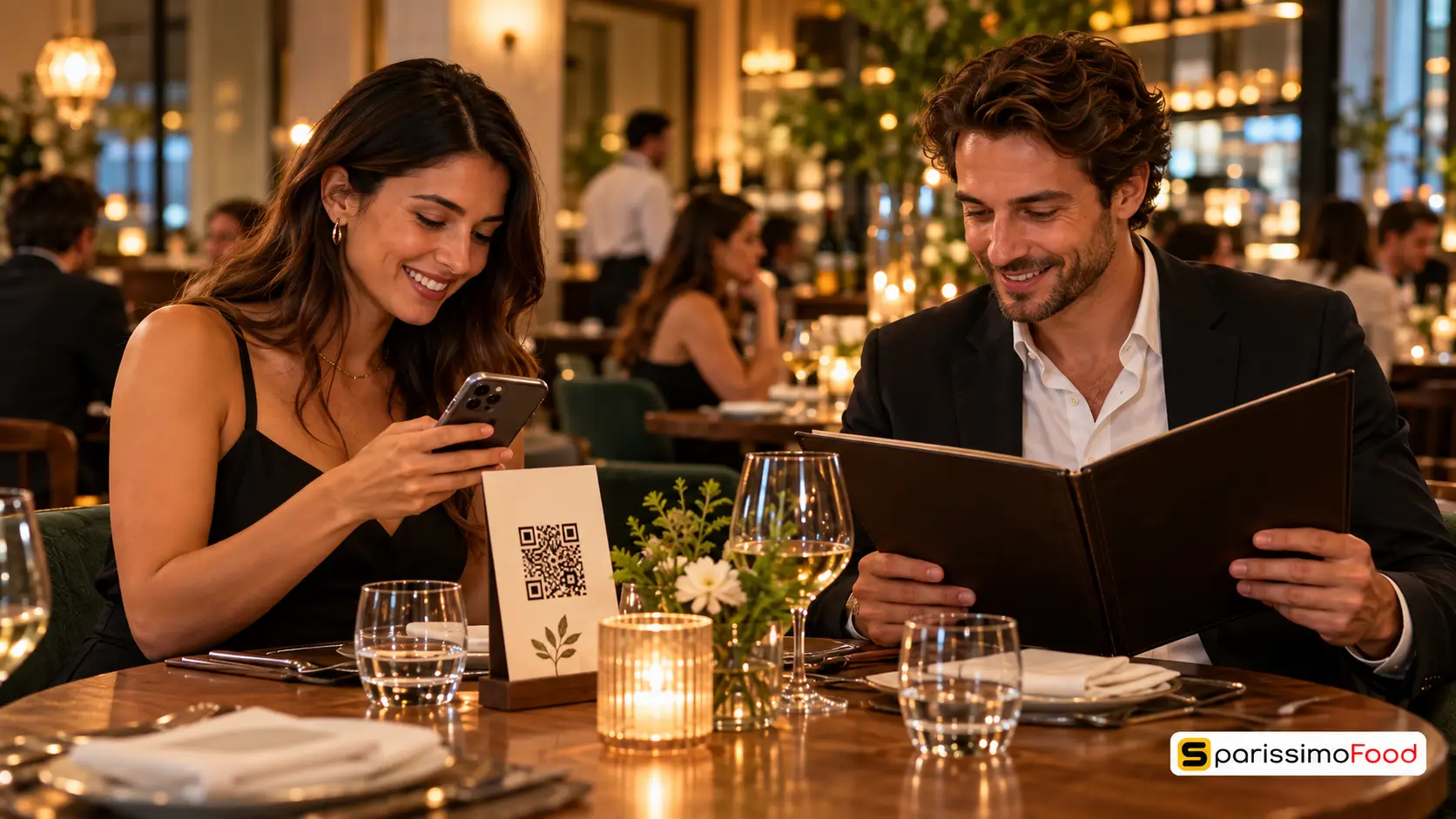
- Add a QR code to receipts and tables. A line such as “Book your next visit here” turns a good evening into the next booking.
- Tag the source of every booking. One monthly review of 15 minutes shows which channel brings new guests and which brings regulars.
- Keep availability in sync. Use one calendar, or set a fixed capacity per channel, so the same table is never sold twice.
- Reward direct bookings with a small perk. A preferred table time or a welcome drink is enough. Check your TheFork agreement before changing how you promote channels.
For the retention side, our guide to getting repeat customers shows what keeps guests returning. The same hybrid logic applies to delivery, as our Just Eat vs own ordering website comparison shows in CHF.
What the American Express Acquisition Means for TheFork Restaurants
On 15 June 2026, American Express announced an agreement to acquire TheFork from Tripadvisor for USD 700 million in cash. Closing is expected before the end of 2026. American Express lists regulatory approvals and a labour consultation process among the closing conditions in its filings.
According to the announcement, TheFork keeps its existing leadership team after closing. Together with Resy and Tock, American Express expects a dining network of 75,000 bookable venues.
For a restaurant, the practical steps are the same as with any partner. Read your current plan terms in TheFork Manager, note the notice period, and check TheFork’s communications for updates. Keeping a direct booking channel next to your listing means your guest relationships do not sit in one place only.
How SparissimoFood Helps With Direct Table Reservations
Direct reservations on SparissimoFood run through your own booking link, which you place on your Google profile, website, Instagram and a QR code. Guest names and phone numbers captured through a reservation belong to your restaurant, so you can follow up with them directly.
The feature that matters most for reservations is the no-show sequence. Automated SMS reminders go out 48 hours and 2 hours before each booking, with a one-tap cancellation link. A digital waitlist lets you text the next guest the moment a table frees up, and card pre-authorisation can be configured for selected booking types.
SparissimoFood charges a commission, so direct booking here is not free. Starter costs CHF 49 a month plus 8% commission on orders, Business costs CHF 79 plus 5%, and Professional costs CHF 148 plus 5%. A table reservation fee also applies: CHF 2.50 on Starter, CHF 2.00 on Business and CHF 1.50 on Professional.
You can run a direct reservation page next to a TheFork listing. Compare the plans and start the 14-day free trial, which needs no credit card.
Frequently Asked Questions
TheFork vs direct online booking: which is better for a Swiss restaurant?
Neither wins everywhere. Direct online booking suits guests who already know your restaurant and keeps the booking relationship with you. TheFork suits guests who have not found you yet. At an illustrative fee of CHF 3 per guest and CHF 65 average spend, a TheFork listing pays off once about 7% of its guests are new, so most restaurants benefit from running both.
How much does TheFork cost a restaurant?
TheFork states that bookings from TheFork, Tripadvisor and partners carry a fee based on a percentage of the average bill per guest, and that bookings through the widget on your own channels are included. TheFork Manager lists Performance and Enterprise plans with pricing on request, so your exact rate depends on your plan. You can see it in TheFork Manager under billing. The CHF 2 to 4 per guest used in this article is illustrative, not a published TheFork rate.
Can a restaurant use TheFork and direct online booking at the same time?
Yes. A restaurant can keep a TheFork listing for discovery and run a direct booking page for returning guests. The one thing to manage is availability: use a single calendar or set a capacity per channel so the same table is never sold twice. Check your TheFork agreement for any rules on how you promote channels.
What is the no-show rate for Swiss restaurant reservations?
Lunchgate’s No-Show Report 2026, based on 2025 data from foratable reservations, found that 2.24% of reserving guests did not appear. Almost a third of no-shows came from same-day reservations, and Monday had the highest rate. Large groups had the lowest rate but caused the most damage. Reminders and reconfirmation help on any channel.
What does the American Express acquisition mean for restaurants on TheFork?
American Express announced on 15 June 2026 that it will acquire TheFork from Tripadvisor for USD 700 million in cash, with closing expected before the end of 2026 and subject to approvals. TheFork is to keep its existing leadership team. Restaurants should review their current plan terms in TheFork Manager, as with any partner, and keep a direct booking channel alongside the listing.
TheFork helps diners find your table, and direct booking helps them find their way back.
.Ds4FHhSq_ZxC9WE.webp "Restaurant Upselling Techniques That Don't Feel Pushy")

.CXCr6fQt_Z11gsYh.webp "Build a Branded Restaurant App Without Developers")
.y09Xtv8Z_1gH6f6.webp "Set Up Restaurant Online Ordering in Under a Week")
.B-Rl4IDw_Z204OoN.webp "Restaurant Loss Prevention and Theft Guide")
.DPpk5JZR_AlrVy.webp "Restaurant Communication During Peak Hours | Guide 2026")
.B6eEizW1_Z2bHQYl.webp "Restaurant Menu Pricing Strategies That Actually Protect Your Margins in 2026")
.CRszlDy5_2neUXu.webp "How to Migrate from GloriaFood Without Disruption: A Technical Step-by-Step Guide")
.kT6N2QP-_1Tp2j1.webp "GloriaFood Is Shutting Down on April 30, 2027 — What Every Restaurant Owner Needs to Do Now")