
Online Ordering vs Phone Ordering: Real Cost per Order
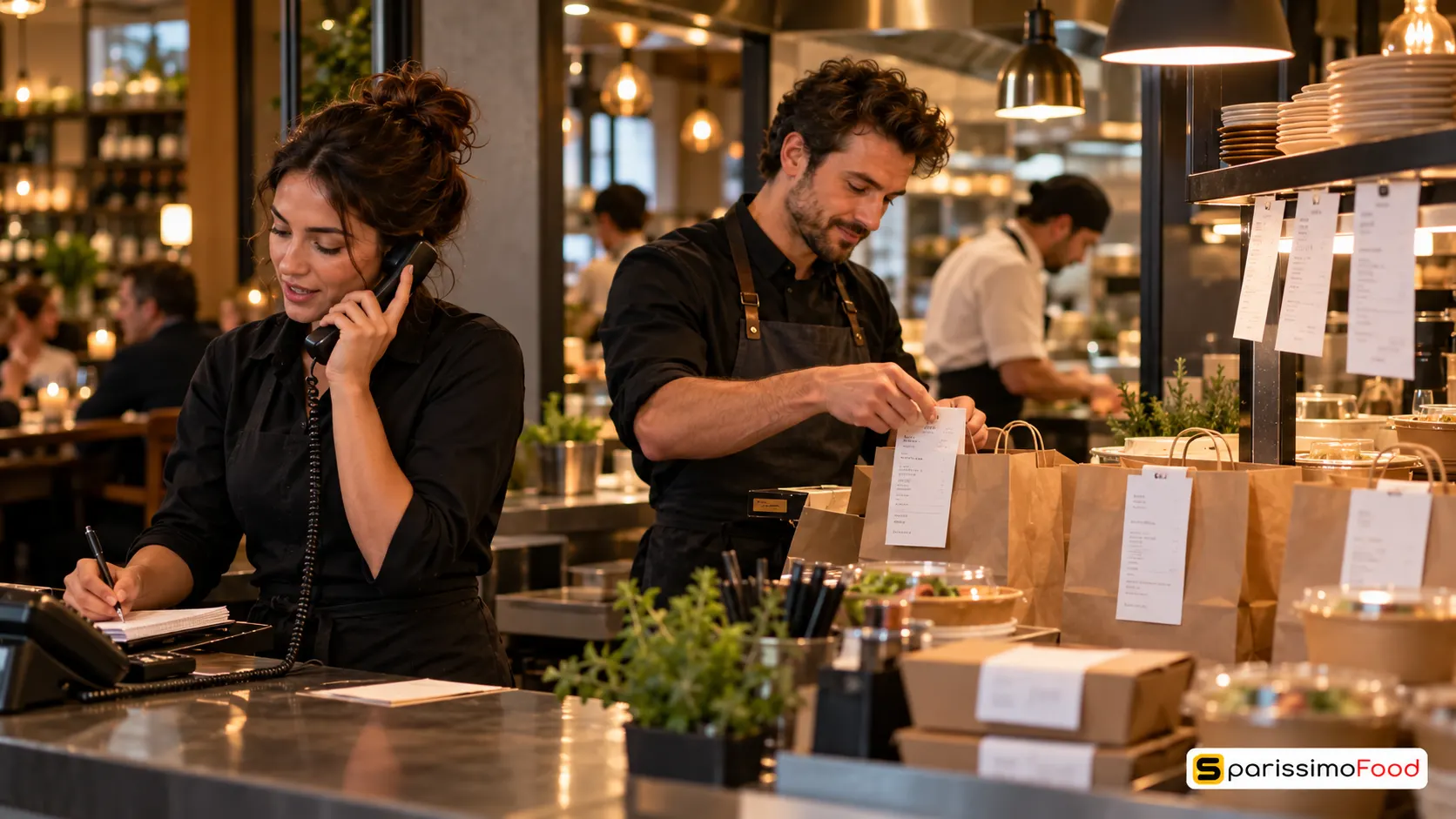

Quick Answer: For most Swiss restaurants, online ordering is more efficient: it frees staff time, takes orders in parallel and reduces typing errors. It is not always cheaper per order: 200 orders a month cost CHF 576 by phone and CHF 650.50 online on the Business plan. Online closes that CHF 74.50 gap by recovering about 3 missed orders a month. The phone still wins for allergy questions and unusual orders.
At 5 minutes a call, one person on the phone completes at most 12 orders an hour and does nothing else while doing it. That is the core of online ordering vs phone ordering. A phone line serves one guest at a time, while an online menu serves everyone at once. This guide prices both channels in CHF, shows where each one wins and answers the follow-up questions owners ask next.
Online Ordering vs Phone Ordering at a Glance
| | Phone ordering | Online ordering |
|---|---|---|
| Staff time per order | About 5 minutes in our example, with one person fully tied up | About 1 minute to check and confirm |
| Orders handled at once | One per person answering | As many as the kitchen can cook |
| Where errors come from | Hearing, writing and typing the order | Guest choices and out-of-date menus |
| Allergy and special requests | A real conversation, with written allergen information at hand | Allergen details listed per dish, plus a note field for the kitchen |
| Payment | Usually at pickup | Can be paid when ordering, including TWINT |
| Guest data | Name and number, if staff note them | Contact details captured by your own ordering page |
| Upselling | A staff member suggests extras | Prompts built into the menu |
| Cost | Staff time and missed calls | Plan fee and commission, minus staff time |
| Best for | Complex orders, older regulars, questions | Repeat orders, rush hours, orders placed ahead |
In short, phone ordering is a conversation, and online ordering is a queue the guest builds alone. Which one is more efficient depends on which of the two your restaurant is short of.
What One Order Costs: Staff Time, Errors and Commission
Staff time is the cost most online ordering vs phone ordering comparisons skip. The table below prices 200 orders a month at CHF 45, which is CHF 9,000 in sales. Every input is an example, so replace each one with your own stopwatch and till numbers.
- Labour: CHF 27 per working hour, loaded with social charges. The GastroSuisse sheet on 2026 hospitality wages, published in German, lists a minimum of CHF 4,070 a month for staff with a federal vocational certificate. A 13th monthly salary is added.
- Time per order: 5 minutes by phone to answer, listen, repeat back and key in the order, and 1 minute online to check and confirm it.
- Errors: 4% of phone orders and 1% of online orders need a remake. These are planning inputs, not measured Swiss benchmarks.
- Remake cost: CHF 15.75, which is CHF 13.50 of food at a 30% food cost plus 5 minutes of staff time.
- Online plan: Business at CHF 79 a month plus 5% commission, and Starter at CHF 49 plus 8%.
| Cost line, 200 orders a month | Phone | Online, Business | Online, Starter |
|---|---|---|---|
| Staff time on orders | CHF 450.00 | CHF 90.00 | CHF 90.00 |
| Remakes after errors | CHF 126.00 | CHF 31.50 | CHF 31.50 |
| Commission on CHF 9,000 | CHF 0 | CHF 450.00 | CHF 720.00 |
| Monthly plan fee | CHF 0 | CHF 79.00 | CHF 49.00 |
| Total | CHF 576.00 | CHF 650.50 | CHF 890.50 |
| Per order | CHF 2.88 | CHF 3.25 | CHF 4.45 |
| Staff hours spent on orders | 16.7 | 3.3 | 3.3 |
Read the table honestly. Online ordering is not cheaper per order in this example. It moves cost from staff time to commission, and it gives back 13.3 staff hours a month. Those hours only count if the team uses them, for example for prep before the rush.
What the table leaves out is the order the phone never hears. One formula covers it:
Break-even recovered orders = extra monthly cost of online ordering ÷ net contribution per recovered order
Net contribution starts from CHF 28.05, what a counter takeaway order keeps after VAT, food, packaging and payment fees in our dine-in vs takeaway vs delivery comparison. Subtract commission, handling time and expected remakes. On the Business plan that leaves CHF 25.19, so CHF 74.50 ÷ CHF 25.19 gives about 3 orders. On Starter it leaves CHF 23.84, so CHF 314.50 ÷ CHF 23.84 gives about 13 orders.
Online Ordering vs Phone Ordering at Peak Hour: The Capacity Gap
Peak hour is where the two channels separate. Phone capacity follows a simple formula:
Orders per hour per person on the phone = 60 ÷ minutes per phone order
At 5 minutes per order, that is 12. Now take a Friday rush with 18 order calls an hour for two hours and one person on the phone. Twelve orders an hour get through, and 6 an hour wait or hang up. Over the rush, 12 orders are at risk, which is CHF 540 in sales at CHF 45 each.
A second person on the phone doubles capacity to 24 orders an hour. It also costs CHF 54 for a two-hour rush and takes someone off the floor.
Online guests order in parallel, so the limit moves to the kitchen. If the kitchen can cook 20 orders an hour and 30 arrive, tickets run late and seated guests wait. A cap or a pause on online orders protects the dining room, and our guide to restaurant peak hour management shows how to set one.
Missed calls follow the same logic:
Lost sales per month = missed order calls × average order value
Count only callers who order elsewhere instead of calling back. If 15 order calls a month go unanswered at CHF 45, that is CHF 675 in sales. At CHF 28.05 per pickup order, it is about CHF 421 in contribution. Your phone provider’s call log shows unanswered calls during opening hours, which gives you the real number.
Accuracy and Allergens: Where Each Channel Can Go Wrong
A phone order passes through four steps: the caller speaks, staff hear, staff write and someone keys it into the till. Every step can introduce an error, and a noisy kitchen makes each one more likely. An online order passes through one step, because the guest selects each item and the kitchen receives it as entered.
Online ordering has its own failure points. Guests tap the wrong size, mistype an address or order a dish that sold out an hour ago. A menu that is not kept up to date moves errors from the phone to the screen.
Allergies are where Swiss rules matter. According to the Federal Food Safety and Veterinary Office, whose page is in German, allergens in unpackaged food must be declared in writing. The requirement can be waived if a written notice says that information is given orally. In that case, staff must have the information in written form or be able to pass it on through a specialist.
That has a practical meaning for both channels. A phone answer about allergens needs a written source at the counter, not memory. An online menu can show allergen details next to each dish, but ask your cantonal food control authority whether your set-up meets the rule. For any order with an allergy note, a one-minute confirmation from staff costs little and removes the biggest risk.
Revenue per Order: Basket Size, Prepayment and TWINT
Published claims about basket size in the online ordering vs phone ordering debate point in different directions. Some say online baskets are larger, because guests browse at their own pace and see upsell prompts. Others report larger phone baskets, because staff suggest extras in the moment. Neither claim comes from Swiss restaurant data, so measure your own:
Average order value by channel = channel revenue ÷ channel orders
Record phone orders as their own order type at the till for four weeks and compare. Even a CHF 2 difference per order on 100 online orders is CHF 200 a month, more than the CHF 74.50 gap in the cost table.
Payment timing differs too. A phone order is usually paid at pickup. An online order can be paid when it is placed, so the kitchen never cooks an order that goes uncollected and unpaid. In Switzerland, that means TWINT matters. The Swiss Payment Monitor survey from May 2026 found that mobile payments, which include TWINT, made up 34.5% of all transactions, ahead of cash at 23.2%.
Online Ordering vs Phone Ordering: Which Fits Your Restaurant?
Neither channel wins everywhere. The pattern depends on the kind of restaurant you run.
Pizzeria, kebab or Asian takeaway with many repeat callers. Online ordering carries the rush, while the phone stays open for regulars who call in their usual order.
Restaurant with older regulars and a fixed lunch crowd. Keep the phone as the main channel and add online ordering for guests who prefer it. Do not remove a channel your best guests use.
Reservation-led restaurant with a small takeaway menu. The phone is already busy with bookings, so online ordering keeps takeaway from competing with them.
Very low order volume. With only a few orders a month, the time saved is small and the plan fee is the main cost. Test with a free trial before you commit.
Multi-location operator. Run the numbers per site. A city-centre site with a dense lunch rush reaches break-even much sooner than a quiet suburban one.
Online ordering also loses orders when checkout is clumsy. If guests start an order and leave, our article on why customers abandon restaurant checkout covers the usual causes.
The phone line itself can also be improved. A mobile forwarding at peak hours, an automatic SMS that sends your ordering link after a missed call and a callback list all help. Some restaurants also test AI phone answering. If you try one, check how it handles Swiss German and Hochdeutsch callers and compare its accuracy with your own staff before you rely on it.
How to Run Both Without Doubling the Work
Most restaurants settle online ordering vs phone ordering by running both and shifting only the simple repeat orders. Six steps work for most Swiss restaurants:
- Measure for two weeks. Count phone orders, missed order calls, minutes per call and average order value by channel.
- Keep one queue. Key every phone order into the till straight away, so the kitchen sees one list whatever the channel.
- Offer the link on every call. A short line works: “You can also order this online in under a minute. Shall I send you the link by SMS?”
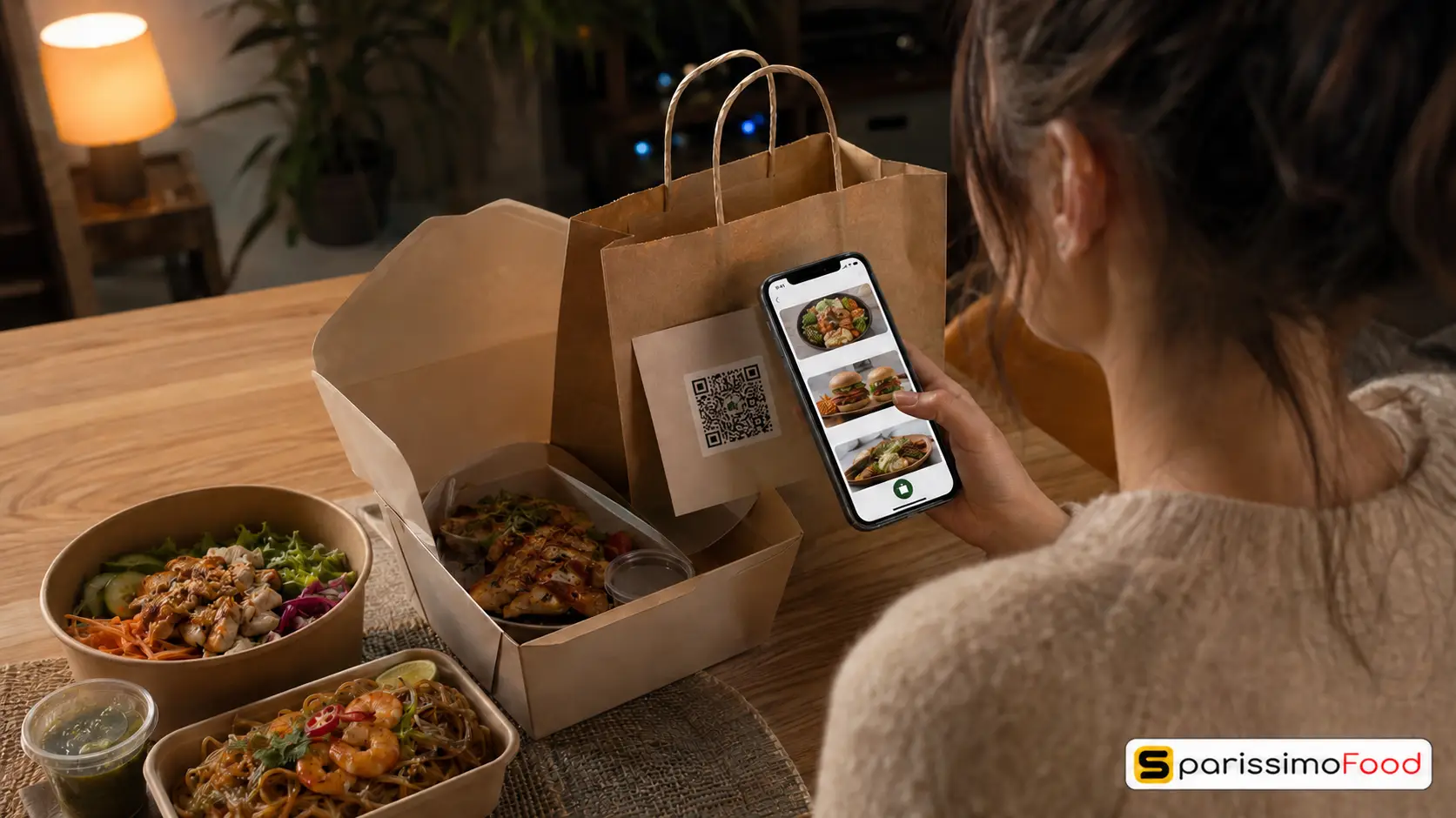
- Put the link where regulars already look. Add a QR code to bags and receipts and the ordering link to your Google Business Profile.
- Keep the phone for what needs a person. Allergies, catering and unusual requests stay with staff.
- Re-run the break-even quarterly. Online share grows, and the numbers move with it. Our guide to setting up online ordering covers the first steps.
How SparissimoFood Helps With Order Channel Efficiency
The capacity gap is really a kitchen question. Online orders arrive in parallel, so what protects the dining room is control over how many the kitchen accepts. SparissimoFood has kitchen throttling tools that let you pause or slow online orders during the rush.
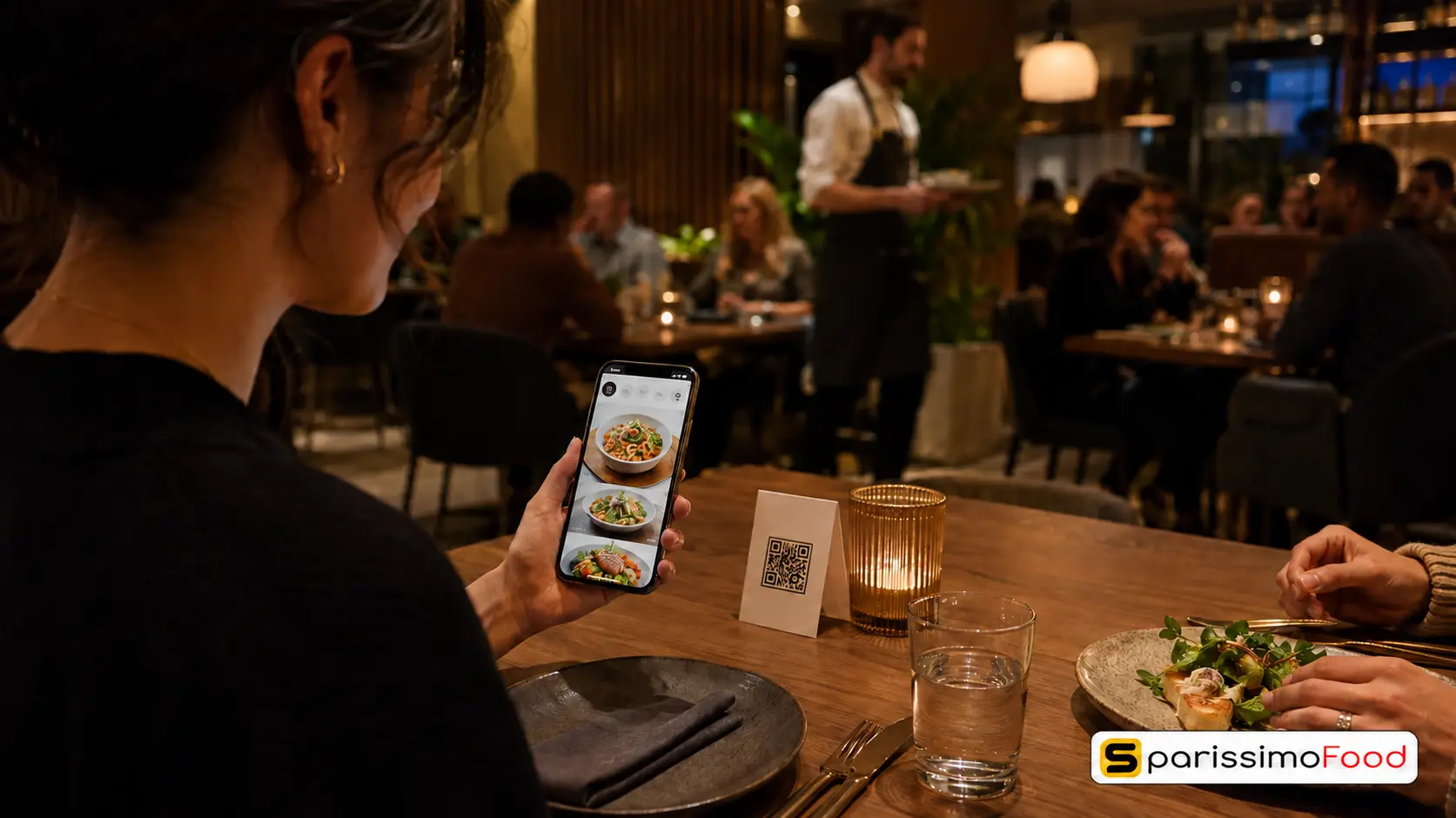
Orders for delivery, pickup and dine-in via QR code appear in the manager dashboard with real-time tracking, so the kitchen works from one list.
SparissimoFood charges a commission, a lower one than marketplaces. Starter costs CHF 49 a month plus 8% per order, Business costs CHF 79 plus 5%, and Professional costs CHF 148 plus 5%. The cost table above uses Business and Starter, and the break-even formula shows where the fee pays back. You can compare the plans and start a 14-day free trial without a credit card.
Frequently Asked Questions
Is online ordering more efficient than phone ordering for restaurants?
Usually yes on staff time, capacity and accuracy, but not always on cost per order. In our example, a phone order takes 5 minutes of staff time and an online order 1 minute. That frees about 13 hours a month at 200 orders. Online adds commission and a monthly fee, so it costs CHF 74.50 more a month on the Business plan before missed calls. It pays back once it recovers about 3 orders a month.
Should a restaurant stop taking phone orders once it has online ordering?
No. The phone remains the better channel for allergy questions, large or unusual orders and guests who do not use apps. The aim is to move simple repeat orders online and keep the phone free for conversations that need a person. Every phone order should go into the same queue as online orders, so the kitchen sees one list.
How much does a missed phone order cost a restaurant?
Multiply missed order calls by your average order value, counting only callers who order elsewhere. Fifteen missed calls a month at CHF 45 is CHF 675 in lost sales, or about CHF 421 in contribution at CHF 28.05 per pickup order. Your phone provider’s call log shows unanswered calls during opening hours, which gives you your own figure.
Is online ordering more accurate than phone ordering?
For simple orders, usually yes, because the guest selects each item and the kitchen receives the order as entered. A phone order passes through hearing, writing and typing, and each step can add an error. Phone can be more accurate when an order needs explanation, such as an allergy. Our example assumes 4% errors by phone and 1% online, which are planning inputs, not measured benchmarks.
How can I move phone customers to online ordering without losing regulars?
Offer the link instead of replacing the phone. Send the ordering link by SMS during or after a call. Add a QR code to bags and receipts, and list the link on your Google Business Profile. Keep your phone number visible, and review the online share every month.
The phone sells the conversation, online ordering sells the rush, and a busy Friday needs both.


.Ds4FHhSq_ZxC9WE.webp "Restaurant Upselling Techniques That Don't Feel Pushy")



.CXCr6fQt_Z11gsYh.webp "Build a Branded Restaurant App Without Developers")
.y09Xtv8Z_1gH6f6.webp "Set Up Restaurant Online Ordering in Under a Week")
.B-Rl4IDw_Z204OoN.webp "Restaurant Loss Prevention and Theft Guide")
.DPpk5JZR_AlrVy.webp "Restaurant Communication During Peak Hours | Guide 2026")

.B6eEizW1_Z2bHQYl.webp "Restaurant Menu Pricing Strategies That Actually Protect Your Margins in 2026")
.CRszlDy5_2neUXu.webp "How to Migrate from GloriaFood Without Disruption: A Technical Step-by-Step Guide")
.kT6N2QP-_1Tp2j1.webp "GloriaFood Is Shutting Down on April 30, 2027 — What Every Restaurant Owner Needs to Do Now")