
Online Reservations vs Walk-Ins for Small Restaurants
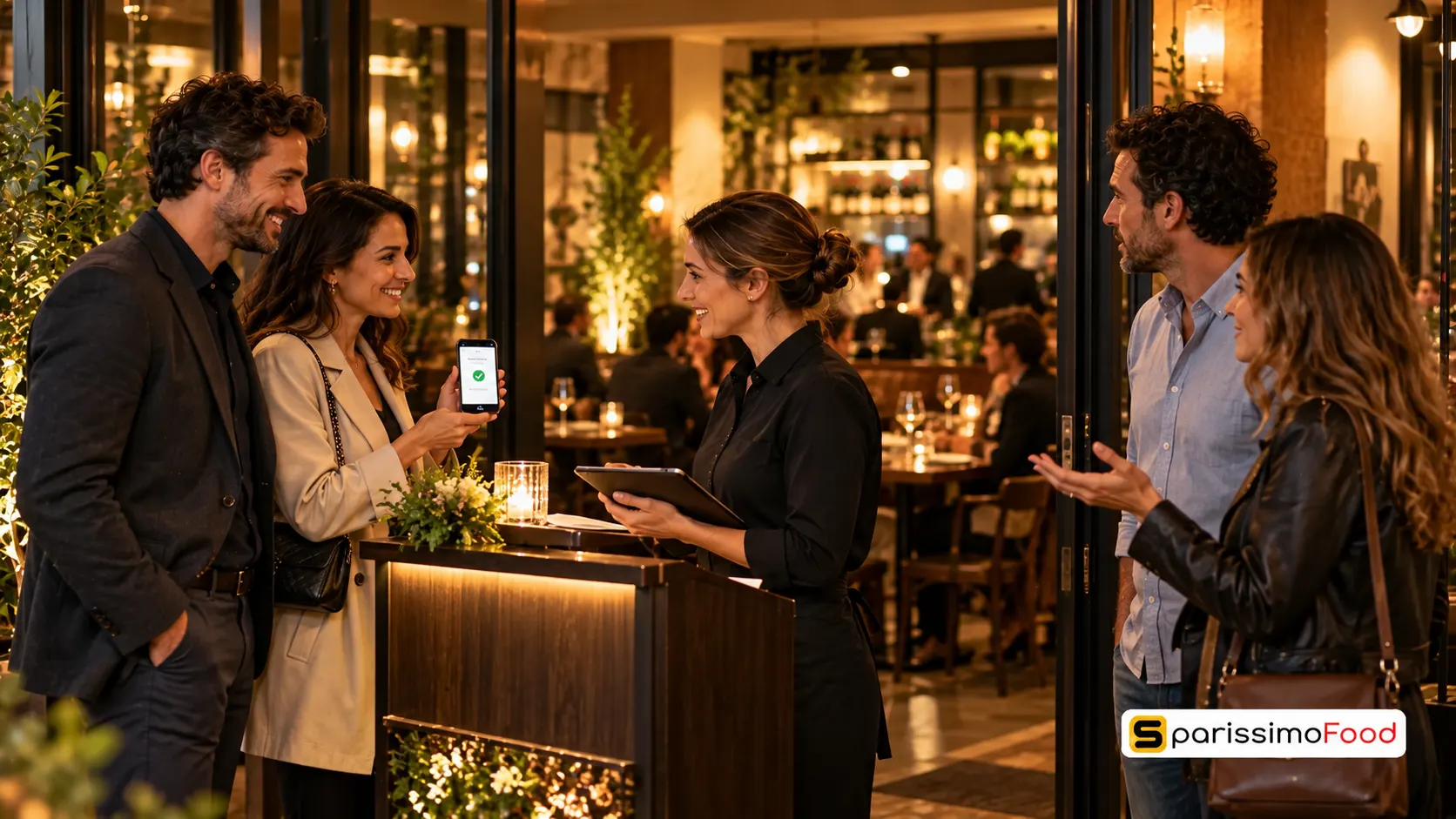

Quick Answer: For most small Swiss restaurants, a hybrid model wins the online reservations vs walk-ins decision. Take online reservations for most evening tables, hold about a third of your seats for walk-ins and send reminders to protect peak slots. Walk-in only suits cafés, bars and lunch counters where guests stay briefly. In our worked example, reservation software on a Starter plan pays for itself with about ten extra guests a month.
Swiss restaurants work on thin margins, so every empty seat counts. Booked tables saw a no-show rate of 2.4% in 2025, according to Hotel Inside, up from 1.4% in 2019, per the NZZ. Online reservations vs walk-ins comes down to one question: which empty table costs more, the booked one or the unplanned one?
Online Reservations vs Walk-Ins at a Glance
| | Walk-ins only | Online reservations | Hybrid |
|---|---|---|---|
| Demand predictability | Low, driven by weather, footfall and weekday | High for booked slots | Medium to high |
| No-show risk | None | About 2.4% of booked tables in Switzerland in 2025, higher on some nights | Limited to the booked share |
| Empty-seat risk | Higher on quiet nights | Lower, as long as no-shows are managed | Lowest when held tables are released on time |
| Groups and special occasions | Hard to promise a table | Easy to confirm | Easy, groups book ahead |
| Guest data | None unless you ask at the door | Name and mobile number for every booking | Name and mobile number for the booked share |
| Typical cost | No system cost | Monthly fee, often plus a fee per booking | Same as reservations |
| Best suited to | Cafés, bars, lunch counters | Dinner-led restaurants, tasting menus, groups | Most neighbourhood restaurants with 20 to 40 seats |
The short version: walk-ins keep your restaurant simple and open, online reservations make your evenings predictable, and a hybrid gives you both. The right mix depends on how long guests stay, how concentrated your evening revenue is and how much footfall passes your door.
What No-Shows Really Cost a Small Restaurant in Switzerland
The Swiss picture is milder than the headlines suggest, but averages hide the bad nights. The foratable by Lunchgate report behind that 2.4% breaks it down. Mondays show the highest rate, while Fridays and Saturdays cause the largest absolute loss. Risk rises clearly after 20:00, and almost a third of no-shows come from same-day bookings.
Individual restaurants report much worse. One Zurich restaurateur told Blick that up to 10% of his guests skip a booking. One evening, a third of the reserved guests stayed away. The NZZ has reported that hospitality works with profit margins of only 1 to 2%, which is why a few empty tables matter.
You can price the problem for your own restaurant with one formula:
No-show cost = booked covers × no-show rate × average spend per guest
Take a Friday with 40 booked covers and an average spend of CHF 48 per guest:
- At the Swiss average of 2.4%: 40 × 0.024 × CHF 48 is about CHF 46 per Friday, or roughly CHF 2,400 a year over 52 Fridays.
- At 10% on a hard night: 40 × 0.10 × CHF 48 is CHF 192 per Friday, or roughly CHF 10,000 a year.
Payment protection changes the picture. The Resos No-Show Index covers 3.77 million reservations worldwide from August 2025 to July 2026. Bookings that required no-show protection, such as a deposit, recorded a 0.80% no-show rate. Bookings without any payment requirement recorded 2.47%.
Walk-in only restaurants have no no-show line in the accounts, but they carry a different cost: the empty seat nobody planned for. The formula mirrors the first one:
Unplanned empty-seat cost = unfilled covers × contribution per guest
Assume 35% of the CHF 48 spend goes on food, drinks and payment costs, leaving CHF 31.20 per guest. If 12 of 40 seats stay empty on a quiet Tuesday, that is 12 × CHF 31.20, or about CHF 374 of contribution gone. Use your own cost share, because 35% is an assumption.
The honest comparison: a no-show costs you a booked cover, while a walk-in only room costs you the covers you could not forecast, prepare for or promise.
What Walk-In Only Does Well, and Where It Struggles
A walk-in only restaurant has real strengths. There is no booking friction, no no-show risk and no system to pay for or learn. Guests decide on the spot, and when the room is full you simply say so. Turns can be quick, which is why short-stay formats such as cafés, bakeries, street food and lunch counters often thrive on it.
The weak points show up in the evening. You cannot tell how many guests will arrive at 19:30, so kitchen prep and staff rotas are built on guesses. A group of eight cannot be promised a table, so birthdays, business dinners and family meals go to restaurants that can guarantee a seat. You also collect no guest data, which makes it harder to bring people back.
Walk-in traffic also depends on being found. Passers-by and people searching on their phones need to see you are open, which is why your listing matters as much as your front door. Our guide to Google Maps SEO for restaurants covers how to make that listing work for you.
What Online Reservations Do Well, and What They Cost
Online reservations give you three things walk-ins cannot. They let you forecast covers by slot, so you can prep food and schedule staff against real numbers. They let a guest secure a table at any hour, including when you are closed or busy serving. They capture a name and mobile number for every booking, which you can use for reminders and, with consent, for follow-up.
The costs are real too. There is the system fee, the no-show risk already priced above and the need to pace arrivals so the kitchen is not flooded. Reservation systems differ in how they charge, so compare the monthly fee, any fee per booking and the no-show tools included.
The next section runs the numbers.
Online Reservations vs Walk-Ins: The Break-Even Maths
A reservation system pays for itself when it brings in enough guests who would not otherwise have come. These are the guests who needed a guaranteed table, planned ahead or booked while you were busy. The formula is:
Break-even covers per month = monthly system cost plus expected no-show loss, divided by contribution per cover
Here is a worked example using the Starter plan figures from the SparissimoFood pricing page, with the CHF 31.20 contribution per cover from above:
- Monthly fee: CHF 49.
- Reservation fees: 60 reservations a month at CHF 2.50 each is CHF 150, assuming the fee applies to every booking.
- Expected no-show loss: 60 reservations of 2.5 guests is 150 covers. At 2.4%, that is 3.6 covers, or CHF 112.
- Total cost: CHF 49 + CHF 150 + CHF 112 is about CHF 311.
- Break-even: CHF 311 ÷ CHF 31.20 is about 10 extra covers a month, or two to three a week.
If online booking brings in more than ten guests a month who would otherwise have gone elsewhere, the model earns its place. Check the fees of any system you consider and rerun the formula with your own figures.
Online Reservations vs Walk-Ins: Which Model Fits Your Restaurant?
Café, bakery or lunch counter. Stay walk-in only. Guests stay briefly, decisions are spontaneous and a booking would add friction. Offer a way to book only for larger groups or pre-orders.
Neighbourhood bistro with 20 to 40 seats. Run a hybrid. Evenings are where planning pays, so take bookings for most tables and keep a share open for local regulars who drop in.
Dinner-led restaurant or tasting menu. Lead with reservations. Add a card guarantee on peak slots and large groups, and keep bar or counter seats for walk-ins.
Bar or pub. Stay mostly walk-in, but accept reservations for larger groups so a big party never arrives to a full room.
Restaurant in a tourist area. Run a hybrid with online booking in several languages. Visitors often plan ahead, while the rest of your walk-in flow comes from foot traffic.
New restaurant without regulars. Start walk-in friendly while you build visibility, then add online booking for Friday and Saturday evenings once demand outgrows the room.
Several locations. Decide per site. A city-centre lunch location may stay walk-in while a suburban dinner site books out.
The Hybrid Model: How Many Tables to Hold for Walk-Ins
In the online reservations vs walk-ins debate, a hybrid only works if the walk-in share is set deliberately. Guessing leaves either too many empty held tables or too few for the people who walk in. Use this formula:
Tables to hold = average walk-in covers in the slot ÷ average party size, rounded up
Suppose your walk-in log for the last four Thursdays between 18:30 and 20:00 shows 6, 8, 5 and 9 covers. The average is 7. With an average party of 2, that is 3.5, so hold 4 tables for that slot.
If you have no walk-in data yet, hold about a third of your tables for the first month as a test. Then adjust weekly based on how many held tables went unused. Treat the figure as a starting point, not a rule.
Three habits make the hybrid work:
- Release unclaimed tables on a schedule. Open held tables to online booking about an hour before the slot. Ask for a card guarantee on these late bookings, because same-day bookings make up almost a third of no-shows in the foratable by Lunchgate data.
- Use flexible seating as a buffer. Bar seats and shared tables absorb extra walk-ins without breaking the booking plan.
- Pace arrivals. Spread booked arrival times so the kitchen does not receive every table at once. Our guides to peak hour management and improving table turnover show how.
How to Add Online Reservations Without Inviting No-Shows
If you move from walk-in only to online booking, six steps keep no-shows low:
- Set arrival slots. Offer fixed start times, such as every 15 or 30 minutes, instead of an open choice of any minute.
- Send two reminders. One a day or two before and one a few hours before, each with a one-tap cancellation link.
- Require a card only where a gap hurts. Large groups and Friday and Saturday peaks are the usual candidates. One Zurich restaurateur quoted by Blick takes a card for larger tables and charges CHF 50 per person for no-shows.
- State the policy at booking. Guests accept a fee they have seen in advance far more readily than one that arrives afterwards.
- Keep a waitlist. When someone cancels, a waiting guest can take the table.
- Measure monthly. Use this formula and watch the trend:
No-show rate = no-shows ÷ booked reservations
Our full guide to reducing restaurant no-shows goes deeper on reminders, policies and fees.
How SparissimoFood Helps With Online Table Reservations
SparissimoFood includes table reservations on all three plans, alongside delivery, pickup and pre-orders. Booked tables and guests who order ahead sit in one platform, and the contact details stay with your restaurant.
The reservation tools target the problems above. Automated SMS reminders carry a cancellation link, confirmation tracking flags bookings a guest has not confirmed and a digital waitlist can fill cancelled tables. Card pre-authorisation can be configured for selected booking types, such as large groups or peak evenings, so protection applies only where it matters.
SparissimoFood charges a commission on online orders, and the plans are: Starter at CHF 49 per month plus 8%, Business at CHF 79 plus 5%, and Professional at CHF 148 plus 5%. Table reservations carry a reservation fee of CHF 2.50 on Starter, CHF 2.00 on Business and CHF 1.50 on Professional. Business and Professional add extended table management. You can compare the plans and start a 14-day free trial without a credit card.
Frequently Asked Questions
Should a small restaurant take online reservations or stay walk-in only?
On online reservations vs walk-ins, the answer depends on how long guests stay and how much revenue lands in the evening. Cafés, bars and lunch counters can stay walk-in only. Dinner-led restaurants usually do better with a hybrid: online reservations for most tables and a held share for walk-ins. In our worked example, reservation software pays for itself with about ten extra covers a month.
How many tables should a restaurant hold for walk-ins?
Use the formula: average walk-in covers in the slot divided by average party size, rounded up. If your last four Thursdays showed 6, 8, 5 and 9 walk-in covers between 18:30 and 20:00, the average is 7. With parties of two, you would hold 4 tables. With no data, start with about a third of your tables for a month and adjust weekly.
What is the average no-show rate for restaurants in Switzerland?
The foratable by Lunchgate no-show report puts the 2025 average at about 2.4% of reserved tables, up from 1.4% in 2019. Rates are higher on some nights, with Mondays showing the highest rate and Fridays and Saturdays the largest absolute loss. Individual restaurants report worse figures, with one Zurich operator citing up to 10% of guests on difficult evenings.
Do deposits and no-show fees work, and will guests accept them?
Yes, in the data available. In the Resos No-Show Index, bookings with no-show protection recorded a 0.80% no-show rate against 2.47% without. Most guests accept a fee when it is stated at booking. A Blick reader poll with over 5,300 participants found that 95% always cancel when they cannot come. Apply card guarantees to large groups and peak slots, and confirm the wording with your fiduciary.
How much does reservation software cost for a small restaurant in Switzerland?
Prices vary by system, so compare the monthly fee, any fee per booking and the no-show tools included. SparissimoFood starts at CHF 49 per month plus 8% commission on online orders, with a table reservation fee of CHF 2.50 on the Starter plan. In the break-even example above, about ten extra covers a month cover the full cost.
Walk-ins fill the room you can see, reservations fill the room you can plan, and a small restaurant needs a little of both.
.Ds4FHhSq_ZxC9WE.webp "Restaurant Upselling Techniques That Don't Feel Pushy")


.CXCr6fQt_Z11gsYh.webp "Build a Branded Restaurant App Without Developers")
.y09Xtv8Z_1gH6f6.webp "Set Up Restaurant Online Ordering in Under a Week")
.B-Rl4IDw_Z204OoN.webp "Restaurant Loss Prevention and Theft Guide")
.DPpk5JZR_AlrVy.webp "Restaurant Communication During Peak Hours | Guide 2026")

.B6eEizW1_Z2bHQYl.webp "Restaurant Menu Pricing Strategies That Actually Protect Your Margins in 2026")
.CRszlDy5_2neUXu.webp "How to Migrate from GloriaFood Without Disruption: A Technical Step-by-Step Guide")
.kT6N2QP-_1Tp2j1.webp "GloriaFood Is Shutting Down on April 30, 2027 — What Every Restaurant Owner Needs to Do Now")