
Just Eat vs Smood: Smood Closed, What to Do Now

Quick Answer: Smood shut down completely on 30 April 2026, so the Just Eat vs Smood comparison most search results still promise does not describe a choice you can actually make today. Just Eat is now the only major third-party marketplace covering most of Switzerland, charging restaurants 10–15% commission when you use your own drivers and 25–30% when Just Eat’s own couriers deliver. If Smood carried a meaningful share of your orders, the real question in front of you isn’t which marketplace to pick, it’s how much of that lost volume to rebuild through Just Eat and how much to move onto a direct ordering channel you control.
Restaurant owners across Geneva, Lausanne, and Zürich still type “Just Eat vs Smood” into Google every week, and most of what comes back is dangerously out of date. Smood, once Switzerland’s largest independent delivery network, ceased all operations on 30 April 2026, taking 427 jobs and every restaurant storefront on the platform with it. If your restaurant relied on Smood for even a fifth of its delivery revenue, that gap has already opened, and filling it correctly matters more than picking a side in a comparison that no longer applies.
What Happened to Smood? The Shutdown Behind the “Just Eat vs Smood” Question
Smood was founded in Geneva in 2012 and grew into Switzerland’s largest independent on-demand delivery network, built on salaried couriers rather than gig contracts and, in its later years, owned by Migros Genève. That ended in 2026.
A mandatory consultation procedure began on 20 January 2026, and Smood confirmed the closure on 18 February 2026, citing an inability to find an economically viable path forward. The final operational day was 30 April 2026. The closure affected 427 employees, mostly couriers, and Smood negotiated a social plan with the Syndicom union covering financial support, job search help, and preferential access to open roles within Migros Genève.
For restaurants, the practical effect was immediate. Every Smood storefront, every saved customer order history on the app, and every review built up on the platform disappeared on the same day, with no transition window beyond the closure announcement itself.
Just Eat vs Smood in 2026: The Comparison Nobody Else Is Updating
Before the shutdown, the two platforms genuinely competed on different strengths. Smood curated a smaller, quality-focused restaurant selection with employed couriers, which restaurant owners often experienced as more reliable service and fewer delivery complaints. Just Eat, which operated as eat.ch before rebranding and is now part of Just Eat Takeaway.com, covered far more Swiss towns and cities, including many where Smood never launched.
That trade-off no longer exists. Searching “Just Eat vs Smood” today returns comparison articles, review roundups, and even a few restaurant software vendors still listing Smood as a live option, months after it closed. None of that content reflects what a restaurant owner actually needs to decide in 2026.
The contrast in direction matters too. While Smood was winding down, Just Eat announced a new grocery partnership with Migros on 20 April 2026, and its own courier logistics network already reaches more than 30 Swiss cities. One platform was expanding into new categories in the same weeks the other shut its doors for good. The only marketplace comparison that still applies in most of Switzerland is Just Eat against Uber Eats, and for restaurants weighing a genuine alternative, against building a direct ordering channel of your own.
How Much Does Just Eat Actually Charge Swiss Restaurants?
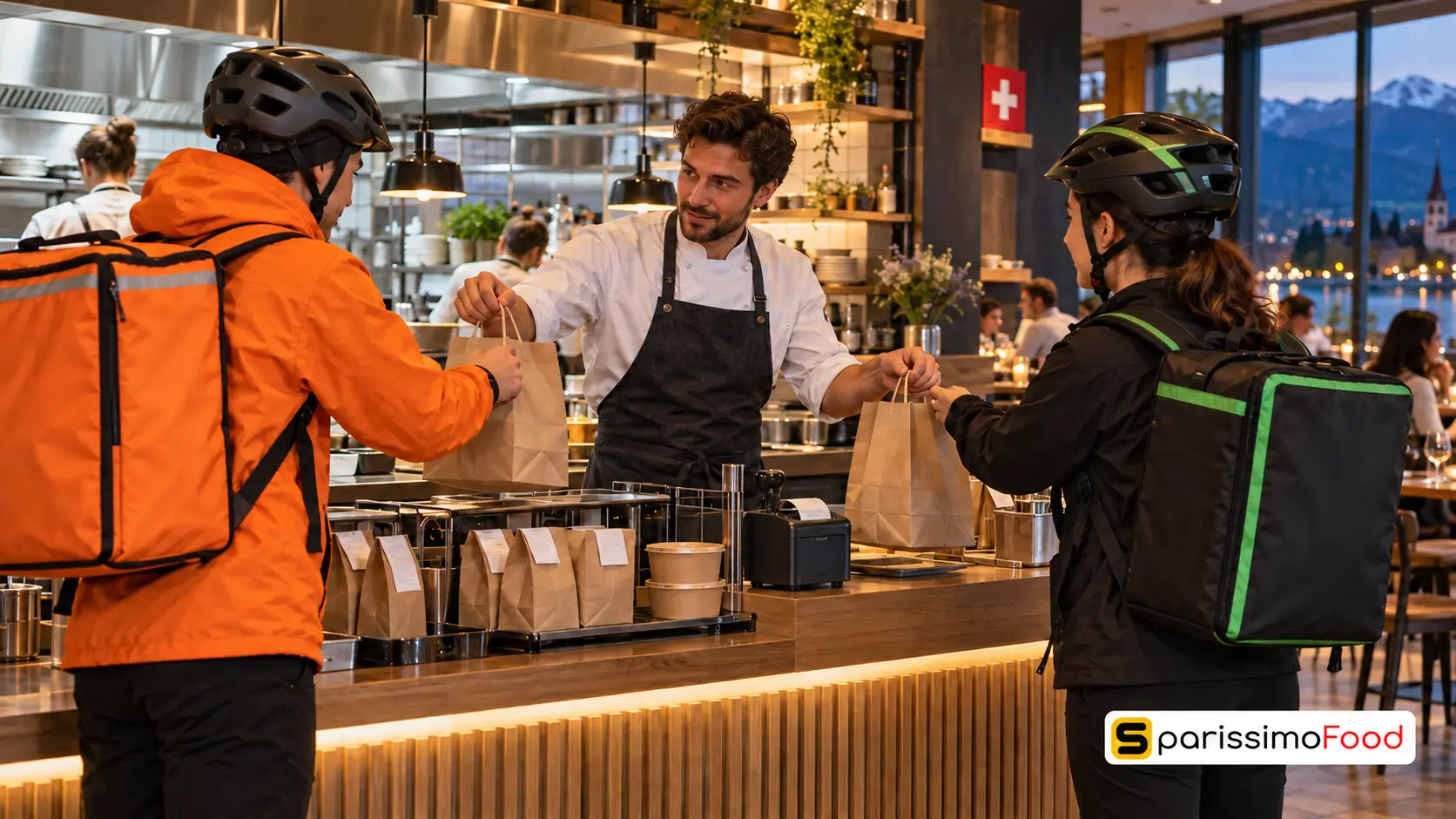
Just Eat doesn’t run one fixed commission rate. The percentage depends on who delivers the order.
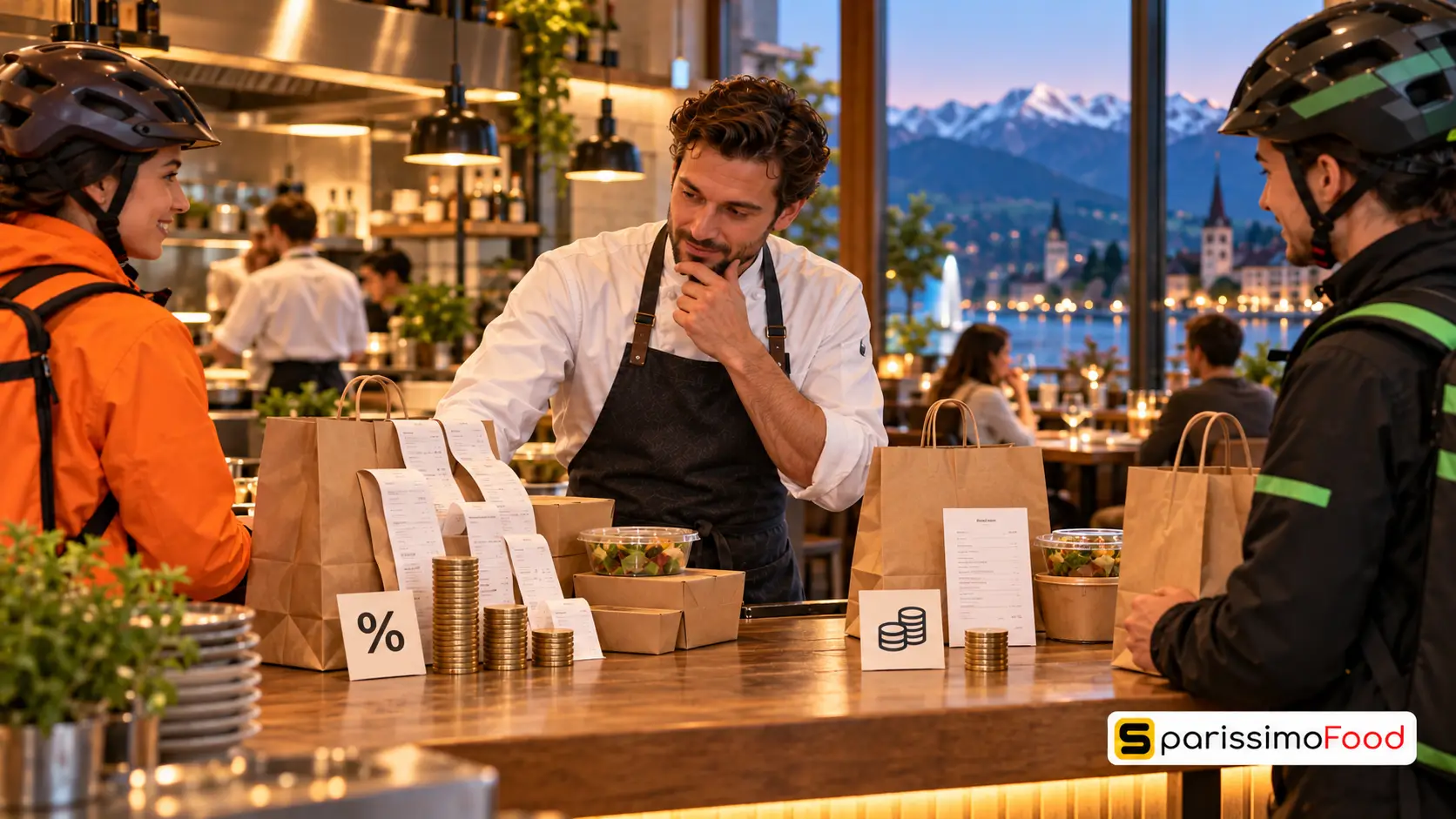
If your own drivers handle delivery, reported commission typically falls between 10% and 15%, with higher-volume and longer-contract restaurants negotiating toward the lower end. If Just Eat’s own courier network delivers the order instead, commission rises to 25–30%. On top of whichever base rate applies, restaurants also pay roughly 1.8% in payment processing fees, packaging costs, and often 3–7% of app revenue on in-app advertising just to stay visible in a competitive category. Our full breakdown of Just Eat’s Swiss commission structure walks through every layer, but the short version is that the effective cost on courier-delivered orders often climbs to 31–35% once advertising is included.
Run it on a real order. A CHF 45 order delivered by Just Eat’s own couriers at 28% commission loses CHF 12.60 to commission alone, plus payment processing and packaging, before food cost is even subtracted. Net revenue to the restaurant lands around CHF 16.59, before rent, labour, or utilities. That’s the number that matters more than any brand comparison: not which platform you use, but what actually reaches your account after it takes its cut.
If Your Restaurant Was Listed on Smood, Here’s What to Do Now
First, confirm your restaurant already has an active Just Eat listing, since some former Smood partners never needed one and are starting from zero. Just Eat’s onboarding for new restaurants typically takes a few days once your menu and bank details are ready.
Second, resist the instinct to simply port your entire lost Smood volume onto Just Eat’s courier model at 25–30% commission. That repeats the exact dependency the shutdown just exposed: all of your delivery revenue routed through a single company whose commission structure, or existence, you don’t control.
Here’s what that looks like in practice. A pizzeria in Geneva doing CHF 8,000 a month in Smood orders lost that entire channel on 1 May 2026. Rebuilding half of that volume through Just Eat’s courier model at 28% commission costs roughly CHF 1,120 a month in commission. Rebuilding the other half through a direct ordering page at CHF 79/month plus 5% commission costs about CHF 279 total. Restaurants that recovered fastest split the volume this way instead of pushing all of it back onto one marketplace, and every guest captured through a direct channel comes with contact details you keep, not data that disappears the next time a platform closes.
Just Eat vs Smood Isn’t the Real Choice Anymore: Marketplace vs Direct Ordering
The Smood shutdown made visible a risk that was always there: a restaurant that depends entirely on one third-party marketplace has no control over its own commission rate, its own customer data, or its own survival if that marketplace shuts its doors. Our comparison of in-house versus third-party delivery covers the full economics of running your own drivers against paying a marketplace, but the underlying lesson from 2026 is simpler: the real choice was never Just Eat against Smood, it was marketplace dependency against ownership of your own ordering channel.
Guests who ordered from your restaurant twice through Smood were repeat guests, not one-time discovery clicks. Converting delivery app regulars into direct orders typically wins back 8–12% of that repeat volume within a few months through a simple QR insert and feedback loop, at a fraction of what any marketplace commission costs on the same orders.
Just Eat as Discovery, Not as Your Business Model
Just Eat still has a real job to do for Swiss restaurants: putting your menu in front of guests who’ve never heard of you. Treat that acquisition cost the way you’d treat any paid marketing channel, not as your primary revenue source.
The restaurants managing this well keep new-customer discovery on Just Eat, then move every repeat guest toward a direct ordering page with a lower, predictable cost. A comparison of low-commission direct ordering platforms is worth reading before you commit to any single replacement, since the platform you choose now is one you’ll likely depend on for years, not a quick stopgap for a channel that just disappeared.
A Simple Decision Framework for Swiss Restaurants in 2026
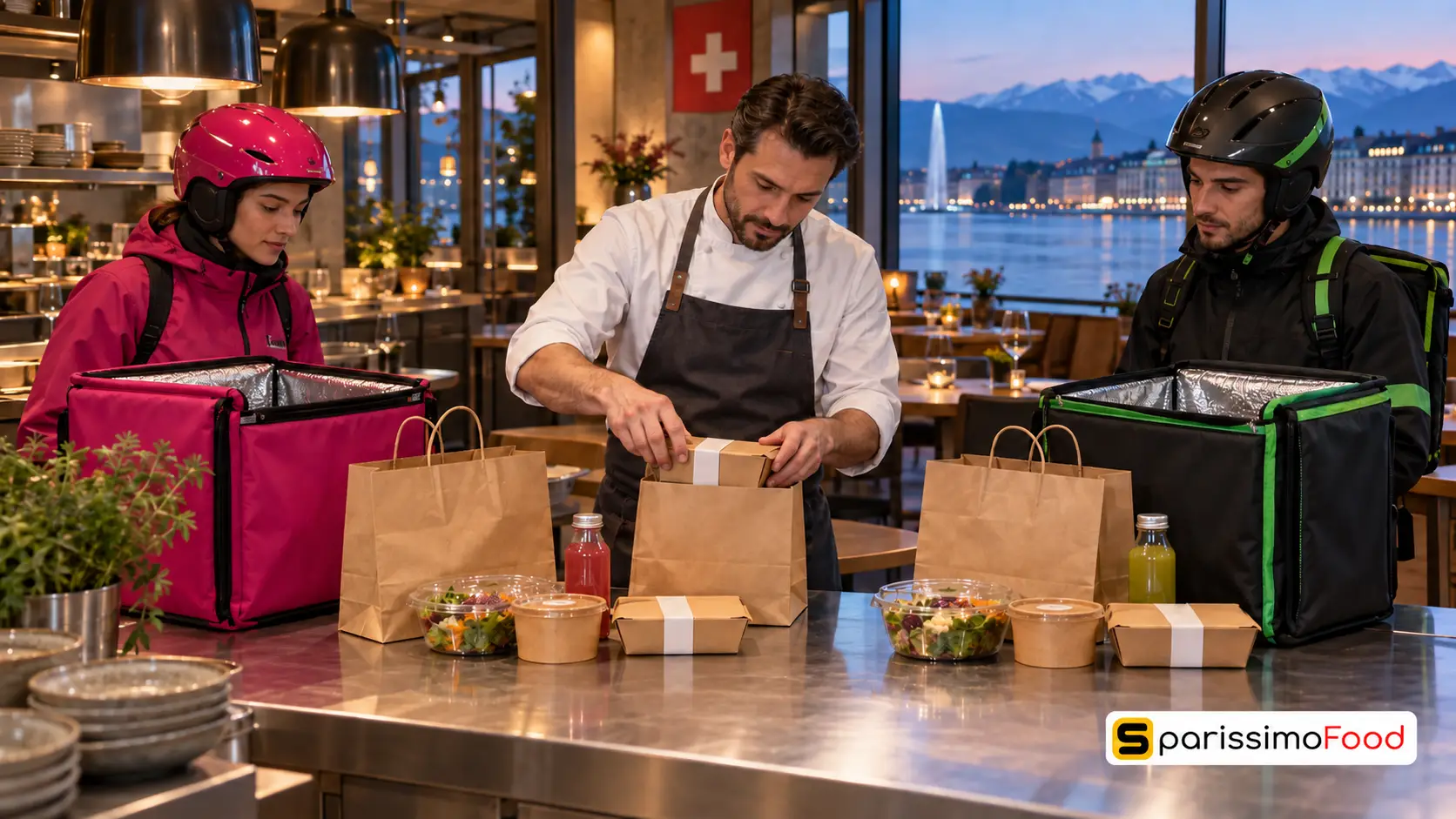
Three situations cover most restaurants weighing this decision right now. If you’re a new restaurant with little local recognition, Just Eat’s marketplace reach is worth the 25–30% commission for the first several months, purely for discovery. If you already have a loyal following, especially one built up on the now-closed Smood, a direct ordering channel should come first, with Just Eat kept only for new-customer acquisition. If you run your own delivery drivers already, negotiate Just Eat’s lower 10–15% tier rather than defaulting to their courier network, and build a direct channel in parallel rather than in sequence.
None of these paths depend on Smood existing. That’s the point: the restaurants that adapt fastest stop waiting for a like-for-like replacement and build toward owning the channel instead.
How SparissimoFood Helps Swiss Restaurants Since Smood’s Shutdown
Restaurants rebuilding a lost Smood channel need to move fast without rebuilding a menu from scratch. SparissimoFood’s onboarding team migrates an existing menu, photos, and modifiers onto a new ordering page within 24 hours, so the gap between losing one channel and taking your first direct order stays measured in days, not weeks.
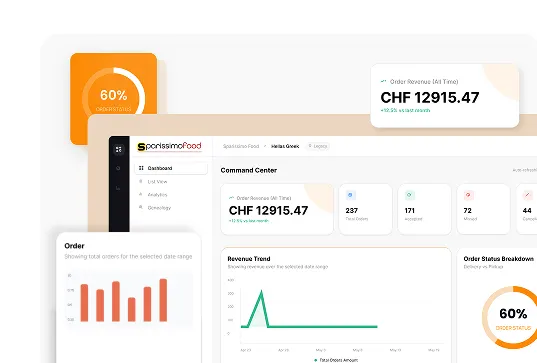
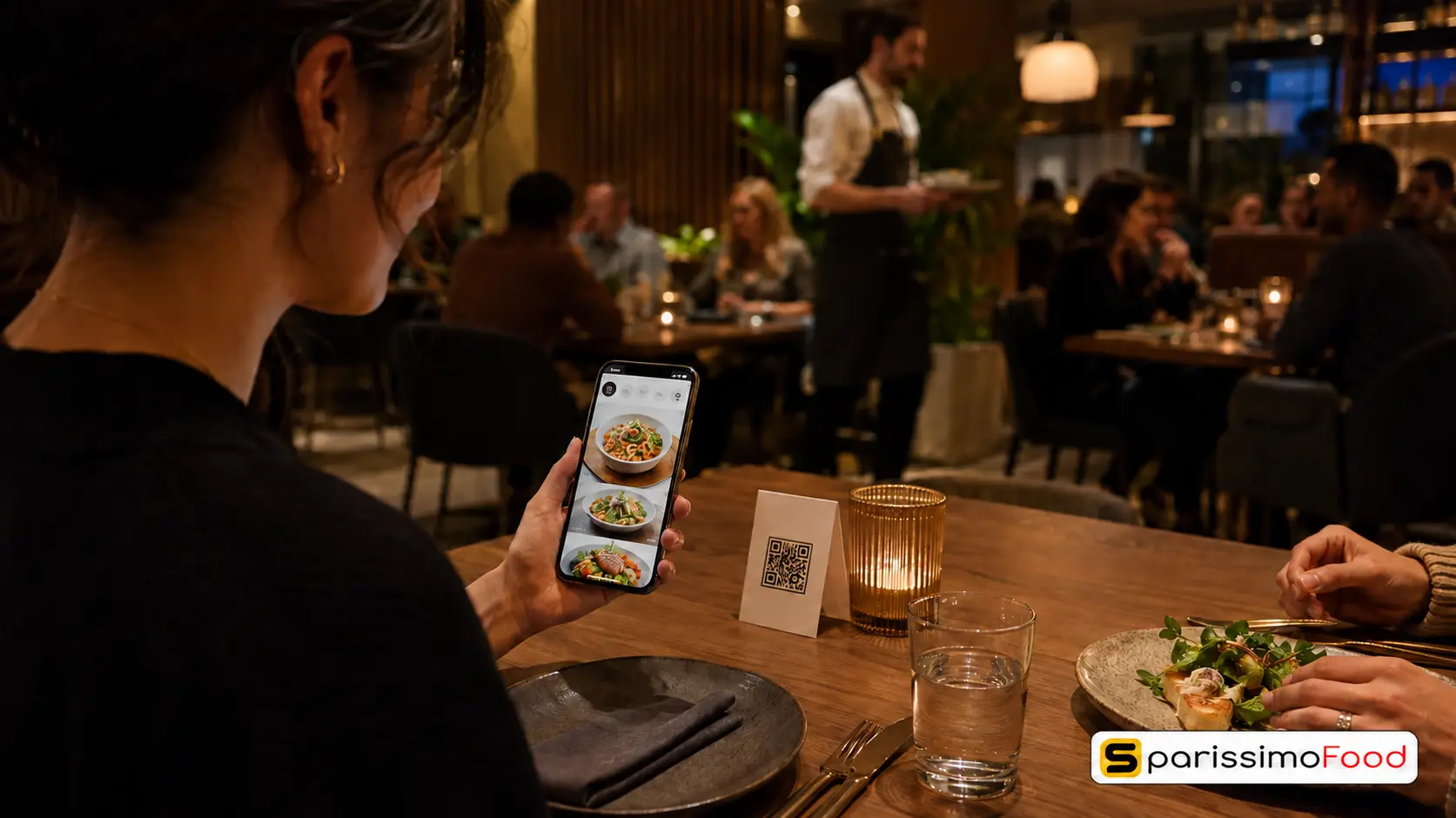
The platform handles delivery, pickup, and dine-in ordering via QR code from one dashboard, with native TWINT support built in from day one, which matters given how many Swiss guests now pay that way rather than by card. Every phone number and email captured through a direct order belongs to your restaurant, not to SparissimoFood, so a future platform closure never costs you your customer list again.
Pricing runs on three predictable plans rather than a marketplace’s percentage cut: Starter at CHF 49/month with an 8% commission, Business at CHF 79/month with 5%, and Professional at CHF 148/month, also at 5%. That’s nowhere close to commission-free, but on the CHF 8,000 example above, it’s a fraction of what the same volume would cost routed entirely through a marketplace at 25–30%. The 14-day free trial requires no credit card, enough time to get a replacement channel live before deciding anything.
Frequently Asked Questions
Is Smood still operating anywhere in Switzerland?
No. Smood ceased all operations on 30 April 2026, following a closure announcement on 18 February 2026 and a consultation process that began in January. There is no Smood service, storefront, or courier network active anywhere in the country, and any guide or app still listing it as an option is describing a platform that no longer exists.
How much commission does Just Eat charge Swiss restaurants?
Just Eat charges 10–15% commission when your own drivers handle delivery, and 25–30% when Just Eat’s own couriers deliver the order. Exact rates are negotiated individually based on order volume, location, and contract length, and restaurants also pay roughly 1.8% in payment processing on top of the base commission.
What should a restaurant do if it lost orders when Smood shut down?
Confirm your Just Eat listing is active first, since not every former Smood restaurant already had one. Then avoid routing all of that lost volume back through a single marketplace at 25–30% commission; splitting it between Just Eat for new-customer discovery and a direct ordering channel for repeat guests reduces both cost and dependency risk.
Is Uber Eats a better option than Just Eat now that Smood is gone?
Uber Eats runs a similarly tiered structure in Switzerland: 15% commission for self-delivery, or 13% on Uber One orders, rising to 32% when Uber’s own couriers deliver, or 35% on Uber One orders, so the commission maths land in a comparable range to Just Eat, if anything slightly higher on the platform-delivered tier. The more useful question isn’t Just Eat against Uber Eats, it’s how much of your volume either marketplace should carry once a direct ordering channel is running alongside it.
Should Swiss restaurants rely on Just Eat as their main ordering channel?
Not as the only channel. Just Eat is a reasonable tool for reaching guests who don’t yet know your restaurant exists, but at 25–30% commission on courier-delivered orders, it isn’t built to be a primary revenue channel. Restaurants that stay profitable typically use Just Eat for discovery and convert repeat guests to a direct ordering page with lower, predictable costs.
Smood proved that a restaurant’s delivery revenue is only as stable as the platform carrying it, and the restaurants that owned a direct channel before 30 April 2026 didn’t lose a single order that day.


.Ds4FHhSq_ZxC9WE.webp "Restaurant Upselling Techniques That Don't Feel Pushy")





.CXCr6fQt_Z11gsYh.webp "Build a Branded Restaurant App Without Developers")
.y09Xtv8Z_1gH6f6.webp "Set Up Restaurant Online Ordering in Under a Week")
.B-Rl4IDw_Z204OoN.webp "Restaurant Loss Prevention and Theft Guide")

.DPpk5JZR_AlrVy.webp "Restaurant Communication During Peak Hours | Guide 2026")



.B6eEizW1_Z2bHQYl.webp "Restaurant Menu Pricing Strategies That Actually Protect Your Margins in 2026")
.CRszlDy5_2neUXu.webp "How to Migrate from GloriaFood Without Disruption: A Technical Step-by-Step Guide")
.kT6N2QP-_1Tp2j1.webp "GloriaFood Is Shutting Down on April 30, 2027 — What Every Restaurant Owner Needs to Do Now")