
Smood vs Uber Eats: French-Speaking Switzerland

Quick Answer: Smood no longer operates. The Geneva-founded platform ceased all activity on 30 April 2026, so the Smood vs Uber Eats decision today is really a choice between Uber Eats, Just Eat, which Smood recommended to its customers when it closed, and your own ordering channel. Uber Eats publishes its Swiss restaurant pricing openly: 15% when your own staff deliver, 13% on Uber One orders, 32% when Uber’s couriers deliver and 35% on Uber One orders, plus a one-time CHF 600 activation fee. For most restaurants in Geneva, Lausanne, Fribourg, Neuchâtel and Valais, the setup that works best uses Uber Eats to reach new guests and a direct ordering page to keep regulars.
Restaurant owners from Geneva to Sion still type “Smood vs Uber Eats” into Google, because for most of the last decade those two apps shaped how French-speaking Switzerland ordered dinner. Since 30 April 2026, only one of them still takes orders. When Smood closed, it employed 427 people across 25 Swiss cities, 236 of them in Geneva alone, which is why the gap it left is felt most in Romandie.
Smood vs Uber Eats in 2026: The Comparison at a Glance
Most comparisons still online were written when both platforms were active. Here is how the two stand today, based on Smood’s own closing notice and Uber Eats’ live Swiss merchant pricing.
| | Smood | Uber Eats |
|---|---|---|
| Status in 2026 | Ceased operations on 30 April 2026 | Active across Switzerland |
| Home base | Founded in Geneva in 2012, based in Plan-les-Ouates, owned by Migros Genève in its final years | Global Uber platform with Swiss pricing published in CHF |
| Courier model | Couriers employed directly under a collective labour agreement | Uber’s courier network or your own staff, depending on the plan |
| Coverage | 25 Swiss cities, strongest in Romandie | Restaurant delivery pages across Romandie, including Geneva, Lausanne, Fribourg and Neuchâtel |
| Restaurant commission | No longer applicable | 15% or 32%, 13% or 35% on Uber One orders, 15% for pickup only |
| Upfront cost | No longer applicable | CHF 600 activation fee, reduced if you opt out of items |
| What guests see today | smood.ch thanks customers and points them to Just Eat | Ordering in the Uber Eats app |
The table makes one thing clear. Smood’s strengths were real: a local Geneva brand, directly employed couriers and a curated restaurant selection that made it, as Le Temps described it years ago, the best-established alternative to Uber Eats in Romandie. None of that is available to book anymore, so the practical question is how to get the most from the platforms still running.
What Happened to Smood, and Why Romandie Felt It Most
Smood opened a legal consultation procedure on 20 January 2026. On 18 February, its board confirmed that operations would end on 30 April 2026, after no economically viable way to continue had been found. A social plan was agreed with the Syndicom union, including financial support, reintegration help and access to open roles within Migros Genève. Service ran as usual right up to the final day.
Today, smood.ch shows a short thank-you note. It tells customers that Just Eat is available for their favourite meals from 1 May and for Migros groceries from 4 May. That single sentence explains where much of Smood’s customer traffic went, and it matters for your planning.
For restaurants, three things disappeared on 30 April at the same moment:
- The storefront, including menus, photos and ratings built up over years
- The order history, so you lost visibility on who ordered what and how often
- The guest relationship, because customer contact details lived inside Smood’s app rather than in your own records
That last point is the lesson that outlasts the platform. Our Just Eat vs Smood breakdown covers the shutdown timeline in more depth, but the short version for Romandie is simple: every order you route through a marketplace builds that marketplace’s customer list, not yours.
How Uber Eats Charges Restaurants in French-Speaking Switzerland
Uber Eats is transparent about its Swiss restaurant pricing, which makes it easy to model. Uber Eats’ Swiss merchant pricing page lists three marketplace options.
Plus is the self-delivery plan. You pay 15% commission, or 13% on orders from Uber One members, and your own staff handle the delivery. Light is the full-service plan, where Uber’s courier network delivers for you. It costs 32%, or 35% on Uber One orders. Pickup covers guests who collect their order themselves, at a flat 15%.
If you read Uber’s merchant site in French, as many owners in Lausanne or Neuchâtel do, the same plans appear as Standard and Léger. The German page calls them Plus and Hell. Compare the percentage, not the plan name, when you speak with an Uber Eats account manager.
Every plan includes payment processing, order management, performance analytics and 24/7 support. There is no separate processing line to add on top, which keeps the maths clean.
New restaurants pay a one-time CHF 600 activation fee. It covers a tablet, a printer, menu creation, professional photography, a window sticker, a welcome pack and an onboarding training call. Uber Eats lets you opt out of individual items, which lowers the fee if you already have hardware or good photos.
Two details are worth knowing before you sign:
- Uber One cuts both ways. Member orders lower your commission on Plus to 13%, but raise it on Light to 35%. Which plan you choose decides whether Uber One helps or costs you.
- Uber Direct is a separate service. Uber offers on-demand delivery for orders placed on your own website, app or by phone, starting at CHF 6.50 per delivery with no service fee. Prices can be higher depending on distance, timing and order type.
Smood vs Uber Eats by the Numbers: What a CHF 50 Order in Lausanne Nets
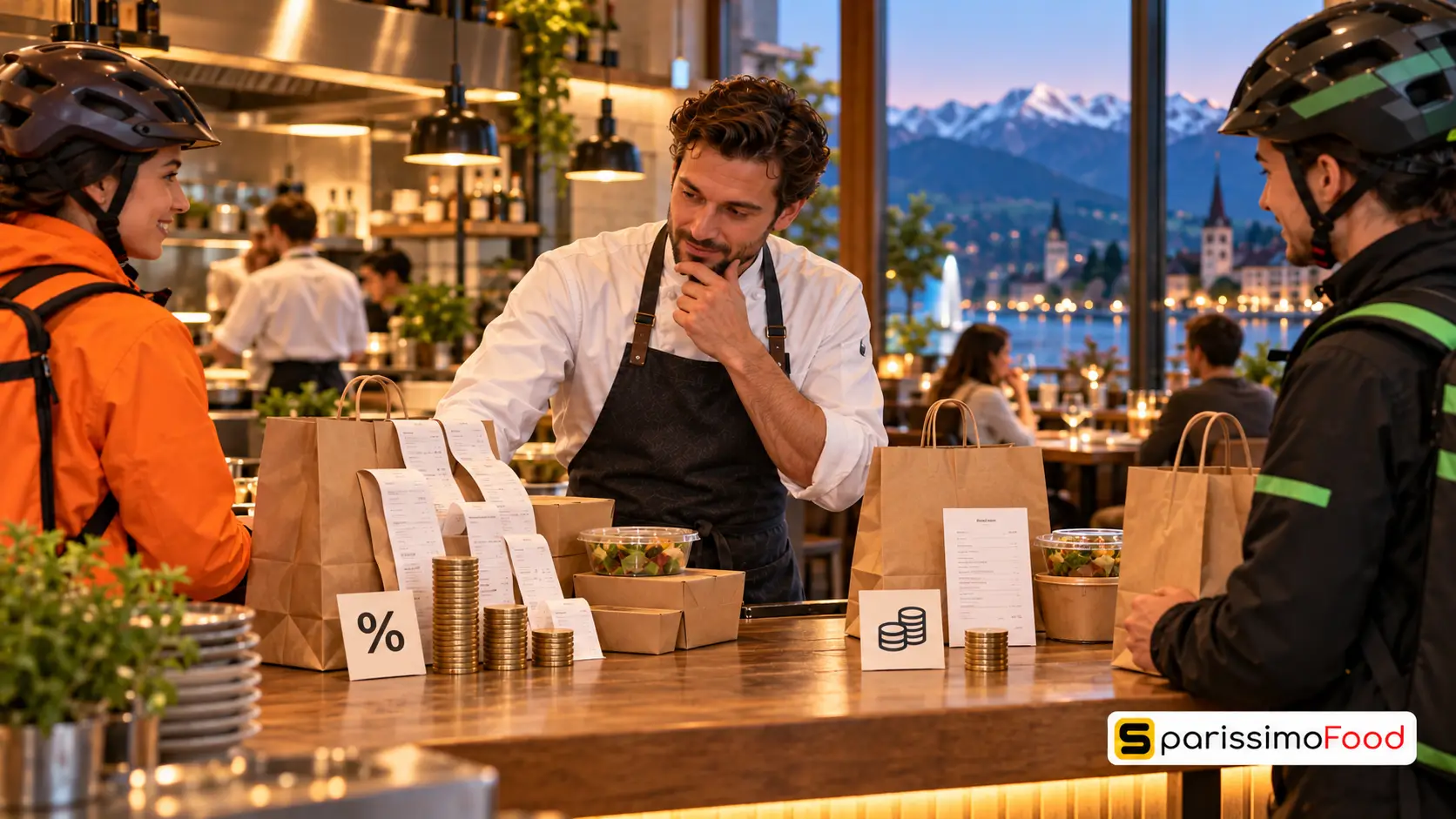
Percentages hide the real story. Here is the same CHF 50 dinner order run through five setups a Romandie restaurant can use today. The assumptions: 30% food cost, CHF 1.50 packaging and, where you deliver yourself, about CHF 4.50 per delivery for a driver paid CHF 27 an hour who completes six deliveries an hour.
| | Uber Eats Light, 32% | Uber Eats Light, Uber One order, 35% | Uber Eats Plus, own driver, 15% | Direct order at 5% + Uber Direct courier | Direct order at 5% + own driver |
|---|---|---|---|---|---|
| Order value | CHF 50.00 | CHF 50.00 | CHF 50.00 | CHF 50.00 | CHF 50.00 |
| Commission | −CHF 16.00 | −CHF 17.50 | −CHF 7.50 | −CHF 2.50 | −CHF 2.50 |
| Delivery cost | included | included | −CHF 4.50 | −CHF 6.50 | −CHF 4.50 |
| Packaging | −CHF 1.50 | −CHF 1.50 | −CHF 1.50 | −CHF 1.50 | −CHF 1.50 |
| Food cost, 30% | −CHF 15.00 | −CHF 15.00 | −CHF 15.00 | −CHF 15.00 | −CHF 15.00 |
| Net to restaurant | CHF 17.50 | CHF 16.00 | CHF 21.50 | CHF 24.50 | CHF 26.50 |
The direct-order columns use SparissimoFood’s 5% Business plan commission and Uber Direct’s starting price. They exclude the CHF 79 monthly subscription, which works out to about 26 rappen per order at 300 orders a month, and any payment processing on your own channel.
Now scale it. Picture a pizzeria in Lausanne doing 300 delivery orders a month at CHF 50, all through Uber Eats Light. That is CHF 15,000 in monthly sales and CHF 4,800 in commission. If 100 of those orders come from regulars who switch to your own ordering page, with Uber Direct still handling the ride, each one nets CHF 7.00 more. That adds CHF 700 a month, or CHF 621 after the Business plan subscription, and roughly CHF 7,450 over a year.
The point is not to leave Uber Eats. Its marketplace still brings you guests you would never reach alone. The point is to stop paying a 32% discovery fee on guests who already know your name.
Smood vs Uber Eats: What Former Smood Restaurants Should Do Now
If Smood carried part of your delivery revenue, the gap opened on 1 May. These five steps close it without rebuilding the same dependency.
- Check which marketplaces you are live on. Many Romandie restaurants listed only on Smood. Confirm an active Uber Eats listing, and decide whether to add Just Eat, which charges 10 to 30% depending on the delivery model. Our Just Eat commission guide breaks down both tiers.
- Match the Uber Eats plan to your delivery setup. If you already employ drivers, Plus at 15% keeps more margin per order. If you have no drivers, Light at 32% is the realistic starting point.
- Trim the activation fee where you can. If you already own a tablet and have strong menu photos from your Smood days, ask to opt out of those items before paying the full CHF 600.
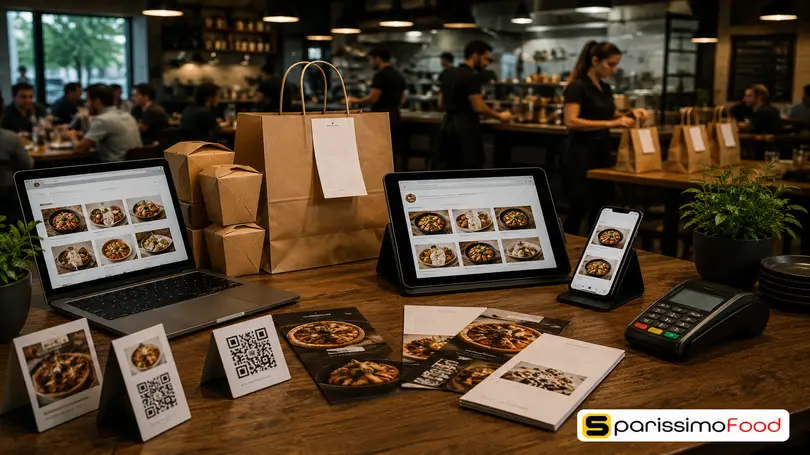
- Turn every delivery bag into a direct-ordering invitation. A simple QR card with a first-order offer for your own ordering page is the fastest way to win back regulars. Our guide to converting delivery-app customers shows how restaurants typically recover 8 to 12% of repeat volume this way.
- Review after six to eight weeks. Compare orders per channel and net revenue per order, not just total sales. The platform with the most orders is not always the one that earns you the most.
Which Setup Works Better in Geneva, Lausanne, Fribourg, Neuchâtel and Valais?
With Smood gone, there is no single answer to Smood vs Uber Eats for all of Romandie. Order density, your delivery capacity and your guest base decide it.
City-centre restaurants in Geneva or Lausanne see the highest order density, which is where Uber Eats is strongest. If you run your own drivers, the Plus plan at 15% is the most profitable marketplace option. If you don’t, Light gives you reach from day one while you build your direct channel alongside it.
Restaurants in smaller towns such as Bulle, Martigny, Yverdon-les-Bains or La Chaux-de-Fonds should check coverage postcode by postcode in the Uber Eats merchant sign-up, since delivery zones vary. Where coverage is thin, a direct ordering page with your own drivers or Uber Direct often fills the gap more reliably than waiting for marketplace demand. Our comparison of in-house delivery and third-party platforms covers the break-even point for your own drivers.
Restaurants with a loyal local following, especially one built on Smood, should put the direct channel first. Those guests already know you. Paying 32% to reach them again is the most expensive way to serve them.
Whichever path you choose, speak your guests’ language. According to the Federal Statistical Office, 23% of Swiss residents aged 15 and over usually speak French at home. A French menu with clear descriptions is not a nice-to-have in Romandie, it is the default your guests expect on every channel.
How SparissimoFood Helps Restaurants Rebuilding After Smood
The hardest part of Smood’s closure was not losing an app. It was losing guests you could no longer contact. SparissimoFood’s direct online ordering is built around fixing exactly that: every name, phone number and email captured through your own ordering page belongs to your restaurant, and stays with you whatever happens to any marketplace.
The platform runs delivery, pickup and table ordering by QR code from one dashboard, with TWINT support, which matters in a country where guests increasingly pay by phone. Our onboarding team can move an existing menu, photos and options onto a new ordering page quickly, so the gap between a lost channel and your first direct order stays short.
SparissimoFood is not commission-free. Plans start at CHF 49 a month with an 8% commission on Starter, CHF 79 a month with 5% on Business and CHF 148 a month with 5% on Professional. On the Lausanne example above, that predictable cost is well below the 15 to 35% a marketplace charges on the same order. You can compare the plans and start a 14-day free trial with no credit card, enough time to run your own channel alongside Uber Eats and see the numbers for yourself.
Frequently Asked Questions
Is Smood still operating in Switzerland?
No. Smood ceased all operations on 30 April 2026, after a consultation procedure that began on 20 January and a closure decision announced on 18 February 2026. There is no active Smood app, storefront or courier network anywhere in Switzerland, and smood.ch now directs former customers to Just Eat.
How much does Uber Eats charge restaurants in Switzerland?
Uber Eats charges 15% on its Plus plan when your own staff deliver, or 13% on Uber One member orders. On the Light plan, where Uber’s couriers deliver, the rate is 32%, or 35% on Uber One orders, and pickup-only orders cost 15%. New restaurants also pay a one-time CHF 600 activation fee, which can be reduced by opting out of items such as the tablet or photography.
Where did Smood’s customers go after the closure?
Smood’s website points former customers to Just Eat for restaurant meals from 1 May 2026 and for Migros groceries from 4 May 2026. Many guests in Romandie also use Uber Eats, which operates across the region’s main cities. Restaurants that want to keep their regulars regardless of platform should give them a direct way to order.
Can I use Uber couriers for orders from my own website?
Yes. Uber Direct lets restaurants book on-demand delivery for orders placed through their own website, app or phone line, starting at CHF 6.50 per delivery with no service fee in Switzerland. The price can rise with distance, delivery speed and order type, so check the quote for your delivery zone before relying on it.
Is Uber Eats or Just Eat better for restaurants in French-speaking Switzerland?
It depends on your delivery setup and location. With your own drivers, Uber Eats Plus at 15% and Just Eat’s own-driver tier at 10 to 15% are close, so order volume should decide. With platform couriers, Uber Eats Light costs 32% against Just Eat’s 25 to 30%, and many restaurants in Geneva and Lausanne list on both, then compare net revenue per order after six to eight weeks.
Smood’s closure did not change what a delivery order is worth, only who keeps the guest, and in Romandie that should now be you.



.Ds4FHhSq_ZxC9WE.webp "Restaurant Upselling Techniques That Don't Feel Pushy")






.CXCr6fQt_Z11gsYh.webp "Build a Branded Restaurant App Without Developers")
.y09Xtv8Z_1gH6f6.webp "Set Up Restaurant Online Ordering in Under a Week")
.B-Rl4IDw_Z204OoN.webp "Restaurant Loss Prevention and Theft Guide")


.DPpk5JZR_AlrVy.webp "Restaurant Communication During Peak Hours | Guide 2026")



.B6eEizW1_Z2bHQYl.webp "Restaurant Menu Pricing Strategies That Actually Protect Your Margins in 2026")
.CRszlDy5_2neUXu.webp "How to Migrate from GloriaFood Without Disruption: A Technical Step-by-Step Guide")
.kT6N2QP-_1Tp2j1.webp "GloriaFood Is Shutting Down on April 30, 2027 — What Every Restaurant Owner Needs to Do Now")